
When you consider workplace hazards, immediate dangers like falls or chemical exposure often spring to mind. However, a more subtle, cumulative risk affects thousands of Australian workers daily: whole body vibration (WBV). Understanding what whole body vibration is and its long-term effects is the first step toward creating a safer work environment.
Put simply, WBV is the mechanical shaking and jolting transmitted through a surface—like a vehicle seat or a machinery platform—that travels through a person's entire body. It's not merely a temporary discomfort; it's a serious occupational hazard that, with prolonged daily exposure, can lead to chronic back pain, musculoskeletal damage, and other debilitating health issues. This guide will explore the health risks, measurement techniques, and effective control strategies for managing whole body vibration in your workplace.
Understanding the Impact of Whole Body Vibration
Imagine the relentless jarring you feel driving for hours on a rough, unsealed road. Now, picture that same sensation, day in and day out, as part of your job. This is the reality for countless workers in essential Australian industries like mining, transport, agriculture, and construction. The health risks of whole body vibration are significant and can lead to permanent injury.
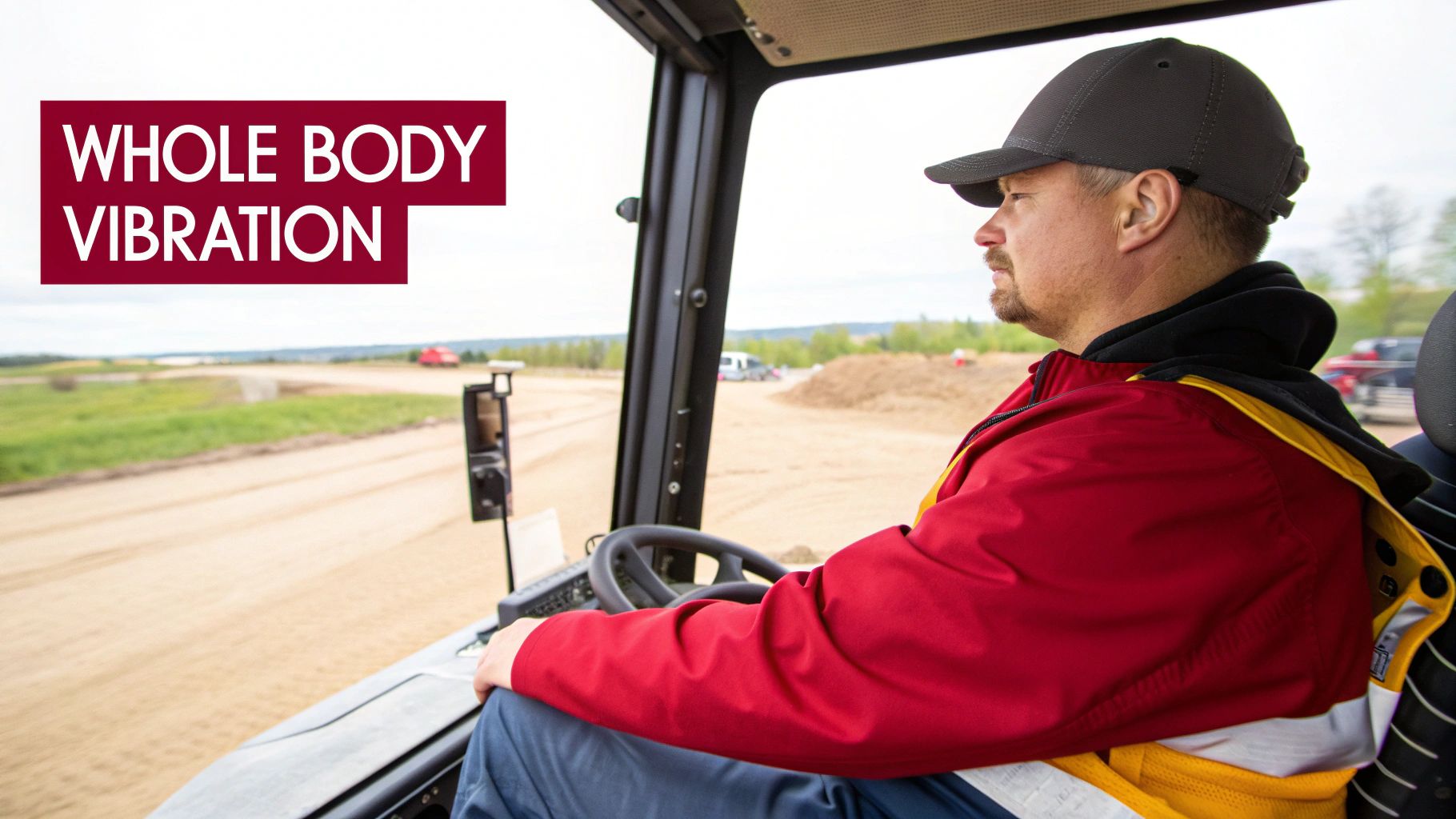
This constant mechanical energy transfers from a vibrating source, typically through the seat or floor, directly into the operator's body. Over time, the cumulative effect of this exposure can cause serious, and often permanent, harm.
The Hidden Dangers of Daily Exposure
The human body simply isn't built to absorb constant vibration. Day after day, this exposure places immense compressive forces on the spinal column while putting continuous strain on muscles, ligaments, and internal organs. The consequences aren't just minor aches and pains; they are serious conditions that can fundamentally change a person's quality of life.
Some of the key health risks linked to long-term WBV exposure include:
- Chronic Lower Back Pain: This is by far the most common complaint, often stemming from cumulative damage to spinal discs and vertebrae.
- Musculoskeletal Disorders (MSDs): The damage isn't limited to the back. WBV can affect the neck, shoulders, and hips, causing widespread pain and reducing mobility.
- Digestive System Problems: The constant internal shaking can disrupt normal organ function, leading to issues like chronic stomach pain and digestive upset.
- Nervous System Effects: Emerging research also suggests links between WBV and neurological symptoms, such as balance disturbances.
Who Is Most at Risk in Australia?
Whole-body vibration is a pervasive issue across many of Australia's foundational industries. The problem is especially acute for anyone who operates heavy mobile equipment or drives for long stretches, particularly over uneven ground.
The scale of this hazard is significant. A landmark Australian study revealed that approximately 24% of workers were exposed to some form of workplace vibration. Of that group, 38% experienced whole-body vibration exclusively, while another 17% faced both WBV and hand-arm vibration.
Even more concerning is the duration of exposure. The study found that 24% of these workers were exposed for more than three-quarters of their workday, dramatically increasing their risk of developing serious health problems. You can explore the full results in the National Hazard Exposure Worker Surveillance survey here.
To put this into perspective, here’s a quick overview of the industries and equipment most commonly associated with dangerous WBV levels.
Whole Body Vibration At a Glance
The table below gives a clear snapshot of the industries, common vibration sources, and the health risks facing Australian workers.
| At-Risk Industry | Common Vibration Source | Primary Health Risk |
|---|---|---|
| Mining & Quarrying | Dump trucks, excavators, loaders, drills | Severe spinal damage, musculoskeletal disorders |
| Transport & Logistics | Long-haul trucks, buses, delivery vans | Chronic lower back pain, neck strain |
| Agriculture & Forestry | Tractors, harvesters, forestry equipment | Musculoskeletal injuries, digestive issues |
| Construction | Graders, bulldozers, earthmoving plant | Spinal disc degeneration, nerve damage |
As you can see, the people operating the machinery that builds and sustains our country are often the ones most at risk.
Recognising these dangers is the critical first step toward building a safer work environment. In the following sections, we’ll dive deeper into how these vibrations physically affect the body and, importantly, what we can do to measure and control them.
How Vibration Impacts Human Physiology
To really get a handle on the dangers of whole-body vibration, we need to look at what's happening when that constant shaking meets human biology. It's more than just a feeling of discomfort; it’s a physical interaction, and the key players are frequency, amplitude, and acceleration.
Think of it like music from a speaker. Frequency is the pitch—how fast the shaking happens, measured in Hertz (Hz). Amplitude is the volume—how far the surface moves up and down. Acceleration ties them together, measuring how quickly the vibration changes speed. These three factors dictate just how harmful the exposure can be.
The Problem of Natural Resonance
Here’s where it gets interesting. Every object has a natural resonant frequency – a specific frequency that makes it vibrate like crazy. The classic example is pushing a child on a a swing. If you time your pushes perfectly with the swing's natural rhythm, it soars higher with very little effort.
The human body isn't one solid object; it's a collection of parts, and each has its own resonant frequency.
- The Spine: Tends to resonate most between 4-8 Hz.
- Internal Organs: The chest and abdomen are most sensitive in the 4-10 Hz range.
- The Head and Neck: Vibrate most intensely between 8-20 Hz.
The real trouble starts when the vibration from a machine or vehicle lines up with the natural frequency of a body part. This creates a powerful amplifying effect. Suddenly, that part of your body is shaking far more intensely than the seat you're sitting on. It’s why driving at a certain speed on a particular road can feel so jarring on your lower back – the truck's vibration is hitting the resonant "sweet spot" for your spine.
Your body is a brilliant shock absorber, but it has its limits. When a machine's frequency matches the body's own rhythm, that protective system gets overwhelmed. Instead of dampening the energy, the body amplifies it, leading to tiny, repeated injuries in tissues, joints, and organs.
Biomechanics of Spinal and Muscle Strain
The spine, in particular, takes a beating from whole-body vibration. The constant jolting compresses the intervertebral discs—the gel-like cushions between your vertebrae—over and over again. Day after day, this can accelerate disc degeneration, lead to herniations (slipped discs), and result in the chronic lower back pain that plagues so many machine operators.
At the same time, your core muscles are fighting a losing battle. They are constantly firing—contracting and relaxing—to try and keep you stable against the relentless shaking. Imagine forcing your muscles through a non-stop, low-level workout for an entire eight-hour shift, with no breaks. This leads directly to muscle fatigue, chronic strain, and other musculoskeletal problems.
This is distinct from the localised shaking experienced when using power tools, which is known as hand-arm vibration. You can learn more about this in our guide on the hand-arm vibration assessment process. And for a different perspective on how mechanical forces affect the body, some may find it interesting to read about therapeutic localized vibration in massage chairs.
From Subtle Shakes to Serious Damage
The damage from whole-body vibration doesn't happen overnight. It’s a slow, cumulative process. A single shift might just leave you feeling tired and a bit sore. But years of this daily exposure allow the micro-trauma to add up.
This gradual breakdown shows up in a few key ways:
- Micro-fractures: Over time, tiny stress fractures can form in the vertebrae.
- Ligament Strain: The ligaments holding your spine together can get stretched and weakened.
- Nerve Compression: As discs wear down and the spine's structure changes, nerves can get pinched, causing pain, numbness, or that "pins and needles" feeling.
Once you understand the physics of resonance and the biomechanics of the body’s response, it's crystal clear why whole-body vibration is such a serious workplace hazard. It’s not just about putting up with a bumpy ride; it’s a direct physical assault on the body that needs to be properly measured and controlled.
How to Measure and Assess Whole Body Vibration Exposure
You can’t manage a risk you can’t measure. When it comes to whole-body vibration, just knowing a ride is "bumpy" isn't enough to protect your people. To get a real handle on the problem, you need to move from subjective feelings to objective data. This means using specialised equipment and a few key metrics to quantify exactly what your workers are experiencing day in, day out.
The go-to tool for this job is an accelerometer. At its core, it's a highly sensitive motion sensor. For a WBV assessment, this sensor is usually embedded in a seat pad that an operator sits on. This allows it to accurately measure the vibrations travelling up from the machinery and into the person's body. It captures movement in three directions—up-and-down, side-to-side, and front-to-back—giving a complete, three-dimensional picture of the forces involved.
Demystifying Key Vibration Metrics
Once the accelerometer has done its job, the raw data needs to be translated into something meaningful. This is where a couple of standardised metrics come into play. While the names might sound technical, the concepts are actually quite straightforward and essential for making smart safety decisions.
These are the two numbers that matter most:
- A(8) Value: This is the cornerstone of any vibration assessment. It represents a worker's total vibration exposure, averaged out over a standard eight-hour workday. You can think of it as their "daily dose" of vibration—it combines the intensity of the shaking with how long they're exposed to give you one clear, comparable figure.
- Vibration Dose Value (VDV): This metric is your specialist tool for situations involving sharp jolts and shocks. Imagine a dump truck hitting a deep pothole or a loader dropping a heavy bucket. The A(8) value smooths these out, but the VDV specifically highlights these high-impact events, which are known to be particularly damaging to the spine.
This diagram perfectly illustrates how that vibration energy travels from the source, like a vehicle's seat, directly into the operator's body.

As you can see, the force doesn't just stop at the surface. It moves right up the body, with the spine often bearing the brunt of the impact.
The Importance of Frequency Weighting
Here's a critical point: not all vibration is equally harmful. The human body is particularly vulnerable to specific frequencies, with the 4-8 Hz range being the real danger zone for our spine and internal organs. Raw data from an accelerometer doesn't differentiate between a harmless high-frequency buzz and a damaging low-frequency jolt. That's where frequency weighting becomes essential.
Think of frequency weighting as an intelligent filter applied to the raw data. It dials up the importance of the most damaging frequencies and dials down the less harmful ones. This ensures the final measurement accurately reflects the real biological risk to a person.
Without this crucial step, you could easily misinterpret the data. You might end up overstating the risk from a minor vibration while dangerously underestimating the damage being done by a more destructive, low-frequency motion. Frequency weighting makes sure the A(8) and VDV values are truly representative of the potential for injury.
Putting It All Together for a Risk Assessment
By combining the right tools with the right metrics, a clear picture of workplace exposure begins to form. A professional assessment involves placing accelerometers on equipment during typical work cycles to capture realistic, on-the-job data. These results aren't just numbers on a page; they're objective evidence that points you directly toward effective solutions.
For example, the data might show that a specific haul road is causing the highest vibration doses, making road maintenance an immediate priority. Or, it could reveal that one model of forklift vibrates far more than others, which is invaluable information for your next procurement round. A comprehensive whole body vibration assessment is the only way to accurately pinpoint these high-risk activities and assets.
Ultimately, measuring whole body vibration is about taking the guesswork out of worker safety. It turns a vague complaint about a "rough ride" into hard data you can act on to protect your team, meet your legal obligations, and build a genuinely safer workplace.
Understanding Australian Regulations and Compliance for Whole Body Vibration
Navigating the rules around whole-body vibration (WBV) in Australia can feel a bit murky. Unlike many other countries, we don’t have a specific, black-and-white legal limit for WBV exposure written into our national laws. This can leave a lot of businesses wondering exactly where they stand and what they need to do.
But here’s the crucial thing to understand: a lack of a specific number doesn't mean a lack of responsibility. The entire Australian safety framework is built on a foundational principle called the general 'duty of care'. This is the bedrock of our Work Health and Safety (WHS) laws, and it simply means employers must do everything 'reasonably practicable' to manage any and all foreseeable risks to their workers.
So, even though there isn't a regulation that singles out whole-body vibration, it’s a well-documented hazard. Failing to identify, assess, and control the risks it poses is a clear breach of your duty of care. For a deeper dive into these core obligations, it’s worth getting familiar with the broader Australian workplace safety standards.
Guidance from International Standards
So, if there's no local rulebook, where do we turn? In practice, Australian industry looks to international standards for clear, actionable guidance. The gold standard here is ISO 2631-1, titled "Mechanical vibration and shock – Evaluation of human exposure to whole-body vibration".
This isn't just a dry technical document; it’s a practical framework that shows you how to:
- Properly measure and evaluate vibration exposure.
- Understand the 'health guidance caution zones' where risks start to climb.
- Apply the exposure action values and limits used as legal requirements in many other parts of the world.
Adopting ISO 2631-1 as your internal benchmark is the smartest move you can make. It demonstrates due diligence and aligns your safety practices with global best practice, giving you a solid technical foundation for managing WBV.
The Problem of the Protection Gap
This grey area in our regulations, unfortunately, creates a real-world problem. Research paints a concerning picture of Australian workplaces, revealing a significant protection gap. A staggering 23% of workers exposed to vibration reported that their employer had no control measures in place at all. This is especially true for smaller businesses, where a huge number of workers get no protection whatsoever from the daily rattle and shake.
The situation is made worse by a serious lack of training. While around 24% of the workforce faces daily vibration exposure, only 27% of them have received any training on the dangers or how to control them. This leaves hundreds of thousands of Australians exposed to serious long-term health risks with little to no awareness or protection.
A Practical Compliance Checklist
Meeting your duty of care for WBV isn't about ticking a box; it’s about a continuous cycle of risk management. It goes far beyond just buying a new seat cushion. Here’s a straightforward checklist to get you on the right track:
-
Identify the Hazard: First, pinpoint where the risk is. Which roles, vehicles, or machines are the culprits? Look at your asset lists, but more importantly, get out there and talk to the people who actually operate the equipment.
-
Assess the Risk: Once you know where the vibration is, you need to figure out how bad it is. This can start with simple observations and worker feedback. But if you suspect a significant risk, it's time for proper quantitative measurements using accelerometers.
-
Consult Your Workers: This is non-negotiable and a legal requirement. You must talk to your employees and their Health and Safety Representatives (HSRs). They are on the front line and have invaluable insights into the problems and potential solutions.
-
Implement Control Measures: Use the hierarchy of controls. Always aim for engineering solutions first—things like better suspension, improved seating, or maintaining haul roads. These are far more effective than just relying on administrative controls like job rotation.
-
Provide Information and Training: Make sure every at-risk worker knows what WBV is, the damage it can do over time, and what you’re all doing to control it. An informed worker is a safer worker.
-
Review and Monitor: Your job isn't done once controls are in place. You have to circle back. Are the new seats working? Has a new piece of equipment changed the risk profile? Regular reviews ensure your safety plan doesn't just sit on a shelf.
Following these steps will help you build a robust safety system that doesn't just satisfy your legal obligations but genuinely protects the long-term health and well-being of your people.
Effective Control Strategies for High-Risk Industries
Knowing how to measure whole-body vibration is one thing, but turning that data into meaningful action is where the real work begins. To manage WBV effectively, you need a systematic approach that goes beyond quick fixes to build robust, lasting solutions. The most proven framework for this is the hierarchy of controls—a strategic playbook for systematically reducing risk.
This hierarchy isn't just a list of suggestions. It guides you to prioritise the most reliable safety measures, starting with eliminating the hazard entirely before falling back on less effective options like changing work schedules or relying on personal protective equipment.
Start at the Source: Elimination and Substitution
Right at the top of the hierarchy is elimination—getting rid of the hazard altogether. While completely removing vibration-producing tasks is often impossible in industries like mining or transport, the principle is crucial during procurement.
When buying new machinery, specifying low-vibration models should be a non-negotiable part of the tender. This is hands-down the single best way to design safety into your operations from day one. Next on the list is substitution, which involves swapping out a high-vibration process for a lower-vibration alternative.
Think about it: could a job traditionally done with a vibrating walk-behind compactor be completed with a small ride-on roller instead? These top-tier controls offer the greatest protection and should always be your first port of call.
Your Best Defence: Engineering Controls
When you can't eliminate the hazard, engineering controls are your next line of defence. These are physical changes to equipment or the workplace that shield people from the vibration source. This is where some of the most practical and impactful WBV solutions live.
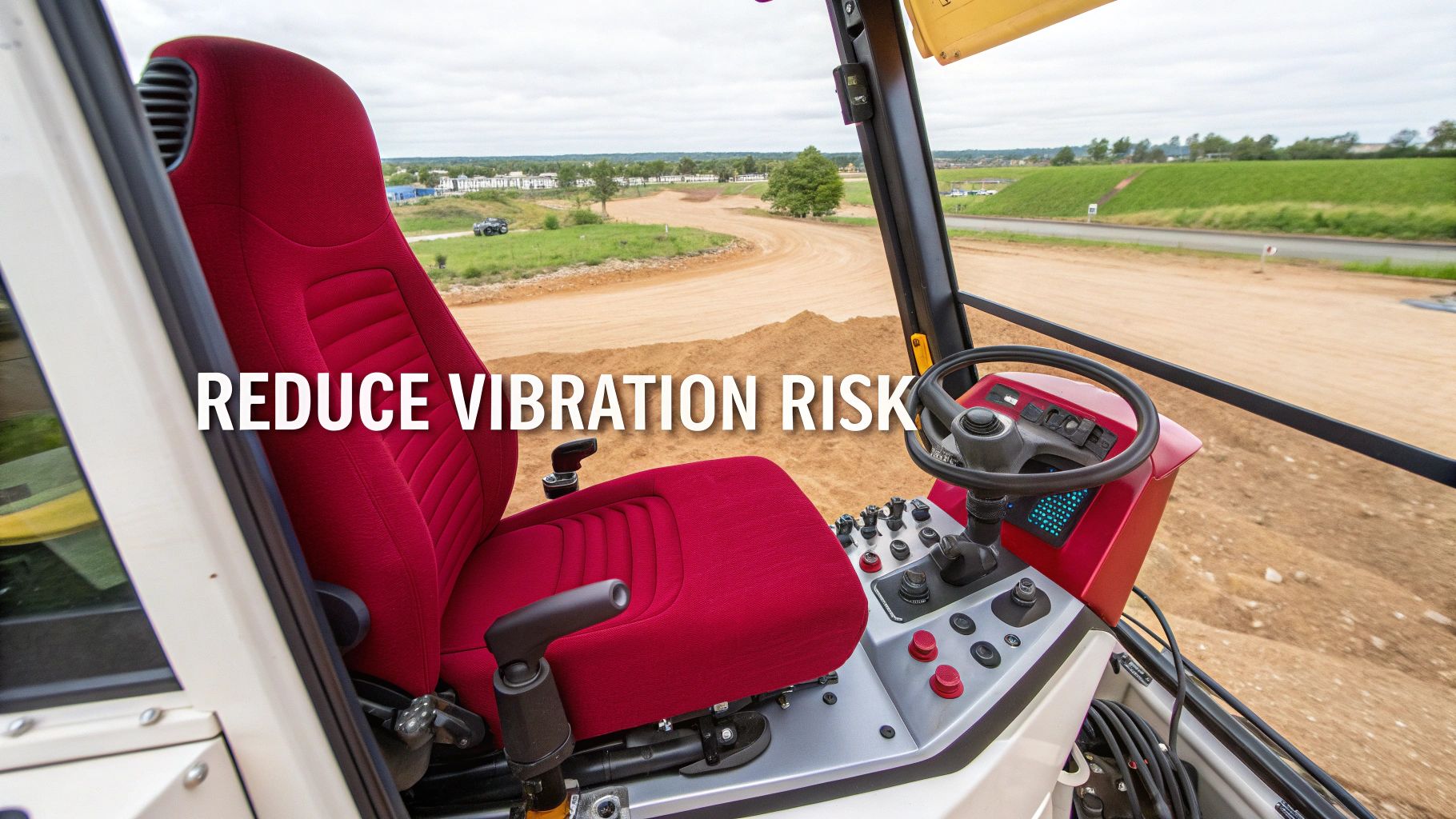
- Vibration-Dampening Seats: Installing high-quality, properly maintained suspension seats in vehicles is a cornerstone of WBV management. These seats are engineered to absorb and neutralise harmful vibrations before they travel up the operator's spine.
- Cab and Chassis Suspension: Look beyond just the seat. Improving a vehicle's overall suspension system can dramatically cut the amount of vibration transmitted from the ground into the cab.
- Road and Surface Maintenance: For sites in mining, agriculture, and construction, the state of haul roads and work surfaces is a massive factor. Regularly grading and maintaining these surfaces to smooth out ruts and potholes tackles jarring shocks right at the source.
Changing the Way We Work: Administrative Controls
Further down the hierarchy are administrative controls, which modify how people work to limit their exposure time. While they aren't as powerful as engineering solutions, they play a vital supporting role in any comprehensive safety program.
These controls include strategies like:
- Job Rotation: Limiting the amount of time any one worker spends on high-vibration equipment during their shift.
- Enforcing Speed Limits: Driving slower, especially over rough terrain, significantly dampens vibration intensity.
- Route Planning: In the transport sector, planning routes that favour better-maintained roads can make a huge difference to a driver's daily vibration dose.
The cost of getting this wrong is staggering. Between 2001 and 2015, Australia recorded over 5,200 compensation claims for vibration-related injuries, costing businesses around AUD $134 million. Despite the risk being highest in sectors like mining, transport, and construction, a recent analysis found that only 27% of exposed workers reported receiving any training on vibration safety. You can find more of these insights in the dorsavi.com analysis on managing whole-body vibration.
By focusing on the hierarchy of controls, you shift from simply reacting to injuries to proactively engineering them out of the job. It’s about building a system where safety isn’t an afterthought—it’s built-in.
Finally, at the very bottom of the hierarchy, is Personal Protective Equipment (PPE). For whole-body vibration, there is no effective PPE. Anti-vibration gloves target hand-arm vibration, and adding unapproved cushions to a seat can sometimes make things worse by amplifying certain frequencies. This just reinforces why focusing on higher-level controls is so critical.
Comparison of WBV Control Measures
Choosing the right control strategy means weighing up its effectiveness against the practicalities of implementation. The table below provides a quick comparison to help guide your decision-making, based on the hierarchy of controls.
| Control Type | Example Strategy | Effectiveness | Implementation Cost/Difficulty |
|---|---|---|---|
| Elimination | Procure low-vibration machinery by design. | Very High | High initial cost, but low long-term effort. |
| Substitution | Replace a manual process with an automated one. | High | Varies; can be high cost and require process redesign. |
| Engineering | Install high-performance suspension seats. | High | Moderate cost; requires regular maintenance. |
| Administrative | Implement job rotation and enforce speed limits. | Low to Moderate | Low cost, but requires ongoing supervision and management. |
By strategically applying this hierarchy, businesses in high-risk sectors can develop a clear, actionable roadmap to protect their workforce from the debilitating long-term effects of whole-body vibration.
Whole Body Vibration: Your Questions Answered
When you start digging into whole body vibration, a lot of practical questions naturally come up. Let's tackle some of the most common ones to clear up any confusion and help you protect your team with confidence.
Are Short, Intense Bursts of Vibration Really That Bad?
Yes, they absolutely can be. It's easy to focus on the long-term, chronic exposure that leads to issues like lower back pain, but we can't afford to overlook the dangers of intense, short-term vibration.
Even a brief period of severe shaking can cause immediate problems like muscle strain, serious fatigue, and slower reaction times. For anyone operating heavy machinery or driving a truck, that’s a direct and immediate safety risk. It significantly increases the chances of an accident.
Then there are the sudden jolts and shocks—think of a loader hitting a deep pothole or a dump truck slamming over a large rock. These high-impact events can cause acute spinal injuries in an instant. The bottom line is that all excessive WBV exposure, no matter how long or short, needs to be managed. The goal is always to cut down vibration at the source.
What About Anti-Vibration Cushions or Gloves? Do They Work?
This is a really common question, and the answer is crucial. Anti-vibration gloves are designed for one thing: Hand-Arm Vibration (HAV), which comes from holding power tools. They do absolutely nothing to protect a person from vibration coming up through the seat or floor.
Likewise, just throwing a generic foam or gel cushion on a poorly maintained seat is usually a band-aid solution at best. In fact, it can sometimes make things worse by forcing the operator into a bad posture or, believe it or not, even amplifying certain vibration frequencies.
Real protection comes from proper engineering. That means investing in high-quality suspension seats designed specifically to absorb the vibrations from your equipment. It also means keeping those seats and the vehicle's suspension in good working order. A simple cushion is never a substitute for proper equipment.
We're Just Starting. What's the Very First Thing We Should Do?
Your first step, without question, is to carry out a risk assessment. This doesn't have to mean calling in experts with fancy equipment right away. Start with a practical, common-sense evaluation.
Begin by identifying which of your workers are most likely to be exposed. Who are the obvious candidates?
- Operators of heavy machinery like excavators, loaders, and dozers.
- Drivers who regularly travel on unpaved or poorly maintained roads.
- Farmworkers operating tractors for long hours.
- Long-haul truck and bus drivers.
Once you have your list, the next step is essential: talk to your workers. They live it every day. They can tell you exactly which machines, which roads, and which tasks shake them around the most. Their feedback is pure gold.
Finally, have a look at your own records. Check your injury logs for patterns. Do you see more back pain complaints or musculoskeletal issues coming from these specific groups of workers?
This initial assessment will give you a solid foundation. It helps you figure out where to focus your energy, whether that's improving vehicle maintenance, scheduling seat upgrades, or deciding it's time to bring in a professional to get hard data.
At Anitech Ltd Pty, our expert occupational hygienists help businesses like yours identify, assess, and control workplace hazards, including whole body vibration. We use a scientific, data-driven approach to ensure your team is protected and your business stays compliant. To learn how we can help protect your workforce, visit us at Anitech's Occupational Hygiene Services.


