
Ever wondered what occupational hygiene really is? At its core, it’s the science of keeping people healthy at work by anticipating, recognising, evaluating, and controlling health hazards.
Think of it as being a 'workplace health detective'. These experts proactively hunt for clues and risks—like harmful dusts, chemicals, excessive noise, or even poor workstation design—long before they can cause serious harm to workers. The philosophy behind it is simple but profound: every worker has the right to go home just as healthy as when they arrived.
Decoding Occupational Hygiene and Its Critical Role
At its heart, occupational hygiene is all about prevention. It's a shift away from simply reacting to incidents and injuries, focusing instead on stopping health problems before they even have a chance to start. It’s less like an ambulance at the bottom of a cliff and more like a fence at the top.
This forward-thinking approach is vital because many of the most damaging workplace health issues don’t happen in a single, dramatic event. They creep in slowly, often over months or years of repeated exposure to what might seem like minor hazards. Issues like permanent hearing loss from noisy machinery, lung diseases from breathing in fine particles, or chronic pain from repetitive tasks are the invisible dangers that occupational hygiene brings into the light.
The Science of Workplace Safety
Occupational hygiene isn't based on guesswork; it's a field grounded firmly in science. Professionals use precise, systematic methods to measure and manage risks in the workplace. They don’t just assume the air is safe or a noise level is 'okay'—they use calibrated equipment to get hard data. This evidence-based strategy ensures that the control measures put in place are actually going to work.
The process requires a deep understanding of toxicology, chemistry, physics, and biology to know how different hazards can impact the human body. This allows a hygienist to draw a clear line between a specific work process and a potential health problem. For example, they know that welding fumes aren't just smoke; they can contain toxic metal particles. They also understand that the constant vibration from a power tool can lead to irreversible nerve damage.
This infographic gives a great visual of how a hygienist acts as that health detective, systematically examining a worksite for hidden risks.
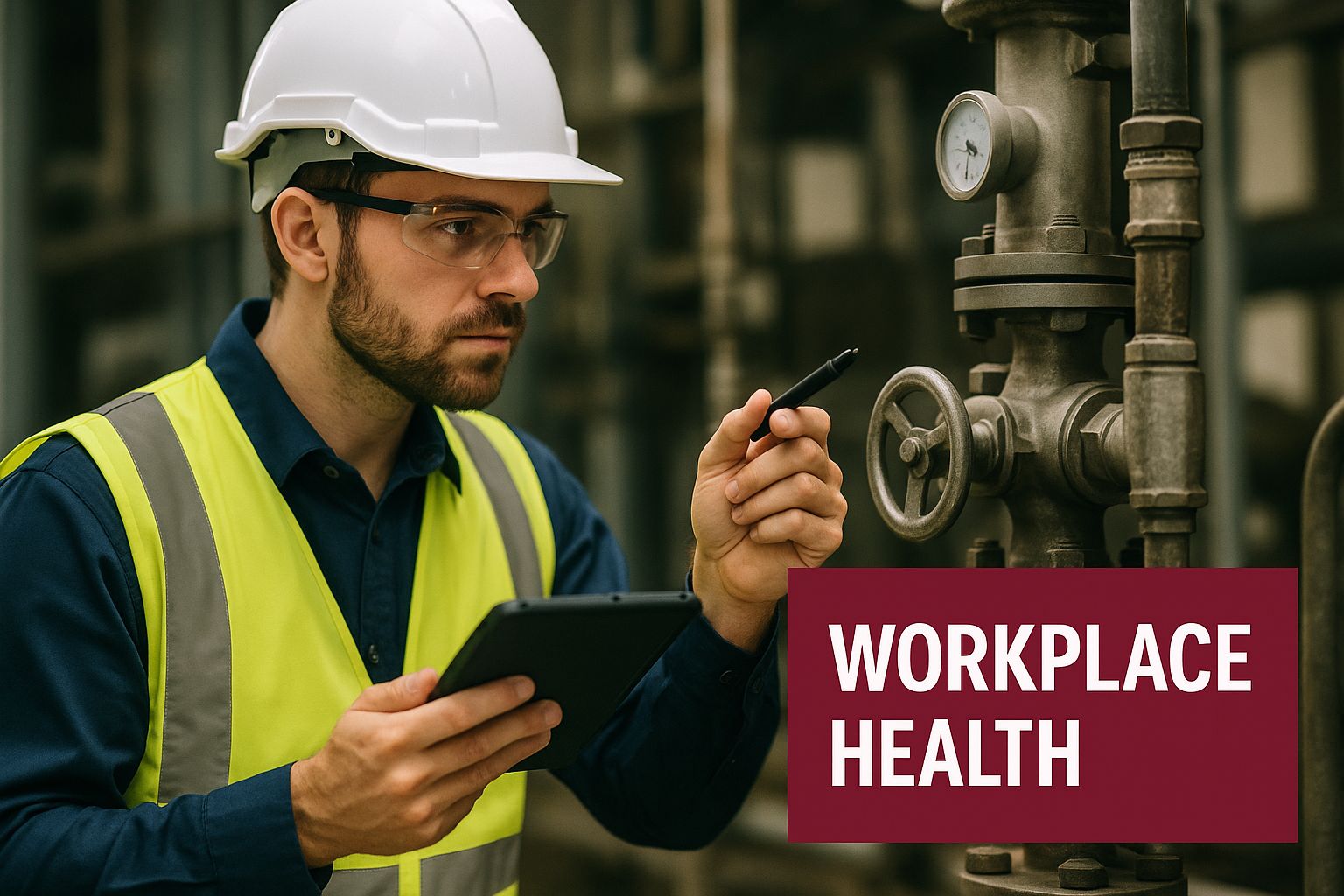
As the image shows, these trained specialists are essential for creating a genuinely safe and productive workplace. To get a better feel for what these professionals do day-to-day, it's worth understanding what is an occupational hygienist and the unique skills they bring to the table.
More Than Just a Legal Box to Tick
Of course, complying with Australian Workplace Health and Safety (WHS) laws is a huge part of it. But the real value of occupational hygiene goes so much deeper than just meeting legal obligations. A robust hygiene program is the hallmark of a smart, responsible business.
By proactively managing health risks, companies not only protect their most valuable asset—their people—but also improve productivity, reduce absenteeism, and lower the likelihood of costly compensation claims. It's an investment in both human wellbeing and business sustainability.
Ultimately, when occupational hygiene becomes part of a company's DNA, it builds a culture where safety is everyone's responsibility. It sends a clear message that the long-term health of the workforce will never be compromised for short-term gains, creating a better, more resilient environment for all.
The Four Pillars of Occupational Hygiene Practice
To get a handle on workplace health risks, occupational hygiene relies on a structured, scientific process. This isn't just a random series of checks; it's a proven four-step framework known as AREC: Anticipation, Recognition, Evaluation, and Control.
Think of it as a continuous cycle. It's a loop that allows hygienists to proactively protect worker health, not just when something new is introduced, but throughout the entire life of a business operation.

This methodical approach ensures nothing gets missed. Each pillar builds on the last, creating a rock-solid foundation for a safe and healthy workplace.
Anticipation: The Strategic Foresight
The first pillar, Anticipation, is all about looking ahead. It's the "what if" stage.
Before a business brings in a new chemical, installs a different piece of machinery, or fires up a new production line, this step involves predicting the potential health hazards that might pop up. It’s the planning phase, where a hygienist acts more like a strategist, thinking several moves ahead.
For instance, if a Western Australian mine plans to open a new extraction site, an occupational hygienist will anticipate the risk of workers being exposed to respirable crystalline silica dust. They’ll dig into geological data, review the proposed extraction methods, and look over equipment specs to forecast where and when the danger might be highest. This means safety can be designed into the process from day one, not bolted on as an afterthought.
Recognition: Identifying Existing Hazards
While anticipation looks to the future, Recognition deals with the here and now. This is the detective work phase, all about identifying hazards that already exist in a workplace. It demands hands-on investigation and a sharp eye.
This pillar is put into action through a few key activities:
- Workplace Walk-Throughs: A systematic tour of a worksite to visually spot potential sources of harm—things like poorly ventilated chemical storage areas or deafeningly loud equipment.
- Employee Interviews: Simply talking to the people on the floor. They know their jobs inside and out and often have crucial insights into strange smells, irritating dusts, or physically draining tasks that a visitor would never notice.
- Reviewing Documentation: Poring over Safety Data Sheets (SDS) for chemicals, equipment manuals, and old incident reports to uncover documented risks.
In a Victorian food and beverage factory, recognition could mean discovering that a new cleaning agent is causing skin irritation among staff, or that the bottling line is so loud workers have to shout to be heard just a metre away. It's all about finding the problems that are already there.
Evaluation: Measuring the Risk
Once a hazard is recognised, the next logical step is to measure it. Evaluation is the scientific heart of occupational hygiene, where hard data replaces guesswork. It involves using specialised equipment to quantify just how much exposure a worker has to a specific hazard.
This is a critical step. After all, you can't effectively control a risk you don't fully understand.
This pillar answers questions like:
- How much chemical vapour is actually in the air?
- Are those noise levels high enough to cause permanent hearing damage?
- Is the amount of dust in a worker's breathing zone above the legal limit?
A hygienist might use personal air monitoring pumps clipped to a welder's collar to measure their fume exposure over an entire shift. Or, they might use a sound level meter to map out the noise "hot spots" across a manufacturing floor. The data they collect is then compared against Australian workplace exposure standards set by Safe Work Australia to determine if the risk is acceptable or needs urgent attention.
Control: Implementing Solutions
The final pillar, Control, is where the rubber meets the road. This is where action is taken to protect workers. Based on the data from the evaluation, the most effective and practical solutions are put in place to either eliminate or reduce the hazard.
This process follows a strict framework called the Hierarchy of Controls, which always prioritises the most effective solutions first. Simply handing out masks or earplugs—Personal Protective Equipment (PPE)—is always the last resort, not the first line of defence.
The ultimate goal of the control phase is to make the workplace inherently safer by removing the hazard at its source, rather than just putting a barrier between the worker and the hazard.
This hierarchy ensures the safety measures are robust and reliable. Understanding how to apply this framework correctly is fundamental, which is where expert guidance becomes so important. To see how these pillars work in the real world, exploring professional occupational hygiene consulting can offer invaluable insights for creating a truly safer workplace.
The AREC Framework of Occupational Hygiene
This table breaks down how these four pillars work together as part of a single, cohesive process. Each stage flows logically into the next, providing a clear path from identifying a potential problem to implementing a lasting solution.
| Pillar | Objective | Example Activities |
|---|---|---|
| Anticipation | To predict potential health hazards before they are introduced. | Reviewing plans for a new factory layout to design proper ventilation systems. |
| Recognition | To identify existing health hazards in the current workplace. | Conducting a site walk-through to spot unlabelled chemicals or ergonomic risks. |
| Evaluation | To measure and quantify worker exposure to identified hazards. | Using air sampling equipment to test for solvent vapours in a printing workshop. |
| Control | To implement solutions to eliminate or reduce the hazard. | Installing sound-dampening enclosures around noisy machinery (Engineering Control). |
By systematically moving through Anticipation, Recognition, Evaluation, and Control, organisations can build a comprehensive and proactive health and safety system that doesn't just react to incidents, but actively prevents them from happening in the first place.
Seeing the Unseen: Recognising Common Workplace Health Hazards
Knowing the theory behind occupational hygiene is one thing, but the real skill lies in applying it on the ground. It’s about learning to see a workplace with fresh eyes, spotting the health hazards that can hide in plain sight everywhere from a noisy construction site to a seemingly quiet office.
These risks aren't random; they fit into clear patterns. By understanding these categories, you can move from a general sense of awareness to actively identifying specific dangers in your own environment. Generally, these hazards fall into four main groups: chemical, physical, biological, and ergonomic.
Chemical Hazards
Chemical hazards are probably the most familiar. They cover any substance—solid, liquid, or gas—that can harm the body if you breathe it in, absorb it through your skin, or accidentally swallow it.
A major one in Australian construction and mining is respirable crystalline silica. Cutting, grinding, or drilling materials like concrete, stone, or sand creates a cloud of microscopic dust. When inhaled, these tiny particles get lodged deep in the lungs and can lead to incurable diseases like silicosis. The risk is incredibly serious, and you can learn more about managing respirable crystalline silica in our detailed guide.
Other common chemical hazards to look out for include:
- Solvents and Vapours: Think of the fumes from paints, glues, and industrial cleaning products found in workshops and manufacturing plants.
- Welding Fumes: This isn't just smoke; it's a complex cocktail of metallic oxides and gases that can cause serious respiratory damage.
- Asbestos Fibres: A legacy risk still found in many older buildings, these fibres are a ticking time bomb during renovations or demolition work.
Physical Hazards
Physical hazards are forms of energy that can cause harm without you ever touching them. They’re common in industrial settings but can pop up almost anywhere. While some chemical risks build up over years, many physical hazards can cause immediate and irreversible damage.
Take a worker in a bottling plant. The constant noise from machinery can easily top 85 decibels—the point where hearing protection becomes mandatory. Day in and day out, that exposure can lead to permanent hearing loss.
It’s a core truth of occupational hygiene: many of the most devastating health problems, like noise-induced hearing loss, are completely preventable if you spot the hazard and put the right controls in place.
Other significant physical hazards include:
- Extreme Temperatures: This could be heat stress for road workers during a scorching Australian summer or cold stress for those working in refrigerated warehouses.
- Vibration: Using power tools for hours on end can lead to Hand-Arm Vibration Syndrome (HAVS), causing lasting damage to nerves and blood vessels.
- Radiation: This ranges from non-ionising radiation from welding arcs to ionising radiation in highly specialised medical or industrial jobs.
Biological Hazards
Biological hazards, or biohazards, are living organisms that threaten our health. This group includes viruses, bacteria, mould, and other microorganisms. While they’re an obvious concern in hospitals and labs, they can appear in any industry.
For instance, an office worker suffering from constant allergies could be breathing in mould spores from a poorly maintained air conditioning unit. What starts as a simple maintenance oversight can quickly become a building-wide health issue, impacting everyone inside.
Ergonomic Hazards
Finally, we have ergonomic hazards. These risks are all about the mismatch between a person and their work environment or tasks. They are the root cause of musculoskeletal disorders (MSDs)—the strains, sprains, and chronic pain that plague so many workers.
Picture an office worker stuck at a poorly set-up desk for eight hours a day. The chair is too low, the monitor is too high, and the keyboard is at an awkward angle. It might not seem like a big deal at first, but over months, that sustained poor posture can lead to debilitating neck pain, back problems, or carpal tunnel syndrome. Ergonomic issues are often called 'cumulative trauma' for a reason; the damage builds up so slowly that it’s easy to ignore until it's too late.
Implementing Effective Risk Assessments and Controls
Spotting a hazard in the workplace is one thing, but what you do next is what truly keeps people safe. This is where a systematic approach to risk assessment and control really shines, helping us move beyond just identifying problems to creating lasting, effective solutions. The absolute cornerstone of this process is a framework professionals swear by: the Hierarchy of Controls.
Think of the hierarchy as an inverted pyramid. The most effective, reliable solutions are at the wide top, and the least effective are at the narrow bottom. The core idea is simple but powerful: always try to fix the problem at its source, rather than just putting a band-aid on it.
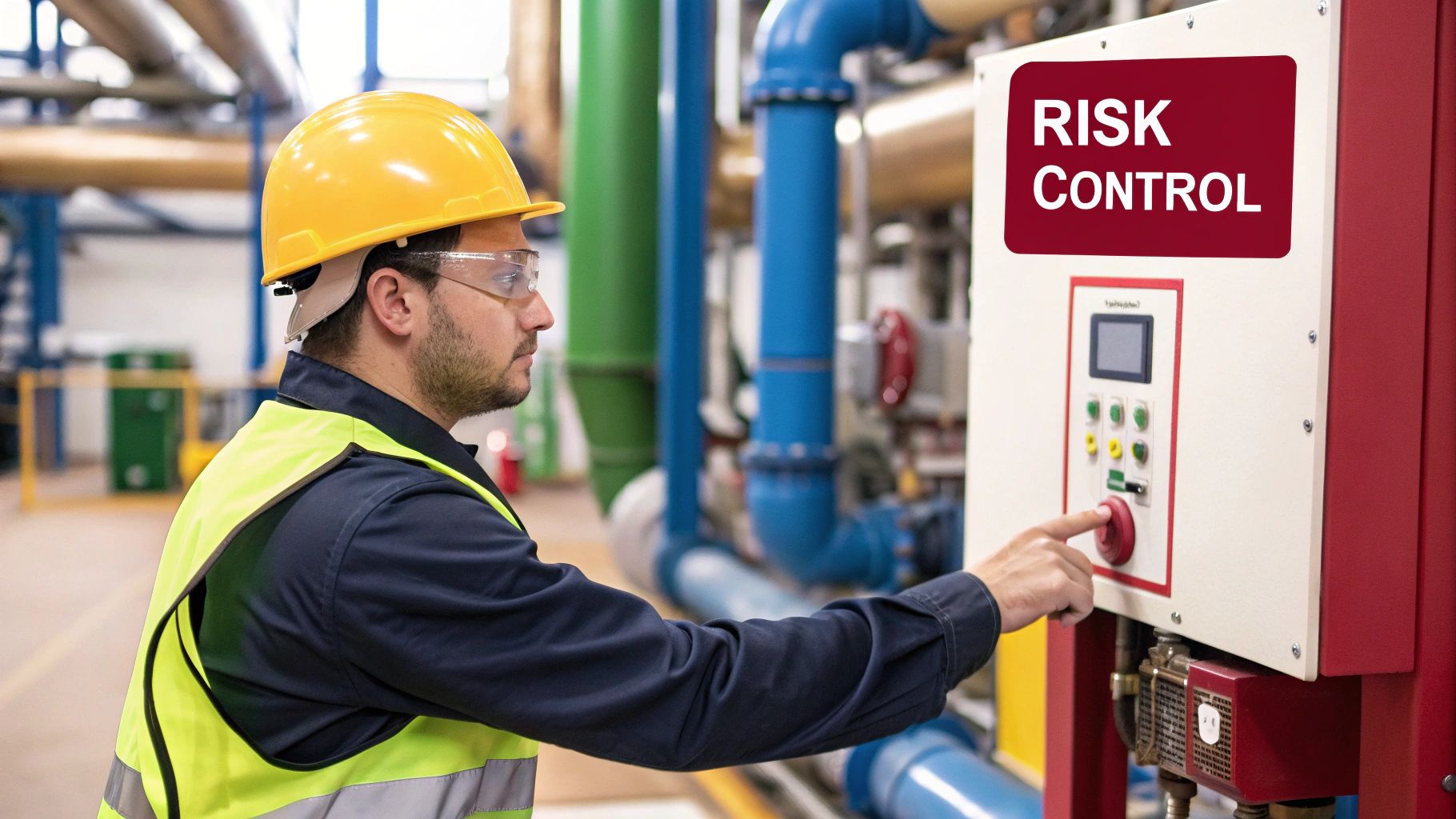
Navigating the Hierarchy of Controls
This framework gives us five levels of action to work through. A proper risk assessment starts at the top and only moves down to the next level if the one above isn't reasonably practical.
-
Elimination: This is the gold standard because it gets rid of the hazard entirely. For instance, a factory might stop using a toxic cleaning solvent altogether, completely removing the risk of exposure for its workers.
-
Substitution: If you can't eliminate the hazard, can you replace it with something safer? A construction site could swap out a noisy, fume-belching diesel generator for a quieter, battery-powered one.
-
Engineering Controls: This is all about making physical changes to the workplace or equipment to shield people from harm. A classic example is installing a ventilation system right at the source of welding fumes to capture them before they enter the air.
-
Administrative Controls: Here, we change how people work. This could mean developing safe work procedures, rotating jobs to limit how long someone is exposed to a hazard, or putting up clear warning signs.
-
Personal Protective Equipment (PPE): This is the very last line of defence. We're talking about things like respirators, gloves, and safety glasses. While often necessary, PPE’s effectiveness depends entirely on workers choosing the right gear, wearing it correctly, and using it every single time. This human factor makes it the least reliable control.
A common pitfall is jumping straight to PPE. True occupational hygiene prioritises higher-level controls first because they offer more robust and collective protection for everyone.
Why Higher-Level Controls Are Superior
Imagine dealing with a chemical spill. Handing out gloves and masks (PPE) helps protect the individuals cleaning it up, but it does nothing to stop the spill from spreading or happening again. An engineering control, like a properly bunded storage area, contains the spill right at the source, protecting everyone automatically. It's a proactive solution, not just a reactive one.
This is especially vital when tackling invisible threats like biological hazards. For these, understanding infection control risk assessment is key to designing safer procedures from the ground up, rather than just reacting to an outbreak.
The Australian Context and Ongoing Duties
In Australia, this isn't just best practice—it's a legal and ethical obligation. The stakes are incredibly high. According to Safe Work Australia, around 250 people die from workplace injuries each year, and a staggering 2,000 more die from occupational diseases. These numbers are a stark reminder of why this work matters so much.
Organisations like the Australian Institute of Occupational Hygienists (AIOH) are at the forefront, championing safer practices and tackling major issues like dust-related diseases. Their work in areas like national respirator fit testing programs is crucial in the fight against silicosis. You can find out more about their impact at AIOH.org.au.
But putting controls in place is never a "set and forget" task. It's a continuous cycle. A ventilation system can break down, and safe procedures can be forgotten over time. That's why ongoing air monitoring, health checks, and regular reviews are essential to ensure the protections you've put in place stay effective, day in and day out.
Hygiene and Wellbeing: Two Sides of the Same Coin
The way we think about work is changing. It's no longer just about ticking the boxes to prevent physical injuries. A truly healthy workplace culture understands that traditional occupational hygiene and broader employee wellbeing are deeply connected—you can't have one without the other.
This shift is a huge step forward for workplace safety. It's a recognition that a physically safe environment is the very foundation of psychological safety. After all, how can an employee feel mentally focused and secure if they’re worried about the air they’re breathing or the physical strain of their tasks?
Beyond Physical Hazards: The New Frontier of Psychosocial Risks
Today, occupational hygienists are applying their skills to a different kind of hazard: psychosocial risks. These aren't things you can always see or touch. They're the elements of work design, organisation, and management that can cause real psychological harm—think relentless workloads, impossible deadlines, workplace bullying, or a lack of support from leadership.
Just like any chemical or physical hazard, these factors can be anticipated, recognised, evaluated, and controlled. A hygienist might observe communication styles, analyse how work is distributed, or use anonymous surveys to get a real measure of stress levels. The goal remains the same: find the root cause of the harm and put practical controls in place to fix it.
This broader focus is vital. The impact of poor mental health is just as damaging as any physical injury. Burnout, stress, and anxiety wreck productivity, drive up staff turnover, and can create a toxic atmosphere. Tackling these issues isn't just the right thing to do; it’s a non-negotiable for any successful business.
Building a Genuinely Holistic Health Strategy
Creating a workplace where people can truly thrive means weaving physical safety and mental wellbeing together. This isn't about running separate programs from different departments; it’s about combining Occupational Health and Safety (OHS) with proactive Workplace Health Promotion (WHP) initiatives.
A recent Australian study gave us a clear picture of what employees themselves are asking for. The research showed workers prioritised more frequent breaks (49%), better training (33%), and direct mental health support (19%). These aren't just nice-to-haves; they show that people need both physical recovery time and dedicated mental health resources. You can dive deeper into the findings on integrated workplace health from the study.
An integrated wellbeing program sees an employee’s health as a complete picture. It’s about making sure the air is free from dust and that their workload is fair. It’s ensuring machinery is safe to operate and that they feel valued by their team.
When you bring it all together, the results are powerful. Here’s what this looks like on the ground:
- Ergonomics and Mental Health: A well-designed workstation doesn't just prevent back pain. It also reduces the fatigue and stress that fuel burnout.
- Noise Control and Breaks: Using engineering to quiet a noisy workshop protects hearing, but it also creates a calmer, more focused environment. Add in scheduled quiet breaks, and you boost mental recovery too.
- Chemical Safety and Training: Clear, practical training on chemical hazards does more than prevent physical harm. It empowers people with knowledge, reducing the anxiety that comes from working with the unknown.
At the end of the day, occupational hygiene is about far more than managing physical risks. It’s a cornerstone of building a positive, resilient, and productive workplace where every single employee can be at their best—physically and mentally.
How We Measure Occupational Health in Australia
You can't manage what you don't measure. In occupational hygiene, this isn't just a business cliché; it’s a fundamental truth. Getting a grip on workplace health across Australia isn't about guesswork—it's a science, and it runs on data. We need a systematic way to gather and analyse information to see the big picture. This data is the evidence that helps us spot new dangers, check if our safety controls are actually working, and steer national policy in the right direction.
Two of the heavy hitters in this space are Safe Work Australia and the Australian Bureau of Statistics (ABS). They’re tasked with tracking work-related injuries, illnesses, and deaths. Think of their work as creating a national health snapshot, showing us exactly where to focus our energy. This information is the foundation for any smart safety strategy, making sure our efforts are aimed at the biggest risks people face on the job.
The Role of National Data Collection
So, how do we build this national picture? It’s a mix of comprehensive surveys and official records. The Australian Bureau of Statistics, for instance, runs large-scale household surveys to get information straight from the source—the workers themselves. This approach is great because it catches a wide range of issues, even the ones that never become a formal workers' compensation claim.
In Australia, we meticulously document workplace injuries and diseases. A key tool for this is the ABS's Multipurpose Household Survey (MPHS), which gathers data on work-related injuries from all employed people. While it lumps illnesses and injuries together, it gives us a vital overview of health problems. Crucially, it captures both claimed and unclaimed incidents, painting a far more complete picture than claim data alone ever could. You can dive deeper into how these national health statistics are gathered on the ABS website.
Turning Data Into Action
This data is so much more than just numbers in a spreadsheet. It’s a powerful tool for preventing harm. By looking at trends over time, occupational hygiene experts and policymakers can make some really smart moves.
- Spot emerging hazards: A sudden spike in a certain illness within an industry can be the first red flag for a new or previously misunderstood risk.
- Target specific industries: The data might scream that manufacturing workers are facing a higher risk of noise-induced hearing loss, triggering targeted awareness campaigns and compliance blitzes.
- Measure the impact of safety initiatives: Let's say we introduce new rules for handling a specific chemical. The data can tell us if related health problems actually drop in the years that follow.
By meticulously measuring and tracking workplace health, Australia shifts from simply reacting to problems to proactively preventing them. We can use solid evidence to anticipate where the next big challenge in occupational hygiene will come from.
At the end of the day, this data-driven approach keeps the field of occupational hygiene moving forward. It allows professionals to base their advice on cold, hard facts, ensuring the strategies rolled out in Aussie workplaces are effective, relevant, and truly capable of protecting workers' long-term health. It’s this constant feedback loop—data, analysis, and action—that keeps people safe on the job.
Got Questions? We've Got Answers
Stepping into the world of occupational hygiene can feel a bit daunting at first. It's a specialised field, and it’s only natural to have a few questions. To help you out, we’ve put together some straightforward answers to the queries we hear most often from businesses across Australia.
What Does an Occupational Hygienist Actually Do All Day?
Think of them as a workplace health detective. A typical day might start with a site visit, walking through a factory floor or a construction site, really observing how work gets done. They’ll talk directly with employees, asking about their day-to-day tasks and any concerns they might have.
Then comes the science. They use specialised gear to measure things you can't always see or hear—like the level of dust in the air, the concentration of chemical vapours, or the exact decibels of a noisy machine. It's all about gathering hard data, which they then take back to analyse, turning it into a clear, detailed report with practical recommendations to make the workplace safer. It's a unique blend of fieldwork, lab analysis, and expert advice.
When Is It Time to Call in an Occupational Hygienist?
The best time to call is before something goes wrong. You don’t need to wait for an incident or a complaint to bring in an expert.
It's a smart move to get in touch when:
- You're about to introduce a new process, a different chemical, or a powerful piece of equipment.
- Your team starts mentioning health issues—things like persistent headaches, skin rashes, or breathing trouble that seems linked to their work.
- You operate in a high-risk industry like manufacturing, mining, or construction and want to be absolutely sure your safety controls are up to scratch.
- You need to comply with specific Work Health and Safety (WHS) laws that require monitoring for hazards like noise, asbestos, or silica dust.
We're a Small Business. Where Do We Even Start?
Getting started doesn't have to be a huge, expensive exercise. The most powerful first step is simply to walk through your own workplace with a fresh pair of eyes, specifically looking for health hazards. Are there areas with a lot of dust? Can you smell strong chemicals? Are there machines so loud you have to shout over them?
A fantastic, concrete starting point is to gather up the Safety Data Sheets (SDS) for every chemical you have on site. This simple document is a goldmine of information, telling you exactly what the hazards are and what precautions you need to take. It gives you an immediate, clear roadmap for safer handling and storage.


