
Respirable crystalline silica is a hazardous dust created when cutting, grinding, or drilling common construction materials like concrete, brick, stone, and sand. The danger lies in the dust particles, which are so incredibly small they can be inhaled deep into the lungs. Once there, they can cause irreversible damage and lead to serious, life-altering diseases such as silicosis. A particularly frightening aspect of this hazard is its invisibility; workers often have no idea they are breathing it in, making proactive prevention absolutely essential for workplace safety. The cumulative nature of the damage means that by the time symptoms appear, significant harm may have already occurred, highlighting the critical need for robust control measures.
Decoding This Invisible Workplace Hazard
Picture a solid concrete slab or a stone benchtop. Left undisturbed, it is perfectly safe. The hazard is unleashed the moment a power tool makes contact. Activities like cutting, grinding, or drilling shatter the crystalline silica into microscopic particles, creating a fine, almost invisible dust cloud that lingers in the air, waiting to be inhaled.
While you might see the larger, heavier dust particles settle fairly quickly, the most dangerous ones are completely invisible to the naked eye. These are the respirable particles. They are so minuscule that they easily bypass your body's natural filters—like the hairs in your nose—and travel deep into the most delicate parts of your lungs. A helpful way to conceptualize them is as tiny, jagged shards of glass floating in the very air you breathe, ready to cause damage with every inhalation.
From Common Mineral to Serious Threat
What makes respirable crystalline silica (RCS) so dangerous is its size. To be inhaled deep into the lungs, particles need to be smaller than 10 micrometres, and RCS is often much smaller than that. This incredibly small size allows it to reach the alveolar region of your lungs, the critical area where the exchange of oxygen and carbon dioxide takes place.
Once lodged, these sharp particles embed themselves into the delicate lung tissue. Your body’s immune system then launches an attack, attempting to engulf and eliminate these foreign invaders. The problem is, it cannot break down silica. This constant, futile attempt to clear the particles triggers a chronic inflammatory response that causes scarring, a condition medically known as fibrosis.
Over years of exposure, this scarring progressively stiffens the lungs, diminishing their elasticity and making them less and less able to perform their vital function. It is this slow, progressive damage that leads to incurable diseases and a severely diminished quality of life.
The core danger of respirable crystalline silica isn't the material itself, but the size of the particles generated during common work activities. It is the microscopic, airborne nature of this dust that transforms a common mineral into a severe occupational hazard.
Why Proactive Management Is Essential
Understanding this process is the first, most crucial step toward creating a safer workplace environment. The damage from RCS accumulates over time and often doesn't manifest as symptoms for many years, which is why prevention is the only effective way to combat it. This requires a solid, systematic plan for identifying, assessing, and controlling exposure risks before they can cause harm.
This is where the principles of workplace health and safety, and specifically occupational hygiene, come into play. If this field is new to you, mastering the fundamentals is key to effective risk management. You can learn more about the science behind spotting and managing workplace hazards in our comprehensive guide on what is occupational hygiene. Actively managing RCS isn't just about complying with Australian regulations; it is a fundamental moral and ethical duty to protect your workers from a preventable and devastating illness.
What Silica Dust Actually Does to Your Health
Breathing in dust on a worksite might feel like an unavoidable part of the job, but when that dust contains respirable crystalline silica (RCS), the long-term consequences are anything but normal. This isn't merely about a temporary cough or irritation; it is a silent, invisible threat that can lead to severe, life-altering diseases years, or even decades, after the initial exposure. Because the damage occurs so slowly and insidiously, proactive and consistent prevention is the only effective strategy to protect yourself and your entire team.
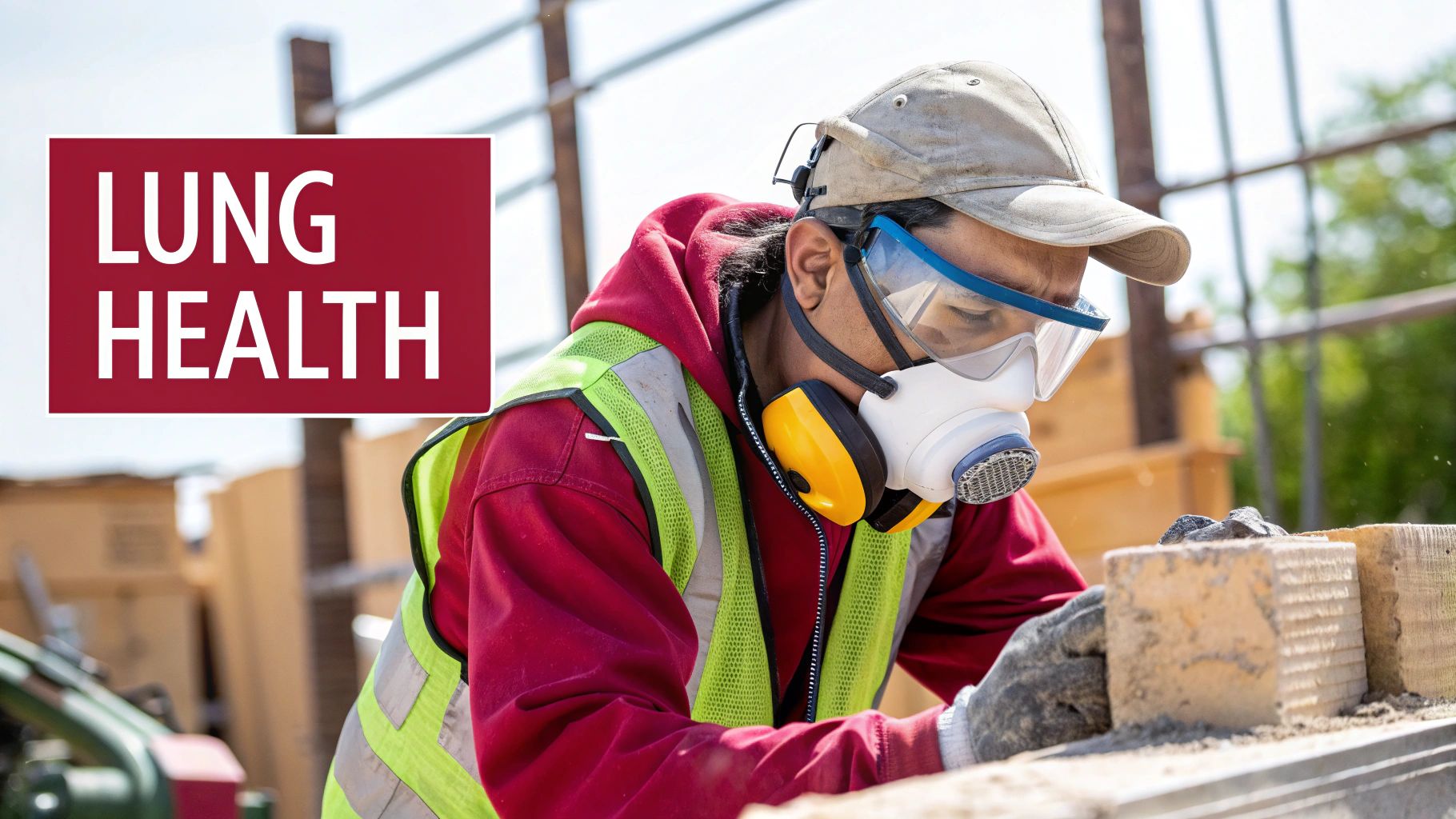
The most notorious disease caused by RCS exposure is silicosis. It is an incurable, progressive lung disease that fundamentally changes your ability to breathe, often leading to severe disability and premature death.
Here’s a breakdown of what happens: when you inhale these microscopic, sharp silica particles, they travel deep into your lungs and become lodged in the tissue. Your body’s immune system initiates an inflammatory response to attack and break them down, but it is unable to do so. This constant, failed attempt to clear the particles creates persistent inflammation, which in turn leads to the formation of scar tissue—a condition known as fibrosis—around each tiny particle.
Imagine your healthy, pliable lungs as a pair of flexible balloons. Silicosis is like those balloons slowly hardening and turning into stiff leather. Over time, this extensive scarring makes your lungs rigid and permanently reduces their capacity to expand and take in sufficient oxygen. Breathing becomes progressively harder, and unfortunately, the damage is irreversible and can continue to worsen even long after you are no longer exposed to silica dust.
The Different Faces of Silicosis
Silicosis is not a single, monolithic disease. It manifests in different forms, largely depending on the concentration of silica dust you have been exposed to and the duration of that exposure. Understanding these variations underscores just how serious any level of unprotected exposure can be.
-
Chronic Silicosis: This is the most common form of the disease. It typically takes 10 to 30 years of exposure to low or moderate levels of RCS before symptoms become apparent. Because it develops so slowly, individuals often do not realize anything is wrong until the lung damage is already severe and widespread.
-
Accelerated Silicosis: As its name implies, this version develops much more rapidly, usually within 5 to 10 years of being exposed to higher concentrations of silica dust. The lung scarring occurs at a faster rate, leading to a quicker and more pronounced decline in respiratory health.
-
Acute Silicosis: This is the rarest but most aggressive and rapidly fatal form of the disease. It can strike just weeks or months after short-term exposure to extremely high, overwhelming levels of silica. In this form, the lungs fill with fluid, causing severe shortness of breath and dangerously low blood oxygen levels. It can be fatal in a very short amount of time.
This spectrum of disease makes one thing abundantly clear: there is no safe level of unprotected exposure to respirable crystalline silica. A single, high-intensity exposure event can be just as dangerous as years of what might seem like minor, daily dust inhalation.
More Than Just a Lung Disease
While silicosis rightfully receives most of the attention, the health risks associated with RCS do not stop there. The damage initiated by these particles can set off a chain reaction, leading to other serious and potentially life-threatening conditions.
For starters, the International Agency for Research on Cancer (IARC) has definitively classified respirable crystalline silica as a Group 1 carcinogen. This is not a speculative link; it is a scientifically established fact. It means there is sufficient evidence to conclude that it causes cancer in humans. The chronic inflammation and cellular damage in the lungs significantly elevate the risk of developing lung cancer.
And the danger does not remain confined to the lungs.
- Kidney Disease: Microscopic silica particles can enter the bloodstream and cause damage to the kidneys, potentially leading to chronic kidney disease or even complete renal failure.
- Chronic Obstructive Pulmonary Disease (COPD): Long-term silica exposure is a known cause or exacerbating factor for conditions like chronic bronchitis and emphysema, making breathing a constant and exhausting struggle.
- Autoimmune Diseases: There is a growing body of scientific evidence linking silica exposure to the development of autoimmune disorders such as rheumatoid arthritis, lupus, and scleroderma, where the body’s own immune system mistakenly attacks its healthy tissues.
The real kicker with all of these diseases is the long latency period. A worker can feel perfectly fine for years, even decades, while irreversible and silent damage is progressively accumulating inside their body. This is precisely why waiting for symptoms to appear is a fundamentally flawed strategy. Prevention is, and always will be, the only effective defence.
The scale of this problem in Australia is immense. Current modelling estimates that around 584,050 Australian workers are exposed to respirable crystalline silica in their workplaces right now. Even more alarmingly, projections indicate that out of this group, approximately 10,390 Australians are expected to develop lung cancer as a direct result of their occupational exposure. You can explore additional details about these staggering figures and their profound implications for public health.
Pinpointing High-Risk Industries and Job Roles
Knowing what respirable crystalline silica is and the severe damage it can inflict is the foundational first step. The next, and arguably more critical step, is knowing where to find it. This is not a hazard that is spread evenly across all workplaces; it is heavily concentrated in specific industries and day-to-day tasks that involve disturbing silica-containing materials, creating clouds of dangerous dust and putting workers squarely in harm's way.
Learning to recognize these high-risk scenarios is the first practical action that any business owner, manager, or worker can take to effectively protect themselves and their team from this preventable occupational disease.
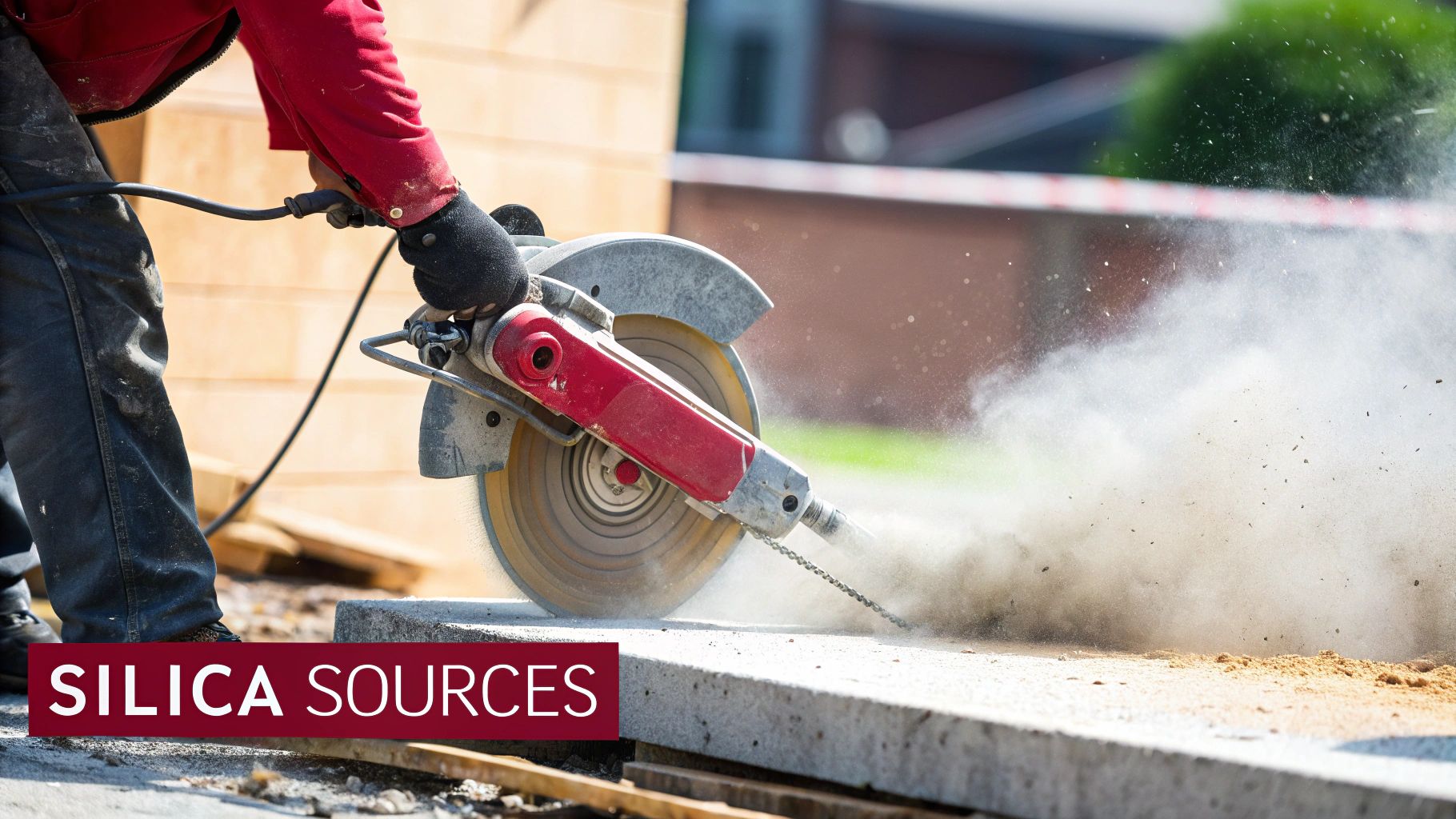
The common thread that ties all these high-risk jobs together is the application of high-energy tools to silica-containing materials. It’s the cutting, grinding, drilling, blasting, and crushing that transforms a solid, harmless block of stone or concrete into a cloud of microscopic, lung-scarring daggers that can hang in the air for hours.
To provide a clearer picture, let's examine a table that outlines where the most significant risks lie within Australia.
Industries and Activities with High RCS Exposure Risk
This table breaks down the key industries and the specific tasks within them that are known to generate dangerous levels of respirable crystalline silica, requiring stringent control measures.
| Industry | High-Risk Activities | Common Materials |
|---|---|---|
| Construction & Demolition | Cutting, grinding, drilling, jackhammering, abrasive blasting, tunnelling. | Concrete, bricks, mortar, tiles, rock, sand. |
| Stonemasonry | Cutting, polishing, grinding, and finishing slabs, particularly engineered stone. | Engineered stone, granite, marble, sandstone. |
| Mining & Quarrying | Drilling, crushing, blasting, cutting rock, hauling and processing ore. | Rock, ore bodies, sand, gravel. |
| Foundry Work | Creating and breaking down sand-based moulds for metal casting. | Silica sand, casting sand. |
| Manufacturing | Cutting and grinding refractory bricks, manufacturing glass and ceramics. | Bricks, cement, glass, clay. |
Understanding these specific applications helps to shift the focus from a vague, abstract threat to a tangible, manageable problem that can be addressed directly on the ground with targeted interventions.
Construction and Demolition
The construction site is, without a doubt, one of the most common and widespread battlegrounds against silica exposure in Australia. Day in and day out, workers are cutting, drilling, and demolishing materials packed with crystalline silica, often without fully grasping the significant level of risk involved in these routine tasks.
Think about a standard day on a construction site. It could involve using a power saw to cut concrete pipes, jackhammering an old slab for removal, or grinding a floor to achieve a perfectly level surface. Each one of these common jobs releases a plume of fine dust into the air, and a significant portion of that dust is respirable crystalline silica.
Stonemasonry and Engineered Stone Fabrication
In recent years, the stonemasonry industry has tragically become the poster child for the devastating dangers of silica. This is particularly true for workshops that fabricate engineered stone benchtops, a popular composite material that can contain up to 95% crystalline silica—a concentration far exceeding that of most natural stones.
When a stonemason cuts, grinds, or polishes an engineered stone slab, the concentration of RCS in the air can skyrocket to extremely hazardous levels. The fine, powder-like dust generated is exceptionally dangerous, making the simple act of shaping a kitchen benchtop one of the highest-risk tasks imaginable, especially in workshops that lack state-of-the-art ventilation and dust suppression systems.
The heartbreaking spike in silicosis cases among young engineered stone workers has cast a harsh and necessary spotlight on the extreme danger of working with these high-silica products. Because the silica content is so incredibly high, even short bursts of intense, unprotected exposure can be enough to trigger accelerated or acute forms of the disease.
Mining and Quarrying
The mining and quarrying sectors have long been on the front lines of the fight against silicosis. Workers who are drilling into rock faces, crushing stone to various grades, and moving vast quantities of raw materials are constantly at risk of breathing in dust laden with silica.
In fact, a 2011 estimate suggested that around 587,000 Australian workers were exposed to RCS, with the highest prevalence found within the mining industry. A revealing study of Western Australian mine workers discovered something critical: even when average exposure was maintained below the legal limit, those exposed to RCS still reported significantly more respiratory symptoms than their unexposed counterparts. You can read more about these mining industry findings and their implications for worker health and safety standards.
Other At-Risk Occupations
While construction, stonemasonry, and mining dominate the headlines, the risk of silica exposure is present in many other fields. Essentially, any occupation that involves cutting, breaking, crushing, or pulverising silica-containing materials could place workers in danger if controls are not in place.
Just a few other roles to consider include:
- Bricklayers: Cutting bricks and blocks to size with power saws.
- Tilers: Sawing ceramic, porcelain, or stone tiles.
- Foundry Workers: Handling the silica sand moulds used in the metal casting process.
- Road Workers: Paving and repair jobs that involve cutting asphalt and concrete.
By pinpointing these specific industries and the daily tasks that create the hazard, we can move beyond generalities and begin to take targeted, effective action. The next crucial step in this process is determining how to accurately measure the levels of silica in these environments to ensure our control measures are truly working.
How to Measure and Monitor Workplace Silica Levels
You cannot effectively manage a risk you cannot see, and this is especially true for an invisible hazard like respirable crystalline silica (RCS). Kicking up a bit of dust might seem like a minor nuisance, but the real danger lies in the microscopic, lung-damaging particles that are too small to be seen. That’s why monitoring the air in your workplace isn't just about fulfilling a regulatory requirement; it is the only reliable way to know if your safety controls are functioning as intended and if your team is genuinely protected.
This process is not about a quick visual inspection of the site. It is a scientific process that requires specialized equipment and expertise, designed to capture and analyse the tiny, lung-damaging particles that pose the greatest threat. Without accurate measurement data, you are essentially flying blind and hoping for the best—a dangerous and unacceptable approach when managing a serious occupational health risk.
Understanding the Australian Workplace Exposure Standard
So, how much is too much? In Australia, the regulations are clear and strict. The national Workplace Exposure Standard (WES) for respirable crystalline silica is set at 0.05 milligrams per cubic metre (mg/m³).
You should think of this number as a daily exposure budget for a worker, averaged out over a standard eight-hour shift. This is known as a time-weighted average (TWA). Exposure levels might spike for a few minutes while a worker is actively cutting concrete, but as long as the average concentration over their full shift remains below that 0.05 mg/m³ threshold, the workplace is considered compliant. Keeping exposure well below this legal limit should be the central goal of every silica dust control plan.
Key Methods for Air Monitoring
Determining if your workplace is meeting the WES is not a do-it-yourself job. It requires specialised equipment and the expertise of a qualified occupational hygienist. The most trusted and accurate method is personal air sampling, as it provides a direct measurement of what a specific worker is actually breathing in as they perform their duties.
Here’s how the process typically works. A worker wears a small, lightweight sampling device for their entire shift:
- The Sampling Pump: A calibrated air pump, usually clipped to a belt, consistently draws air through the system at a very precise and constant flow rate.
- The Sampler Head: A flexible tube runs from the pump to a small device called a cyclone, which is fastened to the worker’s collar—placing it directly within their breathing zone.
- The Filter Cassette: The cyclone’s critical job is to act like a bouncer for dust particles. It spins the air, allowing only the tiniest, most dangerous respirable-sized particles (under 10 micrometres) to pass through to a collection filter inside. It effectively separates out the larger, less harmful dust that your body's natural defences can typically handle.
Once the shift is complete, the filter is carefully packaged and dispatched to an accredited laboratory for analysis. Technicians use sophisticated methods to determine the exact mass of crystalline silica trapped on the filter. The hygienist then takes that number, combines it with the known volume of air that the pump drew in over the shift, and calculates the worker’s average RCS exposure for the day. For a deeper dive into the specifics of this critical process, our detailed guide on air monitoring for silica dust offers more information.
Personal air sampling is universally recognized as the gold standard for assessing exposure. It’s not just a snapshot of the general environment; it measures the air a person is actually inhaling as they move, work, and tackle different tasks throughout their day, providing the most relevant data for risk assessment.
The Challenges of Accurate Measurement
While the process might sound straightforward enough, obtaining truly precise and reliable results is another matter entirely. Measuring something as minuscule as RCS, especially at the very low concentrations required by law, comes with some significant technical hurdles.
Australia’s WES is 0.05 mg/m³, but best practice dictates aiming for levels well below that. The problem is, as airborne concentrations drop to 0.02 mg/m³ or lower, a comprehensive report from Safe Work Australia highlights that measurement uncertainty starts to become a significant factor. Tiny sampling errors, slight variations in laboratory analysis, and reporting inconsistencies can all add up and affect the final result. This can make it challenging for a business to prove, with absolute certainty, that their workplace levels are safely under the legal limit. To understand these complexities in greater detail, you can read the full report on measuring respirable crystalline silica.
This is precisely why the expertise of a professional occupational hygienist is so crucial. They don’t just provide a report with a number on it. They interpret that data within the context of your specific workplace, help you pinpoint which tasks and processes are creating peak exposures, and guide you in making smart, informed decisions to make your workplace safer and more compliant.
How to Implement Effective Silica Dust Control Strategies
Knowing the risks of respirable crystalline silica (RCS) and accurately measuring exposure levels are the essential first steps in any safety program. However, the real work begins when you start actively implementing controls to manage the dust. An effective strategy is not just about handing out masks; it is a systematic, multi-layered approach designed to stop the hazard at its source, long before it can reach a worker's breathing zone.
Let's walk through the playbook for building a safer work environment by using a tried-and-true framework that is the cornerstone of modern workplace safety: the hierarchy of controls.
This hierarchy is a simple yet profoundly powerful concept. It ranks control methods from the most effective and reliable to the least effective, starting with the methods that offer the highest level of protection. The guiding principle is clear: it is always better to eliminate the hazard entirely than to rely on protecting people from it. Think of personal protective equipment (PPE) like respirators as the absolute last line of defence, to be used only when all other options have been exhausted, not as your first move.
Start at the Top: Elimination and Substitution
The most powerful and effective way to deal with any hazard is to remove it from the equation completely. While this is not always practical or feasible, you should always explore these top-tier options first before moving down the hierarchy.
-
Elimination: Can you redesign the job or process to avoid creating silica dust in the first place? This could mean using pre-cast concrete sections that do not need to be cut on-site, or adopting modern building methods that utilize bolts and brackets instead of drilling into masonry.
-
Substitution: If you cannot eliminate the task, can you swap out the hazardous material for a safer one? Actively look for products with low or zero crystalline silica content. For example, you could use certain composite decking materials instead of concrete pavers, or specify silica-free abrasive blasting media. Even a simple switch from an engineered stone with 95% silica content to a natural stone with 5% silica content makes a massive difference to the overall risk level.
The Power of Engineering Controls
When elimination and substitution are not on the table, your next best course of action is to implement engineering controls. These are physical modifications to the workplace, tools, or processes that capture or contain dust right where it is generated. They effectively engineer the danger away from the worker's breathing zone.
These controls are highly reliable because they do not depend on a worker remembering to do something correctly every time. The principles of capturing dust at the source are universal; you can see similar highly effective approaches in other industries that use dust-free refinishing techniques.
For silica, the key engineering controls are:
-
Water Suppression (Wet Methods): This is one of the most common, cost-effective, and efficient controls available. By feeding a controlled stream of water directly to a saw blade, grinder wheel, or drill bit, you turn the dust into a slurry or mist before it has a chance to become airborne. Many modern power tools now have this water-delivery feature built right in.
-
Local Exhaust Ventilation (LEV): If you cannot use water, you must capture the dust at its source. LEV systems act like a super-powered, targeted vacuum, sucking the dust away from the point of generation. You will typically see this as a specially designed shroud attached to a tool, connected by a hose to an industrial M- or H-class vacuum fitted with a high-efficiency particulate air (HEPA) filter.
-
Isolation and Enclosures: Physically separating people from the hazard is another intelligent and effective strategy. This might involve placing dusty machinery in a dedicated, enclosed room with separate ventilation, or ensuring operators of heavy equipment like excavators or loaders have pressurised, air-filtered cabs to work in.
The best engineering controls are those that are integrated directly onto the tools themselves. An on-tool water feed or a well-designed vacuum port is far more effective at controlling exposure than a large fan placed in the corner of the room because it stops respirable crystalline silica the very moment it is created.
The hierarchy of controls provides a structured and logical way to think about managing RCS exposure. The goal is always to use the most effective methods possible before resorting to less reliable options further down the hierarchy.
Hierarchy of Controls for Respirable Crystalline Silica
| Control Level | Description | Practical Examples for Silica Dust |
|---|---|---|
| Elimination | Physically remove the hazard | Use pre-fabricated materials that don't require cutting on-site; design projects to use bolting systems instead of drilling into concrete. |
| Substitution | Replace the hazardous material with a safer alternative | Use silica-free abrasive blasting media; choose building products with lower silica content (e.g., natural stone over engineered stone). |
| Engineering Controls | Isolate people from the hazard using physical changes to the work environment or tools | Use water suppression on saws and grinders; attach on-tool dust extraction (LEV) systems to HEPA vacuums; work inside an enclosed cab with filtered air. |
| Administrative Controls | Change the way people work | Restrict access to high-dust areas; rotate workers through dusty jobs to limit exposure time; use wet-wiping or HEPA vacuums for cleanup (no dry sweeping!). |
| Personal Protective Equipment (PPE) | Protect the worker with personal equipment | Provide properly fit-tested respirators (e.g., P2 masks); wear protective eyewear and clothing. |
By working down from the top of this table, you ensure that you are building multiple layers of protection for your workers, rather than just relying on a single, fallible solution.
Administrative Controls and Safe Work Practices
Next on the list are administrative controls. These are all about changing how people work through established procedures, thorough training, and clear company policies. While they are a crucial component of a comprehensive safety program, they are considered less effective than engineering controls because their success depends heavily on consistent human behaviour.
Common examples of administrative controls include:
- Restricting Access: Cordoning off areas where high-dust work is occurring to keep non-essential personnel safely away from the exposure zone.
- Job Rotation: Limiting the amount of time any single person spends performing a high-exposure task during their shift to reduce their total dose.
- Good Housekeeping: Banning dry sweeping—an activity that simply sends settled dust back into the air to be inhaled. Instead, mandate wet sweeping or cleaning with HEPA-filtered vacuums.
- Training: Ensuring every single worker understands the severe risks of silica, knows how to use the implemented controls correctly, and can identify and report when something is not working as it should.
Personal Protective Equipment: The Last Resort
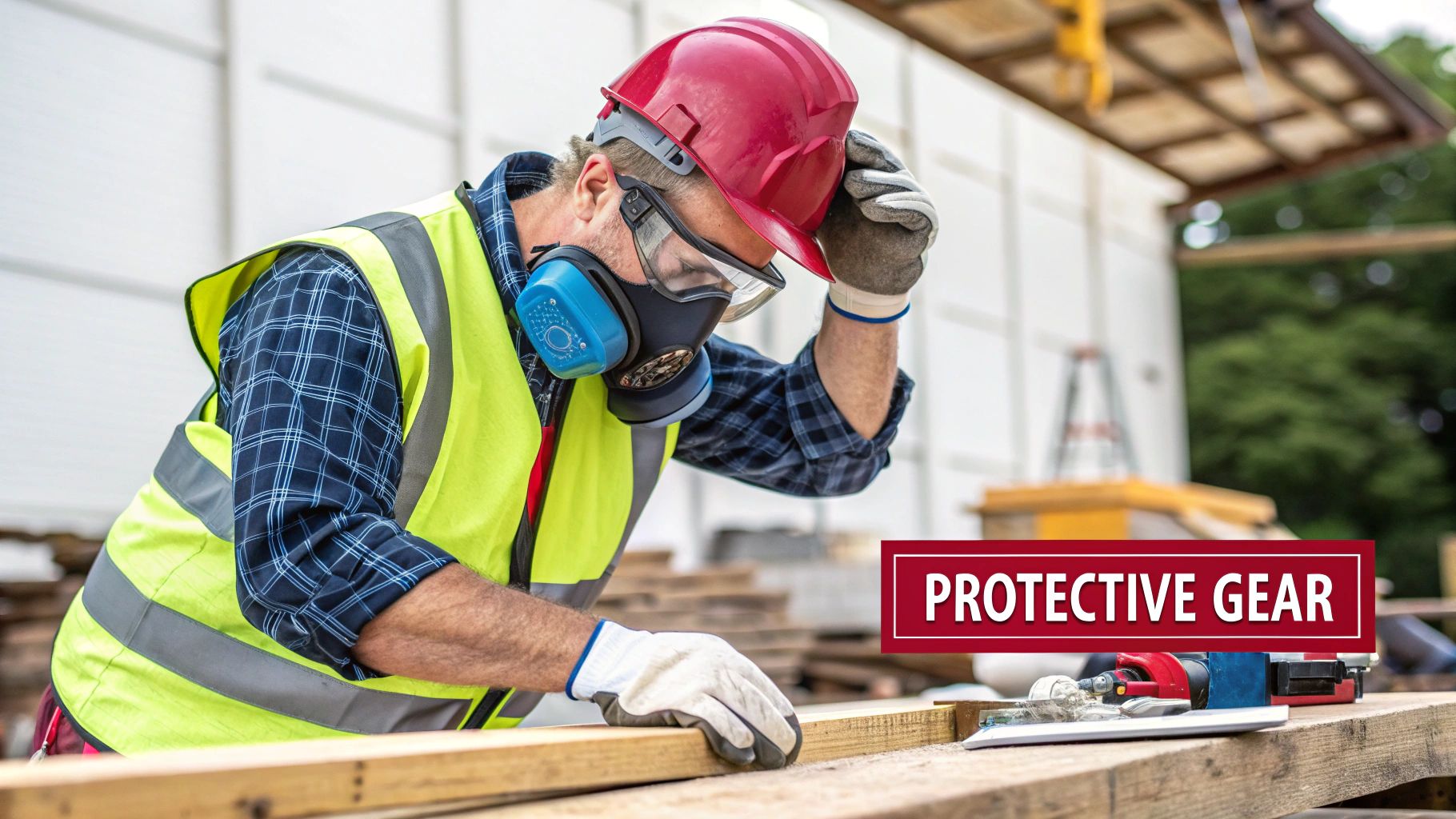
Finally, we arrive at the bottom of the hierarchy: Personal Protective Equipment (PPE). This category includes respirators, which should only be used when higher-level controls cannot reduce exposure to a safe level, or as a temporary, stop-gap measure while you are in the process of implementing better, more permanent controls.
Relying solely on masks as your primary protection strategy is fundamentally flawed and dangerous. The effectiveness of a respirator hinges entirely on a perfect facial fit, consistent and correct use, and proper maintenance. If a respirator is the wrong type for the hazard, has not been properly fit-tested to the individual wearer, or has a broken seal, it provides a false sense of security while offering little to no real protection against microscopic silica particles.
This is precisely why a formal, documented safety plan is so important. To ensure your team is genuinely protected when respirators are required, it is vital to learn about implementing a respiratory protection program that fully complies with stringent Australian standards.
Your Questions About Silica Safety, Answered
Working with materials that create silica dust can be a complex and daunting challenge, and it’s natural to have questions. After all, you are dealing with an invisible hazard that has severe, long-term health consequences. This final section aims to tackle some of the most common queries we hear from both workers and employers, providing clear, practical, and straightforward answers.
Getting a firm handle on these basics is the first step toward building a workplace culture where everyone goes home safe and healthy at the end of every shift.
What Are the First Signs of Silicosis?
One of the most insidious and tricky things about silicosis is how quietly it begins. The early signs are often very subtle and can easily be mistaken for a simple cough, the flu, or just feeling a bit run down from hard work. Since the disease often takes many years to develop, you might not notice that anything is wrong until serious, irreversible lung damage has already occurred.
It is crucial to be vigilant and keep an eye out for these early indicators:
- A persistent, nagging cough that just doesn't seem to clear up.
- Feeling short of breath, particularly when you are exerting yourself during physical activity.
- A sensation of tightness or even pain in your chest.
- Feeling unusually tired all the time (fatigue) or losing weight without trying.
As time progresses, these symptoms can become much more severe, making even simple tasks like climbing a few stairs or walking a short distance feel like a monumental effort. If anyone who works around silica dust starts experiencing these signs, seeking a proper medical check-up with a doctor experienced in occupational lung diseases is absolutely critical.
Is Engineered Stone More Dangerous Than Natural Stone?
Yes, absolutely. Engineered stone poses a much higher and more immediate risk than most natural stones, and it all comes down to a single critical factor: the concentration of crystalline silica.
Think of it this way: a natural stone like granite might contain anywhere from 10% to 45% silica. However, some popular types of engineered stone can be packed with up to 95% crystalline silica.
This incredibly high percentage means that any cutting, grinding, or polishing of the material creates a dust cloud that is far more potent and dangerous. A worker can breathe in a hazardous, and potentially fatal, amount of respirable crystalline silica in a very short period of time. This massively increases the risk of developing silicosis, often in an accelerated and aggressive form that can appear within just a few years of exposure.
The recent and tragic spike in silicosis cases among young Australian stonemasons is a direct and devastating result of the boom in popularity of high-silica engineered stone benchtops. This public health crisis has rightly triggered tougher regulations and a huge push for better, more effective dust control right across the entire industry.
This diagram illustrates the most effective ways to control silica dust exposure, with the most reliable methods listed at the top.
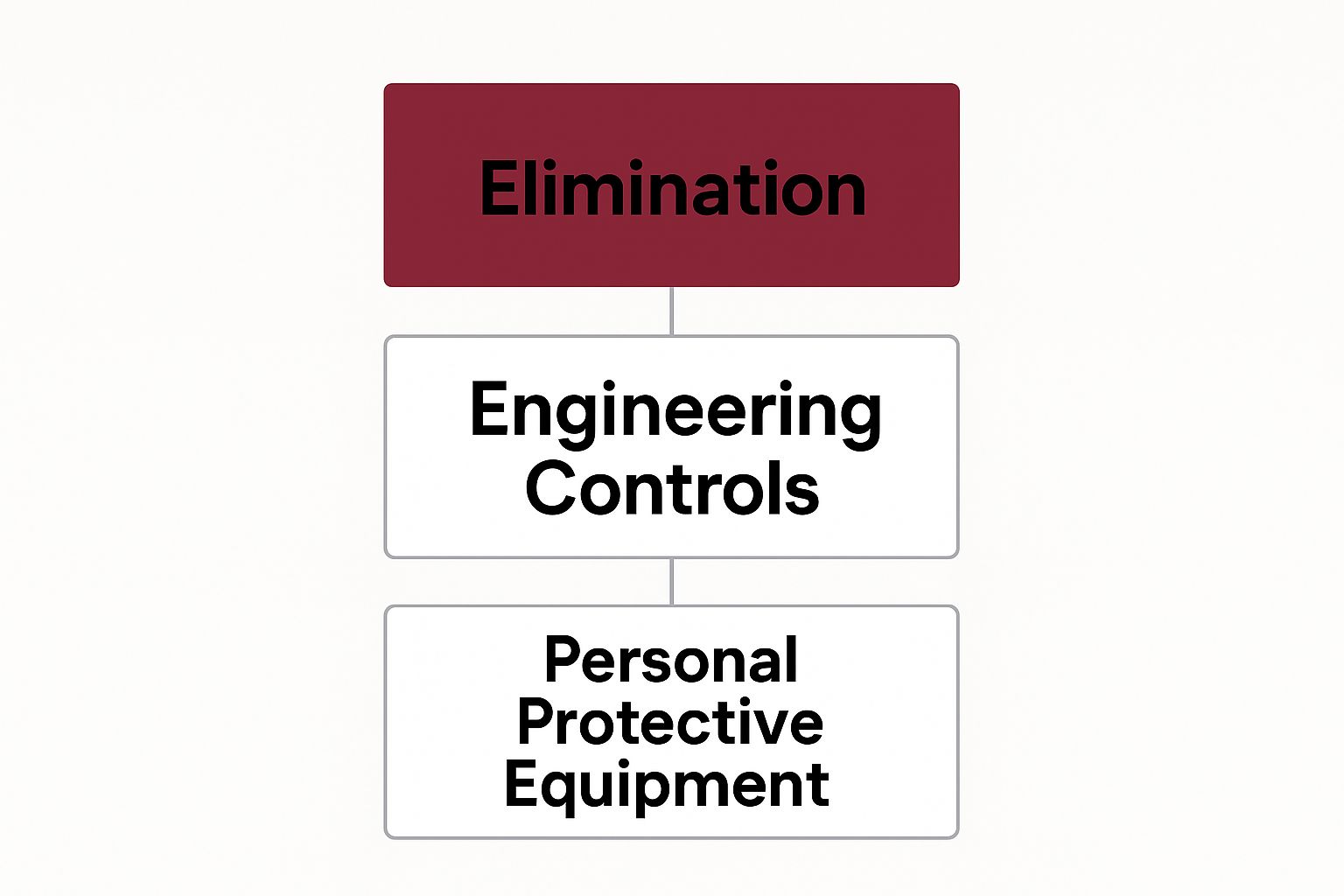
As you can clearly see, the best and most effective approach is always to eliminate the hazard entirely if possible. Relying solely on Personal Protective Equipment (PPE) is the least effective option and should only ever be considered as a last line of defence when all other controls are insufficient.
What Are an Employer's Legal Duties Regarding Silica Dust?
Under Australian Work Health and Safety (WHS) laws, employers have a clear, non-negotiable duty of care to protect their teams from the hazards of silica dust. This is not just a best-practice guideline; it is a strict legal requirement. Getting it wrong can lead to serious legal consequences, including substantial fines, prohibition notices, and even criminal prosecution.
Essentially, an employer's responsibilities can be broken down into a few key actions that form the backbone of any compliant and effective silica safety management plan.
Here’s what the law demands:
- Risk Assessment: You must proactively identify every task in your workplace that could potentially generate silica dust and accurately assess the level of risk to your workers.
- Control Measures: You are required to implement effective control measures to eliminate the dust or, at the very least, minimise exposure to the lowest level reasonably practicable, always following the principles of the hierarchy of controls.
- Air Monitoring: In many situations, it is necessary to conduct air monitoring to verify that dust levels are remaining below the legal workplace exposure standard and that your controls are working effectively.
- Health Surveillance: You must provide regular health check-ups (health surveillance) for workers who are frequently exposed to silica, as this helps to catch any potential health issues at their earliest and most treatable stage.
- Information and Training: Every single worker must be properly trained on the dangers of silica, the specific safe work methods for their tasks, and how to correctly use and maintain all controls and any required PPE.
Meeting these legal obligations is about much more than just ticking boxes for compliance. It is about fostering a genuine culture of safety where every person on site understands the risks, feels empowered to speak up, and is committed to looking after their long-term health and the health of their colleagues.
