
A certified occupational hygienist is essentially a 'workplace health detective'. They are highly skilled scientists whose job is to pinpoint and manage health hazards on a worksite—often the invisible ones—long before they lead to illness or injury.
This proactive approach is all about protecting the long-term wellbeing of your team while ensuring your business stays on the right side of health and safety regulations.
What a Certified Occupational Hygienist Actually Does
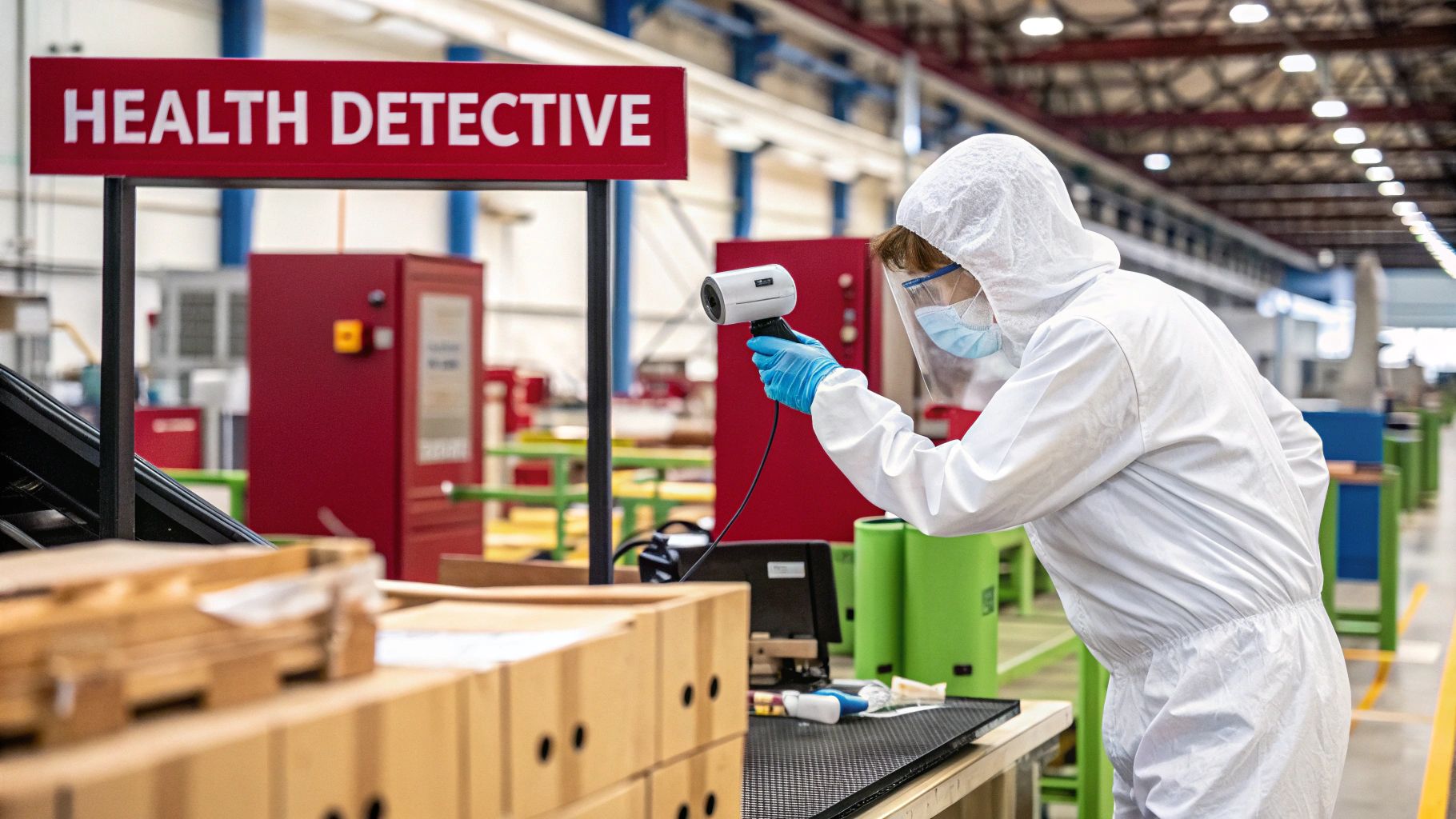
It helps to think of a Certified Occupational Hygienist (COH) as a specialist who guards your team against dangers that a standard safety check might easily miss. A safety officer is typically focused on immediate physical risks—think slips, trips, and falls. A COH goes much deeper.
They apply rigorous scientific principles to investigate and manage risks from chemical agents, physical forces, biological contaminants, and poor ergonomic design. It's this deep dive that prevents the kind of chronic illnesses that can develop from long-term exposure to subtle workplace hazards.
More Than Just a Safety Checklist
A COH isn't there to just tick boxes. Their value lies in a systematic, scientific process designed to tackle complex health threats head-on. This process is built on four key pillars that form the bedrock of their work.
These functions ensure that potential health risks are not only spotted but are properly measured and neutralised. Let's break down what these core responsibilities look like in practice.
- Anticipation: This is about foresight. A COH will identify potential hazards before they even enter a workplace, like reviewing the blueprints for a new factory to engineer out noise problems from the start.
- Identification: Here, they recognise and pinpoint existing health hazards in the current environment. This could be anything from airborne dust in a cabinet maker's workshop to excessive noise from a piece of machinery.
- Evaluation: This is the measurement phase. A COH will scientifically quantify the level of risk. They'll take precise air samples, measure decibel levels, or conduct detailed assessments of ergonomic strain on an assembly line.
- Control: Finally, they design and implement practical, effective strategies to either eliminate the hazard or reduce it to a safe level, truly protecting workers from harm.
The real difference-maker is that a certified occupational hygienist uses validated scientific methods to quantify exposure. It’s the difference between thinking a workshop is a bit loud and proving it exceeds the legal exposure limit of 85 decibels over an eight-hour shift.
This methodical, science-backed approach is what truly distinguishes a COH. They provide employers with the hard data and strategic advice needed to build a genuinely safe and productive workplace.
To get a clearer picture of their day-to-day work, you can learn more about what an occupational hygienist does and how they apply these principles. By understanding their core functions, businesses can see the incredible value a certified expert brings in protecting their most important asset: their people.
The Origins of Occupational Hygiene in Australia
To really get a handle on what a modern certified occupational hygienist brings to the table, it helps to look back at how the profession came to be. This field wasn't born overnight. It grew slowly, starting from very basic factory safety rules and blossoming into the sophisticated, science-based discipline we see in Australia today. This journey is exactly why proper certification became so crucial for protecting workers' health.
The story of occupational hygiene in Australia is really a story of slow-dawning realisation, sparked by the harsh realities of the industrial age. Early on, workplaces were often incredibly dangerous, exposing people to all sorts of hazards with little thought for protection. Naturally, this led to a lot of illness and injury. As people became more aware of the dangers, the call for a more scientific way to manage these risks grew louder.
This move from simply reacting to accidents to proactively protecting people's health was the real turning point. It became obvious that just dealing with incidents after they happened wasn't cutting it. To prevent long-term, chronic health issues, we needed a much deeper understanding of what workers were being exposed to every day.
Pioneering Figures and Formal Standards
The field owes a huge debt to a handful of dedicated pioneers who championed a more scientific, rigorous approach to protecting workers. Their efforts helped shape occupational hygiene from a loose set of practices into a structured profession with clear, enforceable standards. These early leaders knew that good intentions weren't enough—protecting people required hard data, solid evidence, and a repeatable, systematic approach.
One of the giants of the field was Anthony 'Tony' Findlay, whose career stretched from 1954 into the early 1990s. He began as a humble laboratory assistant but his work went on to fundamentally shape national worker health policies. His role as chair of the National Occupational Health and Safety Commission (NOHSC) Exposure Standards Committee from 1985 to 1992 was a game-changer. Findlay was the driving force behind formalising the exposure standards that are still the bedrock of Australian workplace safety. You can read more about the pioneers of Australian occupational hygiene on aioh.org.au.
This push to set official, science-backed limits for hazardous substances marked a new era. It firmly established that workplace safety had to be based on scientific evidence of what a 'safe' level of exposure actually was, not just guesswork.
The Rise of Professional Bodies
As workplaces became more complex, so did the hazards. This created a clear need for a professional body to set the bar for competency and uphold high standards across the industry. This is where organisations dedicated to the profession started to emerge.
The Australian Institute of Occupational Hygienists (AIOH) was formed to be the peak professional body, giving the field a unified voice and creating a clear path for professional development and recognition.
The formation of the AIOH was a massive step forward. It created a solid framework for training, ethical guidelines, and, critically, a credible certification process. Now, when a business hires a certified occupational hygienist, they know they're getting a professional who has met a tough, nationally recognised benchmark for skill and expertise.
This whole journey—from basic factory safety measures to the stringent standards upheld by the AIOH today—really shows why that COH credential matters so much. It’s the culmination of a long, hard-fought commitment to using science to protect the health and wellbeing of every single worker.
Inside the AIOH Certification Process
Becoming a certified occupational hygienist isn't as simple as taking a weekend course. It’s a serious commitment—a journey built on a solid scientific education, years of real-world experience, and a lifelong dedication to staying at the top of the field. The Australian Institute of Occupational Hygienists (AIOH) sets this incredibly high bar for a reason: to make sure anyone with the Certified Occupational Hygienist (COH) title is a true expert.
This tough process is designed to give employers absolute confidence. When you bring a COH onto your team, you're not just hiring a consultant; you're partnering with a professional whose skills have been rigorously tested against Australia’s peak industry benchmark. It’s a guarantee of competence that goes far beyond a basic qualification.
The Foundational Pillars of Certification
The path to COH status starts with a strong academic backbone. Candidates need a relevant university degree, usually in science, engineering, or a related discipline. This ensures they have the scientific grounding to get to the root of complex workplace health hazards, rather than just treating the symptoms.
But theory is only half the battle. After graduating, aspiring hygienists must clock up years of hands-on professional experience. This isn't just about putting in the time; it's about systematically building practical skills under the watchful eye of seasoned mentors. In fact, the AIOH demands a minimum of five years of professional practice before someone can even think about applying for certification. This requirement ensures they’ve seen it all and are ready for anything.
The infographic below maps out this structured pathway from university graduate to certified expert.

As you can see, it's a deliberate climb from foundational knowledge to proven competence, all leading up to a final, challenging exam and a pledge to never stop learning.
The road to becoming a Certified Occupational Hygienist in Australia is methodical and demanding, designed to forge true experts in the field. The table below breaks down the key stages involved in achieving and maintaining this prestigious certification through the AIOH.
AIOH Certified Occupational Hygienist (COH) Certification Pathway
| Stage | Requirement Details | Purpose |
|---|---|---|
| 1. Academic Foundation | Hold a relevant university degree in science, engineering, or a related discipline. | To ensure a strong grasp of the core scientific principles underpinning occupational hygiene. |
| 2. Professional Experience | Accumulate a minimum of 5 years of full-time professional practice in occupational hygiene. | To translate theoretical knowledge into practical, real-world problem-solving skills and professional judgment. |
| 3. Application & Referee Review | Submit a detailed application and professional practice report, supported by referee endorsements from peers or supervisors. | To verify the depth and breadth of the candidate's hands-on experience and professional standing. |
| 4. Rigorous Examination | Pass a challenging two-part examination (written and oral) that tests both theoretical knowledge and practical application in complex scenarios. | To serve as the ultimate validation of competence, ensuring only the most skilled professionals achieve certification. |
| 5. Ongoing Maintenance | Actively participate in continuous professional development (CPD) and undergo recertification audits every 5 years. | To guarantee that a COH remains current with new research, technologies, and legislation throughout their career. |
Each step is a critical filter, ensuring that by the end of the process, a COH represents the highest standard of professional competence and ethical practice in the industry.
The Examination Gauntlet
The real centrepiece of the certification process is the COH examination. Forget multiple-choice quizzes; this is a comprehensive assessment designed to push a candidate's ability to solve complex, real-world problems under pressure. It's notoriously difficult and acts as a crucial gatekeeper, ensuring only the most capable professionals earn the title.
The numbers really tell the story. The AIOH, established in 1980, is Australia's premier professional body in this space, and they don't hand out certifications lightly. In 2022, there were 17 applications for COH status, but with a pass rate of only about 47%, the exam’s reputation is well-earned. This detail, found in the AIOH's annual report on aioh.org.au, highlights the elite level of expertise required.
This tough-but-fair standard is exactly what gives the COH credential its weight. It confirms the person holding it hasn't just memorised a textbook—they have truly mastered their craft and can be trusted to give expert advice when the stakes are high.
A Career-Long Commitment to Excellence
Earning the COH title isn’t the finish line. If anything, it’s the start of a career-long promise to keep getting better. This certification isn't a plaque you hang on the wall and forget about.
To maintain their status, a Certified Occupational Hygienist must actively participate in ongoing professional development and are subject to regular recertification audits. This ensures they remain at the forefront of the latest scientific advancements, legislative changes, and industry best practices.
This ongoing requirement is a massive benefit for employers. It means the COH you hire today is just as sharp and up-to-date as they were when they first passed their exams. The AIOH conducted 72 COH audits in 2022 alone, which resulted in 60 professionals successfully demonstrating their continued commitment to excellence. This process guarantees you’re getting advice you can count on, year after year.
How a COH Solves Real-World Workplace Problems
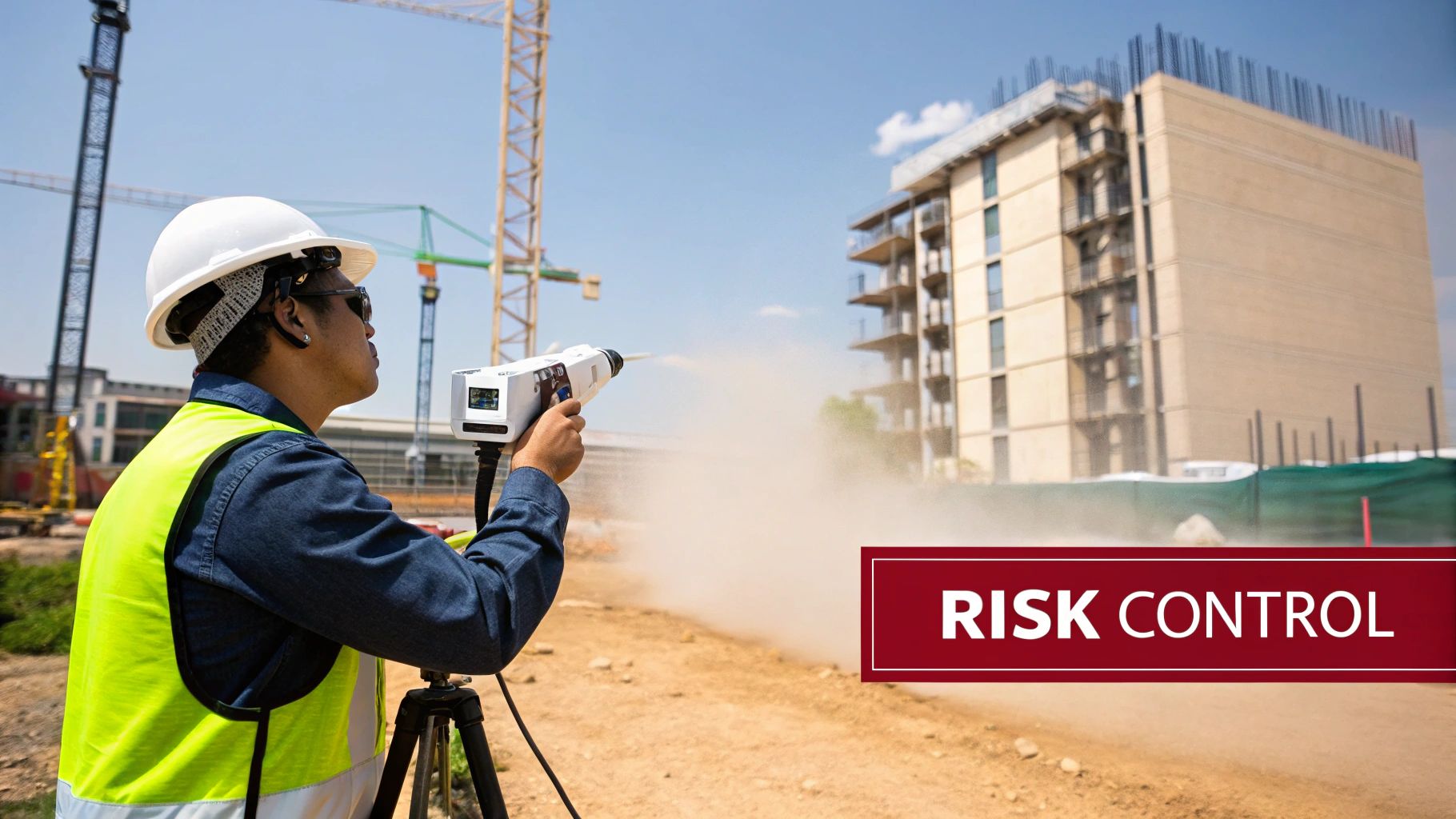
All the theory and tough exams mean nothing until a certified occupational hygienist actually steps onto a worksite. This is where the science hits the ground running, turning principles into practical strategies that prevent real harm. Their expertise isn't just for one industry; it's needed wherever people and potential health hazards cross paths.
Think of them as a specialist doctor, but for the workplace itself. Instead of diagnosing a person, they diagnose the health of an environment, pinpointing underlying conditions that could make the entire workforce sick if ignored. It’s this forward-thinking approach that builds a truly safe culture.
From the deafening roar of a factory floor to the invisible chemical vapours in a lab, a COH brings clarity. They take complex data and turn it into a straightforward action plan, giving businesses the confidence to protect their people and stay on the right side of the law.
Scenario One: The Manufacturing Plant
Picture a busy manufacturing plant. Workers are surrounded by machines kicking up fine metal dust and creating a constant, loud racket. Basic safety measures are there, but worries are growing about long-term lung problems and hearing damage. A general safety officer might check for machine guards, but a COH digs much, much deeper.
The certified occupational hygienist starts by carrying out a detailed risk assessment. They don't rely on guesswork; they measure. Armed with specialised air sampling pumps and sound level meters, they get hard numbers on the exact levels of dust and noise people are exposed to all day long.
With this data in hand, they can design a layered control strategy:
- Engineering Controls: This could mean recommending local exhaust ventilation systems right at the source, capturing dust before it ever has a chance to get into the air.
- Administrative Controls: They might suggest rotating staff through the loudest sections to limit any single person’s exposure time, keeping them safely below the 85-decibel legal limit.
- Personal Protective Equipment (PPE): It’s not enough to just hand out gear. They ensure the respirators and hearing protection are the right type for the job, are properly fitted to each person, and that everyone knows how to use them correctly.
This scientific method delivers a real solution, moving a workplace beyond just ticking boxes to actively preventing serious occupational diseases like industrial deafness and respiratory illness.
Scenario Two: The Healthcare Setting
A hospital is a whole different ball game, with its own set of invisible threats. Staff can be exposed to sterilising chemicals, anaesthetic gases, and all sorts of biological agents. A COH is crucial for managing these complex, often unseen risks.
Take a water leak in a storeroom, for example. Suddenly, there are real concerns about air quality. Certified Occupational Hygienists specialise in identifying these issues, including the often-underestimated hidden dangers of mould. They understand the science behind potential respiratory problems and know how to investigate properly.
A COH’s role here goes far beyond a quick look-around. They would conduct air quality testing to find out exactly what type and concentration of mould spores are present, check how well the ventilation system is working, and map out a safe and complete remediation plan.
This makes sure the immediate issue is fixed and that new procedures are put in place to stop it from happening again, protecting both patients and staff from long-term health issues.
Scenario Three: The Construction Site
Construction sites are organised chaos. The hazards are constantly changing, from silica dust when cutting concrete to solvents in paints and loud, heavy machinery. A certified occupational hygienist brings vital expertise to manage these shifting risks.
They develop a health and safety plan that is specific to the site and anticipates problems before they start. This might involve mandating wet-cutting methods to keep deadly silica dust out of the air, sourcing less toxic building materials, or setting up exclusion zones during incredibly noisy work.
By translating scientific knowledge into practical, on-site rules, they help build a safer environment for everyone from the ground up.
The Business Case for Hiring a Certified Expert
It’s easy to look at the cost of bringing in a certified occupational hygienist and file it under "compliance expense." But that’s a narrow view that misses the bigger picture. In reality, engaging a COH is one of the smartest strategic investments you can make, one that strengthens your business from the ground up.
Their scientific approach to prevention delivers a clear return on investment, protecting your people, your reputation, and your bottom line. This isn't just about ticking boxes to meet legal requirements; it’s about building a more resilient, productive, and ultimately more profitable organisation.
Reducing Direct and Indirect Costs
The most immediate financial upside? A significant drop in workplace incidents and illnesses. A safer workplace means fewer workers' compensation claims, and that alone can have a massive impact on your operational costs. These direct savings are just the tip of the iceberg, though.
Think about the domino effect of a single workplace incident. You've got lost productivity during the investigation, the cost of hiring and training a replacement, and potential damage to expensive equipment. A COH’s whole job is to spot and control these hazards before they can cause harm, stopping those financial drains in their tracks.
By preventing incidents before they occur, you avoid a cascade of hidden costs that erode profitability. This proactive stance is far more cost-effective than reacting to accidents after they happen.
On top of all that, a well-documented health and safety program, managed by a certified expert, can lead to lower insurance premiums. Insurers love to see a business taking a robust, scientific approach to risk management, and they often reward that foresight with better rates.
Enhancing Productivity and Morale
It’s a simple truth: a healthy workforce is a productive workforce. When your team isn't worried about poor air quality, excessive noise, or chemical exposure, they can put their full focus on the job at hand. This improved focus leads directly to higher quality work and better operational efficiency.
Having a certified occupational hygienist on board also sends a powerful message to your staff: their long-term health and well-being are a top priority. This commitment is a huge driver for morale and loyalty.
- Increased Retention: People want to work for companies that invest in their safety, which means you'll reduce costly staff turnover.
- Improved Engagement: A genuine culture of safety builds trust and encourages employees to be more proactive and engaged in their roles.
- Attraction of Talent: Your reputation as a safe employer becomes a key advantage when you’re trying to attract top talent in a competitive market.
The expertise of a certified hygienist directly boosts the ROI of proactive risk detection by heading off the very incidents that disrupt operations and destroy morale.
Building a Resilient Safety Culture
Ultimately, a COH does more than fix individual problems. They help you build a sustainable culture of safety that becomes part of your company’s DNA. They provide the training, data, and expert guidance so that everyone—from the C-suite to the workshop floor—understands their role in keeping the workplace healthy.
This cultural shift is perhaps the greatest return of all. It creates a business that isn't just compliant but is genuinely resilient and prepared for new challenges, all while protecting its most valuable asset: its people. Understanding why your business needs an occupational hygienist is the first step toward unlocking these powerful advantages.
Finding the Right Occupational Hygienist for Your Business
Choosing the right expert to manage workplace health isn't just a tick-box exercise; it's a critical decision that directly protects your people and strengthens your entire operation. You're not just looking for a scientist with a CV full of qualifications. You need a practical partner who understands the realities of your industry.
The goal is to find someone whose solutions are not only compliant with the law but are also practical and sustainable for your business. The best advice in the world is useless if it can't be realistically implemented on your factory floor or construction site.
Key Questions to Ask Potential Candidates
When you sit down with a potential certified occupational hygienist, you need to get a feel for how they think and solve problems. Their answers will tell you if they have the right kind of experience to make a real difference for your team.
Here are a few questions I always suggest businesses ask to get the conversation started:
- Industry-Specific Experience: "Tell me about your experience in the [your industry] sector. What are the biggest or most common hazards you've dealt with in workplaces like ours?"
- Problem-Solving Methodology: "Can you walk me through your typical process for a risk assessment? How do you go from that first site walk-through to a final set of practical recommendations?"
- Knowledge of Legislation: "How do you keep on top of changes in Australian WHS laws, Safe Work Australia codes, and those all-important exposure standards?"
- Communication Style: "Imagine you've found a serious issue. How would you explain the technical details to our management team, and then how would you communicate the key safety messages to the workers on the floor?"
You're listening for more than just textbook answers. A truly experienced COH will back up their points with clear, real-world examples that show they've been there and done that.
Verifying Credentials and Finding Experts
Before you bring anyone on board, verifying their credentials is an absolute must. The single best way to do this in Australia is through the Australian Institute of Occupational Hygienists (AIOH). They keep a public register of every current Certified Occupational Hygienist.
A valid COH certification isn't just a piece of paper. It's your assurance that an individual has passed Australia's highest professional benchmarks and is committed to staying at the top of their game.
The AIOH website also features a consultant directory, which is a fantastic starting point for finding qualified professionals. While the COH scheme is a national standard, you'll naturally find a higher concentration of experts in major industrial hubs like Perth, Brisbane, Sydney, and Melbourne. If you need local support, searching for an occupational hygienist near me is the quickest way to find consultants in your area.
The rigour of the certification process is what gives it value. Data on the COH scheme shows just how tough it is, with pass rates fluctuating over the years—for example, it was 61% in 2018 but dropped to 47% in 2022. You can discover more about Australia's occupational hygiene profession on ioha.net. This high standard ensures that when you hire a COH, you're getting a genuinely proven expert.
Still Have Questions About Occupational Hygienists?
Even after getting the rundown, it’s natural to have a few more practical questions pop up when you’re thinking about engaging a certified occupational hygienist. Let’s tackle some of the most common ones that business owners and managers ask.
Think of this as your quick-reference guide. We’ll cut through the jargon and give you the straightforward answers you need to make the best decisions for your team's health and safety.
What’s the Difference Between a COH and a Safety Officer?
This is easily the most common question we hear, and the answer really gets to the heart of the matter. Your typical safety officer is your frontline expert for immediate, physical dangers—the kinds of things that cause accidents today. They're focused on preventing slips, trips, falls, and ensuring machinery is properly guarded.
A certified occupational hygienist, however, is a health scientist. They’re trained to hunt down the invisible, long-term threats. We're talking about the chemical vapours, hazardous dusts, excessive noise, or poor ergonomics that don't cause an accident, but instead lead to serious illness months, years, or even decades down the track.
Both roles are absolutely critical, but the COH brings a highly specialised, scientific approach to protecting your team from those slower, creeping health risks.
Which Industries Need a Hygienist the Most?
Honestly, any workplace can find value in their expertise, but for some industries, it's not just a 'nice to have'—it's essential. The need becomes urgent wherever work processes create significant health exposures.
Some of the big ones include:
- Manufacturing & Industrial Printing: These workplaces are often full of solvents, metal dusts, and persistent, loud noise.
- Construction & Mining: These are high-stakes environments where workers face serious risks from silica dust, asbestos, and heavy metals.
- Pharmaceutical & Healthcare: Here, the daily reality can involve exposure to powerful chemical compounds, anaesthetic gases, or biological agents.
- Food & Beverage: Risks in this sector might not be as obvious, but things like flour dust (a respiratory sensitiser) or ammonia from refrigeration systems pose real dangers.
The bottom line is, if your business involves processes that generate dust, fumes, noise, or hazardous chemicals, a COH should be on your speed dial.
What Actually Happens During a Workplace Assessment?
Forget a simple walk-through with a clipboard. A proper hygiene assessment is a scientific investigation, plain and simple. It's all about gathering hard data, not just making observations.
The real work begins when the hygienist pulls out specialised, calibrated equipment. This isn't a gut feeling; it's about precise measurement. They might use personal air sampling pumps worn by your staff to find out what they're really breathing, sound level meters to map out noise hot spots, or surface wipes to check for hidden chemical contamination.
Once that data is collected, the certified occupational hygienist doesn't just hand you a bunch of numbers. They analyse the findings against Australian legal exposure standards and deliver a comprehensive report. This report won’t just tell you what’s wrong; it will give you a clear, prioritised roadmap of practical solutions to control the risks. It’s about taking the guesswork out of workplace health so you can make changes that actually work.
At Anitech Pty Ltd, our team of certified professionals provides the scientific expertise and practical solutions needed to protect your workforce from complex health hazards. We partner with businesses across Australia to build safer, healthier, and more productive work environments. Learn more about our occupational hygiene services and how we can support your business.


