
Health and safety consulting is all about bringing in an outside expert to help your business spot, manage, and reduce risks in the workplace. These specialists provide the know-how and frameworks you need to stay compliant with Australian regulations and create a genuinely safe environment for your team.
Understanding Health and Safety Consulting Services
Think of a health and safety consultant as a specialist doctor for your business. They don’t just show up to fix things after an accident; they’re there to diagnose underlying risks, prescribe preventative measures, and help you build up the strength to keep your workplace healthy and legally protected.
This isn’t about just ticking boxes. It’s a deep dive into your specific work environment, whether that’s heavy machinery on a factory floor or the ergonomic setups in your office. The whole point is to get an objective, expert view that your internal team might miss simply because they’re too close to the day-to-day operations.
The Role of an Expert Advisor
A great consultant is your navigator through the maze of Work Health and Safety (WHS) legislation. Their main job is to take complicated legal jargon and turn it into practical, everyday steps that actually work for your business. This isn’t just about avoiding trouble; it’s a smart, strategic move.
They typically focus on a few key areas:
- Identifying Hazards: Finding anything that could potentially cause harm, from physical dangers and chemical exposures to psychological stressors.
- Assessing Risks: Figuring out how likely something is to go wrong and how serious it could be, which helps you focus your efforts where they matter most.
- Developing Control Measures: Coming up with real-world solutions to either get rid of risks or minimise them.
- Ensuring Legal Compliance: Checking what you’re currently doing against national and state WHS laws to make sure you’re covered and avoid hefty fines.
More Than Just Compliance
Staying on the right side of the law is crucial, but the real benefit of bringing in a consultant is building a safety culture that sticks. It’s simple: a safe workplace leads to happier, more productive people. When your team feels looked after, they’re more engaged and committed to their work.
Investing in expert safety guidance isn’t just another business cost. It’s a direct investment in your people, your stability, and your reputation. It shows everyone—from your staff to your customers—that you’re serious about doing things the right way.
Ultimately, getting expert advice strengthens your business from the ground up. By methodically reducing the chance of accidents, you’re not only protecting your team but also shielding your business from fines, legal battles, and the chaos that follows a serious incident. It’s the foundation for a stronger, more successful company.
The Real-World Payback of Partnering with a Safety Consultant
Bringing in a professional health and safety consultant changes the game. It’s the difference between reacting to problems and getting ahead of them. This isn’t just about ticking boxes to meet your legal obligations; it’s a smart investment that pays you back in efficiency, a solid reputation, and financial stability.
The most immediate win? You get an expert guide to navigate the maze of Australia’s Work Health and Safety (WHS) laws.
These regulations are notoriously complex and always changing. Keeping up can feel like a full-time job in itself. A consultant brings that specialised, up-to-the-minute knowledge to your business, making sure your procedures are not only compliant but actually work for your industry. This expertise is your frontline defence against non-compliance penalties, which can be crippling.
Ultimately, a consultant is there to stop incidents from happening in the first place. They bring a fresh, trained eye to your operations, spotting hazards your own team might have stopped noticing. It’s the perfect way to break that dangerous “but we’ve always done it this way” mindset.
Financial and Operational Advantages
The numbers don’t lie. Hiring a safety consultant makes clear financial sense. A safer workplace means fewer injuries, and that leads directly to a drop in workers’ compensation claims and, often, lower insurance premiums. Insurers love to see a business that’s actively managing its risk.
Think about it this way:
- Company A (Goes it Alone): An employee gets seriously hurt by a piece of equipment that wasn’t properly maintained. Now the business is dealing with a WorkSafe investigation, hefty fines, a massive spike in insurance costs, and weeks of lost productivity. On top of that, team morale plummets.
- Company B (Partners with a Consultant): A consultant’s regular audit flagged the equipment as a risk months ago. A simple preventative maintenance plan was put in place, the hazard was neutralised, and the injury never happened. The business keeps running without a hitch, its reputation and bottom line secure.
This comparison really shows how professional health and safety consulting services work like a premium insurance policy for your entire operation, shielding you from disruptions that can bring a business to its knees.
Building a Stronger, Safer Company Culture
The benefits go way beyond the balance sheet. When you visibly invest in safety, you send a clear message to your team: we value you, and your well-being matters. This builds a positive workplace grounded in trust and respect, which is a massive factor in keeping your best people around.
A strong safety culture isn’t a one-off project; it’s a commitment that gets woven into the fabric of your company. It shows your people, your clients, and your industry that you put people first.
When employees feel safe, they can focus on their work. They’re more engaged and more productive. This boost in morale also makes you a more attractive employer, helping you bring in top talent who are looking for companies that take well-being seriously. To really get to grips with this, it’s worth understanding the role of occupational hygienists in promoting workplace safety, as they are the experts in managing those less-obvious health hazards.
It’s clear this kind of expert guidance is being recognised more widely. The OHS consulting industry in Australia is growing steadily, spurred on by ever-more-complex regulations and a bigger push for solid risk management. As more businesses catch on to the value of specialised safety know-how, this trend is only set to continue. In the end, working with a safety consultant flips the script—safety stops being a cost centre and becomes a key driver of your business’s long-term success.
What Health and Safety Consultants Actually Do
Think of a health and safety consultant as a specialist tradesperson for your workplace’s wellbeing. You bring them in not for generic advice, but for a specific set of skills and services designed to find and fix the unique risks in your business.
Knowing what they can offer helps you figure out exactly where you need that expert hand. They work methodically, turning complicated legal-speak into practical, everyday processes that genuinely protect your team and, ultimately, your business’s future.
Comprehensive Risk Assessments
The starting point for any solid safety plan is a risk assessment. This isn’t just a quick walk-through with a checklist. A good consultant digs deep to systematically identify what could go wrong, figure out how likely it is to happen, and then prioritise the biggest threats.
For example, on a construction site, they’re laser-focused on things like fall hazards from scaffolding, machinery movements, and live electrical work. In an office, the focus shifts to ergonomics, trip hazards, and even psychosocial risks like burnout. The end result is a clear, actionable plan to tackle the most critical issues first.
Safety Management Systems Development
A Safety Management System (SMS) is the rulebook for how your company handles safety. It pulls all your policies, procedures, and responsibilities into one cohesive framework. A consultant’s job is to help you build one that isn’t just a binder collecting dust, but a living system that shapes your company culture.
This usually involves:
- Creating Policies: Writing clear WHS policies that actually align with how you do business.
- Documenting Procedures: Mapping out safe work methods for specific tasks, from operating a forklift to handling cleaning chemicals.
- Defining Roles: Making sure everyone, from the CEO to the newest hire, knows what their safety responsibilities are.
A well-built SMS is like the central nervous system for your safety program. It drives consistency and accountability, helping you shift from simply reacting to incidents to proactively preventing them.
Compliance Audits and Gap Analysis
Let’s be honest, navigating Australian WHS legislation can feel like a maze. A compliance audit is where a consultant acts as your guide, giving your business a thorough check-up against all the legal requirements and industry standards. It’s an objective snapshot of where you really stand.
From there, they perform a gap analysis, pinpointing exactly where you’re falling short. This report becomes your roadmap to getting things right, closing legal loopholes, and protecting your business from fines. A consultant adds huge value here, especially in niche areas, which you can see in this comprehensive guide to safety compliance labelling.
This simple graphic breaks down the dual compliance landscape that consultants help businesses manage.
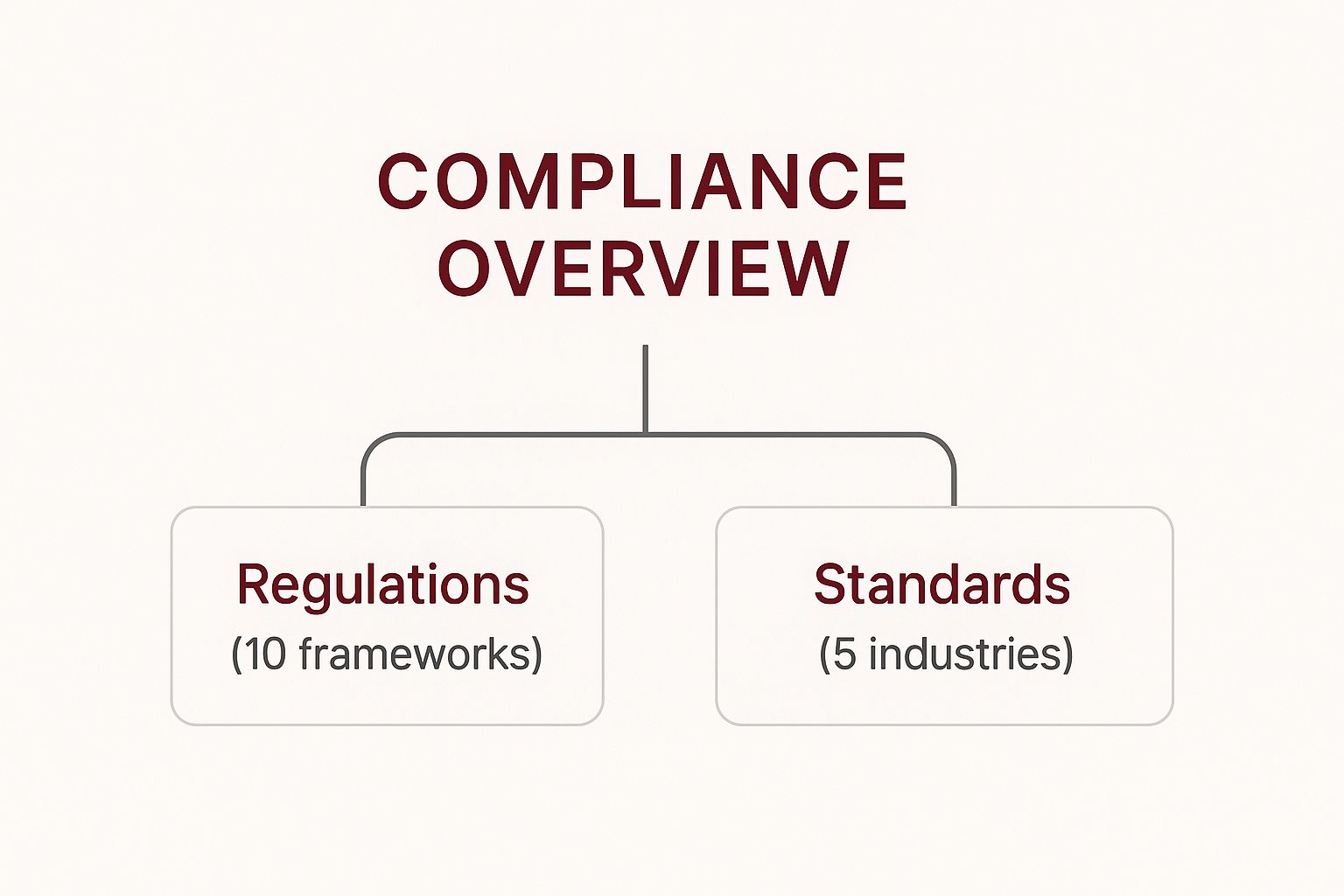
As the image shows, true compliance is about mastering both the government regulations you must follow and the specific industry standards you should follow to be truly safe.
Incident Investigation and Analysis
When something goes wrong—an injury or even a near-miss—you need to know why, fast. Bringing in a consultant to lead the investigation takes the emotion and blame out of the process. They focus on one thing: finding the root causes.
Their objective eye is fantastic at spotting the systemic cracks that led to the incident in the first place. This kind of unbiased analysis is the key to making sure it never happens again. The findings are then fed straight back into your risk assessments and procedures, creating a powerful cycle of improvement.
Customised Training and Education
A safe workplace needs a team that is switched on and knowledgeable. Consultants don’t just deliver boring, generic slideshows. They design and run customised training programs that are directly relevant to your industry and the specific hazards your people face every day.
This training can cover a huge range of essential topics:
- Spotting hazards and controlling risks
- Safe manual handling techniques
- Emergency drills and first aid
- Safety leadership training for supervisors and managers
- Mental health awareness and managing psychosocial risks
By giving your team the right skills, a consultant empowers them to take ownership of safety. For a deeper dive, you can explore https://occhygiene.com.au/australias-holistic-approach-to-ohs-key-practices-emerging-trends-and-future-outlook/ to see how these services contribute to the bigger picture of workplace safety in Australia.
To summarise how these services translate into tangible benefits, the table below connects the consultant’s work to real business outcomes.
Health and Safety Consulting Services and Their Business Outcomes
| Consulting Service | Description | Primary Business Outcome |
|---|---|---|
| Risk Assessments | Systematically identifying, analysing, and prioritising workplace hazards. | Proactive Hazard Control: Prevents incidents before they occur by focusing resources on the most significant risks. |
| SMS Development | Creating a formal framework of policies, procedures, and responsibilities for safety. | Improved Safety Culture: Embeds safety into daily operations, fostering consistency and accountability. |
| Compliance Audits | Evaluating workplace practices against WHS legislation and industry standards. | Reduced Legal & Financial Risk: Minimises exposure to fines, penalties, and litigation by ensuring legal adherence. |
| Incident Investigation | Conducting unbiased analysis to find the root causes of accidents and near-misses. | Continuous Improvement: Prevents recurrence of incidents by fixing underlying systemic failures. |
| Customised Training | Developing and delivering targeted safety education for employees and managers. | Empowered Workforce: Increases employee competence and engagement in maintaining a safe environment. |
Ultimately, these services work together to create a complete support system, helping you build a workplace that is not just compliant, but genuinely resilient and safe for everyone.
How Technology Is Reshaping Workplace Safety
Workplace safety isn’t just about hard hats and high-vis vests anymore. We’re seeing a massive shift, driven by technology, that’s completely changing how businesses spot, manage, and ultimately prevent hazards. For many companies, bringing in expert health and safety consulting services is the key to making sense of it all.
The old way was reactive—waiting for an incident to happen, then fixing the problem. Now, the focus is on getting ahead of the curve with smart, data-driven strategies. This digital evolution allows organisations to anticipate risks with a level of accuracy we’ve never seen before, creating genuinely smarter and safer workplaces. A good consultant helps you choose the right tools and, more importantly, integrate them into your daily operations.
The Rise of Predictive Safety Analytics
Imagine if you could see an accident coming and stop it before it ever happens. That’s essentially the promise of Artificial Intelligence (AI) in workplace safety. AI platforms can crunch huge amounts of data from all sorts of places—incident reports, sensor readings from equipment, even video footage—to find subtle patterns that would be impossible for a person to catch.
These systems can flag where and when the next incident is most likely to happen, allowing you to step in first. This is where a consultant proves their worth. They help you set up these systems, check that your data is reliable, and translate those insights into practical actions, like rolling out targeted training or adjusting your preventative maintenance schedule.
In Australia, health and safety consulting services are being shaped by these advancements, as things like automation and AI call for a whole new safety playbook. Consultants are now guiding organisations on how to use AI-powered platforms to monitor hazards in real-time and predict incidents, moving safety from a reactive chore to a proactive strategy. If you want to dive deeper, you can explore the HSE trends reshaping workplace safety in 2025.
Robotics and Automation for Hazardous Tasks
Let’s be honest, some jobs are just too dangerous for people. This is where robotics and automation are becoming game-changers, taking over high-risk tasks and drastically reducing human exposure to harm. We see this a lot in industries like manufacturing, mining, and chemical processing.
Just think about tasks like:
- Handling hazardous materials: Robots can manage toxic chemicals or lift impossibly heavy loads, removing the risk of spills, exposure, or serious back injuries.
- Working in confined spaces: Instead of sending a person into a tank or a tight pipe, you can send in a drone or a robotic crawler to do the inspection. It keeps people out of harm’s way entirely.
- Performing repetitive motions: Automated systems can take over those mind-numbing, repetitive jobs that often lead to long-term strain injuries.
A safety consultant doesn’t just help you spot where to use a robot. They also help you manage the new risks that come with them, like creating safety protocols for human-robot interaction or for maintenance crews working on automated machinery.
Immersive Training with VR and AR
Classroom-based safety training can only take you so far. Virtual Reality (VR) and Augmented Reality (AR) are creating incredibly realistic training simulations that are not only more engaging but far more effective. With VR, your team can practise emergency drills or learn to operate complex machinery in a completely safe, controlled digital space.
With these immersive tools, an employee can experience a high-stakes scenario—like a chemical spill or a major equipment failure—and build the muscle memory needed to respond correctly, all without facing any real danger. You simply can’t get that level of preparedness from a textbook.
Augmented Reality takes it a step further by overlaying digital information onto the real world. A maintenance technician wearing AR glasses could see step-by-step instructions or safety warnings projected right onto the machine they’re servicing. A consultant can help you design and roll out these training programs, ensuring they target the most critical risks your business faces and truly build a resilient safety culture.
Choosing the Right Health and Safety Consultant
Picking a partner to steer your workplace safety strategy is one of the most important decisions you’ll make for your business. Get it right, and you can transform your company’s culture and protect your bottom line. But the wrong fit can lead to wasted money and lingering, unresolved risks.
Finding that perfect match isn’t about a quick price check; it’s about a careful look at a consultant’s real-world expertise, their methods, and whether they’re a good cultural fit for your team.
You’re not just hiring a generalist. You’re looking for specialised health and safety consulting services that understand the unique world you operate in. The perfect consultant for a high-risk mining operation has a completely different toolkit to someone who specialises in the pharmaceutical industry or a corporate office. The first step is always to narrow your search to professionals who live and breathe your sector.
Evaluating Core Competencies and Experience
Real expertise is much more than a certificate hanging on a wall. You want a consultant with a proven history of solving the exact kinds of problems you’re facing right now.
Don’t hesitate to ask for case studies or to speak with past clients in your industry. This is where you get concrete proof that they can actually deliver the results they promise.
Beyond their track record, look into their professional credentials. Here in Australia, you should be looking for qualifications from recognised bodies like the Australian Institute of Health & Safety (AIHS). These certifications show a real commitment to professional standards and staying up-to-date, so you know their advice is current and sound.
Critical Questions to Ask Potential Consultants
To really get a feel for whether a consultant is the right partner, you need to dig into how they think and work. Before you even talk to them, put together a list of sharp questions that get to the heart of how they operate. That first conversation is your best chance to separate the genuine experts from the slick sales pitches.
Here are a few essential questions to get you started:
- Their Approach: “Can you walk me through your typical process for a business like ours, from the first look around to the final report?”
- Customisation: “How do you make sure your services fit our specific operational risks, instead of just using a generic template?”
- Communication: “What does your reporting look like, and how often will we hear from you about how things are going?”
- Measuring Success: “How do you actually measure the success of a project? What key performance indicators (KPIs) do you focus on?”
- Team Buy-In: “How do you get our employees and managers involved to ensure any safety improvements actually stick?”
A great consultant’s answers should be specific, confident, and all about working together. If you get vague replies or they keep pushing a one-size-fits-all solution, that’s a pretty big red flag.
Spotting Red Flags in the Selection Process
Knowing what to look for is only half the battle; knowing what to avoid is just as crucial. A bad partnership can be incredibly costly and get you nowhere.
Be wary of any consultant who promises a quick, guaranteed fix without really getting to know your business first. Real safety improvement is a journey, not a one-off event.
A lack of transparency is another major warning sign. A true professional will be completely open about their pricing, their methods, and any potential limitations. If they get shifty when you ask for details or references, it’s probably best to walk away. This whole process is about building trust for what should be a long-term relationship.
Choosing the right expert lays the foundation for a resilient safety culture. For instance, the process of finding expert occupational hygiene consultants demands the same level of care to ensure you’re tackling specific health hazards properly. By thoroughly vetting candidates on their experience, methods, and transparency, you can secure a partner who will bring genuine, lasting value to your organisation.
Weaving Safety Into the Fabric of Your Business
Let’s be honest, real workplace safety isn’t just about ticking boxes on an audit form. It’s about creating a culture where everyone, from the newest hire to the CEO, instinctively looks out for themselves and their mates. Bringing in health and safety consulting services is often the spark that ignites this change, turning safety from a dusty rulebook into a core company value.
This is the jump from being reactive to proactive, and it’s where smart businesses find a serious competitive advantage. Instead of just cleaning up messes after an incident, a proactive culture is all about spotting and dealing with risks before they can hurt someone. It’s a forward-looking strategy that protects your crew, your equipment, and your reputation.
The Bottom-Line Benefits of a Strong Safety Mindset
Putting money into building a robust safety culture is one of the sharpest investments a company can make. You’re not just buying compliance; you’re investing in your people, your stability, and your future. A workplace that genuinely cares for its team’s physical and mental wellbeing sees real, tangible returns like better productivity, lower staff turnover, and an easier time attracting top talent.
The numbers back this up. The global health, safety, and environment (HSE) consulting market was worth about $48.1 billion in 2024 and is expected to climb to around $68.4 billion by 2029. This boom isn’t happening by accident. It’s fuelled by tougher regulations and a growing realisation that looking after your people is just good business. For a deeper dive, you can explore more data on these global market trends and see the bigger picture.
Making Safety Second Nature
A good consultant’s goal is to eventually make themselves redundant. They do this by embedding safety knowledge and solid practices so deeply into your team’s day-to-day work that it becomes second nature. This goes way beyond a few training sessions. It’s about creating a place where people feel safe to speak up about a near-miss without worrying about getting blamed.
A resilient safety culture is one where mistakes are seen as learning opportunities, not reasons to point fingers. It turns every close call from a sigh of relief into a crucial piece of intel that makes the whole system safer.
This cultural shift stands on a few simple but powerful pillars:
- Leadership That Walks the Talk: When the boss is out on the floor, participating in safety walks and talking about safety in meetings, it sends a crystal-clear message: this stuff matters.
- Empowering Your People: Give your team the training and the authority to stop a job if they see something unsafe. This turns them from bystanders into active owners of safety.
- Always Getting Better: The organisation constantly looks at its safety performance, celebrates the wins, and works together to find new and better ways to manage risk.
At the end of the day, a proactive and resilient safety culture is what makes everything else stick. It ensures the systems and procedures a consultant helps you build are not just followed, but are owned and continuously improved by your own team. That’s how a truly safe business becomes a successful, sustainable, and respected leader in its field.
Your Questions, Answered
Thinking about bringing in a health and safety consultant often sparks a few questions. It’s a big decision, so let’s clear up some of the common queries to help you see how a professional partnership works in practice.
Here are straightforward answers to what business leaders often ask us.
How Much Do Health and Safety Consulting Services Cost?
This is usually the first question, and the honest answer is: it depends. The price tag for consulting services really hinges on what you need. A one-off risk assessment for a small cafe is going to be a very different job—and price—than designing a complete Safety Management System for a multi-site construction company.
A few things will shape the final quote:
- Your industry’s risk profile: Working with heavy machinery or hazardous chemicals requires a deeper level of expertise than an office environment.
- The scale of your operation: More employees, more locations, and more complex processes naturally mean a more involved project.
- The consultant’s background: A seasoned expert with decades of experience in a niche field will command a higher rate, but their insights can be invaluable.
It helps to reframe this from a cost to an investment. The money spent upfront is a fraction of what a single serious incident could cost your business in fines, legal trouble, and lost productivity.
How Long Does a Typical Engagement Last?
There’s no standard timeline. A consultant’s involvement can be as short as a couple of days if you just need a quick compliance audit or help with an incident investigation.
For bigger goals, like shifting your company’s entire safety culture, you’re looking at a longer-term partnership. These can span several months or even become an ongoing relationship with regular check-ins. A good consultant won’t just hand you a report and walk away; they’ll map out a clear plan with you, complete with milestones and follow-ups.
The best safety outcomes come from collaboration, not a one-time fix. Think of a consultant as a long-term partner who can help you adapt and ensure your safety systems stay effective as your business evolves.
What Is the Difference Between a Safety Consultant and an In-House Safety Officer?
They both champion safety, but they play different positions on the team. Your in-house safety officer is part of the daily fabric of your business. They’re on the ground, they know the people, the processes, and the company’s internal rhythms inside and out.
A safety consultant, on the other hand, is an external specialist. They bring a fresh pair of eyes and an unbiased perspective, free from internal politics. Because they’ve worked across dozens of different industries, they bring a wealth of knowledge your internal team might not have, especially around tricky WHS legislation or specific, high-stakes hazards. Often, the two roles complement each other perfectly.
Can a Consultant Help with Psychosocial Hazards?
Without a doubt. Workplace health and safety today is about much more than just physical slips and trips. Consultants are now deeply involved in helping businesses manage psychosocial hazards—the less visible risks like burnout, workplace stress, bullying, and mental fatigue.
These aren’t soft issues; they have a hard impact on your team’s wellbeing, morale, and your bottom line. A consultant can guide you through:
- Pinpointing and assessing psychosocial risks in your workplace.
- Creating practical policies that genuinely support mental health.
- Training your managers and leaders to build a psychologically safe culture.
Tackling these hazards isn’t just a box-ticking exercise. It’s an essential part of a modern WHS strategy that shows you’re committed to protecting your people in every sense of the word.
Ready to build a safer, more resilient workplace? The expert team at Anitech offers specialised Occupational Hygiene and health and safety consulting services across Australia. Contact us today to discover how we can help protect your people and your business.


