
Think of a workplace health and safety consultant as a specialist doctor, but for the health of your business. They don't just show up with a rulebook. Their real job is to diagnose the hidden risks in your daily operations before they turn into expensive, painful emergencies. They translate the often-confusing language of WHS law into practical steps you can take on the ground to protect your team and your business.
Why Smart Businesses Partner with WHS Consultants
In any organisation, keeping people safe isn't just a legal box to tick—it's the bedrock of a productive, stable operation. The reality is, most businesses don't have a full-time expert on staff who can keep up with the dense, ever-changing world of Australian Work Health and Safety (WHS) legislation. That's precisely where a WHS consultant comes in. They act as a strategic partner, bridging that critical gap between legal compliance and creating a truly safe culture.
They help you move past a simple "tick-the-box" mentality. Instead of just pointing out what’s wrong, a good consultant works with you to build safety into the DNA of your company. This means fostering an environment where every employee feels protected, valued, and confident enough to speak up about safety concerns. This kind of proactive approach delivers real benefits that you'll feel across the entire organisation.
More Than Just Compliance
It’s a common myth that WHS consultants are only called in when something goes wrong. The truth is, their greatest value is in prevention. They bring a fresh, objective pair of eyes to spot hazards that your own team might have stopped noticing simply because they see them every day. It's like having an expert mechanic inspect a car you drive daily—they'll notice the subtle signs of wear and tear that you've grown used to.
This expert oversight is so important for a few key reasons:
- Preventing Incidents: By finding and fixing risks before they cause an injury, consultants directly lower both the human and financial costs of workplace accidents.
- Boosting Morale: When your team sees you genuinely investing in their well-being, it builds loyalty, lifts spirits, and can seriously improve productivity.
- Protecting Your Reputation: A solid safety record strengthens your brand, making you a more attractive employer and a business people want to work with.
The Professionals Behind the Advice
The role of a WHS consultant is a highly specialised one. In Australia, there are approximately 20,600 people employed as Occupational Health and Safety (OHS) Advisers—the very professionals who fill this crucial function. They’re the ones on the ground, developing and implementing risk management policies across all sorts of industries.
This isn't an entry-level field. It's an experienced workforce with a median age of 45, and 83% of them work full-time. They often put in an average of 45 hours per week to make sure worksites are safe and compliant. You can find more details about this workforce profile on the Jobs and Skills Australia website.
At the end of the day, hiring a consultant is a strategic business decision. It's an investment in the long-term health of your company, protecting your most valuable asset—your people—while ensuring your financial stability and ability to operate without disruption.
What Does a Safety Consultant Actually Do? A Look at Their Core Services
Forget the stereotype of someone just walking around with a clipboard ticking boxes. A great workplace health and safety consultant is a technical specialist, a problem-solver who translates complex safety regulations into practical, on-the-ground actions. They’re there to tackle risks before they become incidents, making your business safer and more resilient.
So, what does that look like day-to-day? Their work isn't about adding red tape; it's about embedding safety into your operations so seamlessly that it becomes second nature. Most of their services fall into a few key areas, each building on the last to create a rock-solid safety framework.
Comprehensive Risk Assessments
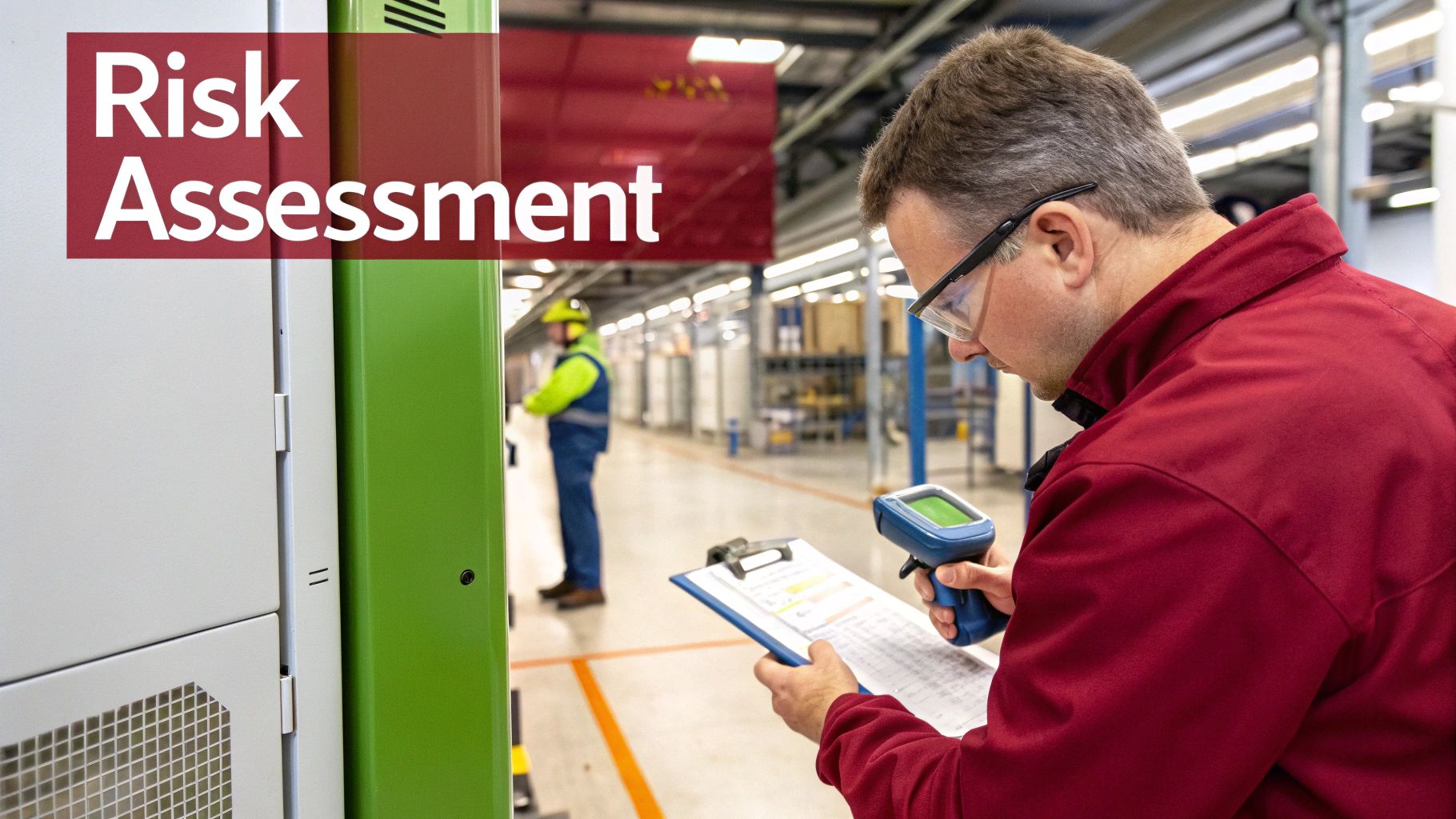
At the very heart of what a consultant does is the risk assessment. This is a deep, methodical dive into your workplace to spot potential hazards before they have a chance to cause harm. Think of them on a factory floor. They’re not just glancing around for obvious dangers; they're systematically breaking down every single process, piece of machinery, and work area.
This involves looking for things like:
- Physical Hazards: Spotting trip hazards from poorly routed cables, identifying gaps in machine guarding that could lead to serious injury, or checking if storage racking is structurally sound.
- Ergonomic Strains: Watching how people actually work. Are they bending awkwardly to lift boxes? Are their workstations set up in a way that could lead to long-term repetitive strain injuries?
- Procedural Gaps: Reviewing your standard operating procedures to see if there are dangerous shortcuts or unsafe practices that have crept into the daily routine over time.
The goal isn’t just to create a long list of problems. It’s to rank them by how severe and likely they are, giving you a clear, prioritised action plan to fix what matters most, first.
Occupational Hygiene and Exposure Monitoring
Some of the biggest dangers in a workplace are the ones you can't see, smell, or hear. This is where occupational hygiene comes in—a highly specialised field focused on identifying and controlling hidden health hazards. A good consultant acts like a detective for these invisible threats.
For example, in a workshop using solvents, they might take air samples to measure the concentration of chemical vapours your team is breathing in. On a construction site, they’ll measure noise levels to prevent permanent hearing loss or test for silica dust exposure during concrete cutting.
A key part of a consultant's job is to make the invisible visible. By measuring unseen hazards like chemical fumes or excessive noise, they provide objective data that allows businesses to implement targeted controls and truly protect their workforce.
Once a hazard is measured, the consultant provides practical, realistic solutions. This might mean recommending a better ventilation system, helping you select the right personal protective equipment (PPE), or even suggesting safer chemical alternatives. You can explore a wide range of these expert health and safety consulting services to see just how deep this expertise runs.
Developing Safety Management Systems
A Safety Management System (SMS) is the formal rulebook for how your company handles safety—it outlines all your policies, procedures, and responsibilities. A consultant’s job is to help you build a system that’s a living, breathing part of your business, not just a binder of documents collecting dust on a shelf.
They’ll work alongside your team to craft a system that includes:
- Clear safety policies and achievable goals.
- Defined roles and responsibilities so everyone knows their part.
- Simple procedures for reporting hazards and incidents.
- A schedule for regular inspections and ongoing safety training.
For businesses in industries with unique risks, like food service, this is critical. A consultant can help implement robust systems that meet specific standards, such as understanding the core HACCP food safety principles, ensuring safety is managed systematically from start to finish.
Incident Investigation and Emergency Planning
Even with the best systems, incidents can happen. When they do, a consultant provides a neutral, expert eye to investigate what went wrong and uncover the true root cause. Their objective approach helps shift the focus from blaming individuals to finding the systemic weaknesses that allowed the incident to occur in the first place—a crucial step in making sure it never happens again.
Finally, they help you prepare for the worst. A consultant assists in creating and testing emergency response plans that actually work in a real crisis. This includes everything from fire evacuation drills and chemical spill containment to medical emergency protocols, ensuring your team knows exactly what to do when every second counts.
To bring it all together, here’s a quick overview of how these services directly impact your business.
Common WHS Consultant Services and Their Business Impact
| Service Area | Description | Primary Business Benefit |
|---|---|---|
| Risk Assessments | Systematically identifying and evaluating workplace hazards to create a prioritised action plan. | Prevents costly incidents and injuries before they happen. |
| Occupational Hygiene | Measuring and controlling invisible health hazards like chemicals, dust, noise, and vibration. | Protects long-term employee health and reduces workers' compensation claims. |
| Safety System Development | Creating a formal framework of policies, procedures, and responsibilities (SMS). | Ensures consistent safety performance and simplifies compliance. |
| Incident Investigation | Analysing incidents to find the root cause, not just the immediate trigger. | Prevents repeat incidents by fixing underlying systemic issues. |
| Emergency Planning | Developing and testing response plans for fires, spills, medical emergencies, and other crises. | Minimises damage and protects lives during a real emergency. |
Ultimately, each of these services is designed not just to meet legal obligations, but to build a stronger, more productive, and more resilient organisation.
The Real ROI of Investing in Workplace Safety
It’s easy to look at a workplace health and safety consultant and see an expense line on a budget. That’s a fundamental mistake. Bringing in an expert is one of the smartest investments you can make, with a return that shows up clearly on your balance sheet and beyond. We're not just talking about ticking compliance boxes; we're talking about building a safer, more profitable, and resilient business.
Too many leaders get stuck on the upfront cost, completely missing the quiet, relentless financial drain that a poor safety culture creates. The moment you start looking at the hard numbers, the value of getting expert guidance becomes crystal clear. Let's start with the most obvious wins.
The Direct Financial Wins
When you stop an injury from happening, you stop a whole cascade of costs before they even begin. Every single incident you avoid is one less workers' compensation claim, and these claims can be a massive drain on your resources. According to Safe Work Australia, the median payout for a serious claim is $13,800. That’s a figure that could easily cripple a small business or take a serious bite out of a larger company's profits.
This is where being proactive pays off, creating a positive financial ripple effect.
- Fewer Workers' Compensation Claims: It’s simple maths. Less injuries mean fewer claims, which saves your company a significant amount of money year after year.
- Lower Insurance Premiums: Insurance companies love safe businesses. When you have a proven track record of low incidents, backed up by professional audits, they often reward you with much more favourable annual premiums.
- Avoiding Hefty Regulatory Fines: Falling short of Australian WHS laws can lead to absolutely staggering fines. An expert consultant ensures you're not just compliant but robustly protected from penalties that can climb into the millions for serious breaches.
Think about it: by preventing just one serious incident, the consultant's fee often pays for itself several times over. It’s one of the most effective financial levers you can pull.
Beyond the Balance Sheet: The Hidden Value
But the real return on this investment goes much deeper than direct savings. A strong safety culture, cultivated with expert help, becomes a genuine business asset. It’s something that boosts productivity and strengthens your brand from the inside out. When your team feels genuinely safe and looked after, it changes everything about how they show up to work.
You’ll see this shift in a few key areas. Morale goes up because people see a real commitment to their well-being, not just lip service. This naturally leads to better engagement, fewer sick days, and lower staff turnover—saving you a fortune in recruitment and retraining costs. A safe, happy team is a productive team. Period.
"A strong safety culture is not an expense; it is an investment that yields returns in productivity, employee loyalty, and brand reputation. It signals to everyone—employees, customers, and regulators—that your organisation is built on a foundation of care and excellence."
This positive vibe doesn't stay within your four walls, either. It radiates outward, polishing your brand reputation. In today’s market, clients and partners want to work with responsible, ethical companies. A stellar safety record is a powerful way to stand out, helping you win contracts, attract the best talent, and build unshakable trust in your industry.
An Example in Action
Let’s look at a real-world scenario. A mid-sized manufacturing firm was getting hammered by frequent minor injuries and had suffered two serious incidents in a single year. Their insurance premiums were through the roof, and morale was at rock bottom. They decided to bring in a WHS consultant, who kicked things off with a full risk assessment and helped them rebuild their safety management system from the ground up.
The consultant quickly pinpointed critical gaps in machine guarding and a major lack of proper manual handling training. By rolling out targeted solutions and getting employees directly involved in new safety committees, the results were astounding. Within 18 months, the company saw a 75% reduction in recordable incidents.
The financial impact was immediate. Their next insurance renewal came in 20% lower, saving them over $50,000 a year. Even better, productivity soared as unplanned downtime from accidents disappeared. The workforce became more engaged and proactive, turning safety from a dreaded cost centre into a true cornerstone of their operational success.
How Consultants Tackle High-Risk Industry Challenges
Safety is never a one-size-fits-all solution. This is especially true in high-stakes environments where the margin for error is razor-thin. What works in a quiet office is completely inadequate for a bustling construction site or a sterile healthcare facility. This is precisely where the specialised expertise of workplace health and safety consultants becomes invaluable. They bring deep, industry-specific knowledge to the table, allowing them to tackle the unique dangers that define Australia's most demanding sectors.
A generic safety checklist just won't cut it in these fields. Each industry has its own distinct set of hazards, from the towering heights of construction to the microscopic biological risks in healthcare. A consultant with proven experience in your sector doesn't just know the regulations; they understand the daily operational realities and the specific pressures your team faces. This allows them to create safety solutions that are both effective and practical.
Customised Strategies for Construction Sites
The construction industry is dynamic and inherently risky, with worksites that change by the day. A consultant’s primary focus here is on preventing catastrophic events. They go far beyond basic advice, implementing robust systems to manage the most significant dangers on site.
This includes developing site-specific fall prevention plans. These aren't just about handing out harnesses; they involve detailed assessments of scaffolding, establishing secure anchor points, and training workers on how to use their equipment properly. Managing site traffic is another huge concern. Consultants design logical traffic management plans that segregate pedestrians from heavy machinery, minimising the risk of collisions in a chaotic environment.
They also address the threat of invisible hazards like crystalline silica. An experienced consultant can provide crucial guidance on protective measures, including specialised solutions for air monitoring for silica dust, to ensure workers aren’t exposed to long-term health risks.
This infographic shows how a consultant's work translates into tangible business benefits, from reducing costs to improving company culture.

The key takeaway is that strategic safety investments, guided by an expert, directly contribute to a healthier bottom line and a more positive work environment.
Navigating Hazards in Manufacturing
Manufacturing environments present a complex mix of mechanical, chemical, and ergonomic risks. A consultant’s job is to untangle these complexities and create layers of protection for workers. A critical area is machine guarding, where they conduct meticulous audits to ensure every pinch point, rotating part, and cutting edge is properly shielded to prevent amputations and other severe injuries.
Beyond the machinery itself, safe chemical handling is a top priority. Consultants develop watertight systems for the correct labelling, storage, and disposal of hazardous substances. They also conduct exposure monitoring to ensure airborne contaminants are kept well below legal limits, protecting everyone's respiratory health.
Ergonomics is another key focus. They analyse production lines to identify repetitive tasks or awkward postures that lead to musculoskeletal disorders. Based on what they find, they can recommend adjustments to workstations and processes that boost both safety and efficiency.
Protecting People in Healthcare
The healthcare sector faces its own unique challenges, combining both physical and biological hazards. Workplace health and safety consultants in this field focus on protecting caregivers and patients alike. A major concern is manual handling injuries, which are incredibly common among nurses and support staff who move patients daily.
Consultants implement safe patient handling programs that go beyond simple lifting techniques. They assess the need for—and train staff on using—mechanical aids like hoists and slide sheets, drastically reducing the physical strain that leads to so many debilitating back injuries.
In high-risk sectors, a consultant’s value lies in their ability to foresee and neutralise industry-specific dangers. They don’t just enforce rules; they engineer safer ways of working that protect lives and livelihoods.
Furthermore, managing biological hazards is absolutely essential. Consultants help develop and drill infection control protocols to contain the spread of pathogens. This includes proper procedures for handling contaminated materials, using personal protective equipment (PPE) correctly, and managing sharps to prevent needlestick injuries.
The need for this specialised expertise is backed by national data. While Australia has seen a 24% reduction in the workplace fatality rate over the past decade, certain sectors remain hotspots for risk. Industries with the highest number of serious injury claims include healthcare (19.9%), construction (12%), and manufacturing (10.1%), underscoring exactly where specialist help is needed most.
By choosing a consultant with proven experience in your field, you aren’t just hiring an advisor. You are partnering with a specialist who understands your world and knows precisely how to make it safer.
How to Choose the Right Safety Consultant for Your Business
Picking the right partner to help shape your safety strategy is one of the most critical decisions you’ll make for your business. The best workplace health and safety consultant isn’t just a qualified auditor ticking boxes; they’re a genuine strategic advisor who gets your industry, fits your company culture, and gives you practical advice that actually works.
Finding that perfect match takes a bit of a structured approach. Instead of just going with the first name that pops up in a search, you need to properly vet potential partners against a solid set of criteria. This way, you’re not just hiring for a technical skill set, but for a true partnership that will add long-term value and, most importantly, create a safer place for your team to work.
Verifying Credentials and Certifications
First things first, you have to check their qualifications. In Australia, you’ll want to look for consultants holding recognised certifications, like a Certified OHS Professional or Practitioner from the Australian Institute of Health & Safety (AIHS). These aren't just fancy titles; they're a clear sign of a high level of expertise and a solid commitment to staying current in their field.
Don’t ever feel shy about asking for proof of these qualifications. You should also ask to see their certificates for professional indemnity and public liability insurance. Any reputable consultant will have this documentation organised and ready to go. Think of this as a non-negotiable first step—it protects your business from getting bad advice from someone unqualified.
Confirming Relevant Industry Experience
Safety challenges are definitely not one-size-fits-all. The risks on a bustling construction site are worlds away from those inside a sterile pharmaceutical lab. Because of this, it's absolutely crucial to find a consultant with deep, hands-on experience in your specific industry.
Someone with a background in manufacturing, for instance, will instinctively understand the finer points of machine guarding and chemical handling in a way a generalist simply can't. When you're talking to potential consultants, ask them for specific examples of their work with businesses like yours. Ask for client testimonials or anonymised case studies that show they know how to solve the kinds of problems you deal with every single day.
The right consultant doesn't just know the safety regulations; they understand your operational realities. Their industry experience allows them to provide solutions that are not only compliant but also practical and sustainable for your business.
Asking the Right Questions
Once you've narrowed down your list of candidates based on their credentials and experience, the interview is where you really get to dig in. Your goal here is to get a feel for their process, their communication style, and how they approach solving problems. A good chat will quickly tell you if they’re going to be a good cultural fit for your organisation.
Here are a few essential questions to have ready for your first meeting:
- How do you stay current with evolving WHS legislation in Australia? This shows they are committed to giving you up-to-date, legally sound advice.
- Can you describe your process for a typical site audit? This gives you a clear window into their methods and how they'll interact with your team on the ground.
- What is your approach to engaging employees and management? A great consultant works with everyone, making sure they get buy-in from the shop floor to the corner office.
- How do you measure the success of your safety recommendations? This tells you they're focused on delivering real, measurable results, not just reports that gather dust.
For businesses in specialised sectors like transport, it’s vital to understand the detailed questions involved, much like learning how to choose a DOT compliance company. That kind of specific vetting is a great model to follow.
Ultimately, your choice should be the consultant who not only answers these questions with confidence but also shows a genuine curiosity about your business’s unique challenges. For those needing specialised expertise in complex areas like exposure monitoring and hazard management, finding the right occupational hygiene consultant with proven, relevant industry experience is an absolutely vital part of this process.
Here's a handy checklist to guide you as you compare potential consultants. It brings together the key points we've covered to help you make a well-informed decision.
Evaluation Checklist for Selecting a WHS Consultant
| Evaluation Criteria | What to Look For | Key Questions to Ask |
|---|---|---|
| Credentials & Insurance | Certified OHS Professional/Practitioner (AIHS), current professional indemnity and public liability insurance. | Can you provide copies of your certifications and insurance certificates? |
| Industry-Specific Experience | Proven track record in your industry (e.g., manufacturing, construction, healthcare). | Can you share case studies or examples of work with companies similar to ours? |
| Methodology & Process | A clear, logical process for audits, risk assessments, and reporting that involves your team. | What does your typical engagement process look like from start to finish? |
| Communication Style | Clear, practical communication. Ability to engage with both management and employees effectively. | How do you ensure everyone, from the CEO to the factory floor, understands your recommendations? |
| Focus on Results | Emphasis on measurable outcomes and continuous improvement, not just compliance. | How do you measure the impact of your work? What metrics do you track? |
| Cultural Fit & Partnership | A collaborative approach that feels like a partnership, not just a transaction. | What do you need from us to make this partnership successful? |
Using a structured checklist like this ensures you’re not just hiring a name from a list, but a true safety partner who is equipped to protect your people and your business for the long haul.
Building a Long-Term Partnership for Sustainable Safety
The best relationship you can have with a workplace health and safety consultant doesn’t just end with a final report. Think of that initial project as the starting point, not the finish line. The real, lasting value comes when that engagement grows into a long-term partnership focused on building a safety culture that sticks.
This shift from a one-off audit to an ongoing alliance is where the magic happens. It’s about more than just ticking boxes on a recommendation list; it’s about weaving safety into the very fabric of how your business operates every single day. The ultimate goal? To get your own team to a place where they own safety, creating a workplace that's both self-sufficient and resilient.
From Consultant to Mentor
In this kind of long-term relationship, a great consultant’s role changes. They stop being just an external auditor and become more of a trusted mentor. They’re there to guide your team, giving them the skills and confidence to manage safety on their own. This mentorship is what builds that in-house capability, ensuring your initial investment pays off for years to come.
This kind of ongoing support often looks like this:
- Customised Safety Manuals: A clear, easy-to-follow safety handbook that’s written specifically for your site and its unique risks, not some generic template.
- Targeted Training Materials: Training programs that actually tackle the real-world hazards your employees face day-to-day.
- Ongoing Guidance: Simply being on the other end of the phone for regular check-ins or when new challenges pop up.
With this approach, you ensure that crucial safety knowledge doesn't walk out the door when the consultant does. It becomes a permanent part of your organisation, growing right alongside your team.
Embedding Safety into Your Culture
A sustainable safety culture is one where doing things safely becomes second nature to everyone, from the CEO down to the newest apprentice. A long-term consultant is instrumental in making this happen, working to embed safety principles at every level of the business. They help champion the idea that safety is everyone’s job, not just a task for the safety officer.
A partnership with a consultant is about building your organisation’s muscle memory. By consistently reinforcing safe practices and empowering your own internal champions, safety shifts from a set of rules on a page to a core company value.
The end result is a workplace that is not only compliant with the law but is genuinely safer and more productive. By committing to this kind of long-term partnership, you’re making an investment that will pay dividends far into the future, protecting your people and strengthening your business from the ground up.
Your Questions About WHS Consultants, Answered
Thinking about bringing in a workplace health and safety consultant for the first time? It’s a smart move, but it naturally comes with a few questions. Getting your head around the costs, legal side of things, and what to expect makes the whole process smoother.
We get asked these questions all the time, so let's clear them up for you.
What’s the Investment to Hire a WHS Consultant?
There’s no single price tag for a WHS consultant. The cost really comes down to what you need them to do.
A few things will shape the final quote:
- The Job Itself: A quick, one-day site inspection is a much smaller job than asking someone to build you a brand-new safety management system from the ground up.
- Your Business: A small office with ten people has a very different risk profile to a sprawling manufacturing plant with heavy machinery and hundreds of workers. The more complex the environment, the more involved the work.
- Your Industry: High-risk sectors like mining or construction demand a deeper level of specialised knowledge, which is factored into the cost.
Consultants typically charge in a few different ways. You might see an hourly rate for quick jobs, a fixed project fee for something like a full audit, or a monthly retainer if you need ongoing support. The best first step is always to have a chat about your needs and ask for a detailed quote.
Does the Law Say My Small Business Must Hire a Consultant?
No, there isn't a specific law in Australia that says, "every small business must hire a WHS consultant." But what the law does say is that every single business, no matter its size, has a legal duty of care. You’re required to provide a safe and healthy workplace for your team, as far as is reasonably practicable.
For a lot of small businesses without a dedicated safety expert on payroll, bringing in a consultant is the simplest, most reliable way to meet that obligation. They have the expertise to spot the risks you might miss and put the right controls in place. It's about staying compliant, but more importantly, it's about avoiding the serious consequences that come with getting it wrong.
What's the Difference Between a Consultant and an In-House Officer?
Think of a WHS officer as part of your internal team. They’re an employee who handles the day-to-day safety tasks and knows your company culture inside and out.
A workplace health and safety consultant, however, is an external expert. They bring a fresh pair of eyes and an objective, third-party perspective that’s free from any internal politics or biases.
The real power of a consultant is their impartial viewpoint and sheer breadth of experience. They’ve seen what works (and what doesn't) across dozens of companies. They can often spot systemic problems that an internal officer, who is just used to "how we do things here," might not even notice.
This outside perspective is incredibly valuable for major projects like system audits, tricky incident investigations, or when you're mapping out a long-term safety strategy.
How Long Does a Safety Audit Usually Take?
The timeline for a safety audit really depends on the scale and complexity of your business. A simple walk-through of a small, low-risk office could be done and dusted in a single day.
On the other hand, a deep-dive audit of a large industrial site—say, a manufacturing facility with multiple buildings or a mine site—could easily take a week or more. The schedule will depend on how many people need to be interviewed, how much paperwork needs to be reviewed, and how complicated your operational processes are. Any good consultant will give you a clear time estimate right from the start in their proposal.
Our team of expert consultants provides specialised occupational hygiene and WHS services across Australia. We partner with businesses in manufacturing, pharmaceuticals, mining, and more to build safer, healthier, and more productive workplaces. If you're ready to enhance your safety standards with professional guidance, explore our WHS consulting services.


