
The primary reason why you must test properties for methamphetamine is to protect people from the serious health risks posed by invisible chemical residues. This isn't about visible damage; it's about a silent, toxic threat left behind from meth production and even casual use. This dangerous residue clings to surfaces and can cause long-term harm to tenants, employees, and families, with children and pets being particularly vulnerable to meth contamination. Understanding the reasons for meth testing is the first step in ensuring a safe environment.
Key Facts: Why Test Properties for Methamphetamine
- Methamphetamine residue is invisible and odourless — it cannot be detected by any standard property inspection.
- Meth residue seeps into porous surfaces including plasterboard, carpet, soft furnishings and HVAC systems.
- Exposure can cause respiratory problems, skin irritation, headaches and serious long-term health effects.
- Australia’s 0.5 µg/100cm² safety limit was set based on health risk modelling for vulnerable populations including children.
- Decontamination typically costs $5,000–$50,000 — far exceeding the cost of pre-purchase testing.
- A meth test converts an unknown financial and health risk into a known, manageable factor in your property decision.
The Invisible Threat Hiding in Plain Sight
Imagine a hazard you can’t see, smell, or touch, but that presents a genuine danger to anyone stepping foot on your property. That’s the reality of methamphetamine contamination. It's an unseen toxin that works its way into walls, carpets, air conditioning systems, and even furniture, and it can stay chemically active for years. A standard clean won't get rid of it, and a fresh coat of paint just traps the problem underneath, creating a false sense of security.
Let's unpack the real drivers for property meth testing. It's about moving beyond what you can see and taking a proactive stance to protect what matters most—a responsibility every property or business owner in Australia should take seriously.
Safeguarding Health and Wellbeing
At its heart, meth testing is about protecting people. Exposure to meth residue, often called third-hand exposure, happens through something as simple as touching a contaminated surface, breathing in airborne particles, or accidental ingestion. The health effects can be devastating.
- For Children and Families: Little ones are the most at risk. Their developing bodies are more susceptible, and their natural tendency to put hands in their mouths increases exposure. This can lead to anything from respiratory issues and skin rashes to significant behavioural changes and neurological problems.
- For Employees: In a commercial or industrial setting, a contaminated vehicle, break room, or piece of machinery can put your entire workforce at risk, resulting in illness, lost productivity, and a compromised workplace.
Fulfilling Legal and Financial Duties
Beyond the immediate health concerns, there are serious legal and financial reasons to act. As a property owner or manager, you have a clear duty of care to provide a safe environment. Ignoring suspected contamination can open the door to expensive lawsuits, voided insurance claims, and hefty fines under Australia's Work Health and Safety (WHS) regulations.
Testing is not just a precaution; it's an essential act of due diligence that protects your assets, your tenants, and your legal standing. It transforms an unknown liability into a manageable risk.
While meth residue is a uniquely potent threat, other unseen contaminants can also linger, such as the invisible, sticky residues like thirdhand smoke. The only way to know for sure that a property is safe from these hidden dangers is through professional, scientific testing.
To make it clear, here’s a quick breakdown of why meth testing is so critical.
Why You Must Test Your Property for Methamphetamine
| Reason | Primary Impact Area | Who Is Most Affected |
|---|---|---|
| Health Protection | Physical and Neurological Wellbeing | Children, families, tenants, and employees |
| Legal Compliance | Duty of Care & WHS Regulations | Property owners, landlords, and business operators |
| Financial Security | Insurance Validity & Asset Value | Property investors and insurance policyholders |
| Peace of Mind | Certainty and Risk Management | All stakeholders, from occupants to owners |
Ultimately, testing is the only way to confirm a property is truly clean and safe for occupation, protecting both people and your investment.
Unpacking the Health Risks of Meth Residue
When we talk about methamphetamine residue, we're not just talking about a faint chemical smell. This is a stubborn, toxic contaminant that seeps into almost every surface in a property. A key reason why you must test properties for methamphetamine is understanding that this invisible residue is a very real and persistent threat to people's health.
The real danger is that you can't see it. Unlike a hole in the wall or a leaky pipe, meth contamination is invisible and often has no smell. This means families, tenants, or even your own employees could be exposed for months or years without a clue, all while dealing with a host of unexplained health problems.
So, how does exposure actually happen? It's surprisingly easy and occurs through three main pathways:
- Inhalation: Tiny, invisible particles of the residue become airborne and are easily breathed into the lungs.
- Skin Contact: You can absorb the toxins simply by touching contaminated surfaces like walls, benchtops, carpets, or furniture.
- Ingestion: This is a huge risk for young children, who are constantly touching floors and toys and then putting their hands straight into their mouths.
The Heavy Toll on Vulnerable Occupants
Children are by far the most vulnerable to the dangers of meth residue. Their small bodies and still-developing organs, combined with their natural hand-to-mouth behaviour, mean they get a much higher, more concentrated dose of these poisons. The effects can be serious and stick with them for a long time.
In a contaminated property, what you might dismiss as a normal kid's cold could actually be a sign of toxic exposure. The symptoms can look like anything from a nagging cough and breathing issues to angry skin rashes, headaches, and even behavioural problems like unusual irritability or hyperactivity. For babies and toddlers, the stakes are even higher, with the potential for it to affect their neurological development.
It's worth noting that the Australian Government’s own guidelines state that even low-level, third-hand exposure is a public health risk, particularly for children. A standard wipe-down with household cleaners won't even touch it.
Symptoms and Long-Term Health Problems
For adults, living or working in a contaminated space can trigger a whole range of frustrating symptoms that are often mistaken for something else. These health issues can completely disrupt daily life, tank productivity, and lead to ongoing medical bills and stress.
Common symptoms of meth residue exposure in adults include:
- Respiratory issues: Think chronic coughs, shortness of breath, and symptoms that mimic asthma.
- Neurological effects: Headaches, feeling dizzy or confused, and major sleep problems.
- Skin problems: Unexplained rashes, sores, and severe skin irritation that just won't go away.
- General sickness: Nausea, constant tiredness, and irritated eyes.
The toxic chemicals left behind by meth don't just disappear over time. They embed themselves deep into porous materials like plasterboard, timber, and carpets, creating a long-term source of contamination that constantly releases harmful particles into the air. This ongoing, silent exposure is precisely why professional testing isn't just a good idea—it's the only way to know for sure if a property is truly safe for people to live in.
Navigating Your Legal and Workplace Safety Duties
In Australia, ensuring a property is safe goes far beyond fixing a broken step or a leaky tap. When you’re dealing with invisible dangers like methamphetamine contamination, pleading ignorance simply won’t hold up in court. Property managers, landlords, and employers all have a fundamental duty of care under Work Health and Safety (WHS) laws to provide a safe environment.
Failing to meet these obligations can lead to serious legal and financial trouble. This is a core reason why you must test properties for methamphetamine—it’s about fulfilling your legal duties and protecting yourself from hefty fines, potential lawsuits, and even criminal negligence charges if someone gets sick.
Understanding Your Work Health and Safety Obligations
For businesses, especially in industries like mining, transport, and manufacturing, the WHS Act is crystal clear. A company vehicle, a shared break room, or even a piece of heavy machinery laced with meth residue is a direct breach of your duty to keep your workplace safe. This isn't just a hypothetical risk; it could put your entire team in danger and bring your operations to a screeching halt.
This legal responsibility also falls squarely on the shoulders of landlords and property managers. You are required by law to provide tenants with a home that is safe and liveable. Getting to grips with what this means for property habitability and safety is crucial. This principle is a cornerstone of tenancy law everywhere, from local Australian regulations to broader frameworks like the landlord responsibilities for repairs in California.
To get a better handle on your specific duties here in Australia, take a look at our detailed guide on meth testing for rental properties.
Ignoring suspected contamination isn't an option. It’s a direct failure of your legal duty of care, turning a manageable risk into a potentially catastrophic liability. Proactive testing is the only responsible way forward.
The Rising Scale of the Problem in Australia
The need to be vigilant is driven home by the sheer scale of methamphetamine use across the country. Consumption has hit alarming new highs, with the National Wastewater Drug Monitoring Program reporting that a staggering 12.8 tonnes was consumed nationwide in the 12 months to August 2024.
This record-breaking figure points to a widespread problem that inevitably seeps into our homes and commercial spaces. You can find more detail on these findings and what they mean for property safety in the official report.
Protecting Your Financial and Insurance Interests
Beyond the risk of legal penalties, undiscovered contamination can deliver a crippling financial blow. Most insurance policies have clauses that can void your cover if you haven’t taken reasonable steps to prevent damage.
If contamination is found and you can't show you've done your due diligence by testing, your insurer could refuse to pay for the expensive, specialised cleanup. This leaves you personally on the hook for a massive bill, making professional testing a non-negotiable part of modern risk management.
When and How Should You Test a Property for Meth?
Knowing why you need to test is one thing, but understanding when and how is where you really start protecting your property and the people in it. Being proactive isn't about being paranoid; it's just good risk management for any responsible property owner, landlord, or business manager.
There are a few key moments when testing should be at the top of your to-do list. These are the red flags that signal it's time to call in a professional to make sure the space is safe.
Think about these critical trigger points for getting a property tested:
- Pre-Purchase Inspections: Before you sign on the dotted line, a meth test should be just as standard as your building and pest inspection. Finding contamination after you’ve bought the place can leave you with an unexpected cleanup bill that runs into the tens of thousands.
- End-of-Lease Checks: When a tenant moves out, it's the perfect time to test. This is especially true if you had any concerns about strange activity, property neglect, or just a gut feeling that something was off. It gives you complete peace of mind before the next person moves in.
- Workplace Incidents: If you even suspect drug use has occurred on-site—whether in a company vehicle, a staff room, or on the factory floor—you need to act fast. Immediate testing isn’t just a good idea; it's a crucial part of meeting your Work Health and Safety obligations.
The Different Ways to Test for Meth
So, you've decided to test. What now? It’s really important to know the difference between a quick screen and a detailed, scientific analysis.
A Comparison of Meth Testing Methods
Choosing the right test depends on what you need to achieve. A DIY kit might give you a quick "yes" or "no," but only professional lab testing can give you the certainty and data required for legal or remediation purposes. This table breaks down the main options.
| Testing Method | Best For | Accuracy | Cost |
|---|---|---|---|
| DIY Instant Kits | Initial, low-cost screening where a simple positive/negative indication is enough to warrant further investigation. | Low to moderate. Prone to false positives and cannot quantify contamination levels. | $ |
| Composite Lab Testing | A cost-effective professional screen. Multiple swabs are combined into one sample to confirm the presence of meth somewhere on the property. | High. Confirms presence but doesn't pinpoint the exact location or concentration in specific areas. | $$ |
| Discrete Lab Testing | The gold standard for confirmation. Individual swabs from different areas are tested separately to identify hotspots and quantify contamination levels. | Very High. Provides legally defensible, precise data (µg/100cm²) needed for remediation plans. | $$$ |
As you can see, while those cheap DIY kits from the hardware store might seem like a good starting point, they have serious limitations. They’re a bit like a home pregnancy test—they can tell you something might be there, but you need a doctor for the real details.
A positive result from a DIY kit doesn't tell you how bad the problem is, and a negative result doesn't give you a 100% guarantee that the property is safe. Real certainty only comes from proper lab analysis.
For results that are accurate, reliable, and will stand up in court, professional laboratory analysis is the only way to go. This isn't just a simple test; it's a rigorous scientific process carried out by a qualified occupational hygienist.
They use a method called surface wipe sampling, where specific areas are carefully swabbed following strict protocols. These samples are then sealed and sent off to a NATA-accredited laboratory, which measures the exact concentration of methamphetamine residue. The results are reported in micrograms per 100cm² (µg/100cm²), giving you hard data you can compare against Australian guidelines.
This detailed information is exactly what you need to build a remediation plan if contamination is found. You can get a better sense of the full professional property meth testing and decontamination cleaning process and see just how thorough it is. It’s an approach that takes all the guesswork out of the equation, so any decisions you make are based on solid evidence, not just a colour-changing strip of paper.
Making Sense of Your Test Results and What Comes Next
Getting a lab report back can be a bit confronting, especially when it's full of technical jargon and numbers. But don't worry, figuring out what it all means is the crucial step toward making your property safe again. It's all about translating that data into a clear, actionable plan.
The main number you need to focus on is the methamphetamine concentration, which is measured in micrograms per 100 square centimetres (µg/100cm²). Essentially, this tells you how much residue is packed into a small surface area. Think of it like a paint spill – a higher number means a thicker, more concentrated mess.
The Australian Safety Benchmark
Here in Australia, we have a clear line in the sand. The official health-based safety benchmark is 0.5 µg/100cm². This isn't just a suggestion; it’s the standard set out in the government’s enHealth Clandestine Drug Laboratory Remediation Guidelines.
If your report shows any reading at or above 0.5 µg/100cm², the property is officially considered contaminated. It needs professional remediation before anyone can safely live there again. This isn't a grey area—it's the point where the health risk becomes unacceptable.
This number wasn't picked out of thin air. It’s based on careful health risk assessments designed to protect everyone, especially the most vulnerable like young children, from the dangers of third-hand exposure.
Why a Standard Clean Just Won't Cut It
When faced with a positive test, it's tempting to think a good old-fashioned scrub with bleach will fix everything. This is a common and dangerous mistake. Methamphetamine residue isn't like everyday dirt; it's a sticky, persistent chemical that household cleaners simply can't break down.
Trying to clean it yourself can actually make things much worse.
- You'll likely spread the contamination: Wiping a contaminated wall can push the invisible residue deeper into porous surfaces like plasterboard, timber frames, and even tile grout, making the problem harder to fix.
- You could stir up toxic particles: Scrubbing can release these chemicals into the air, creating a serious inhalation risk for you and anyone else in the property.
- You won't neutralise the toxin: Meth residue requires very specific chemical agents to break it down and render it harmless. Your bottle of disinfectant just isn’t up to the job.
The only safe path forward is to bring in the professionals. Certified remediation specialists have the right gear, the right training, and the right chemical solutions to properly neutralise and remove the contamination from every affected part of the building.
Once they've finished, an independent hygienist must re-test the property. This final check is essential to verify that the residue levels are well below the 0.5 µg/100cm² guideline, giving you absolute certainty that the home is safe to live in once more.
Choosing the Right Partner for Accurate Testing
Knowing why you need to test a property for methamphetamine is one thing, but finding the right partner to get accurate, reliable results is the crucial next step. We’ve covered the serious health risks, your legal duties, and the financial fallout that comes with contamination. With all that on the line, it’s clear that a DIY testing kit or a standard cleaning service just won’t cut it. They simply lack the scientific precision needed to declare a property truly safe.
To get it right, you need to partner with a qualified occupational hygiene firm. This is the only way to ensure the testing process is thorough and the results will stand up to scrutiny. These specialists do far more than just take a few swabs; they bring a deep, practical understanding of toxicology, risk assessment, and Australian remediation guidelines to the table. Their expertise is absolutely vital for correctly interpreting complex lab reports and mapping out a smart, effective cleanup plan if contamination is found.
The Value of Experience and Nationwide Reach
When you're vetting potential partners, look for a team with a solid track record across a variety of settings—from residential homes to complicated industrial sites. A firm with a nationwide presence can deliver the same high standard of service whether you're dealing with a suburban rental, a vehicle on a remote mine site, or a factory in the middle of the city. This kind of hands-on experience means they’ve seen it all and know how to handle the unique challenges each environment presents.
The flowchart below shows the clear, structured process a professional partner will walk you through if your property tests positive.
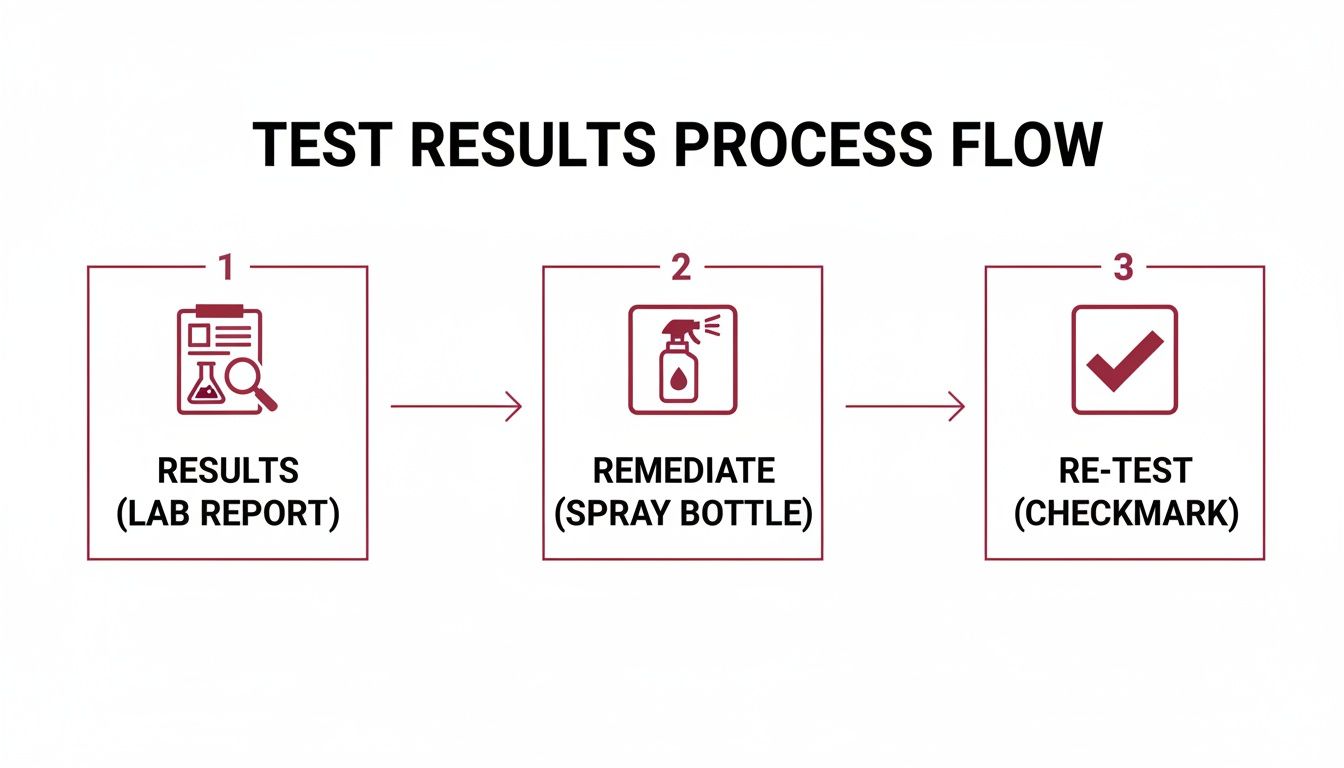
As you can see, getting the results is just the starting line. A real professional is with you for the whole journey, guiding you through remediation and final validation testing to ensure the property is completely safe and compliant.
From Reactive to Proactive Protection
At the end of the day, picking the right partner helps you move from putting out fires to preventing them in the first place. Instead of waiting for a problem to appear, you can put a structured testing program in place that actively protects your assets, your people, and your legal standing. It’s about turning an unknown risk into a managed certainty.
When you bring in experts, you're not just buying a test. You're investing in peace of mind, legal compliance, and the long-term health and safety of every single person who sets foot on your property.
To make sure you're working with the best in the business, you need to engage accredited occupational hygiene consultants who have the right expertise and certifications. Take that final step—schedule a consultation and start building a proactive safety plan for your properties today.
Your Top Meth Testing Questions Answered
Stepping into the world of property contamination can feel a bit overwhelming, and it's natural to have questions. Let's walk through some of the most common queries we get about meth testing, giving you the clear, straightforward answers you need to make the right call.
Can You See Meth Contamination?
In most cases, no. While a full-blown meth lab might leave behind some tell-tale signs like chemical stains, weird smells, or leftover equipment, the residue from simply smoking the drug is completely invisible and has no odour.
This is the biggest misconception we encounter. People assume they'd be able to spot the problem, but you can't. Relying on a visual inspection alone is just guesswork. The only way to be absolutely certain if a property is safe is to have a professional take surface samples and get them analysed by a proper lab.
How Long Does Meth Residue Stick Around?
Forever, essentially. Methamphetamine residue is incredibly stubborn. It doesn’t break down, evaporate, or fade away on its own. It can linger on walls, seep into carpets, and hide in ventilation systems for years, posing an ongoing health risk to anyone who spends time there.
And don't think a bit of elbow grease will solve the problem. Standard cleaning, even with heavy-duty products like bleach, won't touch it. You need a specialised decontamination process carried out by professionals to properly neutralise and remove these hidden toxins.
Is This Just a Problem for Houses and Apartments?
Not at all. We see this issue pop up just as often in commercial and industrial settings. Workplaces, especially in industries like manufacturing, transport, and mining, can become contaminated if staff use meth on the premises.
Think about all the shared spaces that could be affected:
- Company cars, trucks, and heavy machinery
- Lunchrooms and locker areas
- Site offices or on-site accommodation
For a business owner, this isn't just a health issue—it's a legal one. Under Australia's Work Health and Safety (WHS) laws, you have a clear duty of care. Testing isn't just a good idea; it's a fundamental part of managing your workplace risk and keeping your team safe.
At Anitech, we provide nationwide, NATA-accredited meth testing to give you complete certainty and peace of mind. Our expert occupational hygienists help you protect your assets, ensure legal compliance, and safeguard the health of your tenants and employees. Contact us today to schedule a confidential consultation.


