
The constant hum and rattle of power tools are a daily reality in many Australian industries, from construction and mining to manufacturing. While this vibration is a byproduct of getting the job done, it carries a significant and often overlooked risk: Hand-Arm Vibration Syndrome (HAVS). This debilitating condition, caused by prolonged exposure to vibration from handheld equipment, can lead to permanent damage to nerves, blood vessels, and joints in the hands and arms.
Early detection is the most critical defence against irreversible harm, yet the initial symptoms can be subtle and easily dismissed as fatigue or minor discomfort. This guide is designed for employers, safety managers, and workers alike, providing a direct and practical look at the first indicators of this serious occupational health issue.
We will explore the crucial question, 'what are three early signs of HAVS?', and provide actionable insights on how to recognise them in the workplace. Understanding these preliminary warnings enables proactive intervention, protecting your workforce and safeguarding long-term health and productivity. By learning to spot these symptoms, you can implement effective controls and prevent a manageable risk from becoming a permanent disability. Let's examine the key signs that demand your immediate attention.
1. Sign #1: Finger Blanching (The Vascular Phase)
Often referred to as vibration-induced white finger, finger blanching is one of the most visible and classic early signs of HAVS. This vascular symptom occurs when the blood vessels in the fingers go into spasm and constrict, temporarily cutting off normal blood flow. This response is frequently triggered by exposure to cold or continued vibration, causing the affected fingers to turn a stark, waxy white.

The underlying cause is damage to the tiny nerves that regulate the opening and closing of these blood vessels. Over time, prolonged exposure to vibration impairs their function, leading to these episodic spasms. An attack typically lasts between 15 and 30 minutes, after which the blood returns, often causing the fingers to become bright red and throb painfully. Because it is a highly noticeable physical change, finger blanching serves as a critical first alert that significant vascular damage is underway.
How to Recognise Finger Blanching in Workers
Recognising finger blanching requires both observation and active listening, as workers may dismiss it as merely "poor circulation." The key is to look for distinct, clearly defined patches of white on one or more fingers, often starting at the tips. It’s not a uniform paleness; the contrast between the blanced skin and normal skin is usually sharp.
Real-World Scenarios:
- Construction: A jackhammer operator in Melbourne notices their index and middle fingers turn completely white during their morning coffee break on a cold winter day. When they return to their work, the feeling slowly returns with a painful tingling.
- Mining: A quarry worker using rock drills for several years finds their fingertips become pale and waxy during colder morning shifts, even when wearing gloves. They mention that their hands feel "dead" during these episodes.
- Forestry: A chainsaw operator reports that after a long shift, the tips of their fingers feel numb and look unusually pale, a problem that seems to worsen with each passing year of service.
When to Escalate for Assessment
Immediate action is necessary once finger blanching is reported or observed. It is a definitive sign that a worker's vibration exposure has crossed a harmful threshold.
Key Insight: A single, confirmed episode of finger blanching is sufficient grounds to trigger a formal review. Do not wait for symptoms to become frequent or severe. This early intervention is crucial for preventing irreversible damage.
You should escalate for a clinical or occupational hygiene assessment if a worker:
- Reports even one clear episode of blanching.
- Mentions that symptoms are triggered by cold away from the workplace (e.g., while shopping for frozen food).
- Describes their fingers changing colour in a distinct sequence (white, then blue, then red).
Practical Workplace Controls and Prevention
To mitigate the risks associated with finger blanching and prevent the progression of HAVS, businesses should implement a multi-faceted control strategy. A professional occupational hygiene assessment from a provider like Anitech can help identify high-risk tasks and quantify vibration levels to guide these efforts.
Actionable Tips for Prevention:
- Document Everything: Instruct workers to keep a detailed symptom diary. They should note the date, time, duration, and triggers (e.g., cold temperature, specific tool) of any blanching episode. Taking photos with a smartphone can provide valuable evidence for medical review.
- Minimise Cold Exposure: Encourage workers to wear warm, anti-vibration gloves and take breaks in heated areas. Crucially, they should avoid handling cold objects or exposing hands to cold air immediately after using vibrating tools.
- Seek Medical Evaluation: If a worker experiences blanching more than once a month or if the episodes are severe, they must be referred for a formal medical evaluation with a doctor familiar with occupational health. This is essential for a formal diagnosis and to meet health and safety obligations.
- Review and Rotate Tasks: Re-evaluate job schedules to ensure workers using high-vibration tools have their exposure time strictly limited and are rotated to non-vibrating tasks throughout their shift. This is a cornerstone of managing one of the key three early signs of HAVS.
2. Sign #2: Tingling and Pins-and-Needles Sensations (Paresthesia)
Paresthesia, more commonly described as tingling, prickling, or a "pins and needles" sensation, is another critical neurological warning sign of HAVS. This sensory disturbance represents the earliest stages of nerve irritation and damage caused by prolonged exposure to vibration. It occurs when the fine sensory nerve fibres in the fingers and hands are injured, leading to spontaneous or abnormal neural signals being sent to the brain.
Unlike the dramatic visual cue of finger blanching, paresthesia is a subjective symptom that workers report feeling. Initially, these sensations are often intermittent, appearing after a long shift or waking the worker up at night. As the nerve damage progresses, the tingling can become more persistent, eventually leading to a more profound loss of sensation or permanent numbness. Recognising and acting on these early neurological symptoms is vital to prevent irreversible impairment.
How to Recognise Paresthesia in Workers
Identifying paresthesia relies on encouraging workers to report symptoms they might otherwise ignore as simple fatigue. It's crucial to ask specific questions about sensory changes in their hands and fingers, as these feelings can be subtle at first. The key is to listen for descriptions of abnormal sensations that occur without an obvious cause, such as a hand "falling asleep."
Real-World Scenarios:
- Manufacturing: A factory worker who uses pneumatic hammers for several hours a day reports that their fingers feel like they have "ants crawling on them" for an hour or two after their shift ends.
- Construction: A power drill operator in Sydney mentions that they often wake up at night with a painful pins-and-needles sensation in their thumb and index finger, forcing them to shake their hand to get relief.
- Forestry: A chainsaw operator notices that their fingers often feel like they're "falling asleep" during breaks, even when their hands are warm. They dismiss it as being tired, but the sensation becomes more frequent over time.
When to Escalate for Assessment
Any persistent report of tingling or pins and needles should be taken seriously and warrants further investigation. These are not normal side effects of hard work; they are direct indicators of nerve irritation.
Key Insight: Night-time symptoms are a significant red flag. Paresthesia that wakes a worker from sleep indicates that the nerve irritation is not subsiding with rest and may be progressing more rapidly.
You should escalate for a clinical or occupational hygiene assessment if a worker:
- Reports tingling or numbness that persists for hours after finishing work.
- Describes being woken up at night by these sensations.
- Mentions that specific fingers or areas of their hand are consistently affected.
Practical Workplace Controls and Prevention
Addressing paresthesia involves reducing the source of the nerve irritation: vibration. A comprehensive management plan, often developed with the help of an occupational hygienist, is the most effective way to protect workers. Quantifying vibration exposure helps to prioritise controls for the highest-risk tasks.
Actionable Tips for Prevention:
- Document Symptoms Accurately: Encourage workers to keep a detailed symptom log. They should note which fingers are affected, the time of day the sensations occur (during work, after work, at night), and the frequency and duration of each episode. This helps distinguish HAVS from other conditions like carpal tunnel syndrome.
- Use the Right Equipment: Invest in modern, low-vibration tools and ensure they are well-maintained. Worn or unbalanced tool components can significantly increase vibration levels. Also, provide certified anti-vibration gloves to help dampen exposure.
- Promote Correct Tool Handling: Train workers to use a firm but not overly tight grip and to let the tool do the work. Over-gripping a tool dramatically increases the amount of vibration transferred to the hand and arm.
- Schedule Regular Breaks: Implement a work-rest schedule that mandates frequent breaks away from vibrating equipment. These "vibration-free" periods allow blood flow to return to normal and give nerves a chance to recover, which is crucial for managing the three early signs of HAVS.
3. Sign #3: Loss of Grip Strength and Dexterity
Beyond the sensory and vascular symptoms, a decline in motor function is a critical and often debilitating early sign of HAVS. Reduced grip strength and a loss of fine manual dexterity are the direct results of cumulative nerve damage. This damage impairs the motor pathways and proprioception (your sense of where your body parts are), making it difficult to control hand movements effectively.
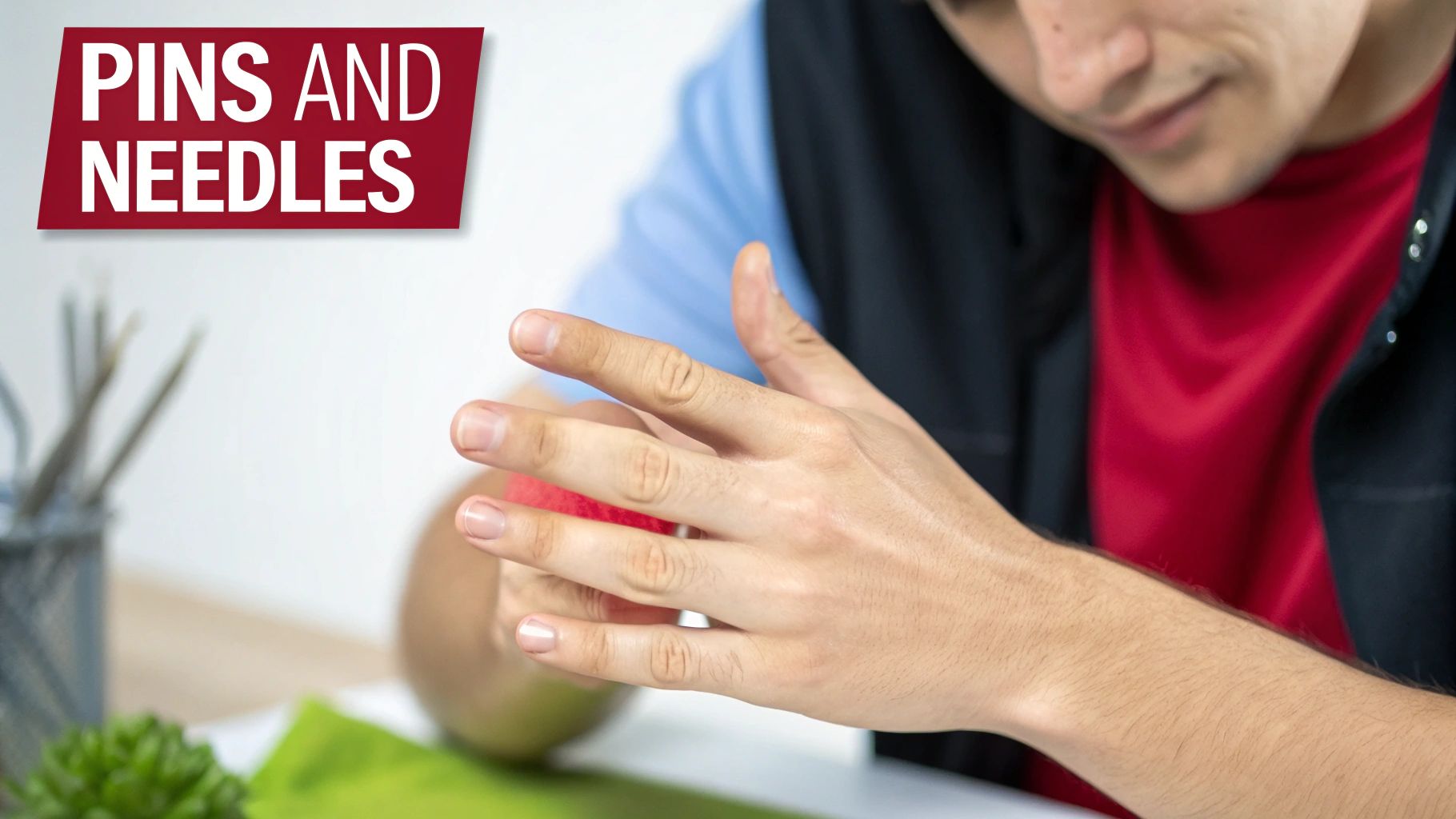
Workers may notice they are dropping tools, struggling to maintain a firm grasp on equipment, or finding intricate tasks like fastening a small bolt suddenly challenging. This functional impairment is not just a nuisance; it poses a significant safety risk. Unlike subjective feelings of numbness, grip strength can be measured objectively with a dynamometer, making it a quantifiable and powerful early indicator of neurological damage from vibration.
How to Recognise Loss of Grip Strength in Workers
Recognising this sign involves observing workers' performance and listening to their frustrations. A worker might not complain about "reduced grip strength," but they might mention feeling clumsy, fumbling with objects, or experiencing hand fatigue much sooner than they used to. Look for signs of over-gripping tools to compensate or needing to use two hands for a task that previously only required one.
Real-World Scenarios:
- Manufacturing: A factory worker on an assembly line who has used pneumatic tools for years finds they are unable to consistently torque small components, leading to quality control issues.
- Construction: A carpenter reports frequently dropping their hammer or finding their hand "gives out" while holding a drill, especially towards the end of a shift.
- Agriculture: A farmhand using vibrating machinery notes that simple tasks like repairing equipment feel increasingly difficult, as their fingers don't seem to cooperate when handling nuts and bolts.
When to Escalate for Assessment
Any reported or observed decline in a worker’s functional ability to handle tools safely and effectively must be escalated. This symptom directly impacts workplace safety and productivity and indicates that nerve damage may be progressing.
Key Insight: Do not dismiss complaints of "clumsiness" or "hand fatigue" as normal. A measurable decline in grip strength is objective evidence that a worker’s health is being compromised by their vibration exposure.
You should escalate for a clinical or occupational hygiene assessment if a worker:
- Reports dropping tools or objects more frequently.
- Mentions difficulty with tasks requiring fine motor skills (e.g., writing, buttoning a shirt).
- Shows a noticeable decline in performance on tasks requiring manual dexterity.
Practical Workplace Controls and Prevention
Proactively managing and monitoring motor function is vital to prevent irreversible nerve damage. A comprehensive strategy should include both regular health surveillance and ergonomic adjustments to work tasks and tools. A formal hand-arm vibration assessment can provide the objective data needed to target these controls effectively.
Actionable Tips for Prevention:
- Establish a Baseline: Conduct baseline grip strength measurements for all new workers exposed to vibration before they start high-risk tasks. Use a calibrated dynamometer and record the average of three trials for each hand.
- Implement Regular Testing: Perform follow-up grip strength tests every 6 to 12 months as part of routine health surveillance. A decline of 10-15% from the worker's baseline is a significant red flag that warrants further investigation.
- Optimise Tools and Tasks: Introduce ergonomic tool handles that reduce the grip force required. Where possible, use tool balancers or other supports to take the weight off the worker’s hands and arms.
- Promote Rest Breaks: Enforce regular breaks away from vibrating equipment to allow nerves and muscles to recover. This is a simple but effective way to manage one of the most critical three early signs of HAVS.
From Recognition to Action: Your Next Steps in HAVS Prevention
Understanding what are three early signs of HAVS is the foundational step in safeguarding your workforce from this debilitating and permanent condition. The journey from awareness to effective prevention, however, requires a deliberate and proactive strategy. We have explored the critical early indicators: the vascular signs like finger blanching, the sensorineural symptoms such as numbness and tingling, and the musculoskeletal effects, including a noticeable loss of grip strength. These symptoms are not mere annoyances; they are clear distress signals from the body, indicating that harmful levels of vibration exposure are taking a toll.
Ignoring these warnings carries severe consequences. For the employee, it can mean a future of chronic pain, lost sensation, and an inability to perform both work-related tasks and simple daily activities. For your business, the ramifications extend beyond ethical responsibility to include significant financial and operational risks, such as increased workers' compensation claims, higher insurance premiums, lost productivity from skilled workers, and potential non-compliance penalties from safety regulators. The key takeaway is that early detection and immediate intervention are the most powerful tools you have.
Turning Knowledge into a Protective Strategy
Moving forward, your focus should be on embedding a culture of vibration safety into your daily operations. This is not a one-time fix but a continuous cycle of risk management. Your immediate priorities should include:
- Reviewing and Enhancing Your Risk Assessment: Go beyond simply identifying vibrating tools. Quantify the exposure levels and durations for specific roles. A thorough assessment is the bedrock of any effective control plan.
- Prioritising the Hierarchy of Controls: Focus first on eliminating or substituting high-vibration equipment. If that's not feasible, invest in low-vibration tools and implement strict maintenance schedules to keep them in optimal condition.
- Implementing Robust Administrative Controls: Introduce job rotation to limit individual exposure times. Ensure workers take regular breaks away from vibrating equipment. This is a simple yet highly effective way to mitigate risk.
- Empowering Your Team with Training: Your workers are your first line of defence. Comprehensive training must cover how to recognise the early signs of HAVS, safe work practices, and the proper procedure for reporting symptoms without fear of reprisal.
The Critical Role of Health Surveillance
Perhaps the most crucial takeaway is the non-negotiable need for a structured health surveillance program for all at-risk employees. This proactive monitoring allows for the detection of HAVS at its earliest, most manageable stage, often before the damage becomes irreversible. It demonstrates a concrete commitment to worker welfare and provides invaluable data for refining your safety protocols. Acting decisively when an employee first reports tingling fingers or a single episode of finger blanching can prevent a lifetime of disability. Don't wait for these symptoms to become frequent or severe. The moment they appear is the moment to take action.
Are you ready to transform your understanding of HAVS into a robust, compliant, and effective vibration management program? The expert occupational hygienists at Anitech Ltd Pty specialise in conducting detailed vibration risk assessments and developing practical control strategies tailored to your industry. Contact us today to ensure your workplace is not just compliant, but truly safe for every member of your team.


