
When you start searching for "VOC testing near me," you're taking a significant step towards safeguarding the air quality inside your home or workplace. This process involves engaging a professional to measure the invisible chemical gases—known as Volatile Organic Compounds—that are quietly released by everyday items all around you. The primary goal is to uncover potential health risks and make your indoor space safer and healthier for everyone.
What Are VOCs and Why Should You Care?
Ever walked into a freshly painted room and noticed that sharp, chemical smell? Or that unmistakable ‘new car’ scent? What you’re smelling are Volatile Organic Compounds, or VOCs. These are a massive family of chemicals that have a very low boiling point, meaning they easily evaporate into a gas at room temperature and mix into the air we breathe.
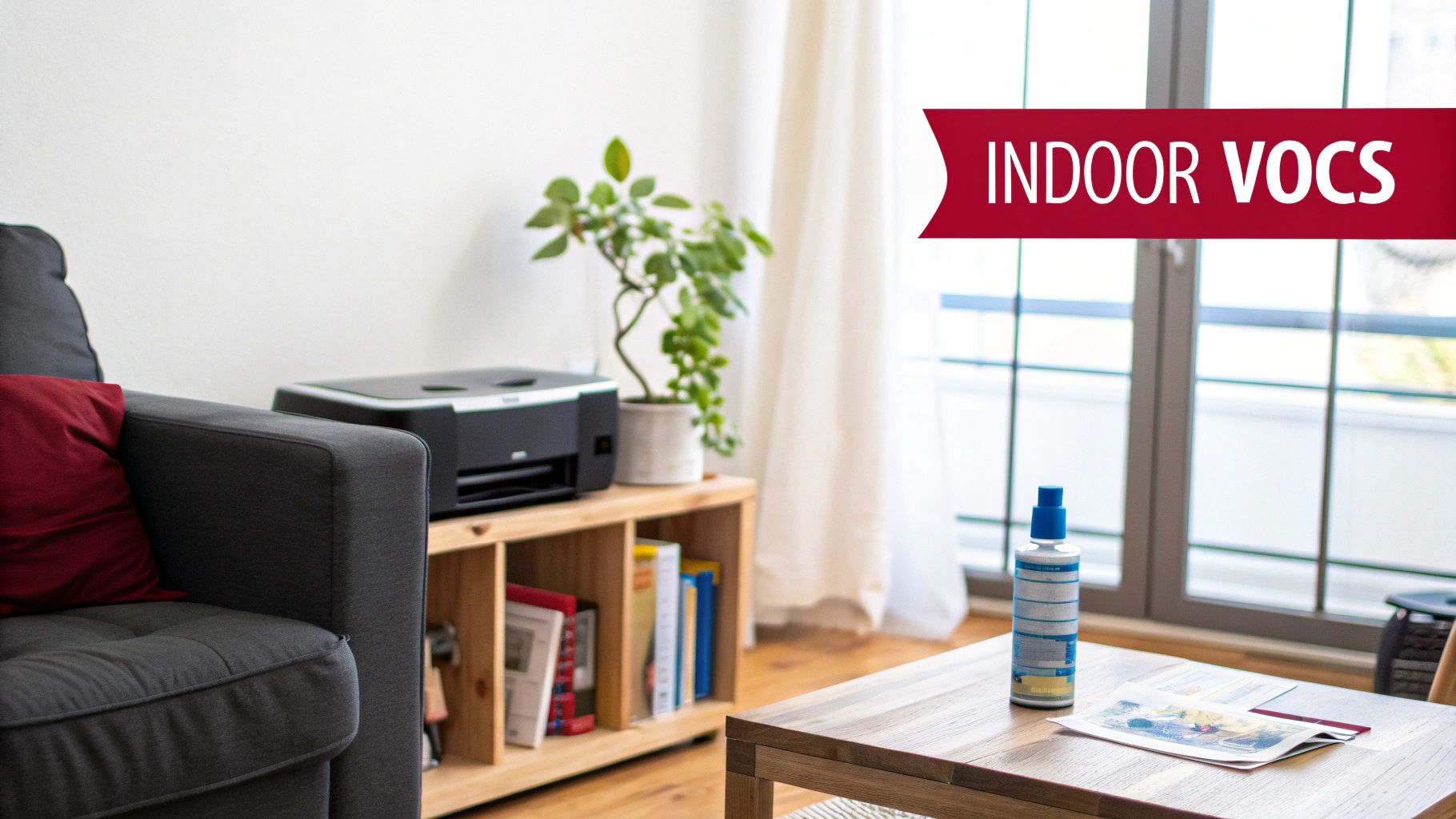
You can think of it like the steam rising off a hot mug of coffee. Except, instead of just water vapour, these are chemical vapours. They seep out of thousands of products in a process called "off-gassing." Because this release is often continuous, these compounds can build up inside, reaching concentrations far higher than you'd ever find outdoors. This accumulation is a primary reason why indoor air quality can become compromised over time.
Where Are These Invisible Chemicals Hiding?
The sources of VOCs are incredibly common; they're lurking in just about every modern building. Getting to know where they come from is the first step toward managing your indoor air quality effectively. Understanding these sources empowers you to make more informed decisions about the products you bring into your environment.
Some of the biggest culprits include:
- Building Materials: Think paints, varnishes, caulking, and even new carpet. These can off-gas VOCs for months, sometimes years, after they're installed, contributing to a long-term decline in air quality.
- Furniture and Furnishings: That new cabinet or desk? If it's made from pressed wood, it likely contains formaldehyde, a notorious VOC. Upholstery, foam in sofas, and new mattresses are also common sources.
- Household and Cleaning Products: Aerosol sprays, air fresheners, strong disinfectants, and even some scented candles release a cocktail of these compounds every time you use them, creating temporary but potent spikes in VOC levels.
- Office Equipment: The humble office printer, photocopiers, and various glues and adhesives all contribute to the chemical load in the air, particularly in enclosed office spaces with limited ventilation.
With VOCs being so widespread, completely avoiding them is next to impossible. While a little bit here and there isn't usually a problem, high concentrations and long-term exposure can start to cause health issues. These can be as mild as headaches and dizziness or as serious as long-term respiratory problems. If you'd like to go deeper on this, our guide on what is VOC testing has all the details.
The crucial takeaway is this: the air inside our homes and offices can be two to five times more polluted than the air outside. That really puts into perspective how important it is to know what we’re breathing day in and day out.
Being proactive about your indoor air isn’t about trying to live in a sterile bubble. It’s simply about being aware and taking smart steps to manage your environment. Professional testing helps you pinpoint where the high concentrations are, so you can take targeted action—like improving ventilation or making smarter choices about the products you bring inside—to create a healthier space for everyone. This targeted approach is far more effective than general, uninformed attempts to improve air quality.
Why Professional VOC Testing Matters
It’s easy to ignore what you can’t see, but the invisible nature of VOCs is exactly what makes professional testing so critical. Think of it as a comprehensive health check for your home or office. Getting a professional assessment isn't about causing alarm; it's about gaining real clarity and taking control of your indoor environment. It turns invisible risks into solid, actionable data that you can use to make meaningful improvements.
This process is especially important in a few key scenarios. If you’ve just wrapped up a renovation, for instance, all that new paint, flooring, and cabinetry is likely off-gassing a significant cocktail of chemicals. Likewise, when you're buying a new home, a VOC test can uncover hidden issues left by previous owners, ensuring you don’t unknowingly inherit an air quality problem. Professional testing provides an objective baseline of your indoor environment's health.
Protecting the People Who Matter Most
For any home with children, elderly family members, or anyone with respiratory issues like asthma, professional VOC testing is non-negotiable. These groups are far more susceptible to the effects of airborne chemicals. Their bodies can react more intensely to even low concentrations of pollutants, making clean indoor air absolutely essential for their health and comfort. Poor air quality can exacerbate existing conditions and lead to new sensitivities.
Knowing the specific types and levels of VOCs in your air empowers you to create a genuinely safe space. It’s a move that brings incredible peace of mind, confirming that the air your family breathes every day isn't quietly contributing to health problems. This proactive measure is a fundamental part of creating a healthy home.
Professional testing takes you from guessing to knowing. It pinpoints the exact sources of pollution, giving you the hard evidence needed to fix the problem and create a truly healthy indoor space for everyone.
From Niggling Symptoms to Long-Term Health Risks
Being exposed to high levels of VOCs can set off a whole range of immediate symptoms, which are often just brushed off as feeling a bit "off." These can really disrupt your day-to-day life and comfort, affecting productivity and overall well-being.
- Frequent Headaches and Dizziness: A very common reaction to chemical fumes in poorly ventilated rooms.
- Eye, Nose, and Throat Irritation: This is a classic tell-tale sign that airborne irritants are floating around.
- Nausea and Fatigue: Often, this is your body working overtime to process foreign chemicals it wasn't designed to handle.
But it goes beyond these short-term annoyances. Ongoing, long-term exposure has been linked to much more serious health concerns, including potential damage to the liver, kidneys, and central nervous system. By identifying and dealing with high VOC levels early on, you’re not just getting rid of a temporary headache—you’re making a proactive investment in your future health. A quick search for "VOC testing near me" is the first step toward getting the data you need to make smart decisions and protect your environment.
Common VOC Sources in Your Home and Office
You might be surprised to learn that Volatile Organic Compounds aren't just found in industrial plants or science labs. They’re actually very common in our homes and workplaces, hiding in plain sight in everyday items. Pinpointing where they come from is the crucial first step toward clearing the air and making your space healthier. This knowledge allows for targeted interventions rather than guesswork.
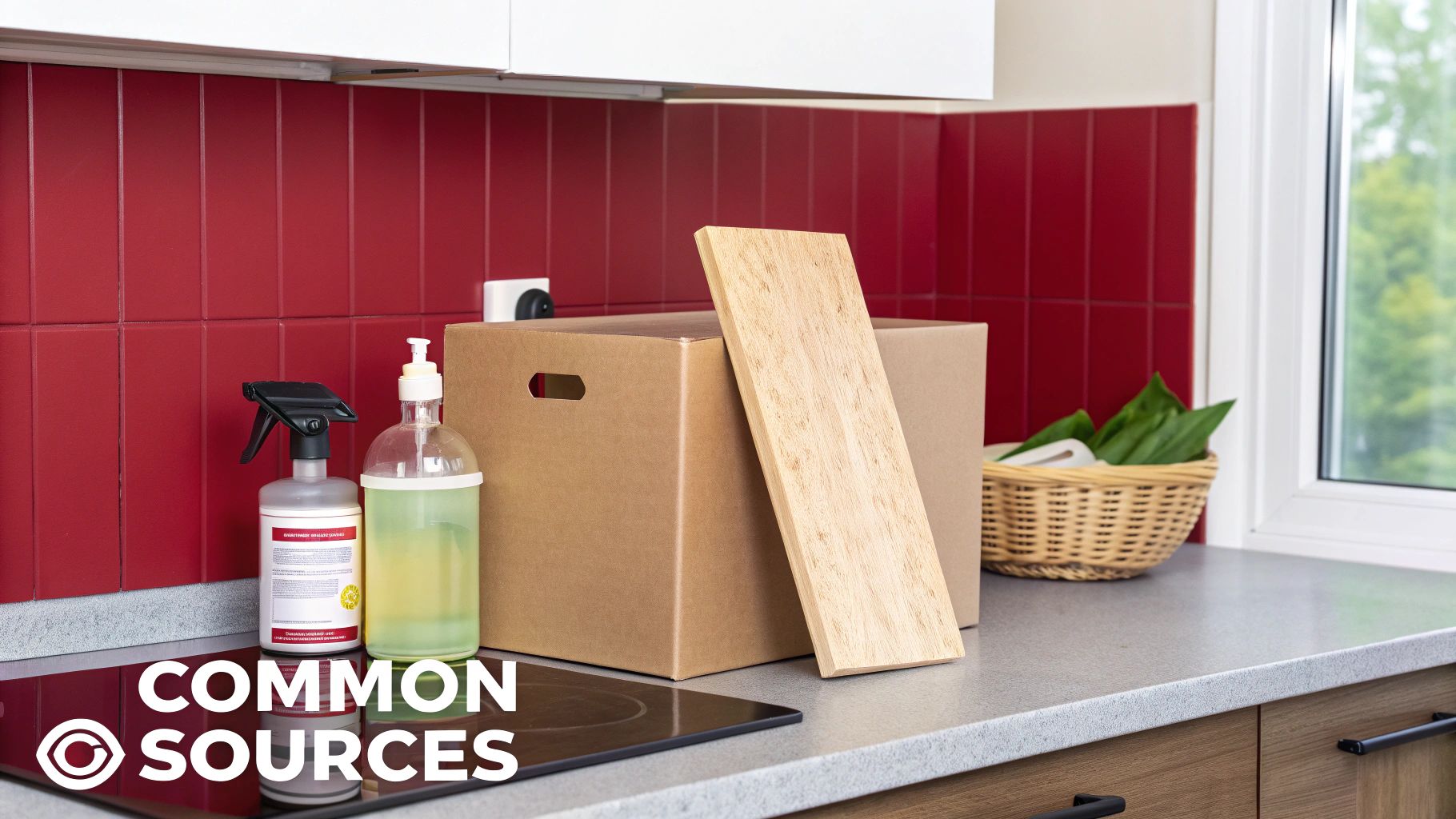
Many of these sources are things we use every single day without a second thought. Have you recently renovated, bought new furniture, or started using a new cleaning product? These activities can cause VOC levels to spike, which is often when people start looking up "VOC testing near me" for some answers. Recognizing these trigger events is key to maintaining good air quality.
A Room-by-Room Guide to Potential Culprits
VOCs can lurk in just about every part of a building, from the paint on the walls to the cleaning supplies under the sink. It's less about a single major source and more about the combined effect of many different items. This cumulative impact is what can lead to significant indoor air pollution.
Here are some of the most common offenders to look out for:
- Building and Renovation Materials: Fresh paint, varnishes, and sealants are notorious for releasing high levels of VOCs. That "new carpet smell"? That’s often the adhesives and carpet fibres off-gassing chemicals, a process that can last for weeks or even months.
- Furniture and Furnishings: Your new flat-pack bookshelf or desk, likely made from pressed wood like MDF or particleboard, is a classic source of formaldehyde. Upholstered furniture and memory foam mattresses also release their own mix of compounds as they settle.
- Cleaning and Household Products: Aerosol sprays, heavy-duty disinfectants, and even some scented candles can fill the air with a cocktail of chemicals. Many popular cleaning supplies and commercial air fresheners can contribute significantly to indoor air pollution.
- Office Equipment and Hobbies: Office printers and photocopiers can emit VOCs when they're running. On the home front, craft supplies like glues, permanent markers, and certain paints are also frequent sources.
When you start identifying these sources, you can connect the dots between the "stuff" in your space and the quality of the air you're breathing. This awareness is the most powerful tool you have for creating a healthier indoor environment.
Understanding Specific Chemical Connections
To get a clearer picture, it helps to know which chemicals come from which products. For example, many of us are familiar with the risks of formaldehyde, but we might not realise it's slowly being released from our furniture or flooring. This specific knowledge is critical for effective source control.
Here’s a quick look at some of the most common VOCs you might encounter.
Common Household VOCs and Their Sources
| VOC Name | Common Sources | Potential Health Effects |
|---|---|---|
| Formaldehyde | Pressed wood (MDF, particleboard), glues, paints, new furniture, insulation | Eye, nose, and throat irritation; coughing; allergic reactions; potential carcinogen |
| Benzene | Plastics, synthetic fibres, detergents, cigarette smoke, vehicle exhaust | Drowsiness, dizziness, headaches; long-term exposure can affect bone marrow and blood |
| Toluene | Paint thinners, adhesives, nail polish, automotive products | Headaches, confusion, fatigue; can impact the nervous system with high exposure |
| Xylene | Markers, paint, varnishes, gasoline | Irritation of the eyes, nose, and throat; dizziness, headaches |
| Ammonia | Window cleaners, floor waxes, fertilisers | Respiratory irritation, coughing, burning sensation in the nose and throat |
Knowing these specific links makes it easier to assess your own environment. It starts to explain why you might feel sluggish in a newly furnished office or why a freshly painted room gives you a headache. Professional VOC testing is designed to move beyond guesswork, giving you concrete data to confirm these suspicions and take meaningful action.
How to Choose a Reliable Local VOC Testing Service
Typing "VOC testing near me" into Google can feel like opening a Pandora's box of options. It's easy to get overwhelmed. But picking the right service isn't just about finding someone down the road; it's about finding a genuine expert who can give you accurate, reliable data about the air you're breathing. Your goal is to get results you can actually trust, so making a well-informed choice is vital.
The first thing to do is a bit of homework on the company's credentials. A truly reputable service will be upfront about their qualifications and the standards they work to. You're looking for professionals with a solid background in occupational hygiene or environmental science, as they have the expertise needed to conduct a proper, thorough assessment. This expertise is what ensures the quality and accuracy of the final report.
Look for Industry Certifications
Proper qualifications aren't just a "nice-to-have"—they're non-negotiable. They are your guarantee that the company follows recognised industry best practices and uses scientifically sound methods for sampling and analysing your air. This verification is crucial for obtaining data you can rely on.
Before you hire anyone, make sure to ask about these key things:
- Accreditation: Do they use a NATA (National Association of Testing Authorities) accredited laboratory to analyse their samples? This is the gold standard in Australia, ensuring the lab meets strict quality and competency requirements.
- Professional Memberships: Are their hygienists members of professional bodies like the Australian Institute of Occupational Hygienists (AIOH)? Membership is a good sign they're committed to ongoing professional development and ethical practice.
- Specific Training: Have they had specific training in indoor air quality (IAQ) assessment and the specialised equipment needed for the job?
These credentials are what separate the real experts from the rest. They ensure your testing is based on science, not guesswork.
Evaluate Their Testing Methods and Transparency
A good provider will be an open book from start to finish. They should be able to walk you through their methodology, explain which specific compounds they're testing for, and describe the equipment they'll use—all without hiding behind confusing jargon. This transparency builds trust and helps you understand the value you are receiving.
A key sign of a trustworthy service is their willingness to discuss their entire process openly. They should detail how samples are collected, where they are analysed, and what standards (like ISO 16000) are used to interpret the results.
Don't be shy about asking direct questions. It's a great way to gauge their transparency. For instance, ask them what type of sampling they do—is it active sampling with pumps or passive sampling with badges? More importantly, ask them why they recommend that method for your specific situation. A true professional will welcome these questions, seeing it as a chance to show their expertise and earn your confidence. You can also explore different types of VOC testing companies to get a feel for how established professionals present their services and credentials.
Prioritise Local Expertise and Comprehensive Reporting
There's a real advantage to choosing a local expert. A provider who is familiar with the Australian climate and the building materials common in your region will have a much better handle on potential VOC sources specific to your area. This local insight can be incredibly valuable for getting to the root cause of an air quality problem quickly and efficiently.
Finally, remember the job isn't done once the samples are taken. A genuinely valuable service provides a comprehensive report that you can actually understand. It should clearly list the VOCs they found, their concentration levels, and how those levels stack up against established Australian exposure standards.
But most importantly, the report must include actionable recommendations. It should give you a clear roadmap for what to do next, turning all that complex data into a straightforward plan for creating a healthier indoor environment. A good report empowers you to act.
What to Expect From Your VOC Test
So, you’ve decided to get a professional VOC test. Knowing what the process involves can take the mystery out of it and help you feel prepared. It’s a systematic journey, moving from an initial chat and inspection right through to a detailed report that gives you clear answers about your indoor air. The entire procedure is designed to be as thorough and non-intrusive as possible.
When a technician from a service like OCCHygiene arrives, they won't just start setting up gear. Their first step is typically a walk-through and a conversation to understand your specific concerns. Are you noticing strange smells? Experiencing headaches? This context is crucial for a targeted and effective investigation.
Next, they'll set up specialised equipment for active air sampling. This usually involves a carefully calibrated air pump attached to a sorbent tube. Think of this tube as a chemical sponge, designed to trap any VOCs floating in a measured volume of air. It’s a quiet and unobtrusive process that can take anywhere from one to several hours, depending on how many rooms you're testing and the specific goals of the assessment.
From On-Site Sample to Laboratory Analysis
Once the air samples have been collected, they are carefully sealed and couriered off to an accredited laboratory. This is where the real deep-dive science happens, far beyond the capabilities of any DIY kit.
Lab technicians use highly sophisticated methods, like Gas Chromatography-Mass Spectrometry (GC-MS), to separate and precisely identify every chemical compound captured in the sample. More importantly, they measure the exact concentration of each one. It's this meticulous analysis that ensures your results are both accurate and reliable, forming the basis of any meaningful recommendations.
You can typically expect to wait anywhere from a few business days to a couple of weeks for the lab results. Your testing provider will give you a clear timeline and keep you in the loop throughout this period.
This infographic breaks down the key stages you'll go through when choosing and working with a professional VOC testing service.

As you can see, the whole process is built on a foundation of proper credentials, scientific rigour, and transparent reporting—all to make sure the results you get are trustworthy.
Understanding Your VOC Test Report
The final report you receive is much more than a jumble of scientific data. It's your roadmap to understanding your indoor air quality. A good report will clearly list which VOCs were found and at what concentration, usually measured in micrograms per cubic metre (µg/m³). This level of detail is essential for a proper diagnosis of your indoor environment.
The most crucial part of any good report is context. It should directly compare your results against established Australian safe exposure limits. This is what tells you whether the detected levels are something you need to worry about.
Finally, the report should deliver clear, actionable advice. If elevated VOC levels are detected, the provider should recommend practical next steps. This might include improving ventilation, suggesting specific air purifiers, or helping you pinpoint and remove the source of the pollution. The goal is to provide a complete solution, not just data.
To dig deeper into creating a healthier home or office, check out our comprehensive guide to indoor air quality VOC testing. It’s all about turning the data from your "VOC testing near me" search into a concrete plan for a safer environment.
Got Questions About VOC Testing? We Have Answers.
When you start digging into indoor air quality, it's natural for questions to pop up. Let's tackle some of the most common ones we hear, especially from people searching for "VOC testing near me." This should clear things up and help you figure out your next steps with confidence.
How Much Does Professional VOC Testing Cost?
There's no single price tag for professional VOC testing; it really depends on what you need. The cost is shaped by a few key things, like the size of your property, the number of air samples required to get a reliable snapshot, and which specific chemicals need to be analysed. A targeted test for a specific chemical will differ in cost from a broad-spectrum analysis.
For a straightforward screening in a small home or flat, you could be looking at a starting price of a few hundred dollars. But for a deep-dive analysis in a larger house or a commercial space, the cost can easily climb, ranging from $1,000 to several thousand dollars. Your best bet is always to get a few detailed quotes from accredited services to see what they offer and how their pricing stacks up.
Are DIY VOC Testing Kits Reliable?
Do-it-yourself kits are tempting because they're cheap, but they have some serious drawbacks. These kits typically give you a single, broad measurement for Total VOCs (TVOC), which basically just mashes all the different compounds into one big number. The problem is, they can't tell you which specific chemicals are in your air or at what levels. This lack of specificity makes the data largely unactionable.
That lack of detail means they aren't very helpful for tracking down the source of a health issue or figuring out what to do next. You might know there's a problem, but you won't know what it is or how to fix it.
When you need results you can actually count on and use, nothing beats a professional service. They come in with sophisticated, calibrated gear and send the samples off to an accredited lab. That’s how you get the precision needed to make smart decisions about your air quality.
How Often Should I Test My Home for VOCs?
For the average home, you don't need to put VOC testing on a regular schedule. It makes the most sense to test after a specific event that might have introduced new chemical sources into your home. It's a diagnostic tool, not a routine maintenance check.
Think about booking a test in these kinds of situations:
- After Renovations: Fresh paint, new floors, and cabinets are all classic sources of off-gassing.
- When Buying New Furniture: That 'new' smell from items made with pressed wood or certain fabrics can be VOCs, and they can linger for months.
- After Water Damage or Mould Problems: The cleanup process can bring new chemicals into the picture, and lingering dampness can affect building materials.
- If Someone is Experiencing Unexplained Symptoms: If people in the house are dealing with ongoing headaches, dizziness, or new breathing issues, it’s a big red flag to check the air.
Unless you notice new problems or make other major changes, one comprehensive test is usually all you need.
What Should I Do If High VOC Levels Are Found?
Getting a report back that shows high VOC levels can be worrying, but it's also the first real step toward solving the problem. The report from your professional testing service should give you a good idea of the likely culprits, which is crucial for taking effective action. The key is to respond methodically rather than panic.
First things first: get the air moving. Open up the windows, turn on fans, and do what you can to bring fresh air in and help clear out the built-up chemicals. This is a powerful and immediate first aid measure for your indoor air.
For a long-term fix, the best strategy is source control. This is just a practical way of saying you need to remove or seal the item that's causing the problem—whether it's a new rug, a piece of furniture, or some old paint tins stored in a cupboard. On top of that, a good air purifier with an activated carbon filter can be a huge help, as it’s designed to trap and remove VOCs from the air. Your testing expert should give you specific advice based on exactly what they found.
For expert guidance and scientifically-backed air quality assessments, trust the team at Anitech Ltd Pty. We provide detailed VOC testing services to help you create a safer and healthier indoor environment. Learn more at https://occhygiene.com.au.


