
A VOC testing company is a specialist firm that identifies and measures the invisible airborne chemicals known as Volatile Organic Compounds (VOCs). That distinct "new car" smell or the scent of fresh paint? Those are VOCs being released into the air, a process called off-gassing. While common, they can have a real impact on our health and a company's regulatory compliance.
The Critical Role of VOC Testing
Have you ever stopped to think about what’s actually in the air you breathe at home or in the office? It’s more than just dust and allergens. Countless invisible chemicals, or Volatile Organic Compounds (VOCs), are constantly being released from everyday items like building materials, furniture, cleaning products, and even printers.
While many of these are harmless in small doses, others can seriously degrade indoor air quality. Over time, exposure can lead to everything from headaches and dizziness to more significant respiratory issues. This is where a professional VOC testing company steps in. Think of them as air quality detectives, using specialised equipment to uncover and measure these hidden airborne risks.
Why Is This Service So Important?
For businesses, accurate VOC testing isn't just a "nice-to-have" for safety—it's a core part of compliance. Australian workplace health and safety regulations mandate that employers provide a safe environment, and that includes managing airborne contaminants. Getting this wrong can lead to hefty fines and disruptive stop-work orders.
For homeowners, the stakes are far more personal: protecting your family’s health from chemicals you can't even see. To properly tackle potential health issues in your living space, the first step is understanding the value of comprehensive professional air quality testing services.
VOC emissions testing in Australia extends to indoor environments, where obtaining representative data can be challenging. For example, formaldehyde levels in some offices have been measured between 16 to 140 µg/m³, sometimes exceeding the WHO's 30-minute exposure guideline of 100 µg/m³. You can find more details in this comprehensive review of VOCs within indoor environments in Australia.
Ultimately, bringing in a testing service gives you clarity and peace of mind. It turns an invisible, unknown risk into clear, manageable data you can act on.
Inside the Lab: Understanding VOC Testing Methods
Once a sample leaves your site, the real detective work begins. A VOC testing company takes that invisible air and starts the intricate process of turning it into hard data. This isn't a simple pass/fail check-up; it's a deep dive into the chemical makeup of your environment, requiring highly specialised equipment and years of expertise.
The journey from a physical sample to a detailed report is a multi-step process, with each stage designed to meticulously identify and measure specific compounds in the air.
This infographic lays out the basic workflow, from pinpointing a potential VOC source to the lab analysis that makes invisible risks visible.

As the visual shows, professional lab testing is the crucial bridge between a vague environmental concern and a known, manageable factor.
The Gold Standard: GC/MS Analysis
When it comes to precision, the most powerful and widely trusted method is Gas Chromatography/Mass Spectrometry (GC/MS). Think of it as a high-tech sorting facility for molecules.
First, the air sample is introduced into the gas chromatograph. You can imagine this as a long, winding sorting line. As the sample travels along, different chemical compounds move at different speeds depending on their unique properties, which effectively separates them from one another.
Once separated, each compound then moves into the mass spectrometer. This part of the machine acts like a final scanner, breaking the molecules apart and identifying them by their unique chemical fingerprint. This two-part process allows labs to both separate and precisely identify hundreds of different VOCs, even at incredibly low concentrations.
The groundwork for this kind of analysis has been refined over decades. A pivotal 1997 study in Western Australia, for instance, established a solid methodology for monitoring airborne VOCs using special canisters and GC/MS. This framework still influences how regional testing is done today. You can learn more about this foundational VOC monitoring research and its long-term impact.
Rapid On-Site Assessment Tools
While GC/MS provides the definitive answer, sometimes you need a faster, on-the-spot reading. For these situations, technicians often turn to Photoionisation Detectors (PIDs).
A PID works a bit like a chemical smoke detector. It uses ultraviolet light to zap the VOCs in an air sample, which creates a tiny, measurable electrical current. While it can’t tell you exactly which chemicals are present, it gives an immediate total VOC (TVOC) reading. This makes it invaluable for initial site walk-throughs or for flagging potential hotspots that need a closer look back at the lab.
This kind of rapid screening helps a VOC testing company make smarter decisions in the field.
By blending immediate on-site data with precise laboratory analysis, experts can build a complete picture of your environment. Understanding the various air quality tests available is the first step to effectively tackling specific concerns. This combined approach ensures that both immediate risks and subtle, long-term air quality issues are properly investigated, giving you the clear insights you need to create a safer space.
Industries That Depend on Accurate VOC Testing
For a whole host of Australian industries, getting VOC testing right isn't just a "nice to have"—it's an absolute must. Think of it less as a box-ticking exercise and more as a core part of ensuring compliance, product integrity, and public health. From the dust and fumes of a construction site to the sterile quiet of a medical lab, managing airborne chemicals is a constant challenge. This is where a professional VOC testing company becomes an indispensable partner, helping businesses navigate tricky regulations and handle risks you can't even see.
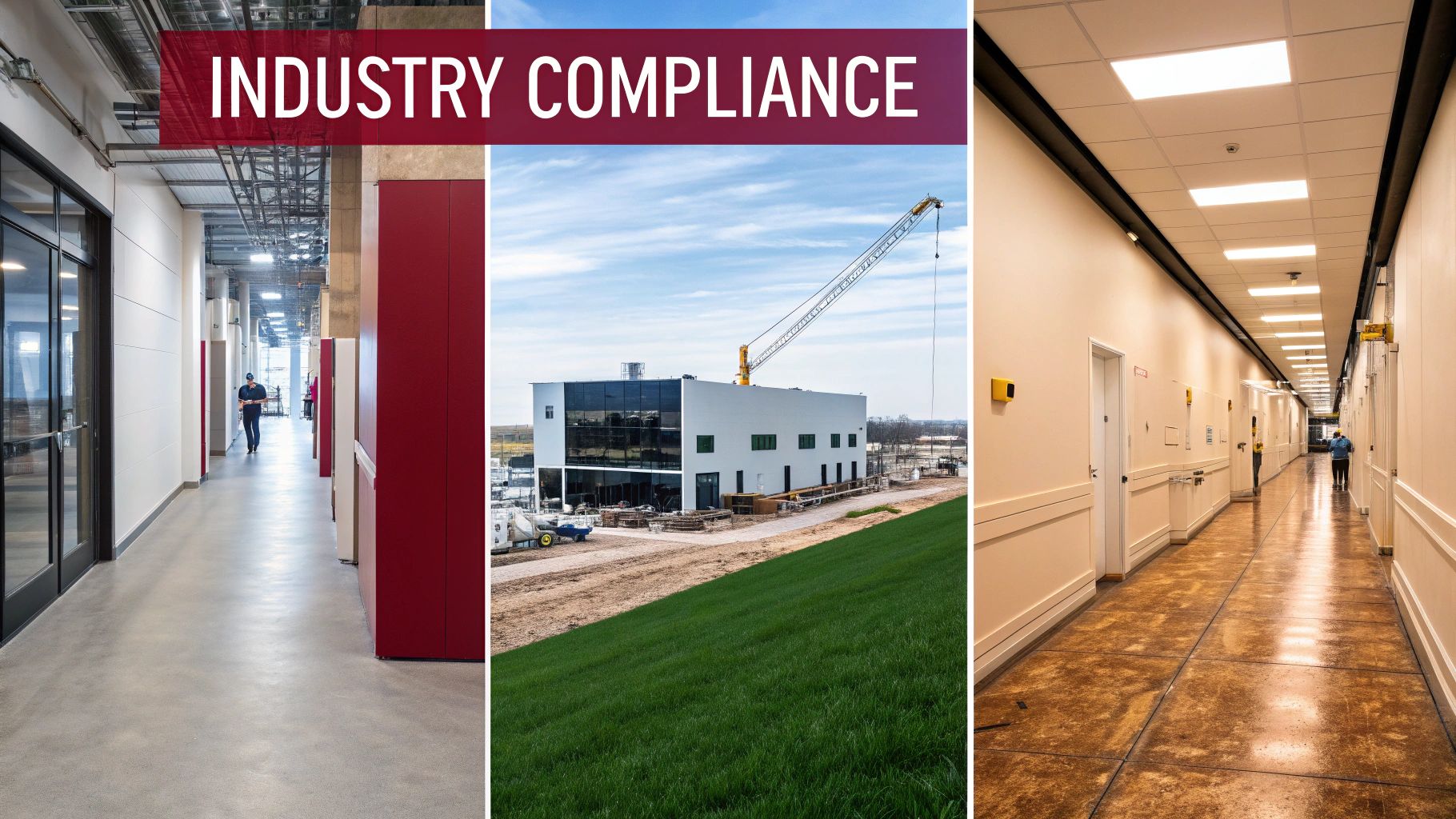
Every industry has its own unique chemical fingerprint and set of challenges. A furniture maker, for example, is worried about the varnishes and glues off-gassing in a customer's living room. An automotive plant, on the other hand, needs to keep a close eye on emissions from paints, solvents, and all those "new car smell" interior plastics to protect both its assembly line workers and the eventual driver.
Construction and Building Materials
The construction sector is a hotbed for materials that release VOCs. We're talking about everything from paints and sealants to flooring adhesives and insulation. It's a real double-edged sword: as we build more energy-efficient, airtight buildings, we're also getting better at trapping those very same chemical compounds indoors. The result? A higher risk of poor indoor air quality.
Construction firms bring in the experts for VOC testing to:
- Check material specs: They need to confirm that the "low-VOC" products arriving on-site actually meet the green building standards they're aiming for.
- Clear a building for handover: Before anyone moves in, a final air quality check is essential to certify the space is safe for occupancy.
- Get ahead of "sick building syndrome": Proactive testing helps pinpoint and remove any sources of airborne nasties that could lead to health complaints down the track.
Taking these steps isn't just about avoiding fines; it’s about building a reputation for quality and care. It’s a powerful way to show a genuine commitment to the health of the people who will eventually live or work in that space.
Manufacturing and Coatings
Walk into many manufacturing plants, especially those dealing with coatings, chemicals, or plastics, and you'll find they are under a microscope when it comes to emissions. These facilities often work with huge volumes of solvents and other organic compounds that can easily become airborne during mixing, spraying, and curing.
In Australia, the coatings industry, in particular, has been flagged as a major source of VOC emissions for years. An influential government report found that architectural and decorative paints were significant contributors, which gave regulators the data they needed to set and enforce limits. If you're interested in the details, you can read the full report on VOCs from surface coatings here.
For businesses in this space, working with a VOC testing company is simply not optional. It’s how they prove their products are safe, meet environmental protection goals, and keep their workforce healthy.
Healthcare and Pharmaceuticals
Nowhere is air quality more critical than in healthcare and pharmaceutical environments. In these settings, even the slightest trace of an unexpected VOC—whether from a powerful cleaning agent, a sterilising chemical, or a newly installed bit of flooring—can have serious consequences. It could ruin sensitive research, compromise a patient's recovery, or create hazards for staff.
Routine air monitoring is fundamental to maintaining the integrity of cleanrooms, operating theatres, and laboratories. It provides the crucial confirmation that the air is free from contaminants that might interfere with delicate procedures or taint a batch of medicine. It’s a non-negotiable part of keeping these critical operations safe and effective.
To give you a clearer picture, here’s a breakdown of how different sectors approach VOC testing.
Common VOC Testing Applications Across Industries
| Industry Sector | Common VOCs of Concern | Primary Driver for Testing |
|---|---|---|
| Construction | Formaldehyde, Benzene, Toluene, Acetone | Indoor Air Quality (IAQ) compliance, Green Building certification (e.g., Green Star), and ensuring safe occupancy post-construction. |
| Manufacturing | Xylene, Styrene, Ethanol, Methyl Ethyl Ketone (MEK) | Workplace Health and Safety (WHS) compliance, environmental emissions monitoring, and product quality control (e.g., low-VOC paint). |
| Healthcare | Isopropyl Alcohol, Formaldehyde, Peracetic Acid | Maintaining sterile environments (cleanrooms, operating theatres), protecting patient and staff health, and preventing contamination of samples. |
| Automotive | Toluene, Xylene, Ethylbenzene, Formaldehyde | Worker exposure monitoring (spray booths), controlling vehicle interior air quality (VIAQ), and meeting environmental emission standards. |
| Printing & Graphics | Toluene, Ethanol, Acetone, Isopropanol | Ensuring compliance with WHS exposure limits for press operators and managing solvent emissions from inks and cleaning solutions. |
As you can see, while the specific chemicals might change, the core reason for testing remains the same across the board: to manage risk, protect people, and operate responsibly.
Navigating Australian VOC Regulations
Trying to get your head around the rules for Volatile Organic Compounds can feel like you’re lost in a maze. For any Australian business, it’s a tricky web of national guidelines, state-specific laws, and industry codes of practice that spell out what’s acceptable for airborne chemical emissions. Getting this right isn't just about being a good corporate citizen—it's a legal must.
At a federal level, the main game is the National Environment Protection Measures (NEPMs). These aren't laws in themselves, but they set the national standards for environmental quality that each state and territory then has to put into practice. The Ambient Air Quality NEPM, for example, sets the bar for common pollutants, which in turn guides how state-level Environmental Protection Agencies (EPAs) manage industrial emissions.
Translating Rules Into Reality
So, what does all this mean for your business on a Tuesday morning? If you’re using solvents, paints, adhesives, or have manufacturing processes that release VOCs, you almost certainly have to meet specific emission limits and keep tabs on them. These rules are there to protect the environment, your workers, and the local community.
Dropping the ball on these obligations can lead to some serious headaches. A breach could mean:
- Significant Fines: We’re talking about financial penalties that can really hurt your bottom line.
- Operational Shutdowns: Regulators have the power to stop work until you can prove you're compliant, which means production and revenue grind to a halt.
- Legal Liability: If people's health is affected, your business could be facing legal action.
- Brand Damage: Getting a reputation for being careless with the environment is a stain that’s tough to wash out.
This is exactly why bringing in an expert VOC testing company is so important. They become your guide and translator, turning dense legal jargon into a straightforward plan to keep you compliant.
Think of it this way: Australian regulations are the rulebook for a very important game. A professional testing service doesn't just hand you the book; they’re your expert coach, showing you exactly how to play by the rules and win. They make sure your operations stay safely within the legal lines.
State-Specific Requirements
On top of the national guidelines, every Australian state has its own EPA with the teeth to enforce local rules. A factory in Victoria, for instance, might have completely different reporting duties compared to a similar setup in Western Australia. These state bodies are the ones issuing licences, running audits, and following up on complaints.
A good VOC testing company is always up-to-date with these shifting state-by-state differences. It’s their job to make sure the testing methods, data gathering, and reports they give you will pass muster with your local regulator. That local knowledge is gold, taking all the guesswork out of compliance.
At the end of the day, working with these specialists is the clearest path to keeping your business on the right side of the law, protecting your operations, your people, and your reputation.
How to Choose the Right VOC Testing Partner
Picking the right company to handle your air quality testing isn’t a decision to be taken lightly. Let's be frank—not all testing services are created equal, and the accuracy of their results can have massive implications for your business and the health of your people. It's about looking past the price tag to really scrutinise their expertise, methodologies, and credentials.
So, where do you start? The absolute first thing you should check for is their accreditation. In Australia, the gold standard is an endorsement from the National Association of Testing Authorities (NATA).
The Importance of NATA Accreditation
NATA accreditation isn't just a fancy logo for their website; it's a rock-solid guarantee of technical competence and reliability. It proves that a laboratory, its equipment, and its team meet incredibly strict Australian and international standards for the specific tests they perform.
When you work with a NATA-accredited lab, you're getting peace of mind. It means:
- Their gear is properly calibrated and looked after.
- Their testing methods are scientifically sound and applied the same way every time.
- Their staff are genuinely qualified and know what they're doing.
- Their results are accurate, traceable, and will hold up if legally challenged.
Choosing a non-accredited provider is a huge gamble. For anything related to compliance or safety, it's a risk you simply can't afford to take.
Key Questions for Your Potential Partner
Once you've confirmed their accreditation, it's time to dig a little deeper. You need to find a partner that’s the right fit for your unique situation. Think of it like an interview—you're looking for the best expert for a critical job.
When you engage a testing service, you are not just buying a report; you are investing in certainty. The right partner provides clear, actionable insights that empower you to make informed decisions about safety and compliance.
Don't be afraid to ask some direct questions:
-
What’s your experience in our industry? A team that knows its way around a construction site will understand entirely different challenges from one that spends its time in sterile pharmaceutical labs. Their specific industry knowledge is priceless.
-
What testing methods do you actually use? You want a company with a full toolkit—everything from rapid on-site screening tools for a quick check to advanced GC/MS analysis for detailed laboratory work.
-
Can I see a sample report? The final report should be easy to understand. It needs to clearly state the findings, benchmark them against relevant exposure standards, and give you practical, no-nonsense recommendations.
-
What’s your process for collecting and handling samples? The integrity of the final result starts the moment a sample is taken. They should be able to walk you through their procedures to guarantee against contamination.
To help you compare your options, use a structured approach. This checklist covers the essentials you should look for when evaluating a potential VOC testing partner.
VOC Testing Company Evaluation Checklist
| Evaluation Criterion | What to Look For | Why It Matters |
|---|---|---|
| Accreditation | NATA endorsement for specific VOC analysis methods. | This is non-negotiable. It guarantees technical competence, valid methods, and legally defensible results. |
| Industry Experience | A proven track record and case studies from your specific sector (e.g., manufacturing, construction, healthcare). | They’ll understand your unique challenges, risks, and regulatory requirements without a steep learning curve. |
| Methodology & Tech | Access to a range of testing methods, including active and passive sampling, sorbent tubes, and GC/MS analysis. | One size doesn't fit all. The right technology ensures the most accurate data for your specific situation. |
| Reporting & Clarity | Sample reports that are clear, concise, and provide actionable recommendations, not just raw data. | A report is useless if you can't understand it. You need clear insights to make informed decisions. |
| Consulting Expertise | Qualified hygienists on staff who can interpret results and provide practical risk management advice. | Data is just numbers. Expertise turns those numbers into a clear plan for ensuring workplace safety. |
| Turnaround Time | Clear, reliable timelines for sample analysis and report delivery. | In many cases, health and safety decisions can't wait. You need a partner who can deliver on time. |
By working through these points, you can systematically vet potential providers and find a partner that truly understands your needs.
Ultimately, bringing in experienced occupational hygiene consultants is often the most comprehensive approach. They don't just give you numbers; they interpret that complex data within the real-world context of your workplace, giving you a clear path forward for managing any identified risks. A careful evaluation is the first step to building a partnership based on genuine trust and expertise.
The Strategic Pay-Off of Proactive Air Monitoring
Thinking about bringing in a VOC testing company? For many, it's just about compliance—a hoop to jump through to keep the regulators happy. But if you only see it as a cost, you're missing out on the real value. Proactive, regular air monitoring is actually a smart business move, an investment that pays dividends well beyond ticking a legal box.
This approach flips the script from putting out fires to preventing them in the first place. Instead of scrambling when someone gets sick, a complaint is filed, or an auditor shows up, you get a constant, clear picture of what’s happening in your environment. That data is gold for making smarter, more informed decisions across the business.
It Starts With Your People
Let's be honest, your most valuable asset isn't on a balance sheet—it's your team. A consistent air monitoring program is a powerful way to show you’re serious about their health and wellbeing. When you find and fix airborne hazards before they cause harm, you’re not just creating a safer workspace; you're building a healthier and more productive one. This commitment can directly lead to fewer sick days, better morale, and people sticking around for the long haul.
From a business perspective, this proactive stance is also a solid defence. Having a clear, documented history of regular testing and any corrective measures taken is your best protection against potential workplace health claims. It’s about safeguarding your business from the headache of costly litigation and the damage it can do to your reputation.
A proactive monitoring strategy turns what feels like a burden into a genuine competitive edge. It sends a clear message to your staff, your customers, and the authorities that you're a leader who takes safety and sustainability seriously.
A Stronger Brand and a Smarter Operation
In today's world, people care about who they do business with. A demonstrated commitment to looking after your people and the environment builds a powerful brand reputation. It tells your customers and partners that you run your business with integrity, which can be what sets you apart from the competition.
But the benefits don't stop at brand image. The data you get from ongoing monitoring can also reveal surprising ways to make your operations more efficient. For instance, what if you notice a sudden spike in a specific VOC? That could be a red flag for an inefficient process or a problem with material wastage. By getting to the bottom of it, you not only clean up the air but you might also cut down on material costs, making the whole operation leaner and more profitable.
Working with a VOC testing company on an ongoing basis is an investment in a safer, more sustainable, and ultimately more successful future. A great first step is to explore the various methods for improving indoor air quality that can work alongside your testing program.
Your VOC Testing Questions, Answered
It's completely normal to have a few questions lingering after digging into the details of airborne chemicals. Let's tackle some of the most common queries we get about VOC testing to help clear things up and get you ready for the next step.
How Often Should My Business Get Tested for VOCs?
There’s no hard and fast rule here—it really comes down to your specific operations and what you’re trying to achieve. The right frequency is all about managing risk.
A busy manufacturing plant handling solvents and chemicals might need quarterly testing, or even continuous monitoring, to stay on top of safety obligations and environmental regulations. On the other hand, a standard office might only need a check-up once a year, or perhaps after a big renovation with new paints, carpets, and furniture off-gassing into the space.
A professional consultant will look at your unique situation and help you work out a sensible testing schedule that fits both your operational needs and Australian workplace safety guidelines.
What’s the Difference Between Ambient and Source Testing?
Think of it like taking a photo. You can either capture the whole landscape or zoom in on a single detail.
Ambient testing is your wide-angle shot. It measures the general concentration of VOCs across a broad area, like along the fenceline of your property or throughout a local community. This gives you a big-picture view of the overall air quality.
Source testing is the close-up. It hones in on a specific point of release, like a factory smokestack or an exhaust vent, to measure the exact amount of VOCs coming out. This is crucial for proving you’re meeting the specific emission limits set by environmental regulators.
Choosing between ambient and source testing is a strategic decision. One gives you the general lay of the land, while the other puts a specific process under the microscope. An expert can tell you which approach will give you the answers you need.
Can VOC Testing Figure Out Where a Weird Smell Is Coming From?
Yes, it absolutely can. In fact, tracking down a mysterious odour is one of the main reasons people call in the experts. Those lingering, unidentifiable smells are almost always caused by specific volatile organic compounds.
By taking an air sample and running it through a detailed lab analysis (usually GC/MS), specialists can identify the exact chemical "fingerprint" of the odour. An experienced hygienist can then use that information to trace the smell back to its source—whether it’s the adhesive from newly laid flooring, a hidden mould issue, or a problem with your ventilation system. It’s the fastest way to get to the bottom of it and fix the problem for good.
At Anitech Ltd Pty, we provide expert occupational hygiene services to give you clear, actionable insights into your workplace environment. Our nationwide team is ready to help you manage air quality risks and ensure compliance. Contact us today to discuss your testing needs.


