
The different types of electromagnetic radiation are all part of a vast, continuous range of energy known as the electromagnetic spectrum. Think of it as an ordered line-up, stretching from the very low-energy radio waves all the way up to the incredibly high-energy gamma rays. Each type, from radio waves to gamma rays, is defined by its own unique properties, primarily its wavelength and frequency. This comprehensive guide will explore the electromagnetic spectrum and its significance in our daily lives and workplaces.
Decoding The Electromagnetic Spectrum
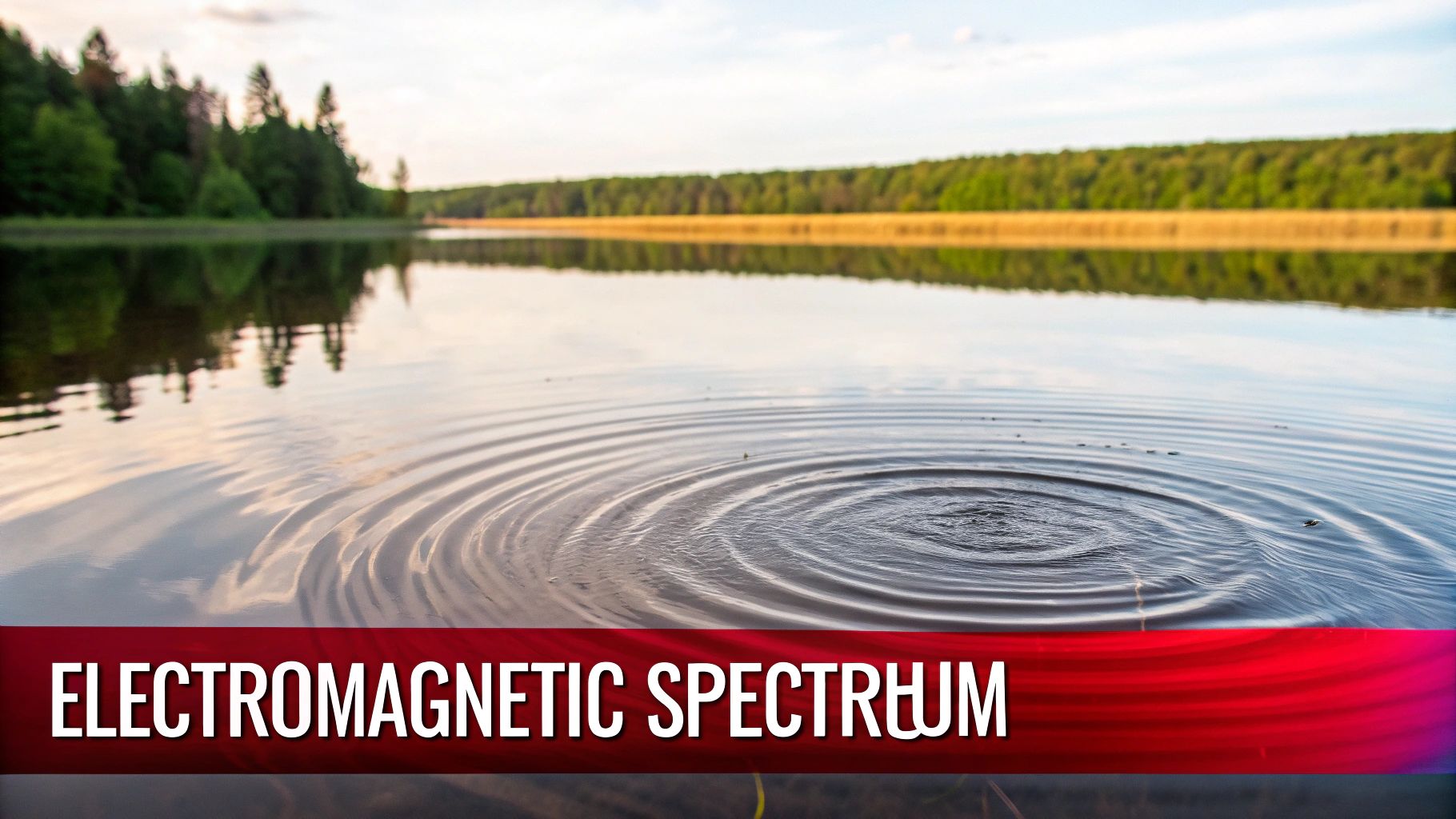
If you’ve ever dropped a pebble into a still pond and watched the ripples spread out, you have a perfect real-world picture of how electromagnetic radiation works. These are simply waves of energy travelling through space. And just like those ripples in the water, some are long and lazy, while others can be tiny and packed tightly together.
It’s these differences that give each type of radiation its distinct character.
Wavelength and Frequency: The Defining Factors
At the heart of it all, every wave of electromagnetic energy is measured by two key properties: its wavelength and its frequency. The crucial thing to remember is that these two are inversely related—when one goes up, the other goes down.
- Wavelength: This is the physical distance from the peak of one wave to the peak of the next. A radio wave, for example, can have a wavelength kilometres long. These long wavelengths carry much lower energy.
- Frequency: This measures how many waves pass a single point in a set amount of time, measured in Hertz (Hz). A higher frequency means more waves are zipping past every second, which means more energy is being carried.
This simple relationship is what gives us the incredible diversity of the electromagnetic spectrum. A long-wavelength radio wave has a low frequency and therefore low energy. At the other extreme, a tiny gamma ray has a wavelength smaller than an atom, packing an immense punch with its incredibly high frequency.
At its core, the electromagnetic spectrum is a cosmic rainbow of both visible and invisible energy. Knowing where a certain type of radiation falls on this spectrum tells us almost everything we need to know about how it behaves and how it might interact with our bodies.
This infographic lays it all out, showing the journey from low-frequency, low-energy waves on the left to high-frequency, high-energy waves on the right.
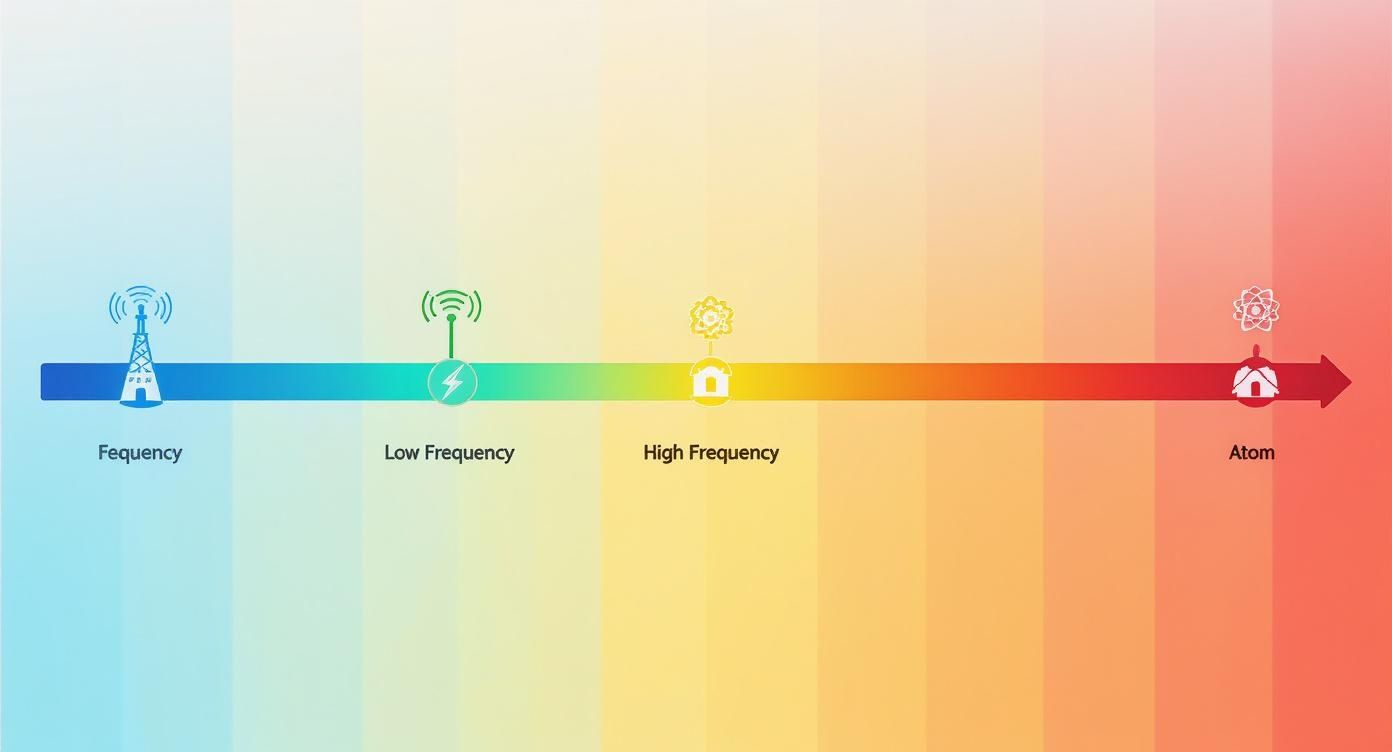
As you can see, the spectrum covers everything from the radio waves that bring us music to the powerful gamma rays used in medicine and industry. In this guide, we’ll walk through each of these different types of radiation, look at where you might encounter them in Australian workplaces, and discuss the practical steps needed to manage them safely.
Understanding Everyday Non-Ionising Radiation
As we begin our journey along the electromagnetic spectrum, we start with the lower-energy waves known as non-ionising radiation. This is the invisible energy that drives so much of our modern world, from the Wi-Fi signal connecting your laptop to the remote control for your TV.
The name ‘non-ionising’ sounds technical, but the concept is simple. It means these waves have enough energy to make molecules vibrate and create warmth, but not enough punch to knock electrons out of their atoms. Think of it as a gentle nudge rather than a hard shove—it can cause a stir, but it doesn't fundamentally change the structure of what it touches.
This category covers some of the most familiar types of energy we encounter every day. Because they're so common, it’s crucial to understand where they come from and how they behave, especially when it comes to keeping workplaces safe.
The Most Common Types of Non-Ionising Radiation
The non-ionising part of the spectrum is incredibly broad, ranging from extremely long, low-frequency waves all the way up to the light we see with our own eyes. Each band has its own personality and a unique set of jobs in various industries.
Let's break down the main players you’ll come across:
- Radio Waves: These are the long-distance travellers of the spectrum. Their long wavelengths make them perfect for broadcasting radio and TV signals, running mobile phone networks, and powering the two-way radio systems essential in mining and logistics.
- Microwaves: With shorter wavelengths than radio waves, microwaves are brilliant for focused, point-to-point communication. We rely on them for Wi-Fi, satellite links, radar systems in aerospace, and, of course, heating up last night's dinner.
- Infrared (IR): You already know this one—we feel infrared radiation as heat. Every warm object, including our own bodies, gives it off. Industrially, it’s a workhorse for everything from thermal imaging and night vision to drying paints and coatings in manufacturing.
- Visible Light: This is the tiny, colourful slice of the spectrum that our eyes can detect. While it’s vital for simply lighting our workplaces, it's also used in high-tech applications like laser cutters and the fibre optic cables that carry our internet data.
Non-ionising radiation isn't some far-off phenomenon; its sources are all around us, both at home and across countless Australian industries. To give you a better sense of where you'll find these energy types, here's a quick summary.
Common Types of Non-Ionising Radiation and Their Sources
| Radiation Type | Typical Frequency Range | Everyday Sources | Industrial Applications |
|---|---|---|---|
| Radio Waves | 3 kHz – 300 GHz | AM/FM radio, televisions, mobile phones, garage door openers | Two-way radios (mining, logistics), broadcast towers, RFID systems |
| Microwaves | 300 MHz – 300 GHz | Microwave ovens, Wi-Fi routers, Bluetooth devices, weather radar | Telecommunications, satellite links, radar (aerospace, defence), industrial heating |
| Infrared (IR) | 300 GHz – 400 THz | Remote controls, thermal cameras, heat lamps, toaster ovens | Process heating (drying, curing), thermal imaging, night vision, fibre optics |
| Visible Light | 400 THz – 790 THz | Light bulbs, computer screens, sunlight, lasers in DVD players | General lighting, laser cutting and welding, medical lasers, optical scanners |
As you can see, a single facility, like a manufacturing plant, could easily be using radio frequencies for communication, infrared for process heating, and visible light lasers for precision cutting—all at the same time.
While these forms of energy are generally safe at the levels we typically encounter, Australian regulations are in place to ensure even non-ionising radiation is properly managed in the workplace to prevent harm from overexposure, such as the heating of body tissue.
In Australia, exposure to radiofrequency (RF) energy is strictly managed by the Australian Radiation Protection and Nuclear Safety Agency (ARPANSA). The national standard, set back in May 2002, puts firm limits on exposure levels to protect the public. To put this in perspective, research consistently shows that everyday exposure is a tiny fraction of these limits. A 2022 survey in Melbourne, for instance, found the median RF level was just 0.0011% of the public exposure limit.
Managing Exposure and Understanding Health Effects
The main biological effect of high-intensity non-ionising radiation is heating. It’s the very principle a microwave oven uses to cook food by making water molecules vibrate rapidly. In a workplace, powerful sources like broadcast antennas or industrial heating equipment could pose a real risk if they aren't controlled.
For most everyday sources like mobile phones and Wi-Fi routers, however, the energy levels are extremely low and not considered a health risk. Visible light, especially the blue light from our screens, is another area of ongoing research. If you're curious about how we interact with this type of energy daily, exploring topics like a guide to blue light filters and eye health can offer some practical insights.
The key takeaway is simple: while these energy types are a normal part of life, awareness and following safety standards are non-negotiable in industrial settings where power levels can be much, much higher.
Where Energy Gets Serious: High-Energy Ionising Radiation
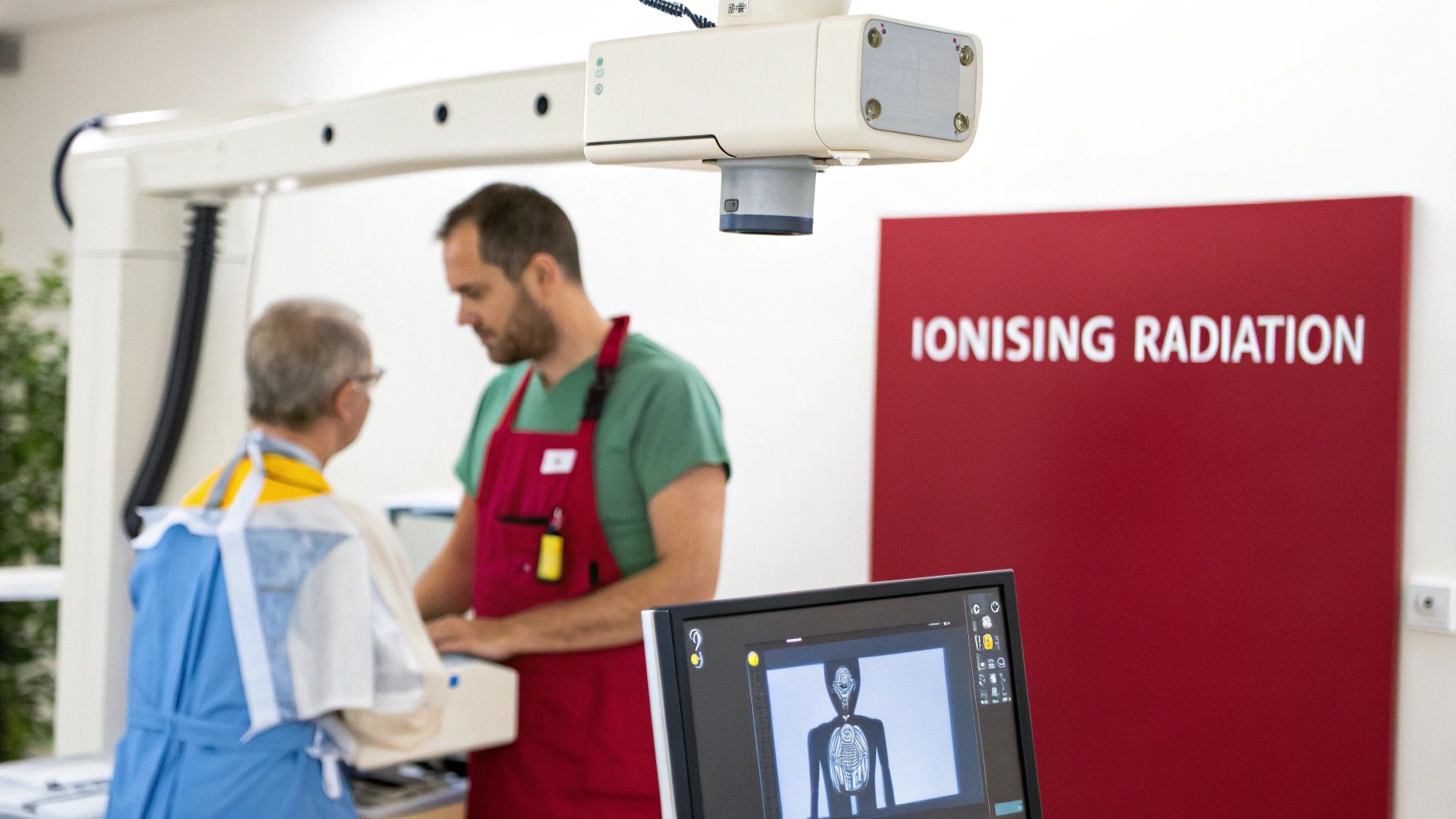
As we climb higher up the electromagnetic spectrum, we cross a very important line. This is where we enter the world of high-energy ionising radiation, and the game completely changes. Here, the energy waves pack enough of a punch to physically alter the atoms they hit, which has massive implications for workplace safety.
Think of it like this: the non-ionising radiation we’ve already covered is like a gentle nudge. It can warm things up or make molecules jiggle. Ionising radiation, on the other hand, is a powerful blow that can literally knock an electron out of an atom’s orbit. This process, called ionisation, creates charged particles and has the power to shatter chemical bonds inside molecules – including the DNA in our cells.
It’s this ability to change matter on a molecular level that makes ionising radiation a double-edged sword. It’s an incredibly powerful tool with life-saving applications, but it also brings serious health risks if it’s not handled with the utmost respect and care.
The Heavy Hitters: UV, X-Rays, and Gamma Rays
At the top end of the spectrum, we find three main types of ionising electromagnetic radiation. Each has its own unique characteristics and is used in specific ways across Australian industries, from our hospitals to our heavy manufacturing plants.
Let's break them down:
- Ultraviolet (UV) Radiation: This is the one we’re all familiar with, thanks to its biggest natural source: the sun. While a little bit of UV is good for us (it helps produce vitamin D), too much is a huge occupational hazard for anyone working outdoors, leading to skin damage and cancer. In the workplace, you’ll also find artificial sources like welding arcs and sterilisation lamps.
- X-rays: Discovered over a century ago, X-rays are high-energy photons produced when we fire electrons at high speed and then slam on the brakes. Their incredible ability to sail through soft tissues while being stopped by dense materials like bone makes them indispensable for medical imaging and industrial quality control.
- Gamma Rays: These are the most energetic waves on the entire electromagnetic spectrum, period. Gamma rays are blasted out from the nucleus of radioactive atoms as they decay. This immense energy lets them penetrate deep into materials, making them perfect for things like cancer therapy and sterilising medical equipment.
The common thread linking these three is their shared ability to cause ionisation. This power is what makes them so useful for medical diagnostics, cancer treatment, and industrial inspection, but it also demands the strictest safety protocols to keep workers safe.
Where You’ll Find Ionising Radiation in Aussie Workplaces
Ionising radiation is a tightly controlled but vital tool in many specialised fields. In healthcare, X-ray machines are a daily diagnostic tool, and radiotherapy clinics use linear accelerators to fire focused beams of radiation to obliterate cancerous tumours.
Head over to the mining and resources sector, and you’ll find industrial radiography using gamma or X-rays to peer inside welds and critical structures to find hidden flaws. The aerospace and manufacturing industries do the same thing, relying on this technology for non-destructive testing to ensure parts are built to exacting safety standards.
Beyond looking at things, high-energy radiation is also crucial for sterilisation. To get a sense of the rigorous processes required, you can find valuable information on topics like medical device sterilization validation. It’s another example of how precise control over radiation is absolutely critical.
Understanding Exposure and Australian Safety Standards
While these industrial sources are powerful, it’s worth remembering that we’re all exposed to a low level of natural background radiation every day. In Australia, our natural background exposure is quite low compared to many other parts of the world. Most Aussies receive between 1,500 and 2,000 microsieverts (µSv) per year from cosmic rays and radioactive elements in the earth. To put that into context, the Australian Radiation Protection and Nuclear Safety Agency (ARPANSA) limits a radiation worker’s exposure to a maximum of 20,000 µSv averaged over five years. You can learn more about radiation in Australia from ANSTO.
Because the potential health effects—ranging from skin burns at high doses to an increased long-term cancer risk—are so serious, managing exposure is everything. The Australian regulatory framework is built on three beautifully simple but effective principles of radiation protection:
- Time: Keep your time near a radiation source as short as possible.
- Distance: Keep as far away from the source as you can. Radiation intensity drops off dramatically with distance.
- Shielding: Put a barrier between you and the source. This could be a lead apron for a radiographer or a thick concrete wall for industrial equipment.
These three principles are the bedrock of workplace safety wherever ionising radiation is used. They ensure we can harness its incredible power without putting workers’ health on the line.
Managing EMFs in Australian Workplaces
Electromagnetic fields (EMFs) are an invisible but constant presence across countless Australian worksites, powering everything from heavy machinery to our communication networks. While they're fundamental to modern industry, these energy fields are also a common and often misunderstood workplace hazard. To manage them properly, we first need to get a handle on where they come from and the national safety standards that apply.
It’s really important to know the difference between the types of EMFs you might find at work, as their properties and potential impacts are worlds apart. The spectrum of these non-ionising fields is vast, stretching from the low-frequency hum of a power transformer all the way up to the high-frequency signals from a broadcast antenna.
Spotting Low and High Frequency EMF Sources
Workplace EMFs generally fall into two main camps based on their frequency. Getting your head around this distinction is the first step in any proper risk assessment.
- Low-Frequency EMFs: Think of these as coming from anything involved in generating, distributing, or using electricity. These sources are everywhere, including power lines, electrical substations, welding gear, and the induction furnaces you’d find in manufacturing.
- High-Frequency EMFs: Also known as radiofrequency (RF) fields, these are the workhorses of telecommunications and broadcasting. You'll find them coming from radio and TV towers, mobile phone base stations, radar systems in aerospace and defence, and industrial microwave ovens used for food processing.
So, a linesman working on power lines is dealing with low-frequency fields, while a technician servicing a radar installation is facing high-frequency exposure. Each job demands a completely different safety game plan.
Biological Effects and Australian Exposure Limits
The main proven biological effect from being overexposed to high-frequency EMFs is the heating of body tissue. For low-frequency magnetic fields, the key concern at extremely high levels is the stimulation of nerves and muscles. It’s worth remembering that these effects only happen at field strengths much, much higher than what most people encounter in their daily lives or at work.
To keep workers safe, the Australian Radiation Protection and Nuclear Safety Agency (ARPANSA) sets clear exposure limits. These standards aren't just plucked out of thin air; they're based on decades of scientific evidence and are specifically designed to prevent any known health problems.
At its heart, Australian regulation is about one thing: ensuring no worker is exposed to harmful EMF levels. Complying with ARPANSA's Radiation Protection Standard for Maximum Exposure Levels to Radiofrequency Fields is non-negotiable for creating a safe working environment.
These limits are legally binding in many jurisdictions and serve as the gold standard for workplace safety. Employers have a duty of care to make sure exposures stay well below these official thresholds.
To put things in perspective, even the fields in our homes are incredibly low. An ARPANSA survey in Melbourne homes found the average magnetic fields were around 0.06 microteslas (µT), with a massive 93% of homes having levels far below anything to worry about. You can learn more about the findings from ARPANSA's residential survey on their website.
Practical Management in Key Industries
Different industries face their own unique EMF challenges, which means they need tailored strategies to keep workers safe and stay on the right side of the regulations.
Industry-Specific EMF Hazards:
- Manufacturing: Workers can be exposed to powerful magnetic fields from welding equipment, induction heaters, and huge electric motors.
- Aerospace & Defence: High-power radar and communication systems are major sources of high-frequency EMFs, demanding strict exclusion zones.
- Utilities: Employees working near high-voltage power lines or inside substations are exposed to intense low-frequency electric and magnetic fields.
- Telecommunications: Technicians climbing broadcast towers or working on mobile phone base stations can find themselves in areas with very high RF levels.
Getting on top of these risks calls for a mix of engineering controls, like shielding and safety interlocks, and administrative controls, such as setting up safety zones, providing thorough training, and using personal protective equipment where needed. By identifying the sources and applying controls based on ARPANSA’s guidance, businesses can confidently protect their people from potential EMF hazards.
Practical Steps for Radiation Measurement and Control
Knowing the theory behind electromagnetic radiation is one thing, but making a workplace genuinely safe means putting that knowledge into action. This is where we move from concepts to concrete steps, focusing on two key pillars: accurately measuring potential exposures and then putting effective controls in place to minimise any risk. This isn't just about best practice—it's a core part of meeting your workplace safety duties here in Australia.
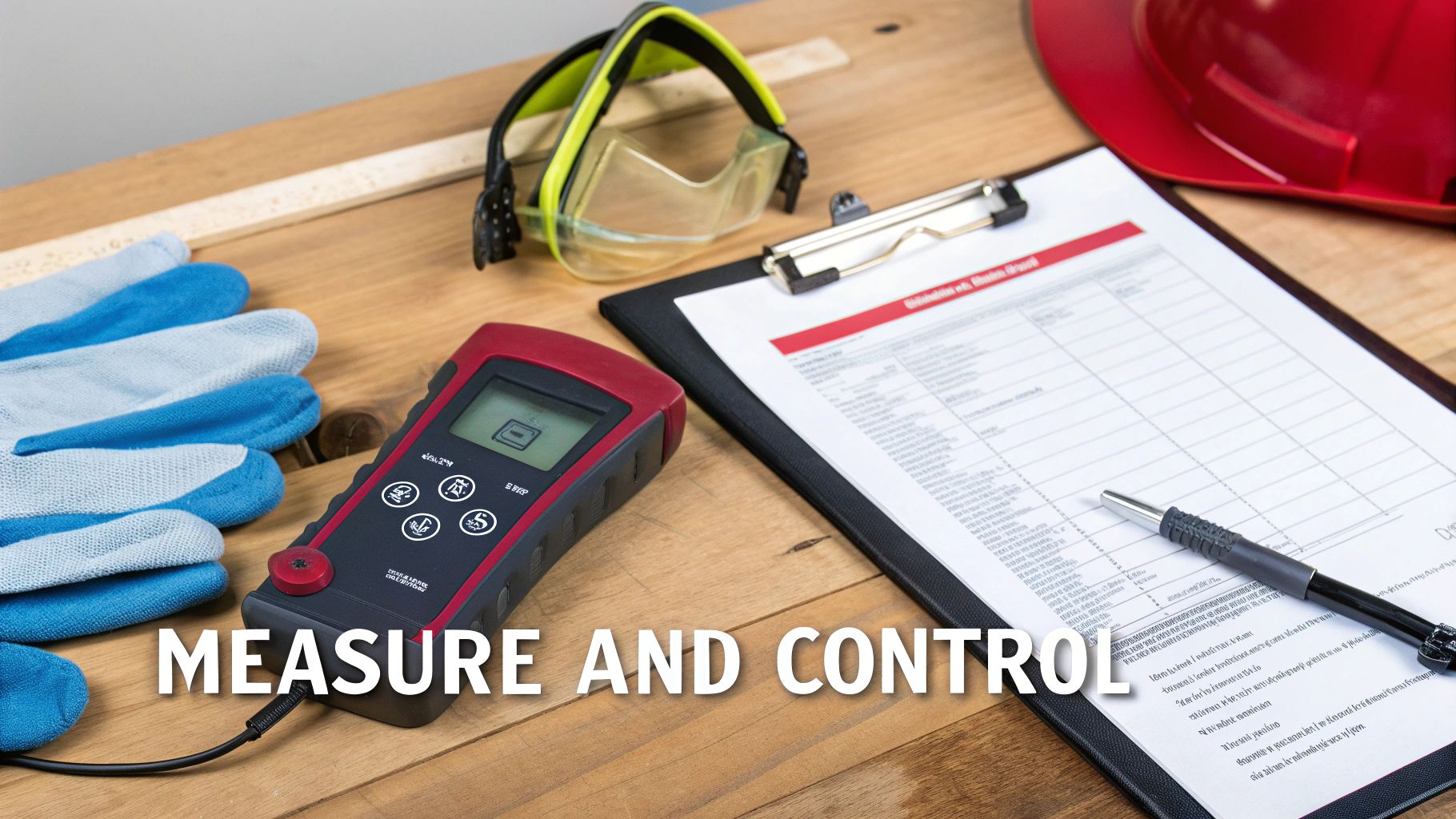
The old saying, "you can't manage what you don't measure," rings particularly true for an invisible hazard like radiation. The tools and methods you use will depend entirely on the type of energy you’re dealing with. It’s all about choosing the right instrument for the job.
Choosing the Right Tools for Measurement
To get a true picture of the electromagnetic environment on-site, you need specialised equipment designed to detect specific frequencies and energy levels.
- EMF Meters and Probes: For non-ionising radiation, EMF meters are the workhorse. These devices are used with probes sensitive to either electric or magnetic fields across different frequency bands. A hygienist might use a low-frequency meter to assess fields around a power substation, then switch to a high-frequency probe to measure RF energy from a mobile phone tower.
- Personal Dosimeters: When it comes to ionising radiation, personal dosimeters are non-negotiable. These are small, wearable devices that workers in high-risk roles (like medical imaging or industrial radiography) carry with them. They quietly track the total radiation dose a person receives over time, giving a precise, individual exposure record.
These instruments give you more than just numbers; they provide the hard data needed to map out potential hotspots, confirm your safety controls are actually working, and make sure no one is unknowingly exposed above Australian safety limits.
Putting the Hierarchy of Controls into Practice
Once you have a clear understanding of the radiation sources and their strength, the next job is to control the risk. The most effective safety strategies always follow the Hierarchy of Controls, a framework that prioritises the most reliable solutions first.
This model is a cornerstone of managing any workplace hazard, and for radiation, it gives us a clear roadmap for reducing risk.
- Elimination: The best possible outcome is to remove the radiation source from the process entirely. While it’s not always feasible, it should always be the first question you ask.
- Substitution: Can you change the process to use a less hazardous form of radiation or a lower-power source? Think about whether an ultrasound inspection could do the job instead of an X-ray for certain materials.
- Engineering Controls: These are physical changes to the workplace that put a barrier between people and the hazard. This is where you’ll find most radiation safety measures, like installing lead shielding around an X-ray machine or using interlock systems that automatically shut down equipment if a safety door is opened.
- Administrative Controls: These are the rules and procedures that change how people work. This includes creating restricted "safe zones" with clear warning signs, limiting the time workers can spend near a source, and providing thorough radiation safety training. For complex situations, understanding what is occupational hygiene helps build the framework for these vital procedures.
- Personal Protective Equipment (PPE): This is your last line of defence. For radiation, this means things like lead aprons and thyroid collars for X-ray technicians or specialised RF suits for people working near powerful broadcast antennas.
By working your way down this hierarchy, a business can build a robust, multi-layered defence against radiation exposure. It’s always far better to rely on well-designed engineering and administrative controls rather than just PPE, as this approach builds safety directly into the work environment itself.
When to Partner with an Occupational Hygienist
Understanding the different types of electromagnetic radiation is one thing, but knowing when to call in the experts is what really keeps a workplace safe. Let's be honest—managing radiation hazards isn't a DIY job, especially when your team's health is at stake. That’s where an occupational hygienist comes in. They are specialists trained to see hazards coming, recognise them on-site, evaluate the risk, and get it under control. This includes all forms of EMF.
So, when is it time to bring one on board? It usually comes down to a few key situations where the risks are a bit of an unknown, too complex for your in-house team, or when you need specialised assessments to meet Australian standards. Working with an expert takes the guesswork out of your safety plan and replaces it with a scientifically sound strategy.
Identifying Triggers for Expert Consultation
So, how do you know it's time to make that call? Certain situations should act as immediate red flags, signalling that a professional assessment isn't just a good idea—it’s essential.
You should think about bringing in an expert when you are:
- Installing New or High-Powered Equipment: If you're bringing in heavy-duty gear like industrial welders, powerful broadcast antennas, or medical imaging devices, a hygienist can conduct a baseline assessment. This helps establish safe operating zones before anyone even starts work.
- Auditing for Regulatory Compliance: When you need to prove your workplace meets the exposure limits set by ARPANSA, a certified professional provides the accurate measurements and official documentation to ensure you're compliant.
- Investigating Employee Concerns: If team members report symptoms or voice worries about potential exposure, an independent investigation by a hygienist gives you clear, unbiased answers and practical recommendations.
- Designing a New Facility: Involving a hygienist during the design phase is one of the smartest moves you can make. It allows safety to be built right into the layout, integrating shielding and other controls from the very beginning.
Engaging an expert is a proactive investment in your company's most valuable asset—its people. It demonstrates a firm commitment to health and safety that goes beyond basic compliance, fostering a culture of trust and care.
Ultimately, a hygienist offers peace of mind. For a deeper look into their critical role, you can learn more about what an occupational hygienist is and how they support industries across Australia.
Got Questions About Electromagnetic Radiation? We've Got Answers
It's completely normal to have questions when dealing with something you can't see, like electromagnetic energy. Let's tackle some of the most common queries with clear, practical answers based on what we've covered.
What’s the Real Difference Between Ionising and Non-Ionising Radiation?
It all comes down to energy. Think of it like this: non-ionising radiation (like radio waves from your car stereo or microwaves) has enough energy to get things moving and create some heat, but it can't fundamentally alter the atoms it passes through.
Ionising radiation (like the more potent end of UV, X-rays, and gamma rays) is a different beast entirely. It packs enough of a wallop to literally knock electrons out of their atoms. That’s a big deal because this process can damage living tissue and DNA, which is why Australian workplaces have such strict rules around it.
Should I Be Worried About My Mobile Phone or Wi-Fi?
This is easily one of the most-asked questions, and for good reason—these devices are everywhere. Mobile phones, Wi-Fi networks, and similar gadgets all emit low-level, non-ionising radiofrequency (RF) energy.
The official stance from the Australian Radiation Protection and Nuclear Safety Agency (ARPANSA) is that there's no established scientific evidence showing the low-level RF EME from these devices causes any harm. The exposure you get is typically thousands of times lower than the safety limits in Australian standards.
How Much Radiation Is Actually Safe at Work?
Australia doesn't leave this to guesswork. We have legally binding exposure limits for both ionising and non-ionising radiation, all set by ARPANSA. These limits are deliberately conservative, with a huge safety buffer built in to protect workers from any known health effects.
To give you some perspective, a designated radiation worker is limited to an average of 20,000 microsieverts (µSv) of ionising radiation exposure per year—a level far below what’s considered harmful.
What Should I Do if I’m Concerned About Exposure on My Job Site?
If you have a genuine concern, don't just worry about it—take action. The single most important first step is to ask for a formal risk assessment. A proper assessment will:
- Pinpoint every potential source of electromagnetic radiation on site.
- Figure out who might be exposed and how.
- Evaluate whether your current safety controls are up to scratch.
For anything beyond simple, low-risk scenarios, this isn't a DIY job. It needs to be handled by a qualified professional, like a certified occupational hygienist. They have the right equipment to take accurate measurements and the expertise to make sure your workplace isn't just safe, but also fully compliant with the law.
At Anitech, our expertise is in identifying, evaluating, and controlling all kinds of workplace hazards, including every type of electromagnetic radiation. If you need a hand making sure your workplace is safe and compliant, get in touch with our team for a comprehensive occupational hygiene assessment.


