
Think of an occupational hygienist in Queensland as a health detective for your workplace. They're highly trained scientists who specialise in a very specific, and often invisible, type of workplace risk. Their job is to anticipate, find, measure, and control the hidden health hazards that lead to long-term illness or disease.
We're not talking about obvious dangers like a slippery floor. We're talking about chemical fumes, dangerous dust, excessive noise, and other threats that can cause serious harm over time. The goal is to create a work environment where employees can perform their duties without jeopardizing their long-term health, ensuring they return home safely and healthily every day. This proactive approach to health is fundamental to a sustainable and responsible business operation in Queensland.
What an Occupational Hygienist Actually Does
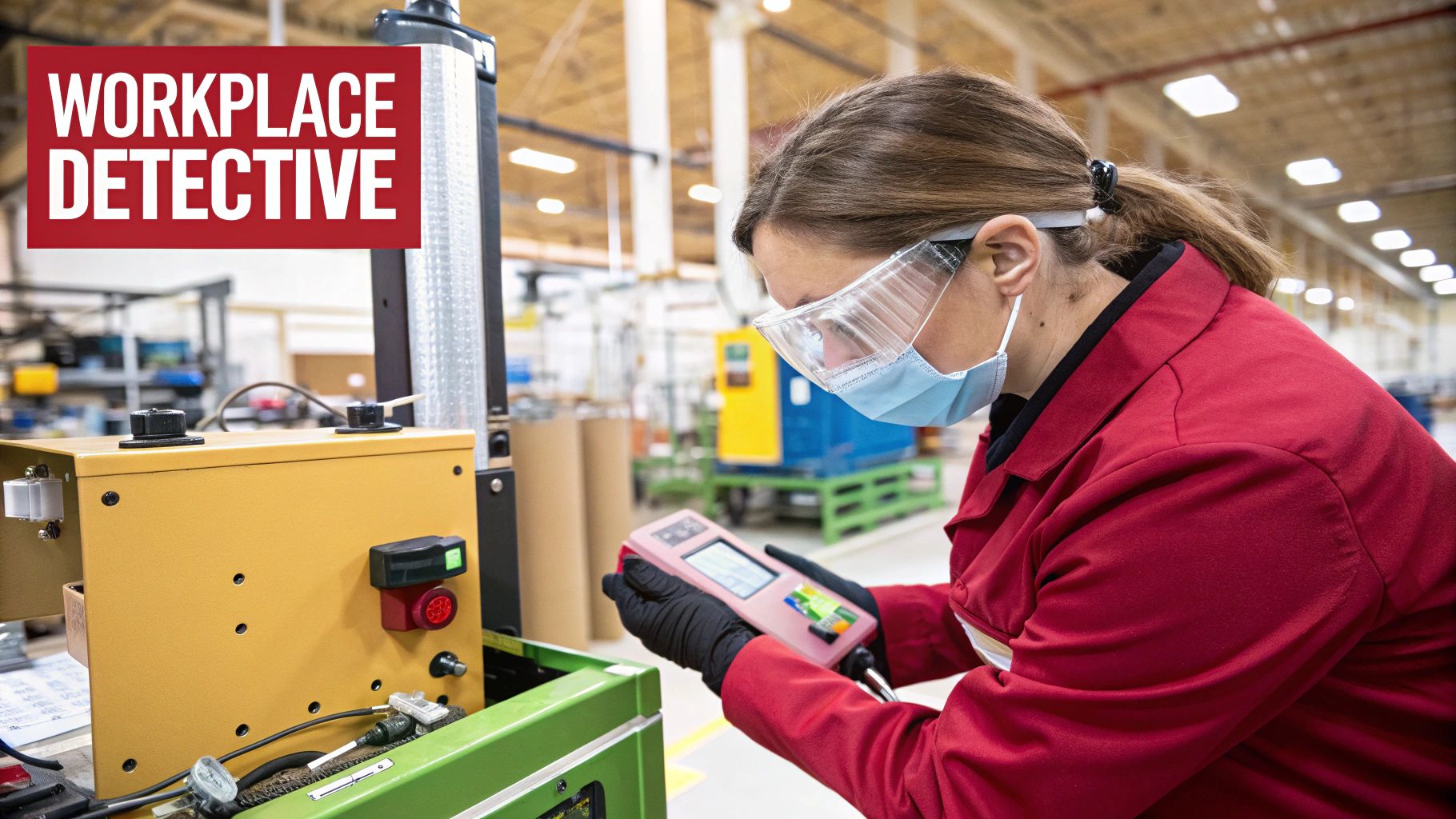
It's easy to get this role mixed up with a general safety officer, but their focus is quite different. A safety officer is brilliant at preventing immediate accidents—the slips, trips, falls, and other physical dangers that could cause an injury today. Their work is centered on acute risks and immediate prevention, which is a vital part of any safety program.
An occupational hygienist, on the other hand, plays the long game. They are the scientific expert dedicated to protecting your team from health problems that might not show up for months, years, or even decades. They focus on the chronic, cumulative effects of workplace exposures that can lead to serious, often irreversible, health conditions.
Their work is all about science and data. They use precise measurement and analysis to uncover threats you can't see, hear, or smell. For instance, an occupational hygienist in Queensland might inspect a factory floor, not for trip hazards, but for the invisible dust particles that could cause irreversible lung disease twenty years down the track. They are the guardians against the silent dangers, using their expertise to foresee and mitigate risks before they manifest as health problems.
A Detective for Workplace Health
A good way to picture it is like a crime scene investigator. They arrive on the scene to meticulously gather evidence. An occupational hygienist does something very similar, but their goal is to investigate potential health risks before any "crime"—in this case, an occupational illness—is committed.
They follow a clear, methodical process known as the anticipate, recognise, evaluate, and control (AREC) framework:
- Anticipate: First, they look at your processes, materials, and day-to-day operations to predict what hazards could exist. This involves understanding the nature of the work and the substances involved.
- Identify (Recognise): Then, they conduct a walkthrough to pinpoint where and how workers are actually being exposed to these potential hazards, observing work practices and environmental conditions.
- Evaluate: This is where the science really comes in. They use specialised equipment to measure the exact levels of exposure to things like chemicals, noise, dust, or even radiation, comparing these findings against established safety standards.
- Control: Finally, using the hard data they've collected, they recommend practical, effective strategies to either eliminate the risk or reduce it to a safe level, often following the hierarchy of controls.
This scientific approach is what makes their work so valuable. There's no guesswork. Every recommendation is based on real-world data, not just assumptions, ensuring that the implemented controls are both effective and efficient.
An occupational hygienist focuses on preventing chronic illness and long-term harm. They protect against occupational diseases that develop over time, whereas a general safety officer typically focuses on preventing acute injuries and immediate accidents.
Occupational Hygienist vs General Safety Officer
While both roles are crucial for a safe workplace, understanding how they differ is key to building a truly robust health and safety program. The following table breaks down the main distinctions.
| Aspect | Occupational Hygienist | General Safety Officer |
|---|---|---|
| Primary Focus | Preventing long-term occupational diseases (e.g., cancer, hearing loss, respiratory illness). | Preventing immediate accidents and injuries (e.g., slips, trips, falls, cuts, electrical shock). |
| Nature of Hazards | Invisible, chronic hazards like chemicals, dust, noise, vibration, radiation, and biological agents. | Visible, acute hazards like unguarded machinery, poor housekeeping, and unsafe work practices. |
| Methods & Tools | Scientific measurement, air/noise sampling, data analysis, toxicology, and engineering controls. | Visual inspections, risk assessments, safety audits, training, and implementing safety procedures. |
| Time Horizon | Long-term (protecting health over a worker's entire career and beyond). | Short-term and immediate (preventing an incident from happening today or this week). |
| Core Expertise | Industrial hygiene, chemistry, physics, biology, and toxicology. | Safety management systems, risk assessment, incident investigation, and regulatory compliance. |
| Example Scenario | Measuring silica dust levels for stonemasons to prevent future silicosis. | Ensuring scaffolding is correctly erected to prevent a collapse. |
In short, a general safety officer makes sure the scaffolding is secure today. The occupational hygienist makes sure the welder working on that scaffold isn't inhaling fumes that will damage their health 15 years from now.
This long-term perspective is indispensable for any Queensland business. By getting to the root cause of occupational diseases, these professionals do more than just help you tick a compliance box—they help you build a healthier, more productive, and more resilient workforce for years to come. Their work contributes significantly to a culture of health and safety that values the well-being of every employee.
Understanding Queensland's Workplace Health and Safety Laws
If you run a business in Queensland, you'll know that the Work Health and Safety (WHS) Act 2011 isn't just a piece of paper—it's woven into the very fabric of your daily operations. This legislation sets a clear, non-negotiable standard for every employer: you must provide a safe and healthy workplace, so far as is reasonably practicable. It’s the bedrock of workplace safety in our state.
The core of this law is what’s known as the ‘primary duty of care’. Think of it as a fundamental promise you make to your team. It means you are legally responsible for protecting everyone at your workplace from both physical and psychological harm. This isn't a "set and forget" task; it demands that you actively manage risks, especially the subtle ones that aren't immediately obvious.
This is precisely where an occupational hygienist becomes so valuable. They are the scientific experts who can identify, measure, and control the very hazards that your legal duty of care obligates you to manage, providing the evidence and strategies needed to demonstrate due diligence.
Putting Your Legal Duties into Practice
Your primary duty of care covers a vast range of potential health hazards, and many of them are completely invisible. An occupational hygienist in Queensland is the person who helps you turn those broad legal responsibilities into specific, concrete actions.
Let's look at a few real-world examples:
- Airborne Contaminants: Imagine a workshop where workers are sanding timber or cutting concrete. Your duty of care means you must control the fine dust they create, as inhaling those tiny particles over time can lead to devastating lung diseases.
- Hazardous Chemicals: A factory using industrial solvents or acids has a legal duty to prevent workers from being exposed, whether through breathing in fumes or through skin contact. This includes ensuring proper storage, handling procedures, and ventilation.
- Excessive Noise: On a loud construction site or factory floor, you must have effective controls in place to protect your team from permanent, life-altering hearing loss. This could involve sound barriers, quieter machinery, or strict limits on exposure time.
In every one of these situations, an occupational hygienist provides the scientific data to first confirm if a genuine risk exists, and then to verify that your safety measures are actually doing their job effectively.
Your legal responsibility under the WHS Act isn't just to assume your workplace is safe, but to actively prove it. This means identifying potential health hazards, assessing the real-world risk they pose, and implementing effective controls to protect your people.
When Health Monitoring is No Longer a Choice
While proactive risk assessment is always a good idea, there are certain situations where health monitoring becomes a mandatory legal requirement here in Queensland. This usually happens when workers are dealing with high-risk substances known to cause specific occupational diseases.
For instance, if your team works with asbestos, lead, or certain chemicals like benzene, you are likely required by law to have a formal health monitoring program. This involves scheduling regular health checks for exposed workers to catch any early signs of illness, allowing for early intervention and prevention of more severe conditions.
An occupational hygienist is central to this process. Their expert assessments determine the actual level of exposure, which in turn can trigger the legal requirement for health monitoring. What’s more, Queensland regulations require employers to get—and keep—health monitoring reports for workers exposed to certain hazardous chemicals. According to WorkSafe Queensland, these records must be kept for a minimum of 30 years, a timeline that underscores just how serious and long-lasting these health risks can be.
Bringing in a professional ensures you’re not just ticking a legal box, but genuinely protecting your most important asset: your people. Grasping these legal duties is the first step, and for a broader look at the national framework, you can explore more about Australian workplace safety standards in our detailed guide.
Key Workplace Hazards Hygienists Uncover in Queensland
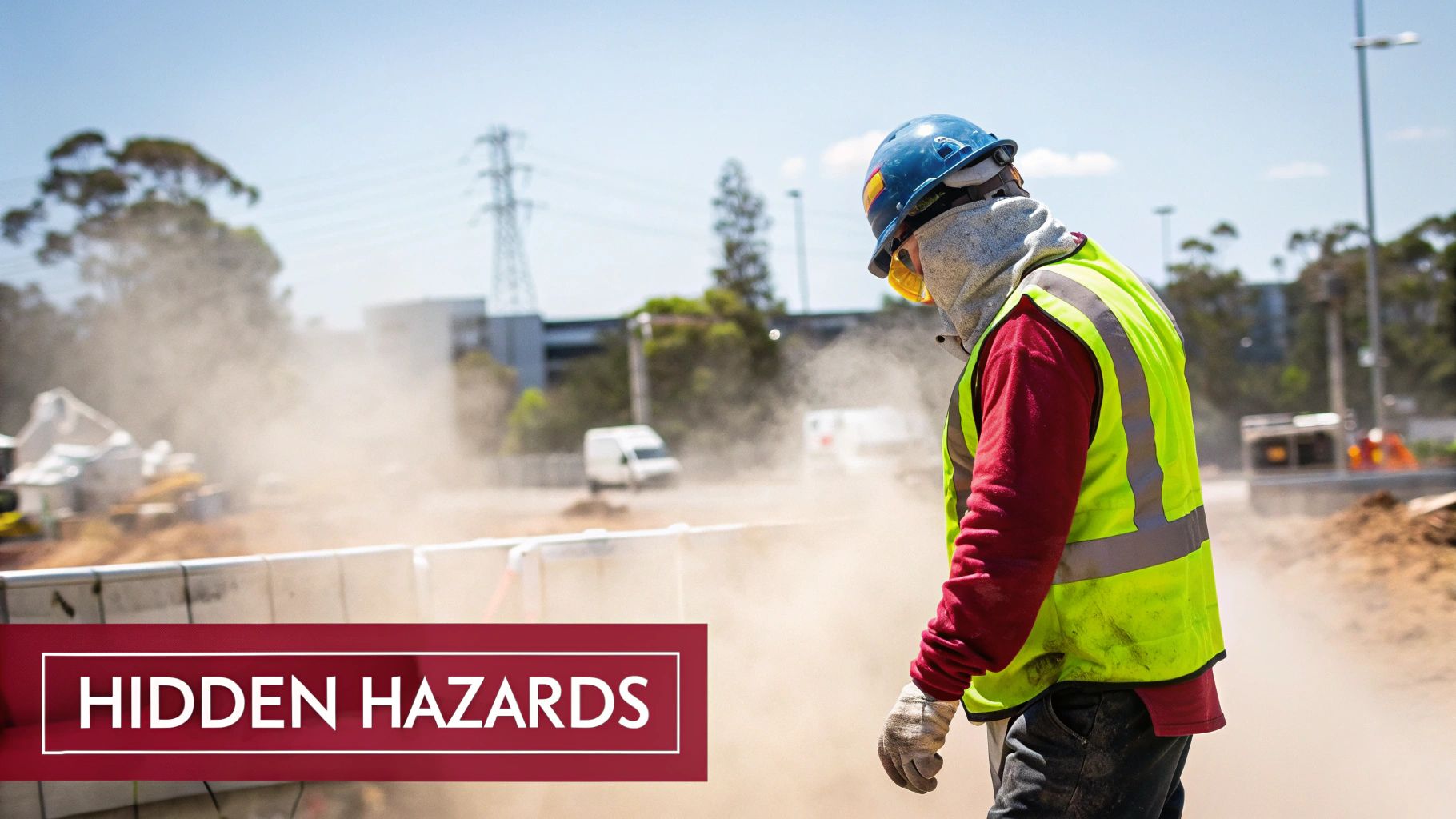
An occupational hygienist in Queensland deals with a whole spectrum of hazards, many of which are unique to our state's key industries like mining, construction, agriculture, and manufacturing. This isn't just about ticking boxes on a form; it's about getting on the ground to find tangible threats that can cause real, lasting harm to workers.
These workplace dangers generally fall into four main buckets: chemical, physical, biological, and ergonomic, each with its own set of challenges and solutions. A good hygienist knows these hazards rarely show up alone. They use a methodical, scientific approach to untangle the often-complex web of risks, giving businesses clear, actionable steps to take. It's a process of using specialised monitoring gear, crunching the data, and translating complicated findings into practical, everyday controls that protect the workforce.
Chemical Hazards
Chemical hazards are easily some of the most common and sneaky threats in Queensland workplaces. Think gases, vapours, dusts, fumes, or liquids that can cause harm if they're breathed in, absorbed through the skin, or accidentally swallowed. The real danger is that they're often invisible, and the damage can build up slowly over many years before anyone notices.
Take a cabinet-making workshop in Brisbane, for example. Workers might be breathing in formaldehyde from pressed wood products or solvents from glues and finishes without even realising it. A hygienist would come in with air sampling pumps to measure the exact concentration of these chemicals in the air people are breathing, then compare those numbers against the legal exposure limits.
One of the most talked-about chemical hazards in Queensland right now is respirable crystalline silica (RCS). This is a super-fine dust created when you cut, grind, or polish materials like engineered stone, concrete, and rock. It's the cause of silicosis, a devastating and incurable lung disease that became a major health crisis in our state. An audit in Queensland uncovered 98 new cases in just four months during 2019, and that number climbed to 151 diagnosed workers by the year's end. The stone benchtop industry was hit particularly hard, which just goes to show how urgently expert help is needed. To learn more about the risks and how to manage them, you can find detailed information on our page about respirable crystalline silica.
Physical Hazards
Physical hazards are all about energy—forms of it that can hurt you, sometimes without even making direct contact. Given Queensland's climate and industrial landscape, these risks are a big deal here. Hygienists are often called in to assess and get a handle on these powerful, environmental dangers.
Some of the usual suspects include:
- Noise: Think of the constant roar of machinery in a factory or on a construction site. Over time, it can cause permanent hearing loss. Hygienists use specialised meters to map out noisy areas and figure out how long someone can safely work there.
- Heat Stress: For anyone working outdoors in construction, farming, or mining, Queensland’s brutal sun and humidity are a serious threat. A hygienist can assess the conditions, the type of work being done, and the heat levels to recommend smarter work schedules and proper hydration plans.
- Vibration: Using heavy machinery or power tools all day can lead to nasty conditions like Hand-Arm Vibration Syndrome (HAVS). A hygienist can measure the vibration coming off the tools and advise on better equipment or safe usage limits.
The core task of the hygienist is to quantify the unseen. They measure the decibels of sound, the degrees of heat, and the vibrations per second to turn an abstract danger into a measurable risk that can be controlled.
Biological and Ergonomic Hazards
Beyond chemicals and physical forces, workplaces can also hide biological and ergonomic risks. These hazards are just as serious and require a specialised eye to spot and manage properly.
Biological hazards cover everything from bacteria and viruses to mould and other microorganisms that can cause infections or allergic reactions. They're a major concern in healthcare and agriculture, but they can even pop up in office buildings with poorly maintained air-con systems. When dealing with biological hazards, understanding how they spread is key. It's critical to implement essential ways to prevent cross-contamination in workplaces like healthcare or laboratories.
Ergonomic hazards, on the other hand, are all about how the job fits the person. A poorly designed workstation, highly repetitive tasks, or constant heavy lifting can lead to musculoskeletal disorders (MSDs), which are a massive cause of workers' compensation claims. A hygienist looks at the tasks and the work environment and recommends changes that make the job a better fit for the worker, reducing physical strain and ultimately boosting health and productivity. These recommendations might include adjustable workstations, better tool design, or changes in work processes.
The Hygiene Assessment Process From Start to Finish
Bringing in an occupational hygienist in Queensland might seem daunting, but it's really a logical, step-by-step process. Think of it as a comprehensive health check-up for your workplace, designed to give you a clear picture of any health risks and how to manage them effectively.
A good hygienist doesn't rely on guesswork. They follow a methodical approach that moves from broad observation to precise measurement, and finally, to practical solutions. This ensures that every recommendation is backed by solid scientific evidence, giving you confidence in your action plan and demonstrating a commitment to workplace health.
This infographic captures a hygienist at work, showing the blend of on-site observation and technical measurement that forms the basis of any good assessment.
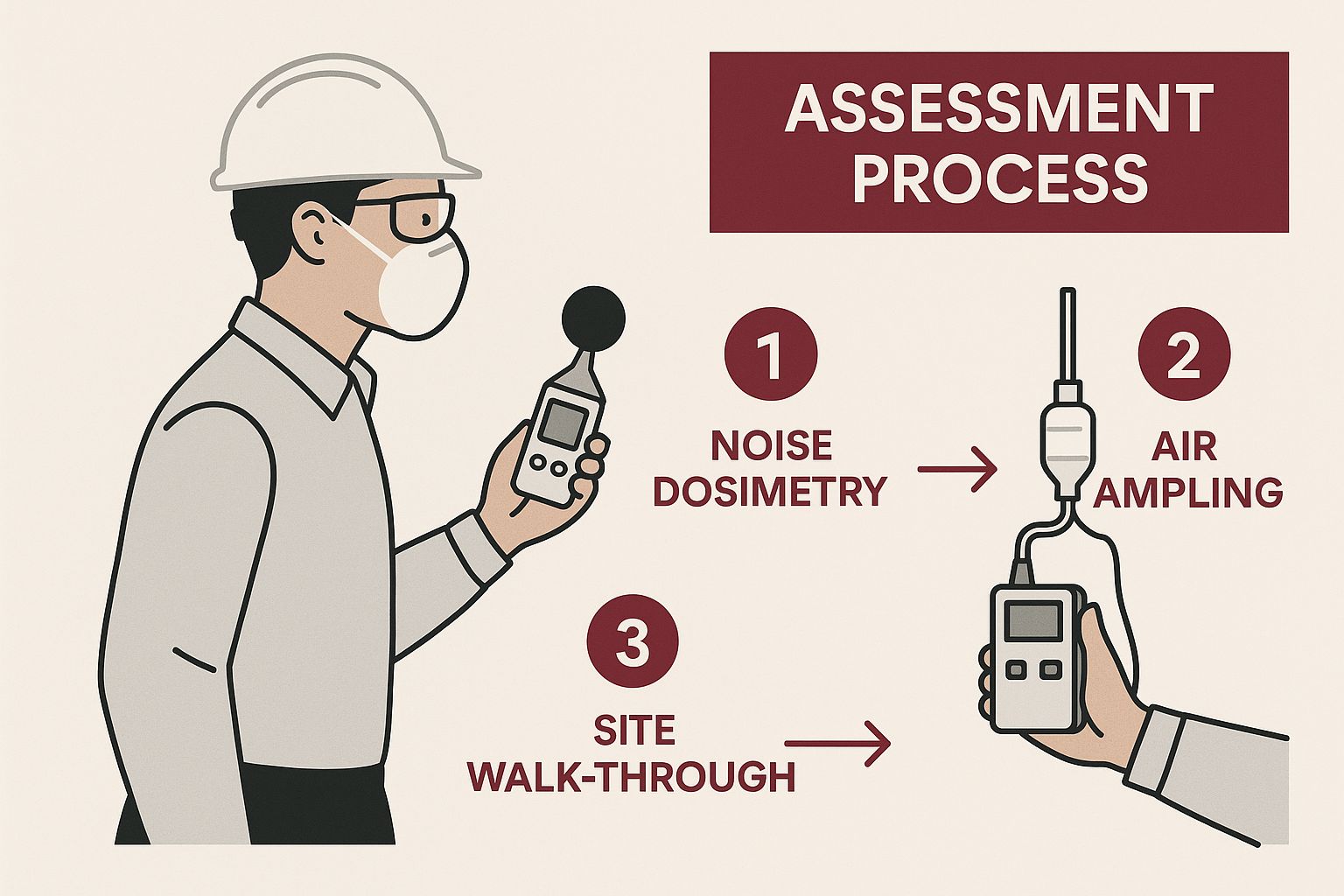
As you can see, it's about combining a trained eye with specialised tools to get the full story.
Stage 1: The Initial Consultation and Walk-Through
It all starts with a conversation. The hygienist will want to get a feel for your business—what you do, the materials you handle, and any specific health and safety concerns you might already have. This initial chat is vital, as it helps them anticipate potential hazards before they even step onto the floor.
Next comes the site walk-through. This is far more than a simple tour. With a trained eye, the hygienist will be looking for potential exposure points, observing how tasks are done, where materials are stored, and how well ventilation systems are working. This is the anticipation and identification phase, where they flag potential risks that need a closer look. They may also review your existing safety data sheets (SDS) and work procedures.
Stage 2: Data Collection and Scientific Evaluation
With potential hazards identified, it's time to measure them. This is where the science of occupational hygiene really comes into play. We move from suspecting there might be a problem to collecting hard data to understand the actual level of risk.
A hygienist uses specialised, calibrated equipment to get precise readings. Depending on the hazard, this could involve:
- Air Sampling: To test for airborne dust or chemicals, workers might wear a small personal sampling pump. This device draws air from their breathing zone through a filter, which is later sent to a lab to measure the exact concentration of any contaminants.
- Noise Dosimetry: For noise, a worker might wear a small dosimeter on their shoulder for an entire shift. This device records their total noise exposure, giving a much more accurate picture than a quick spot check with a sound level meter.
- Surface Swabs: If there's a risk of contamination from something like lead dust, the hygienist might take swabs from various surfaces to check for hazardous residue.
- Direct-Reading Instruments: For some hazards like certain gases or heat stress, instruments that provide real-time data can be used to assess immediate conditions and fluctuations.
The evaluation stage is what turns uncertainty into hard facts. It answers the crucial question: "Are my workers being exposed to hazardous levels, and if so, by how much?"
Stage 3: Reporting and Recommending Controls
Once the samples have been analysed, the final step is to translate all that scientific data into a clear, easy-to-understand report. This report is your roadmap. It will detail exactly what was found, compare the results against Australian legal exposure standards, and state clearly whether a significant risk exists.
But a good report doesn't just point out problems; it gives you solutions. The hygienist will recommend specific control measures based on a globally recognised framework called the Hierarchy of Controls. This framework is brilliant because it prioritises the most effective and reliable solutions first.
It’s a simple, top-down approach:
- Elimination: Can you get rid of the hazard altogether? This is always the best option.
- Substitution: If not, can you replace the hazardous substance or process with a safer one?
- Engineering Controls: Can you physically isolate people from the hazard? Think ventilation systems, soundproof enclosures, or machine guards.
- Administrative Controls: Can you change the way people work to reduce exposure? This includes things like job rotation or limiting the time spent on a hazardous task.
- Personal Protective Equipment (PPE): This is the last line of defence. Providing masks, gloves, or earplugs is essential when other controls aren't enough.
Following this structure helps you focus your time and money on the fixes that will provide the best possible protection for your team, ensuring a safe and compliant workplace.
Why Proactive Hygiene Is a Smart Business Investment
It’s easy to look at the work of an occupational hygienist in Queensland and see it as just another business expense. A compliance cost. A box you have to tick to stay out of trouble. But honestly, that view misses the bigger picture entirely.
Treating occupational hygiene as a proactive strategy is one of the smartest investments you can make for the future of your business. It’s about moving beyond the legal minimums and using it as a powerful tool to build a stronger, more resilient, and ultimately more profitable company.
This forward-thinking approach means you’re not just reacting to problems after someone gets sick. You’re anticipating and neutralising threats before they can do any damage to your people or your bottom line. Investing in proactive health management is investing in the longevity and success of your entire operation.
Protecting Your Most Valuable Asset
Let's be blunt: your employees are the engine of your business. When they feel safe, valued, and genuinely looked after, their performance skyrockets. A proactive hygiene program is a tangible way to show them you care about their long-term health, not just their output for the day.
This commitment creates a positive workplace culture, boosting morale and reducing staff turnover. People who know their employer is actively protecting them from unseen dangers are naturally more engaged, focused, and productive. It builds a foundation of trust that pays you back every single day. By fostering a safe environment, you become an employer of choice, attracting and retaining top talent.
Investing in a healthy workforce isn't just an ethical choice; it's a strategic one. A healthy, motivated team directly contributes to higher quality work, fewer errors, and a more stable operational environment.
The Financial Case for Proactive Management
The numbers don't lie. The financial benefits of preventing occupational illness are incredibly compelling. Every single incident, near miss, or confirmed illness triggers a cascade of costs—both direct and indirect—that can seriously hurt your business.
Think about the financial fallout from just one preventable incident:
- Workers' Compensation Claims: This is the most obvious cost. A single serious claim for a long-term illness can cause your insurance premiums to skyrocket for years.
- Regulatory Fines and Stop-Work Orders: WorkSafe Queensland doesn't mess around. They can hit you with significant penalties for non-compliance, and a stop-work order can bring your entire operation to a grinding halt, causing catastrophic financial losses.
- Legal Fees: Defending your business against legal action from affected employees is a long, expensive, and stressful ordeal you want to avoid.
- Lost Productivity: When a skilled worker is off sick, you don't just lose their output; you lose their expertise. Then come the costs of hiring and training a replacement, which all adds up.
- Equipment Damage and Cleanup Costs: Incidents involving hazardous materials can also lead to expensive cleanup operations and damage to valuable equipment.
By bringing in an occupational hygienist in Queensland, you are essentially buying insurance against these crippling expenses. You stop the incidents that trigger these costs from ever happening, protecting your financial stability. This approach fits neatly within broader operational risk management strategies.
Safeguarding Your Brand and Reputation
In the end, your reputation is one of your most precious assets. News travels fast, and a single, serious health and safety incident can do irreparable damage to your brand. Today, customers, clients, and top-tier talent are drawn to businesses that walk the talk on ethical and social responsibility.
Taking a proactive stance on workplace health sends a clear message to the community: you are a responsible employer who genuinely cares. This protects your public image, builds your reputation as an employer of choice, and fosters long-term trust with everyone you do business with. That kind of goodwill is priceless and is a key differentiator in a competitive market.
How to Choose the Right Occupational Hygienist in Queensland
Finding the right expert is everything. It's the difference between getting a tick-box report and gaining a genuine partner who can help you make meaningful improvements to your workplace safety. The right hygienist doesn't just find problems; they provide practical solutions that work for your specific business.
When you're looking for an occupational hygienist in Queensland, you're essentially hiring a specialist consultant whose advice will shape your health and safety policies. You need someone with the right qualifications and, just as importantly, the right real-world experience to guide you through the complexities of workplace health management.
Checking Credentials and Certifications
Your first port of call should always be to check a consultant's professional standing. In Australia, the key organisation is the Australian Institute of Occupational Hygienists (AIOH). Membership is a good sign, showing a commitment to professional standards and ongoing learning.
But the real benchmark to look for is the Certified Occupational Hygienist (COH) designation.
A COH has gone through the AIOH's rigorous certification process. This means they have the university qualifications, years of hands-on experience, and have been peer-reviewed to prove their competence. It’s the industry’s gold standard.
Hiring a COH gives you peace of mind. You know you're working with someone who is recognised by their peers as a true expert in the field and is committed to upholding the highest ethical and professional standards.
Industry-Specific Experience Matters
Queensland is a big place with diverse industries, from the mines out west to the construction sites in Brisbane and the farms up north. Each one has its own unique set of hazards. A hygienist who has spent their career in a lab might not be the best person to assess silica dust on a construction site.
Always ask about their direct experience in your industry. An occupational hygienist in Queensland who already understands your day-to-day operations, the materials you use, and the pressures your team faces will give you advice that's far more relevant and practical. They know what to look for and how to fix it in a way that makes sense for your workplace, ensuring that solutions are not only effective but also operationally feasible.
Key Questions to Ask a Potential Consultant
Before you hire anyone, have a chat and ask some pointed questions. This isn't just about ticking boxes; it’s about seeing if they are the right fit and can communicate clearly. Their ability to explain complex scientific concepts in simple terms is crucial for effective implementation of their recommendations.
Here’s a quick checklist to help you evaluate potential hygienists and find the best one for your business.
Essential Checklist for Selecting a Queensland Hygienist
| Evaluation Criterion | What to Look For | Why It Matters |
|---|---|---|
| Qualifications | AIOH membership and, ideally, the Certified Occupational Hygienist (COH) designation. | This is your quality assurance. A COH has been independently verified as a competent and experienced professional. |
| Industry Experience | Direct, hands-on experience in your specific industry (e.g., mining, construction, manufacturing). | They'll understand your unique risks and provide solutions that are practical for your operational environment, not just theoretical. |
| Methodology | A clear, confident explanation of the scientific methods and equipment they will use to assess your workplace. | You need to know their approach is based on sound science and follows Australian standards to ensure the results are accurate and defensible. |
| Reporting Style | A commitment to providing a report that is easy to understand, with clear findings and actionable, prioritised recommendations. | A confusing report is useless. The goal is to get practical steps you can take to control risks, ranked by importance. |
| Regulator Experience | Familiarity with WorkSafe Queensland and experience in dealing with inspectors and compliance matters. | This experience can be invaluable if you're dealing with a notice or simply want to ensure your practices meet regulatory expectations. |
Getting straight, confident answers to these questions will help you sort the wheat from the chaff. It ensures you find a professional who will be a genuine asset to your business.
If you’re ready to start your search, our guide on finding an occupational hygienist near me has more tips to help you connect with a local expert.
Got Questions About Occupational Hygiene?
It's completely normal to have questions when you're diving into the world of workplace health and safety. We've put together some straightforward answers to the questions we hear most often from Queensland business owners. The goal here is to clear up the confusion so you can feel confident about protecting your team.
Good information leads to better decisions, and that’s what this is all about. Having a clear understanding helps you take the right steps at the right time.
How Often Do I Need to Bring in an Occupational Hygienist?
There’s no magic number here—it really depends on your specific industry and the risks your people face day-to-day. The best rule of thumb is to get an expert in whenever you're making a significant change at your workplace or as part of a scheduled review program.
It’s probably time to book an assessment if you:
- Are bringing in new chemicals, machinery, or changing how you do things.
- Are planning a big renovation or shifting the layout of your workspace.
- Have had a near-miss, an incident, or a team member has raised a health concern.
- Need to conduct routine checks for high-risk work, like yearly noise monitoring or regular silica dust testing.
- Are responding to a request or notice from a regulatory body like WorkSafe Queensland.
A good hygienist won’t just give you a report; they'll help you develop a practical, risk-based schedule that actually works for your business.
Is This Just for Big Factories and Industrial Sites?
Not at all. This is one of the biggest myths out there, and it can leave smaller businesses unknowingly exposed. Any workplace with potential health hazards—no matter how small—can benefit from a professional eye.
Think about it. Health risks aren't just found in heavy industry:
- Office environments: Things like poor ergonomics, stuffy air from bad ventilation, or hidden mould can cause real health issues over time.
- Small workshops: Fumes from a quick welding job, solvents used in painting, or the constant hum of machinery all add up.
- Healthcare clinics: Staff can be exposed to biological agents or potent cleaning chemicals every single day.
- Hospitality venues: Noise levels in bars, exposure to cleaning chemicals in kitchens, and ergonomic strains from service tasks are all real risks.
Your legal duty of care to provide a safe workplace doesn't change with the size of your payroll.
A proactive hygiene assessment isn’t about how big your company is; it’s about the nature of the risks your people face. It's simply smart, responsible management for any business.
What's the Difference Between a Hygiene Assessment and a WorkSafe Inspection?
This is a really important one to get right. Think of a hygiene assessment as a proactive health check-up that you arrange for your business. It’s a scientific process to find, measure, and control health risks before they can hurt anyone. It's a tool to help you manage your workplace better and demonstrate due diligence.
A WorkSafe Queensland inspection, on the other hand, is a regulatory audit. An inspector turns up to make sure you're complying with the law. It’s more like a pop quiz to see if you’re meeting your legal duties under WHS legislation. They are there to enforce compliance, and their findings can result in improvement notices, prohibitions, or even fines.
The best way to feel confident about a WorkSafe inspection is to have a robust hygiene assessment already done. It shows you’re on the front foot and have already identified and managed your risks properly, which is exactly what a regulator wants to see.
At Anitech Ltd Pty, our experts deliver clear, data-backed advice to help you get on top of workplace health risks. We work alongside businesses all over Queensland to create safer, healthier, and more productive environments. If you’re ready to take a proactive step in protecting your team, find out more about our services at https://occhygiene.com.au.


