
A noise assessment is essentially a deep dive into the soundscape of your workplace. It's a systematic way to measure, map out, and understand the noise your team is exposed to every day. Think of it as a crucial health check for your site's acoustic environment, helping you figure out who is at risk, where the problem areas are, and what you need to do to protect everyone's hearing and wellbeing.
Uncovering the Invisible Risks in Your Workplace
It's easy to get used to the sounds of your own workplace. The constant hum of machinery or the buzz of a busy workshop can quickly become background noise that you barely notice. But just because it feels normal doesn't mean it's safe. This is where a formal noise assessment cuts through the guesswork. It moves beyond what you think you hear and provides hard data on the invisible threat of excessive noise.
I often compare noise exposure to sun exposure. A few minutes in the sun feels fine, but we all know that years of unprotected exposure can cause serious, irreversible damage. It's the same with noise. Daily exposure to levels that aren't painfully loud can still, over time, lead to permanent hearing loss and other health problems. A professional assessment acts like a UV meter for sound, detecting the danger you’ve grown accustomed to.
More Than Just a Measurement
A noise assessment is far more than just pointing a meter at a machine and writing down a number. It's a fact-finding mission that builds a complete picture of your workplace's acoustic profile. This process is the bedrock of a safe and productive environment.
To give you a clearer idea, let's break down what a comprehensive noise assessment really aims to achieve.
Key Objectives of a Workplace Noise Assessment
This table outlines the primary goals of a comprehensive noise assessment, clarifying what the process aims to achieve.
| Objective | Description | Why It's Important |
|---|---|---|
| Identify Noise Hazards | Pinpointing the specific machines, tools, and work areas that produce hazardous levels of noise. | You can't fix a problem until you know exactly where it's coming from. This is the first step in targeting your efforts. |
| Quantify Employee Exposure | Measuring the actual noise dose individual workers are exposed to over a typical shift, including peaks and averages. | This tells you who is most at risk and helps you prioritise protective measures for specific roles or individuals. |
| Assess the Risk | Evaluating the potential for harm based on the measured noise levels and how long employees are exposed. | This connects the data to real-world health consequences and determines the urgency for action. |
| Verify Legal Compliance | Ensuring that noise levels and worker exposure are within the legal limits set by Australian Work Health and Safety (WHS) regulations. | This is non-negotiable. It protects your business from penalties and, more importantly, ensures you meet your duty of care. |
| Inform Control Strategies | Providing the concrete data needed to choose the most effective and practical noise control solutions. | Guesswork is expensive and ineffective. Data-driven decisions ensure you invest in solutions that actually work. |
By tackling these objectives, the assessment gives you a clear, actionable roadmap for managing noise risks.
A common and dangerous myth is that if you can still hold a conversation, the noise level must be safe. The reality is that sustained exposure to levels just over 85 decibels—where you have to raise your voice to be heard by someone a metre away—can cause permanent hearing damage.
The Foundation of a Proactive Safety Strategy
Ultimately, a noise assessment gives you the objective evidence you need to shift from a reactive safety mindset to a proactive one. It replaces assumptions with facts, empowering you to make smart decisions that protect your most important asset: your people.
When you know exactly where, when, and how noise poses a risk, you can implement targeted solutions that prevent long-term harm like permanent hearing loss, tinnitus (that constant, frustrating ringing in the ears), and even heightened stress. It’s not just about ticking a compliance box; it's about building a genuinely safe workplace from the ground up.
The Hidden Dangers of Workplace Noise
When you think about workplace hazards, what comes to mind? Is it the obvious stuff, like chemical spills or unguarded machinery? Most people do. But one of the most widespread and damaging risks is one you can't even see: excessive noise. It’s far more than just a nuisance; it’s an invisible stressor that quietly undermines your entire operation, impacting everything from your team's health to the safety of your site.
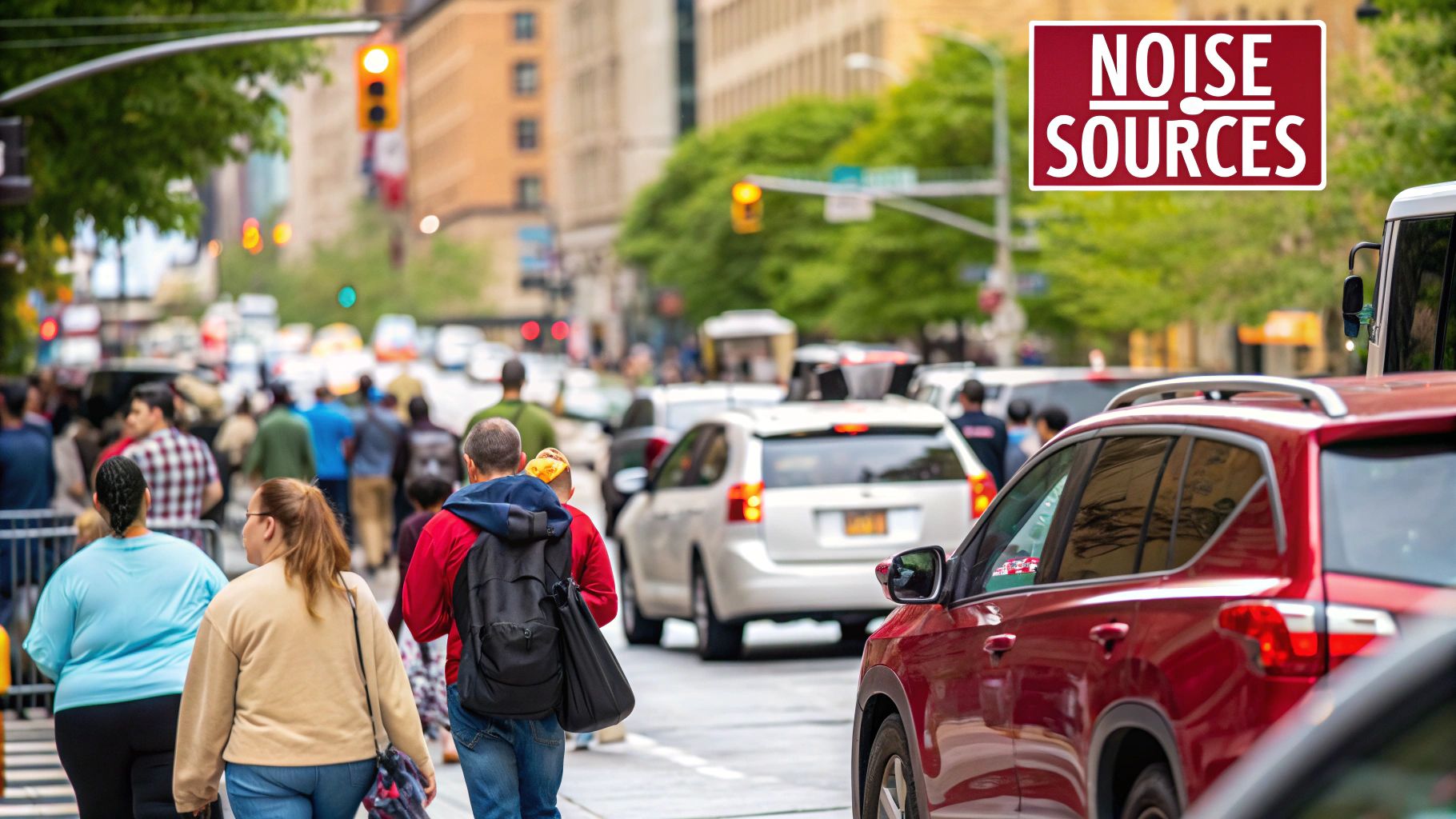
The fallout from long-term noise exposure is much bigger than most people assume. While hearing loss is the most well-known result, the damage often begins with more subtle signs. One of the most common is tinnitus—that persistent ringing, buzzing, or hissing in the ears that sticks around long after the workday is over. For many workers, this becomes a chronic source of frustration and distress.
Beyond The Ears: The Systemic Impact Of Noise
The real threat of workplace noise is how it affects the entire body, not just the ears. These non-auditory effects are often missed, but they can have a serious impact on employee wellbeing and productivity.
Think about it: constant exposure to loud noise puts the body on high alert, kicking its stress response into overdrive and flooding it with hormones like cortisol. Over time, this chronic stress can lead to a whole host of health problems.
- Cardiovascular Strain: Research has clearly linked ongoing noise exposure to higher blood pressure and an increased risk of heart disease. The body is essentially stuck in a low-level state of "fight or flight," which puts a serious strain on the heart and circulatory system.
- Mental and Physical Fatigue: The brain has to work incredibly hard to filter out all that unwanted sound just to focus on a task, which leads to mental exhaustion. This cognitive overload quickly turns into physical fatigue, draining your team's energy and alertness.
- Decreased Concentration: Whether it's in a factory or an open-plan office, background noise shatters focus. The result is a noticeable drop in productivity, a higher chance of errors, and real difficulty with complex problem-solving.
And this isn't just a problem inside the workplace. Noise exposure in Australian cities is a major issue affecting people at work and at home. In fact, studies show that in major cities, between 8% and 20% of homes are exposed to noise levels from things like traffic that exceed recommended health guidelines. This constant environmental noise disrupts sleep and contributes to health issues, making the stress from a noisy workplace even worse.
When Sound Creates Unsafe Conditions
Beyond the long-term health effects, excessive noise creates immediate, tangible safety risks. It acts as a barrier, masking crucial sounds and cutting off communication, which can have disastrous results in a busy environment.
Picture a factory floor where a worker is near a forklift route. If the roar of machinery drowns out the forklift's warning beep or a co-worker's shout, a routine moment can become a life-threatening one. That breakdown in auditory awareness is a direct line connecting noise to workplace accidents.
Even in an open-plan office, while the danger isn't physical, the constant chatter and background noise still undermine safety. When team members can't focus, they're more likely to make critical errors in data entry, financial calculations, or quality control checks—mistakes that can put the business at risk.
Connecting Noise To Business Risk
At the end of the day, uncontrolled workplace noise is a direct threat to your business’s bottom line and, more importantly, its people. The consequences are clear and measurable, from higher rates of sick leave due to stress-related illness to a rise in workers' compensation claims for hearing damage. Securing grants for workplace wellness programs can be a proactive way to fund initiatives that tackle these challenges head-on.
Understanding these hidden dangers is the crucial first step. When you start treating noise as the serious occupational hazard it is, you can put effective controls in place to protect your team from its far-reaching effects. Many of these risks come from places you wouldn't expect, which is why a thorough noise assessment is so important.
For more on this, you might be interested in our guide covering the unseen hazards and overlooked causes of occupational hearing loss.
Meeting Your Legal Duties in Australia
When it comes to workplace noise in Australia, understanding your legal obligations isn't optional. It's a core part of running a safe and compliant business under our Work Health and Safety (WHS) laws. These regulations aren't just bureaucratic hurdles; they're a critical framework designed to prevent the kind of permanent hearing damage that can change a person's life forever.
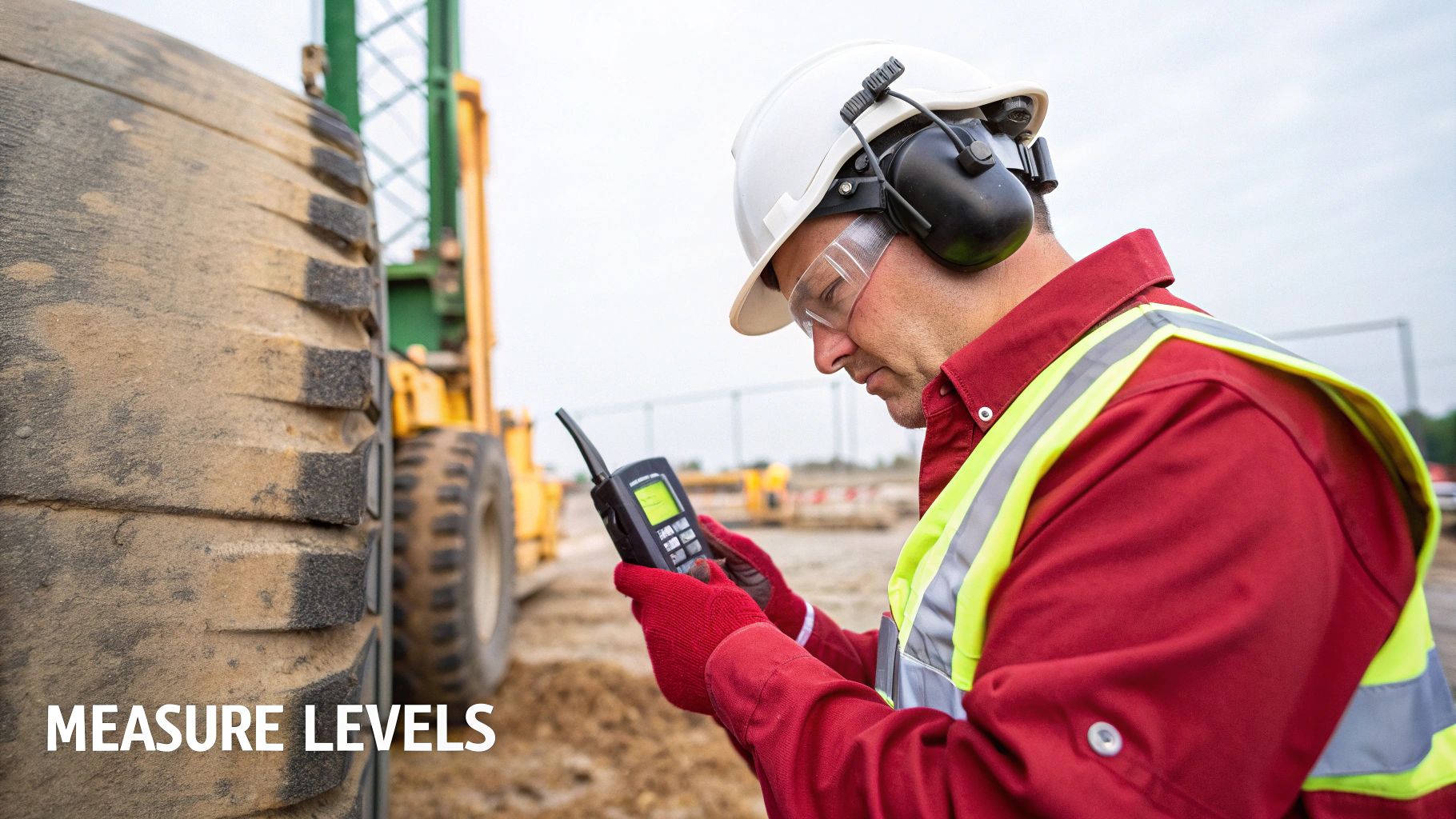
The law places a direct 'duty of care' on the Person Conducting a Business or Undertaking (PCBU). If you’re a business owner, a site manager, or a team supervisor, that’s you. The responsibility to manage the risks from hazardous noise lands squarely on your shoulders, and it all starts with getting to grips with the rules.
Understanding the National Exposure Standards
Australian WHS regulations are very specific about the limits for workplace noise. These aren't just arbitrary numbers; they are science-backed thresholds that define the line between a safe environment and one that causes long-term harm. A professional noise assessment will measure your workplace against these two crucial standards.
-
LAeq,8h of 85 dB(A): Think of this as a person's average noise "dose" over a standard eight-hour workday. If an employee's exposure averages out to 85 decibels or more, you are legally required to take action to bring it down. Once you cross this line, the risk of hearing damage starts to climb.
-
LC,peak of 140 dB(C): This one is about sudden, sharp sounds. It measures the peak level of impact noises like a nail gun firing, a metal press stamping, or a loud crash. Any exposure at or above 140 decibels, even for a split second, can cause immediate and irreversible damage to the ear.
As a PCBU, it's your legal duty to ensure no worker is exposed to noise above these limits. Getting this wrong can lead to hefty penalties, but more importantly, it puts your people in harm's way.
The central idea in WHS law is managing risk "so far as is reasonably practicable." This means you must eliminate noise hazards if you can. If you can't, you must minimise the risk with effective controls. A noise assessment is your first and most critical step in that process.
When Is a Formal Noise Assessment Mandatory?
While being proactive about noise is always smart, there are specific triggers in the regulations that make a formal noise assessment a non-negotiable requirement. Guesswork simply isn't good enough when someone's hearing is at stake.
You are legally required to bring in the experts for a professional noise assessment when:
- You're not certain if your team is being exposed to noise above the legal limit.
- The noise is loud enough that people have to raise their voices to speak to someone just one metre away.
- You make changes to the workplace—like installing new machinery, altering the building, or changing work methods—that could pump up the volume.
- Employees start reporting symptoms of hearing loss, like a constant ringing in their ears (tinnitus) or finding it hard to follow conversations after a shift.
These triggers ensure you're making safety decisions based on objective, reliable data, not just assumptions.
The Duty to Provide Audiometric Testing
Your legal responsibilities don't stop at measuring the noise. If your noise assessment finds that workers need to wear hearing protection (like earplugs or earmuffs) regularly to stay below the exposure standard, another duty kicks in.
Under WHS law, you must provide audiometric testing for these employees. This is essentially a regular hearing check-up and a crucial part of your health monitoring program.
The initial test needs to happen within three months of the worker starting their role, with follow-up tests at least every two years. This ongoing process allows you to:
- Get a baseline of each employee's hearing when they start.
- Track for any subtle changes or hearing loss over time.
- Check if your noise control strategies and hearing protection are actually working.
By properly managing these legal duties—from meeting the exposure standards to providing health monitoring—you're not just ticking a compliance box. You’re building a genuinely safe workplace that protects your team's long-term health and shields your business from the serious legal and financial fallout of getting it wrong.
How a Professional Noise Assessment Is Conducted
So, what actually happens when an occupational hygienist walks through your doors to conduct a noise assessment? It’s far more than just pointing a meter at a noisy machine. It's a methodical process designed to give you a true, real-world picture of your workplace's sound environment.
Think of it as a deep dive into the acoustics of your business. We start with a detailed chat and a walk-through of the site. The goal here is to really get a feel for your operations – what your people do, what machinery they use, and how the workflow ebbs and flows throughout the day. This initial groundwork is crucial; it helps us build a measurement plan that captures genuine work conditions, not just a random snapshot in time.
This first step is all about context. It’s what allows us to pinpoint key areas of concern and choose the right tools for the job.
The Tools of the Trade: Measurement Equipment
Forget smartphone apps. A professional noise assessment relies on highly specialised, calibrated equipment. The two workhorses of our trade are the sound level meter and the noise dosimeter, and each has a specific role to play.
Choosing the Right Noise Measurement Tool
To get a complete picture, we often need both 'area' measurements and 'personal' exposure data. The choice of instrument really depends on the job at hand and the questions we need to answer. Here’s a quick breakdown of how we decide what to use and when.
| Equipment Type | Primary Use | Best For | Limitations |
|---|---|---|---|
| Sound Level Meter | Area Monitoring | Taking instant "snapshot" readings at a fixed location, like next to a specific machine or in a quiet office. Ideal for creating a 'noise map' of the workplace. | Doesn't follow a worker, so it can't measure their personal exposure if they move around. |
| Noise Dosimeter | Personal Monitoring | Measuring an individual’s total noise exposure over a full shift. It's a small device worn by the employee. | Doesn't pinpoint exactly where or when the highest noise levels occurred without more detailed data analysis. |
By using the right combination of tools, we can build a comprehensive and accurate noise profile for your entire operation, covering both static locations and mobile workers.
Capturing Realistic Data On-Site
With a solid plan and the right gear, it’s time for the on-site data collection. The golden rule here is to measure during typical operating conditions. There's no point conducting an assessment during a factory shutdown or on an unusually quiet day—the data would be meaningless. We need to see your workplace in its natural state.
To get a truly complete profile, we look at distinct work patterns. For example, we'll measure the noise when a machine is under full load, but also during the quieter setup or maintenance periods. This detailed approach ensures the final results reflect the full spectrum of noise your team is exposed to.
The process doesn't stop once the measurements are taken. The raw data then goes through a rigorous analysis, as you can see below.
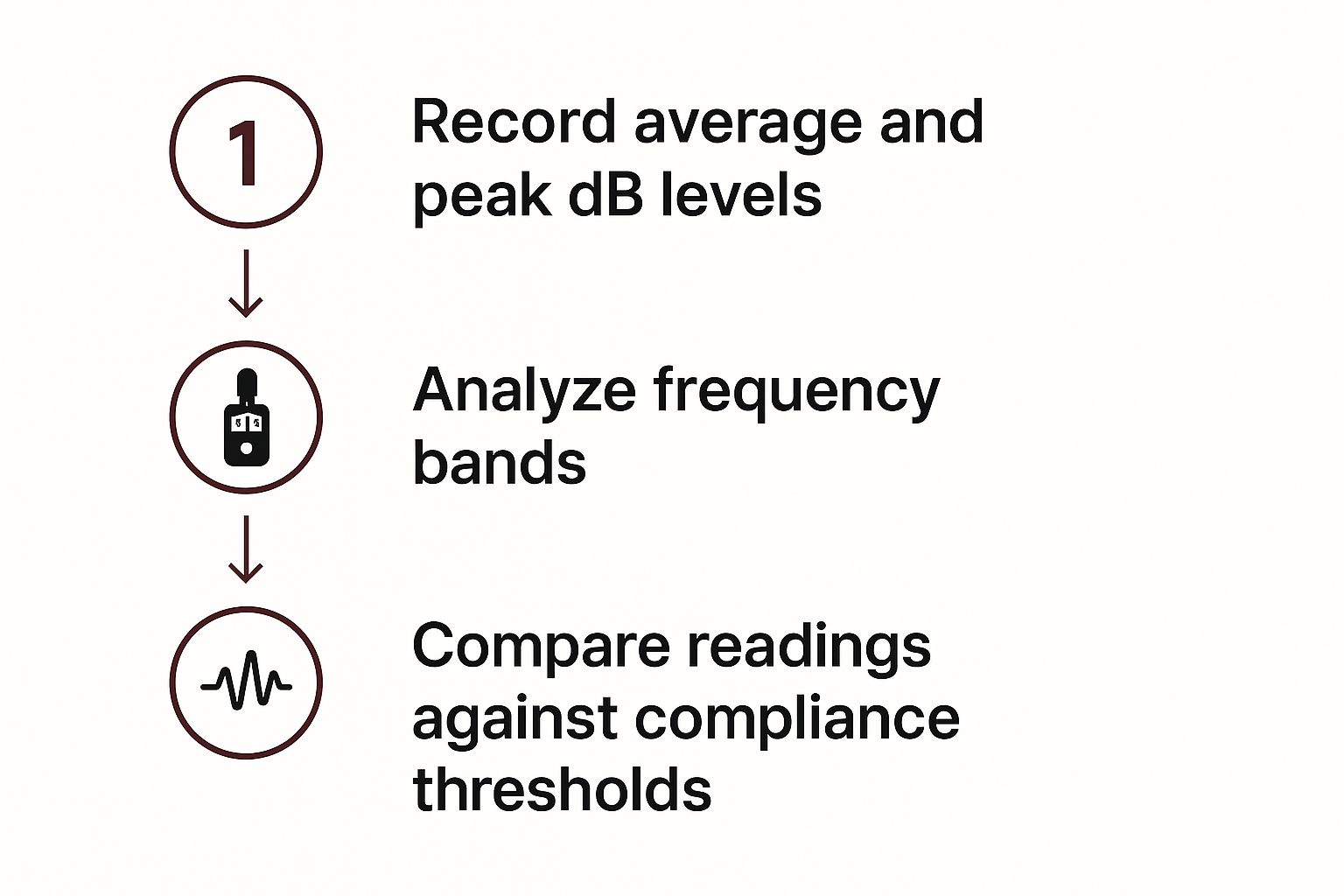
As this shows, it's not just about how loud the noise is. We break it down, analyse the different sound frequencies, and compare everything against the legal exposure standards. This multi-layered analysis helps us understand the true risk and potential for hearing damage.
Undergoing a professional assessment like this gives you the objective evidence needed to protect your team and fulfil your legal obligations. To see what a comprehensive report covers, you can explore the details of a professional noise survey. Ultimately, by combining smart planning with precise measurement, an expert assessment gives you the clarity you need to create a safer and quieter workplace.
Turning Noise Data Into Actionable Solutions
A proper noise assessment report isn't just a collection of decibel readings and technical charts. Its real value is in providing a clear, data-driven roadmap to make your workplace quieter and, most importantly, safer. Think of the raw numbers as the diagnosis; the next step is creating an effective treatment plan by turning that data into practical, sustainable solutions.
This is where the hierarchy of control comes in. It’s a well-established framework in workplace health and safety that forces you to prioritise the most effective control measures over the least. Instead of jumping straight to the easiest fix, like handing out earplugs, this framework guides you to implement solutions that tackle the risk at its source.
Start at the Top: Elimination and Substitution
The single most effective way to manage a noise hazard is to get rid of it entirely. This is the first and highest level of the control hierarchy.
- Elimination: Can you remove the noisy process altogether? A great example is a manufacturing facility switching from riveting—an incredibly loud process—to a modern welding technique that gets the same result with far less noise.
- Substitution: If you can't eliminate the process, can you swap out the noisy equipment for a quieter alternative? This could be as simple as investing in a new air compressor with built-in sound dampening or sourcing electric forklifts to replace older, louder diesel models.
These top-tier controls solve the problem for good. They remove the need for ongoing management or relying on workers to wear protective gear. While they can require an initial investment, the long-term safety benefits are simply unmatched.
Applying Engineering Controls
When you can't eliminate or substitute the noise source, the next best thing is to physically isolate people from it using engineering controls. These are physical modifications to the workplace that either reduce noise at the source or block its path before it reaches your team.
Think of it as building a sound barrier. A classic example is constructing an acoustic enclosure around a loud generator. This purpose-built box, lined with sound-absorbing material, effectively traps the noise and stops it from spreading across the factory floor.
Other effective engineering solutions include:
- Installing acoustic barriers or sound-absorbing panels on walls and ceilings to stop sound waves from bouncing around and amplifying.
- Applying vibration-damping materials directly onto noisy machine panels and guards.
- Keeping up with regular maintenance. You'd be surprised how often worn bearings and unbalanced parts are the true culprits behind unnecessary noise.
Implementing Administrative Controls
Next on the ladder are administrative controls. These are all about changing the way people work to limit their exposure to noise. While they don't get rid of the hazard itself, they’re a vital part of a layered safety strategy.
These controls revolve around managing time and location. For instance, you could schedule noisy maintenance jobs to happen outside of regular work hours when fewer people are around. Another common strategy is job rotation, where workers are moved between noisy and quiet areas throughout their shift, which brings down their total daily noise dose.
A key administrative control is setting up 'quiet zones' or sound-proofed break rooms. This gives employees a place to get genuine respite from constant workplace noise, which not only reduces their overall exposure but also helps combat mental fatigue.
Even simple policies, like making sure doors to loud machine rooms are always kept closed, fall into this category and can make a real difference. Working with an experienced occupational hygiene consultant can help pinpoint the most effective administrative strategies for your specific workflow.
Personal Protective Equipment: The Final Defence
Right at the bottom of the hierarchy, you'll find Personal Protective Equipment (PPE), like earplugs and earmuffs. It's absolutely critical to understand that PPE is the last line of defence, not the first solution you reach for. It should only be used when all higher-level controls have been exhausted and the risk has been reduced as much as humanly possible.
Relying only on PPE is a flawed, reactive strategy because it puts the entire burden of safety on the individual worker. If the equipment isn't worn correctly, is the wrong type for the noise frequency, or isn't worn for the whole time someone is exposed, it simply fails to provide enough protection.
Managing environmental noise effectively extends far beyond the workplace. In Australia, large-scale systems like the Australian Noise Exposure Forecast (ANEF) are used to manage aircraft noise around airports, mapping noise contours to guide better land-use planning. These broader strategies, which focus on controlling noise at a community level, mirror the same principles we use in the workplace: always prioritise controlling the source over relying on personal protection.
Answering Your Questions About Workplace Noise Assessments
When it comes to workplace noise, it’s natural to have questions. Getting to grips with the rules and best practices can feel a bit overwhelming, especially when you're trying to keep your team safe and stay compliant. Let's walk through some of the most common queries we hear from business owners and safety managers.
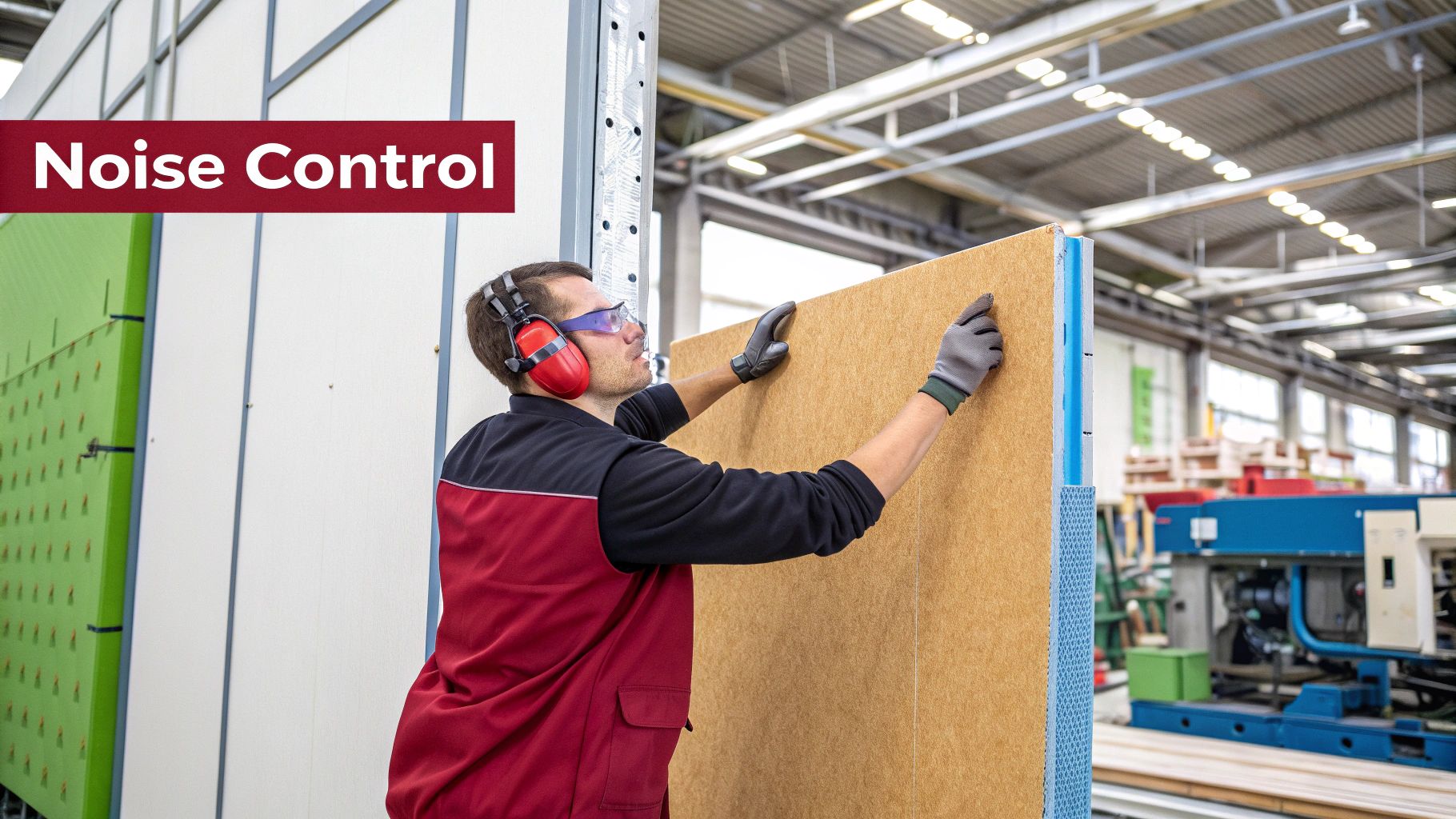
Think of this as a practical Q&A session to clear up any confusion and help you build a solid noise management plan.
How Often Do We Need to Do a Noise Assessment?
This is probably the number one question we get asked. According to Australian WHS regulations, you must review your formal noise assessment at least every five years. But please, don't just mark your calendar and forget about it until then. That five-year mark is a bare minimum.
The reality is, you need to conduct a new assessment much sooner if anything significant changes in your workplace. Staying proactive is the only way to ensure your noise controls are actually working.
You should book a reassessment whenever:
- New Machinery Arrives: Installing new equipment is a major trigger, as it can completely change your workplace's noise profile.
- The Layout is Altered: Moving equipment or reconfiguring a workspace can affect how sound bounces around and where noisy hotspots are.
- Work Practices Change: Introducing new tasks or shifting how your team works can create new noise exposures.
- Someone Raises a Concern: If an employee reports hearing issues or complains about the noise, you need to investigate immediately.
Can I Just Use a Smartphone App to Measure Noise?
It’s tempting, isn't it? Pulling out your phone for a quick reading seems so easy. While a smartphone app can give you a very rough idea of whether a space is loud, it is absolutely not suitable for a WHS-compliant noise assessment.
These apps simply don't have the accuracy, reliability, or calibration needed for official measurements.
A professional assessment is done with a calibrated Type 1 or Type 2 sound level meter. These are precision instruments built for one purpose: to capture legally defensible noise data. Using an app is a gamble that could lead to flawed controls and leave you non-compliant.
What Do the Hearing Protection Classes Mean?
Understanding the ratings on hearing protection is crucial for getting it right. In Australia, we use a simple Class rating system from 1 to 5.
It's pretty straightforward: the higher the class number, the more noise reduction (or attenuation) it provides. A Class 5 earmuff, for example, offers the highest level of protection you can get.
The key is to match the class to the noise level. This is a balancing act, because getting it wrong creates two different problems:
- Under-protection: The most obvious risk, where workers are still exposed to damaging noise levels.
- Over-protection: This is a real hazard, too. If the protection is too strong, workers can become isolated, unable to hear crucial alarms, warnings, or approaching vehicles.
Who is Actually Qualified to Perform a Noise Assessment?
The regulations state that an assessment must be carried out by a 'competent person'. This isn't just a vague title—it means someone with proven knowledge, hands-on training, and experience in noise measurement and the current WHS laws.
In practice, this is an occupational hygienist or a specialist acoustic consultant. These professionals don't just know how to use the equipment; they know how to interpret the data, understand its implications, and recommend practical controls that will actually work for your business and protect your people.
Qualified occupational hygienists provide expert noise assessments to help you meet your legal duties and build a safer workplace. To make sure your business is compliant and your team is protected, contact us today for a consultation.


