
Meth testing in rental properties isn't just something for the paranoid landlord anymore; it's become a vital part of managing your investment and protecting yourself from serious risk. If you don't find and deal with methamphetamine residue, you could be facing huge financial losses, serious legal trouble, and genuine health problems for your tenants. Your investment could quickly turn into a liability.
Key Facts: Meth Testing for Rental Properties
- Australian landlords have a duty of care to provide safe, habitable rental properties under all state tenancy acts.
- Known meth contamination that is not disclosed can create significant legal and financial liability for landlords.
- A positive result above 0.5 µg/100cm² means the property is unsafe to inhabit without professional remediation.
- Professional meth testing for rental properties costs $250–$450 for NATA-accredited lab analysis.
- Testing between tenancies is best practice — confirming the property is clean before new tenants move in.
- Most standard landlord insurance policies exclude meth contamination — making pre-tenancy testing even more critical.
The Hidden Risk Lurking in Australian Rental Properties
As a landlord, your core responsibility is to provide a safe and healthy home. But there's a danger you can't see or smell that's putting both your property and your tenants at risk: methamphetamine contamination.
This isn't just about secret meth labs in the garage. Even casual, recreational smoking of meth indoors leaves a toxic chemical residue. It seeps into walls, carpets, curtains, and even the air conditioning system, and it can stay there for years. This creates a dangerous living space for anyone who moves in, particularly vulnerable people like children and the elderly.
Just How Big is This Problem?
Across Australia, meth contamination in rental properties is a growing public health crisis, fuelled by the country's high rates of meth use. In the year leading up to August 2023, an estimated 10.5 tonnes of methamphetamine was consumed nationwide. That’s a 17% jump from the previous year and a big leap from the 8.3 tonnes used back in 2018.
This sharp rise in use means a much higher chance that a rental property has been contaminated, often without the owner ever knowing. A property can look perfectly fine, with no police raids or obvious signs of trouble, and still hide dangerous levels of residue. The scale of this issue underscores the importance for landlords to be vigilant and informed.
It's More Than a Health Risk — It's a Financial and Legal One
The fallout from undiscovered meth contamination goes way beyond a tenant's health. For you, the property owner, it presents a massive risk that could destabilise your entire investment portfolio. Being proactive here isn't about being overly cautious; it's just smart business.
Think about what could happen if a property is found to be contaminated:
- Decontamination Costs: Getting a property professionally cleaned isn't cheap. It can easily cost tens of thousands of dollars, depending on how bad the contamination is.
- Lost Rent: A contaminated property has to sit empty during testing and cleanup, which means months of no rental income.
- Legal Action: If tenants get sick from living in a contaminated home, they can take legal action against you for not providing a safe place to live.
- Slashed Property Value: A property with a history of meth contamination can become incredibly difficult to sell or rent out later, taking a significant hit on its market value.
A proactive approach to meth testing isn’t about expecting the worst; it’s about responsible asset management. Finding a problem early protects your tenants, preserves your property's value, and shields you from devastating financial and legal consequences.
This guide isn't about scaring you; it's about giving you clear, practical steps to manage this hidden risk. This is all part of providing a safe living environment, which is a core principle in the field of occupational hygiene. By understanding what is occupational hygiene and applying that same preventative mindset to your properties, you can protect your investments and meet your obligations as a landlord.
How to Spot the Telltale Signs of Meth Contamination
Before you even think about ordering a test, you need to know what you’re looking for. While meth contamination is often invisible, there are definitely subtle—and sometimes not-so-subtle—clues that can point to a serious problem.
Learning to spot these red flags during routine inspections is what separates a vague worry from an informed decision to investigate. This isn't about profiling tenants; it's about recognising environmental warnings. A single sign doesn't automatically mean there's an issue, but when you start seeing a few of them together, it’s time to pay closer attention.
Unusual Odours and Stains
Your own senses are your best first line of defence. The residue from meth use and the chemicals from its production leave behind distinct traces that are hard to ignore once you know what to look for.
- Distinctive Smells: A persistent chemical smell is a big one. Tenants often try to mask it with air fresheners, but that underlying odour usually punches through. Keep an eye out for smells like ammonia, solvents, or even a strange cat-urine-like scent. These odours often get stronger in enclosed spaces like cupboards or when the heating kicks on.
- Yellowish-Brown Staining: Scan the walls, ceilings, and around air vents for odd discolouration. Meth smoke leaves behind a sticky, oily residue that can create yellow or brownish stains, which are very easily mistaken for standard nicotine stains. Pay extra attention to corners and spots with poor airflow.
- Blue Discolouration: If a property was used for cooking meth, you might find blue stains around toilet bowls, sinks, and drains. This is a classic sign of chemical solvents being dumped down the plumbing.
Concerning Property Conditions
The overall state of the property can tell you a lot. People involved in illegal drug activities often let general maintenance slide and sometimes make strange modifications to the property to hide what they’re doing.
When you’re doing an inspection, be on the lookout for things like:
- Blacked-out Windows: Are the windows covered with blankets, aluminium foil, or thick black plastic? This is a common way to stop anyone from seeing inside, no matter the time of day.
- Disabled Smoke Detectors: It’s a massive red flag if you find smoke alarms that have been removed, have the batteries ripped out, or are wrapped in plastic. This is often done to avoid setting them off during smoking or cooking.
- Excessive Security Measures: A deadbolt is normal; three deadbolts, makeshift barricades, and security cameras pointed at the driveway might be overkill. This kind of setup is often less about preventing break-ins and more about watching for law enforcement.
By learning to recognise these signs, you transform routine inspections into a proactive risk management tool. It's not about suspicion; it's about being a diligent property manager protecting your asset and future tenants from harm.
Suspicious Tenant Behaviour and Left-Behind Items
While you have to respect a tenant’s privacy, certain behaviours and items found after they’ve moved out can be very telling. This is particularly true during the final bond inspection when you have full access to an empty property.
You’re looking for a pattern—a few different things that, when you put them together, paint a pretty clear picture.
- Unusual Visitor Patterns: Have neighbours mentioned cars coming and going at all hours, with visitors who only stay for a few minutes at a time? This can be a strong indicator of drug-related activity.
- Strange Rubbish: Take a look in the bins for an unusually high number of chemical containers, packaging for cold and flu medicine (which contains pseudoephedrine), coffee filters with weird residue, or piles of empty bottles.
- Left-Behind Equipment: After a tenant has gone, you might find obvious paraphernalia like glass pipes, needles, or small plastic bags. Even more concerning would be equipment like gas canisters, plastic tubing, or lab glassware, which strongly suggests meth was being manufactured on-site.
If you’re ticking off several of these boxes, that’s your signal. Getting a professional meth test done is the next logical, and most responsible, step. It’s the only way to get the hard data you need to either confirm your suspicions or put your mind at ease.
Choosing The Right Meth Testing Method
So, you've spotted some warning signs and your gut is telling you something might be off. Now what? The next step is to get concrete proof, and that means choosing the right way to test the property. This is where a lot of landlords get a bit lost – you've got everything from cheap DIY kits to full-scale professional services, and it's tough to know what you actually need.
Getting this choice right is more than just a box-ticking exercise. It's about getting accurate, legally sound results that protect you, your investment, and your tenants.
Think of it this way: spending a little on proper testing now is an insurance policy against a massive financial headache later. The numbers don't lie – the cost of a professional test is a drop in the ocean compared to the potential remediation bills and the hit your property's value can take.
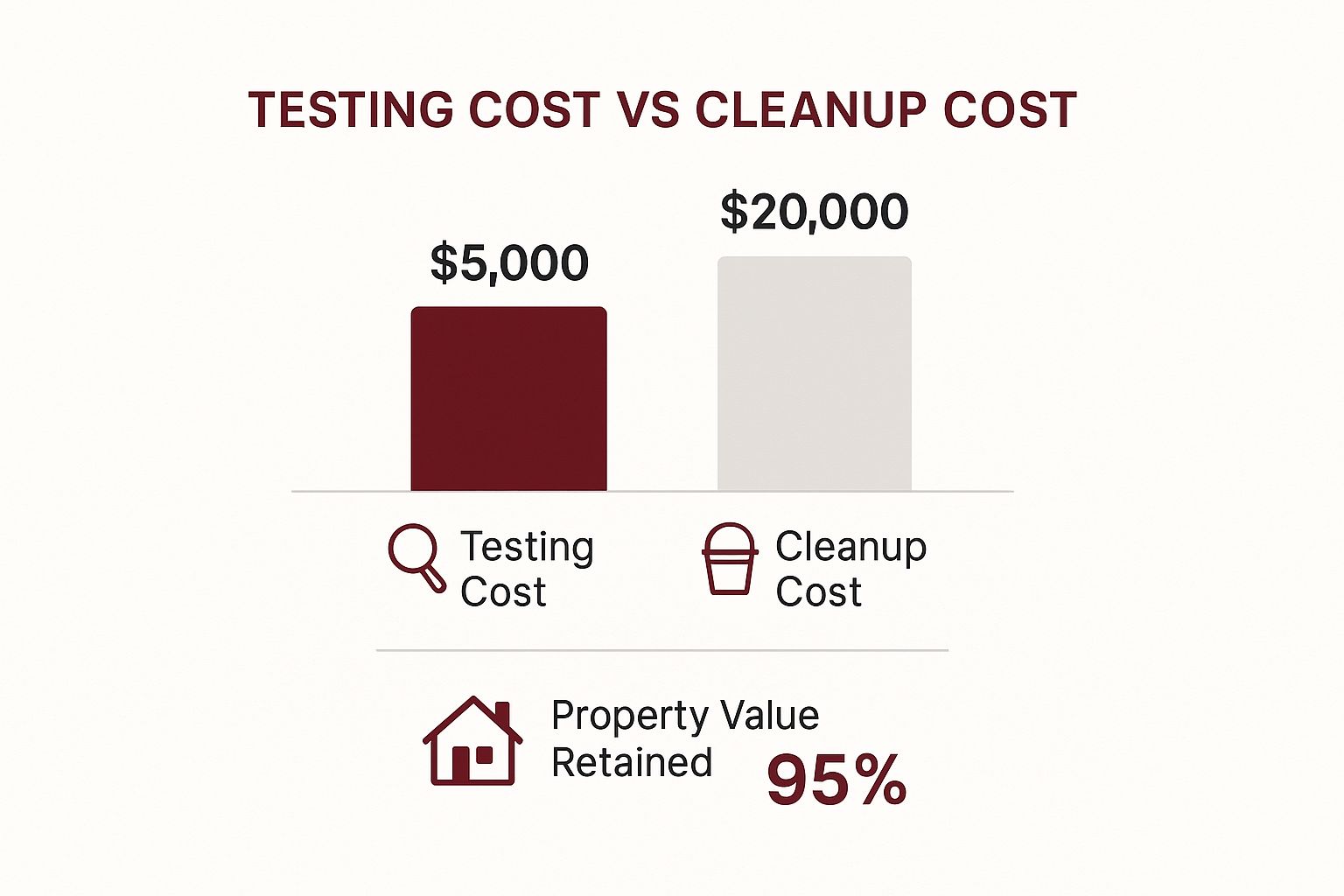
As you can see, a small, proactive investment can literally save you tens of thousands of dollars in decontamination costs and help preserve the value of your asset.
DIY Kits vs Professional Lab Testing
Your first big decision is whether to grab a do-it-yourself kit from the hardware store or call in the professionals. While those DIY kits look tempting on the surface because they're cheap, they come with some serious limitations that every property owner needs to understand.
-
DIY Meth Testing Kits: These are really just for an initial, informal check. If you have a very low-level suspicion and just want a quick "yes" or "no" answer to put your mind at ease, they can be a starting point. The huge downside? They can't tell you how much contamination there is. That level is the critical piece of information you need to decide if the property is habitable or needs a full-on clean-up.
-
Professional On-Site Sampling: This is the real deal. A trained technician comes to the property and takes multiple swab samples from all the right places. They know how to do this properly, following a strict protocol to avoid contaminating the samples and to get a true picture of the situation across the entire house.
Now, it's true that the cost of professional meth testing can run into the thousands. There are also valid concerns in the industry about the quality and consistency of some testing services. We've seen cases where property managers use basic self-swabbing kits or hire non-accredited testers, which really undermines the reliability of the results. You can find more detail on these meth testing industry concerns and why getting it right matters.
To help you weigh up the options, here's a quick comparison of the different approaches you can take.
Comparison of Meth Testing Methods for Landlords
| Testing Method | Typical Cost (AU$) | Reliability & Accuracy | Best Use Case |
|---|---|---|---|
| DIY Screening Kits | $50 – $150 | Low. Provides a simple positive/negative result. Prone to user error and false results. | A quick, informal check for very low-risk situations. Not legally defensible. |
| Composite Lab Testing | $400 – $800 | Medium-High. Multiple swabs are combined into one lab sample. Cost-effective but doesn't pinpoint specific contaminated areas. | A more reliable screening method to confirm presence and get a general idea of contamination across the property. |
| Individual Lab Testing | $800 – $2,500+ | High. Each swab is analysed individually by a NATA-accredited lab, providing specific contamination levels for each room. | The gold standard. Essential when you have a strong suspicion, need legally defensible evidence, or are planning for remediation. |
Ultimately, while a DIY kit might seem like you're saving money, it often just delays the inevitable cost of getting a proper, detailed analysis if the result comes back positive.
Finding a Reputable Testing Company
Choosing the right testing company is just as critical as choosing the right method. This isn't the place to cut corners. A dodgy provider can give you unreliable results that could lead to massive legal and financial trouble.
When you're on the phone with a potential company, don't be shy. You need to ask them some direct questions:
- Do you use a NATA-accredited laboratory to analyse the samples?
- Will I receive a detailed report showing exactly where samples were taken and the specific contamination levels for each one?
- Are your technicians properly trained in sampling protocols to prevent cross-contamination?
- Do you also provide post-remediation testing to confirm the property is officially clean?
If they hesitate or can't give you a clear and confident "yes" to all of these, hang up and call someone else. It's a huge red flag.
The Non-Negotiable Role of NATA Accreditation
If there’s one thing you take away from this guide, let it be this: for your results to have any legal standing, the samples must be analysed by a NATA-accredited laboratory.
NATA (National Association of Testing Authorities) is Australia's official accreditation body. Their stamp of approval means a lab meets the highest standards for technical skill, quality control, and unbiased reporting.
A report from a NATA-accredited lab is your single most powerful piece of evidence. It’s an impartial, scientific assessment that will hold up in a tenancy tribunal, with your insurance company, or in any legal dispute. Without it, you’re just guessing.
The actual sampling process is pretty quick. A technician will visit and take somewhere between five to ten individual swabs from surfaces around the house. They'll focus on high-risk areas like walls, kitchen benchtops, and air conditioning vents. Each swab is then carefully sealed, documented, and sent to the lab under a strict chain of custody.
At the lab, they use highly sensitive equipment to measure the exact amount of meth residue, giving you a result in micrograms per 100cm². This is the hard data you need to make an informed, defensible decision about whether the property is safe or needs decontamination. Trying to save a few hundred dollars by skipping this step is a risk that simply isn't worth taking.
What to Do After a Positive Meth Test Result
So, you’ve got the lab report back, and the news isn't good. Seeing that positive result for methamphetamine contamination can really make your stomach drop. It’s a moment where a hypothetical problem becomes a very real one, demanding your immediate attention. But before you panic, take a breath. This is the time for a calm, methodical plan of attack.
A positive test result isn't the end of the world; it's simply the starting line for a clear remediation process. With the right team and a solid plan, you can get through this, make the property safe again, and manage the costs without breaking the bank. The trick is to understand exactly what you're looking at and follow a structured approach.
Decoding Your Meth Test Report
First things first, let's make sense of that lab report. You'll see contamination levels listed in micrograms per 100 square centimetres (µg/100cm²). This number is everything, as it's what we measure against Australian health and safety guidelines to figure out if the property is safe to live in.
The magic number you’re looking for is 0.5 µg/100cm². This is the nationally recognised safe limit. If your report shows levels higher than this, the property is officially considered contaminated. Professional remediation is now non-negotiable before anyone can legally and safely move back in.
That 0.5 µg/100cm² threshold isn't just some arbitrary figure. It's a health-based guideline specifically set to protect the most vulnerable people, like young children, from the long-term health risks of living with this kind of chemical residue.
It's also worth noting that the health risks vary wildly depending on whether the property was a meth lab or just used for smoking. Australian guidelines are clear: any property with residue over 0.5 micrograms per 100 square centimetres needs remediation. For a deeper dive into the specifics, the official report on methamphetamine exposure and remediation guidelines is a good resource.
User Residue Versus a Former Meth Lab
One of the most critical things the report will help you understand is the likely source of the contamination. The levels of residue are a dead giveaway as to whether you're dealing with the fallout from casual smoking or a full-blown clandestine lab. This isn't just a technical detail—it has massive financial implications.
- User Residue: This usually means lower-level contamination spread widely as meth smoke settles on surfaces. It absolutely still needs professional cleaning, but the job is typically less intense and, therefore, less expensive.
- Former Meth Lab: Here, we're talking about much higher, more concentrated contamination from chemical spills and toxic by-products. This often means tearing out and disposing of porous materials like carpets, curtains, and even plasterboard, making the whole process far more complex and costly.
Getting a handle on this distinction early on helps you set a realistic budget and ensures you don't end up paying for a level of decontamination the property simply doesn't need. A qualified remediation company can look at the lab results and the property itself to give you a precise scope of work.
The Decontamination and Remediation Process
Once you’ve confirmed the contamination is above the safe limit, the property has to be professionally cleaned. I can't stress this enough: do not attempt a DIY clean-up. It's not only completely ineffective against invisible chemical residues, but it's also incredibly dangerous. Your standard household cleaners won't touch these toxins and can actually make things worse by spreading them around.
A professional job typically unfolds in a few key stages:
- Initial Site Assessment: A certified remediation company will come out to the property. They'll use the lab report and a physical inspection to map out a detailed plan.
- Removal of Contaminated Items: Anything porous that can't be saved—think carpets, soft furnishings, unsealed timber—is carefully removed and disposed of following strict hazardous waste regulations.
- Specialised Cleaning: Technicians get to work with industry-approved, specialised cleaning agents designed to break down and lift meth residues from every surface. This means walls, ceilings, floors, and even deep inside the ventilation system. It’s a meticulous process, often involving multiple rounds of washing and scrubbing.
- Air Quality Management: Throughout the clean-up, professionals focus on managing the air. It's vital to ensure all airborne particles are captured and removed. If you're curious, there are several professional methods for improving indoor air quality that are used in these situations.
Post-Remediation Verification Testing
The job isn't done just because the cleaners have packed up their van. The final, and arguably most important, step is post-remediation verification testing.
This involves bringing in an independent testing company (it's best practice to use a different firm from the one that did the clean-up) to take new samples from the remediated areas.
Those samples go back to a NATA-accredited lab. The property is only officially declared decontaminated and safe to occupy when that final report confirms all levels are below the 0.5 µg/100cm² guideline. This clearance certificate is your proof that you've done your due diligence, protecting you from future liability and giving you the green light to confidently put the property back on the rental market.
Your Legal Duties as an Australian Landlord
As a landlord, figuring out your legal obligations can be a headache, particularly when you’re dealing with something as serious as meth contamination. The laws can be a bit of a grey area, but one principle is absolutely central to everything: your duty of care. This is your fundamental responsibility to provide a rental property that is safe for someone to live in.
This isn't just a nice-to-have idea; it's the foundation of tenancy law in every Australian state and territory. A property contaminated with methamphetamine residue is, by definition, unsafe. That means renting it out—whether you knew about the contamination or not—is a direct breach of your most important legal duty.
The Murky Waters of Disclosure
One of the trickiest parts for landlords is knowing exactly what you have to disclose about a property's history. While specific laws targeting meth contamination are still catching up, the general rules around property disclosure are already in place.
Put simply, if you know a property was a former meth lab or has tested positive for high levels of residue, you have a legal obligation to tell any prospective tenants. Hiding this information is a serious misrepresentation and can land you in a world of trouble.
- Lease Termination: A tenant who finds out about undisclosed contamination could have the right to break their lease on the spot.
- Rent Repayment: You might be ordered by a tenancy tribunal to refund every dollar of rent the tenant paid while living in the unsafe property.
- Compensation Claims: Tenants can also take you to court to sue for damages, covering things like their moving costs, medical expenses, and even for the health problems they've suffered.
State-by-State Variations
It’s crucial to remember that the specific rules and penalties can change depending on which state your property is in. Some jurisdictions, for instance, have much stricter requirements for disclosing any "material facts" that could sway a tenant's decision to rent. A history of meth contamination would absolutely fall into that category.
The core legal principle is the same across Australia: you cannot rent out a property that you know, or should reasonably know, is a health hazard. Claiming ignorance won't hold up, especially if there were red flags you should have noticed.
This is exactly why proactive meth testing rental properties between tenancies is fast becoming standard practice. It’s the single best way to protect yourself from a claim that you "should have known" about the contamination.
Strengthen Your Tenancy Agreements and Documentation
Protecting yourself legally isn't just about damage control; it's about being prepared from the get-go. A solid tenancy agreement is one of the most important tools you have.
Think about including specific clauses that outright prohibit any illegal activities on the premises, including drug manufacturing or use. While this won’t physically stop someone, it gives you a much stronger legal footing if you need to evict them or claim for damages down the track.
On top of that, meticulous record-keeping is your best defence in any dispute. Document everything.
- Routine Inspection Reports: Keep detailed notes and photos from every single inspection, paying close attention to anything that seems out of place.
- Meth Test Results: Keep a dedicated file for all lab reports. This includes the "all clear" results, which help build a documented history of the property's clean state.
- Remediation Certificates: If a property ever needs to be decontaminated, the final clearance certificate is a critical legal document. Don't lose it.
- Tenant Communications: Keep a saved record of any relevant emails, messages, or letters between you and your tenants.
Beyond the specifics of meth testing, having a firm grasp of your general landlord responsibilities is essential. These duties are the bedrock of running a safe and compliant tenancy. Taking a proactive approach like this not only helps you operate more professionally but also provides a vital layer of protection in a complex legal landscape.
Taking a Proactive Stance to Protect Your Property
Knowing what to do after a positive meth test is essential, but the real win is preventing contamination from ever happening. Moving from a reactive to a proactive mindset is, without a doubt, the best way to safeguard your property, your tenants, and your back pocket.
Think of these preventative measures less as putting up barriers and more as building a professional, well-managed rental environment. This approach naturally discourages the kind of behaviour that leads to problems. It all starts long before a tenant even gets the keys.
Rigorous Tenant Screening
Your first and best line of defence is a rock-solid tenant screening process. You absolutely have to follow anti-discrimination laws, but that doesn't stop you from doing your due diligence and verifying every single piece of information an applicant gives you. This isn't about being judgmental; it's about confirming their track record.
- Dig into those references: Don't just ask their last property manager to confirm they lived there. Ask pointed questions. What condition was the property left in? Were inspections easy to arrange? Were there ever complaints from the neighbours? You'll learn a lot from the answers.
- Verify employment and income: Make sure the applicant has a stable income that can comfortably cover the rent. This is a basic indicator of responsibility and can reduce the financial stress that sometimes goes hand-in-hand with risky behaviour.
A thorough screening process sends a powerful signal from day one: you're an engaged, professional landlord. That alone can be enough to deter someone looking for a place to conduct illegal activities.
Conduct Regular and Detailed Inspections
Regular inspections are simply non-negotiable. They are your single best chance to catch the subtle red flags of meth use or production before they spiral into a huge, expensive mess.
Make your inspections systematic and document everything. It's not just about looking for damage; it’s about noticing changes. To make sure nothing gets missed, many landlords find it helpful to use a comprehensive rental property inspection checklist during their walkthroughs.
Open communication is the bedrock of a good landlord-tenant relationship. When your tenants trust that they can report issues without getting in trouble, they become an invaluable asset in protecting the property.
Encourage this kind of relationship. A good tenant wants a safe and clean home just as much as you do, and they'll often be the first to notice if something is amiss. For those tricky situations where you need expert advice on maintaining a safe living environment, bringing in professional occupational hygiene consultants can offer that specialised guidance.
Strengthen Your Lease Agreement
Don't underestimate the power of your tenancy agreement. It’s a legally binding document, and adding specific, crystal-clear clauses about illegal activities gives you a firm legal footing if things go wrong.
It's worth talking to a legal professional to help you draft clauses that explicitly prohibit:
- The use, possession, or manufacturing of any illegal substances on the property.
- Any activity that could lead to chemical contamination or create hazardous conditions.
Having this in black and white sets clear boundaries and consequences from the very beginning. If you ever have to go to a tenancy tribunal, these clauses will significantly strengthen your case and make it easier to protect your investment.
Your Top Questions About Meth Testing in Rentals, Answered
When you're dealing with the possibility of meth contamination in a rental property, a lot of questions pop up. It’s a stressful situation, and as a landlord, you need straight answers to protect your investment and, most importantly, keep your tenants safe. Let's walk through some of the most common questions we hear from property owners.
How Often Should I Be Testing My Rental?
While there’s no law that dictates a rigid testing schedule, the industry best practice is clear: test between every tenancy.
Think of it as creating a clean slate. A test before a new tenant moves in establishes a baseline, proving the property was clear of contamination at the start of their lease. This simple step protects you from being blamed for an issue left by a previous tenant and gives you a clear point of reference if a problem arises later. Of course, you should also test immediately if you ever spot any of the red flags we mentioned earlier.
Are Those Cheap DIY Kits from the Hardware Store Any Good?
It’s tempting to grab a cheap DIY kit, but you have to understand their limitations. At best, they're a basic screening tool—a simple "yes" or "no" that might indicate a problem. They are not accurate enough for any official purpose.
The results from a DIY kit won't hold up in a tenancy tribunal or for an insurance claim. For legally defensible results that can actually guide a cleanup and protect you, you need a professional service that uses a NATA-accredited laboratory. Anything else is a false economy.
Who Pays for the Testing and Cleanup?
Initially, the responsibility and the cost fall squarely on the property owner. It’s part of your duty of care to provide a safe and healthy home for your tenants. You have to front the costs for both the professional testing and any remediation that’s required.
However, if you can prove that a specific tenant caused the contamination, you may be able to recover your costs. This could come from their bond, a landlord insurance claim, or even legal action. Success here really depends on the strength of your evidence and the tenancy laws in your state.
Will My Landlord Insurance Cover Meth Decontamination?
This is a massive "it depends." Coverage for meth cleanup varies wildly from one insurer to the next. In fact, many standard landlord policies have specific exclusions for any costs related to illegal drug activity.
Don't just assume you're covered. You need to pull out your policy document and read the fine print, word for word. Some insurers offer this as a special add-on, while others have specific policies for this type of risk. The only way to know for sure is to call your provider and get confirmation in writing.
We provide expert guidance to help you manage and mitigate workplace and residential environmental risks. Our professional occupational hygiene services ensure you have the data and support needed to maintain safe, compliant properties. Find out how we can help protect your investment.
📚 More in This Series: Landlords, Legal & Insurance
Need Professional Meth Testing?
Anitech Group provides NATA-accredited meth testing and decontamination services across Australia. Our qualified occupational hygienists deliver legally defensible results with fast turnaround.
Get a Free Quote

