
Quick Summary: This guide offers landlords tactical advice on managing meth contamination liability. Learn about your mandatory disclosure obligations under Australian law, the risks of non-compliance, and practical steps for testing and remediation. Protecting your rental income and legal standing starts with understanding and fulfilling your duty to provide a safe home.
As a landlord, your core responsibility is to provide your tenants with a safe home. This guide dives into what that means for the hidden risk of meth contamination, explaining your mandatory disclosure duties under Australian law. We'll give you clear, practical steps to navigate this complex issue, protect your rental income, and shield your investment from serious legal and financial trouble. Understanding your obligations regarding mandatory disclosures and meth contamination liability is the first, most critical step in responsible property management.
When you invest in a rental property, you're not just buying bricks and mortar; you're taking on a fundamental duty to keep your tenants safe. This goes far beyond fixing a leaky tap or a broken fence. It extends to invisible dangers like methamphetamine contamination, an issue that's becoming a major headache for uninformed landlords across Australia.
If you fail to meet your obligations, especially around mandatory disclosures, you could face a world of legal and financial pain. Your valuable asset could quickly become a massive liability.

Your Legal Duty to Provide a Safe Rental Property and Avoid Liability
At the heart of every tenancy agreement is a promise, whether it's written down or not: the property is fit for someone to live in. This core principle, your 'duty of care', is the starting point for understanding your meth contamination liability.
When you hand over those keys, you're essentially guaranteeing the property won't harm your tenant's health. Meth residue is a serious health hazard that shatters this guarantee. It’s an invisible poison that clings to walls, carpets, and even air-conditioning systems long after any illegal activity has stopped. Ignoring it, or worse, knowing about it and saying nothing, isn't just cutting corners—it’s a direct violation of your legal duties as a landlord.
The Consequences of Negligence
Failing to meet this duty of care can set off a disastrous chain reaction. Tenants who find out their home is contaminated can and will take legal action. This often leads to broken leases, orders to refund months of rent, and compensation claims for everything from medical bills to moving costs. On top of that, local councils can slap you with a clean-up order, forcing you to pay for expensive, professional remediation.
To help you understand the stakes, here’s a quick overview of the primary risks you face if you don't disclose meth contamination.
Key Landlord Liabilities at a Glance
| Area of Liability | Consequence of Non-Disclosure | Proactive Management Step |
|---|---|---|
| Tenancy Tribunal Claims | Tenants can terminate the lease, claim rent refunds, and seek compensation for health issues. | Disclose any known history or positive test results before the lease is signed. |
| Financial Losses | Costs can include lost rent, professional remediation (which can be tens of thousands), and legal fees. | Implement a routine meth testing schedule between tenancies. |
| Regulatory Orders | Local councils or health departments can issue costly clean-up orders and declare the property uninhabitable. | Act immediately on any suspicions by engaging a certified testing company. |
| Insurance & Valuation | Your insurance policy may be voided, and the property's value can plummet. | Review your landlord insurance policy to ensure it covers contamination and remediation. |
As you can see, the risks are far too significant to ignore. Being proactive is the only sensible path forward.
In essence, if you know about contamination—or even have a good reason to suspect it—the law says you must act. Proactive testing and transparent disclosure aren't optional extras. They are the absolute cornerstones of protecting your investment and meeting your legal obligations.
This guide is designed to give you the practical advice you need to manage this issue properly. Understanding your duties is the first, most important step in protecting your tenants and your bottom line.
Why Meth Contamination Is a Growing Threat to Landlords
The meth problem in Australia is no longer a distant headline you can afford to ignore. It's a very real, and growing, threat to your property investment. As a landlord, getting your head around this issue is the first step in managing what can be a massive financial and legal headache. The problem has moved on from just being about hidden labs in the middle of nowhere; it's now firmly planted in suburban rental properties right across the country.
This shift means your rental could be at risk, and you might have no idea. The scale of the problem is easy to underestimate, but the latest data paints a pretty grim picture.
The Alarming Rise in Meth Use
National statistics show a trend that should have every property owner sitting up and paying attention. The Australian Criminal Intelligence Commission (ACIC) recently reported that a staggering 12.8 tonnes of methylamphetamine were consumed in Australia between August 2023 and August 2024. That’s the highest level ever recorded, with a street value of around $8.9 billion. It's a jump of 21% on the previous year, which tells you just how widespread the issue has become. You can dig into the full findings on Australia's drug consumption trends here.
This isn't just a concern for the police; it's a looming crisis for property management. More consumption means a higher chance that a rental property, somewhere, will be exposed to contamination—either from someone cooking it or, far more commonly, just from smoking it.
From Casual Use to Persistent Contamination
One of the biggest mistakes landlords make is thinking that only properties used as meth labs pose a real danger. That’s dangerously wrong. Even someone smoking meth recreationally releases a toxic, invisible aerosol that coats every single surface it touches.
Think of it like third-hand cigarette smoke, but on steroids—it's far more potent and it sticks around for a lot longer.
- Invisible Residue: The chemical compounds in meth smoke are heavy and sticky. They latch onto walls, carpets, curtains, and get sucked into air conditioning ducts. They can even work their way into porous materials like plasterboard and timber.
- Long-Term Presence: Unlike smoke that you can air out, this residue doesn't just disappear. It can stay chemically active for years, continuously releasing harmful toxins into the air.
- Widespread Contamination: The aerosol travels everywhere, often through the HVAC system. This means the contamination is rarely just in one room; it can easily spread throughout the entire property.
This persistent chemical footprint can turn what looks like a clean, tidy property into a serious health hazard for your next tenants. Children and pets are particularly vulnerable to the effects of this ongoing exposure.
The key thing to understand is this: your property doesn't need to have been a "meth lab" to be dangerously contaminated. A tenant who smokes meth recreationally can cause enough contamination to make the property legally uninhabitable and expose you to significant liability.
The Financial and Legal Fallout
When contamination is discovered, the fallout for a landlord is severe. Cleaning it up isn't a job for your regular cleaner; it’s a specialised, expensive process that can easily run into tens of thousands of dollars. While this is happening, the property is a no-go zone, which means you're losing rent.
Even worse, if contamination is found after a new tenant has moved in, you could be facing legal action, orders to refund rent, and potentially claims for damages if they suffer health problems.
Given these serious risks, understanding your mandatory disclosure obligations isn't optional. It's a non-negotiable part of managing property today. Being proactive with testing and transparent in your communication aren't just 'best practice' anymore—they are your essential lines of defence for protecting your investment, your tenants, and yourself.
Navigating Australia's State-Specific Disclosure Laws
If you’ve ever felt like you need a different road map for every state you drive through, you'll understand what landlords in Australia face with meth disclosure laws. There’s no single, national rulebook. Instead, we have a confusing patchwork of state and territory regulations that can easily catch out even the most diligent property owner.
This lack of a unified standard makes it absolutely critical to get your head around the local rules. Getting it wrong isn't just a minor slip-up; failing to meet your mandatory disclosures can lead to serious legal headaches and financial penalties. Let's break down this maze so you know exactly where you stand.

What Is a "Material Fact"?
At the heart of nearly all disclosure laws is a simple concept: the "material fact." It’s a powerful idea.
Think of it like this: a material fact is any piece of information that a reasonable person would want to know before deciding to rent a property. If knowing something could make a potential tenant walk away, or perhaps offer a lower rent, then it's almost certainly a material fact.
Previous meth contamination, even if it’s been professionally cleaned, fits this description perfectly. It’s a crucial detail about the property’s history and potential health risks. Trying to hide this kind of information isn't just unethical—it's a direct breach of your legal duties as a landlord.
State and Territory Disclosure Requirement Overview
While the "material fact" principle is a great starting point, how it's applied varies wildly across Australia. Some states have put explicit rules in place for drug contamination, while others bundle it into broader consumer protection and tenancy laws.
The table below gives you a quick snapshot of the different approaches.
| State/Territory | Governing Principle | Practical Disclosure Obligation |
|---|---|---|
| NSW | Explicit legislative requirement (Residential Tenancies Regulation 2019) | Must disclose if the property has been subject to a meth-related health and safety order in the past two years. |
| QLD | General duty to disclose "material facts" that could influence a tenant's decision. | Known meth contamination or a history as a drug lab is considered a material fact that must be revealed. |
| VIC | Obligation to disclose if the property has been the site of a serious crime, including specific drug offences. | Must disclose if the property was used for trafficking or cultivating a drug of dependence. |
| WA | Landlord's duty to provide a habitable property in a reasonable state of cleanliness and repair. | Failing to disclose known meth contamination would breach the duty of care, as the property could be deemed unsafe and uninhabitable. |
As you can see, the specifics change, but the core responsibility remains.
The common thread across all states is that withholding knowledge of contamination is a significant legal risk. Courts and tribunals consistently side with tenants when landlords are found to have concealed a property’s hazardous past.
Practical Steps for Legal Compliance
Navigating this legal landscape isn't about hoping for the best. That’s a gamble you can't afford to take with your investment. Your goal should be to create a clear, honest record that proves you’ve done the right thing.
To stay on the right side of the law, no matter which state your property is in, follow these key steps:
- Put It in Writing. A verbal chat won't cut it. Your disclosure must be a formal, written statement included as a special condition or addendum to the tenancy agreement. This creates a permanent legal record.
- Be Specific and Transparent. Don't use vague language. If the property was contaminated and has since been professionally remediated, state that clearly. Go a step further and provide copies of the remediation report and the final clearance certificate to prove it's now safe.
- Disclose Before the Ink Dries. The tenant needs to know before they sign the lease. The whole point is to give them the chance to make an informed decision. Telling them after they’ve already committed is too late and could give them grounds to terminate the agreement.
Ultimately, your approach to mandatory disclosures regarding meth contamination liability should always come back to one thing: transparency. By understanding your state's laws and documenting every step, you protect your tenants, your investment, and your reputation.
The Hidden Health Dangers of Meth Residue for Tenants
When we talk about landlord disclosures and "material facts," it's easy to get bogged down in legal jargon. But the rules around meth contamination exist for a very stark and human reason: the residue left behind is an invisible poison that can wreak havoc on your tenants' health.
Thinking about it this way shifts the conversation from a simple box-ticking exercise to a serious ethical responsibility.
Unlike a patch of mould you can scrub away or a weird smell you can air out, meth residue is a stubborn chemical hazard. It seeps into walls, carpets, and even benchtops, silently releasing toxic compounds long after the source is gone. When a new family moves in, they have no idea they’re being exposed to a dangerous chemical cocktail, day in and day out.
How an Invisible Threat Causes Harm
No one needs to come into direct contact with the drug to get sick. The real danger lies in what’s called third-hand exposure, which typically happens in a few ways:
- Through the skin: Think about a toddler crawling on a contaminated carpet. Toxins can be absorbed directly through their skin from everyday surfaces like floors, walls, and furniture.
- Breathing it in: The residue doesn't just sit there; it slowly releases toxic vapours into the air in a process known as "off-gassing." Every breath a tenant takes can be delivering these chemicals into their system.
- Accidental ingestion: Young children are especially vulnerable here. They touch a contaminated surface, then put their hands or a toy in their mouth, ingesting the toxic residue.
This kind of constant, low-level exposure can trigger a cascade of serious health issues—often leaving tenants and their doctors completely stumped as to the cause.
The Real-World Health Consequences
Living in a property with a history of meth use can lead to a disturbing range of physical and neurological symptoms. It’s often the most vulnerable—children, pregnant women, the elderly—who suffer the most.
Here are some of the documented health problems linked to third-hand meth exposure:
- Respiratory Issues: A persistent cough that won’t go away, shortness of breath, and asthma-like symptoms are very common reactions to inhaling the toxic air.
- Neurological Problems: Tenants might complain of chronic headaches, dizziness, confusion, or sudden bouts of anxiety and irritability. In children, this can look like severe behavioural problems or developmental delays.
- Skin and Eye Irritation: Rashes, chemical-like burns, and severely irritated eyes can result from direct contact with contaminated surfaces.
The scale of this public health issue is frankly alarming. Methamphetamine-related deaths in Australia more than quadrupled between 2001 and 2020. We're also seeing that meth-induced psychosis can affect up to 46% of dependent users, which gives you an idea of the devastating neurological damage this drug causes. If you're interested in the data, you can read more about the findings on methamphetamine-related deaths here.
When you see the potential health consequences laid out like this, the reason for mandatory disclosure becomes painfully obvious. This isn't about a leaky tap or a cracked tile; it's about protecting people from a serious health hazard they can't see, smell, or even know is there.
At the end of the day, your legal duty to disclose is tied directly to your ethical duty to keep people safe. By being upfront about a property’s history, you empower prospective tenants to make an informed choice to protect their family. It’s not just about avoiding a tribunal hearing—it's about doing the right thing.
A Practical Guide to Meth Testing and Remediation
If you suspect your property might be contaminated, it’s time to move from worry to action. Getting your head around meth testing and remediation can feel overwhelming, but following a clear, step-by-step process is the best way to protect your investment and, just as importantly, your legal standing.
This isn’t just about hypotheticals. The latest hair testing data from across the country shows that a staggering 45.4% of tests came back positive for drugs—a 3.3% jump from the previous year. What's really concerning for property owners is that methamphetamine concentrations have been climbing steadily since 2020. This trend suggests the risk of a rental property becoming contaminated is higher now than ever before. You can dig deeper into these concerning drug use statistics in Australia to see the full picture.
Choosing the Right Testing Method
Your first job is to find out if there’s actually a problem. There are two main ways to go about testing, and each has its place in a solid risk management plan.
- DIY Instant Kits: These are cheap and cheerful kits you can buy online or from specialty suppliers. You just swab a surface, and the kit gives you a simple positive or negative result on the spot. Think of it as a screening tool—it’s perfect for a quick, low-cost check between tenancies, but it won’t stand up as formal evidence if things get legal.
- Professional Lab Sampling: This is the gold standard, no two ways about it. A qualified technician comes to the property, takes multiple swabs from key areas, and sends them to a NATA-accredited lab for a proper analysis. This gives you precise contamination levels in a report that is legally defensible.
A DIY kit is a sensible first step, but if it comes back positive, you absolutely must follow up with professional testing to understand the true scale of the problem.
This flowchart gives you a clear idea of how invisible meth residue can spread and become a serious health risk for anyone living in the property.
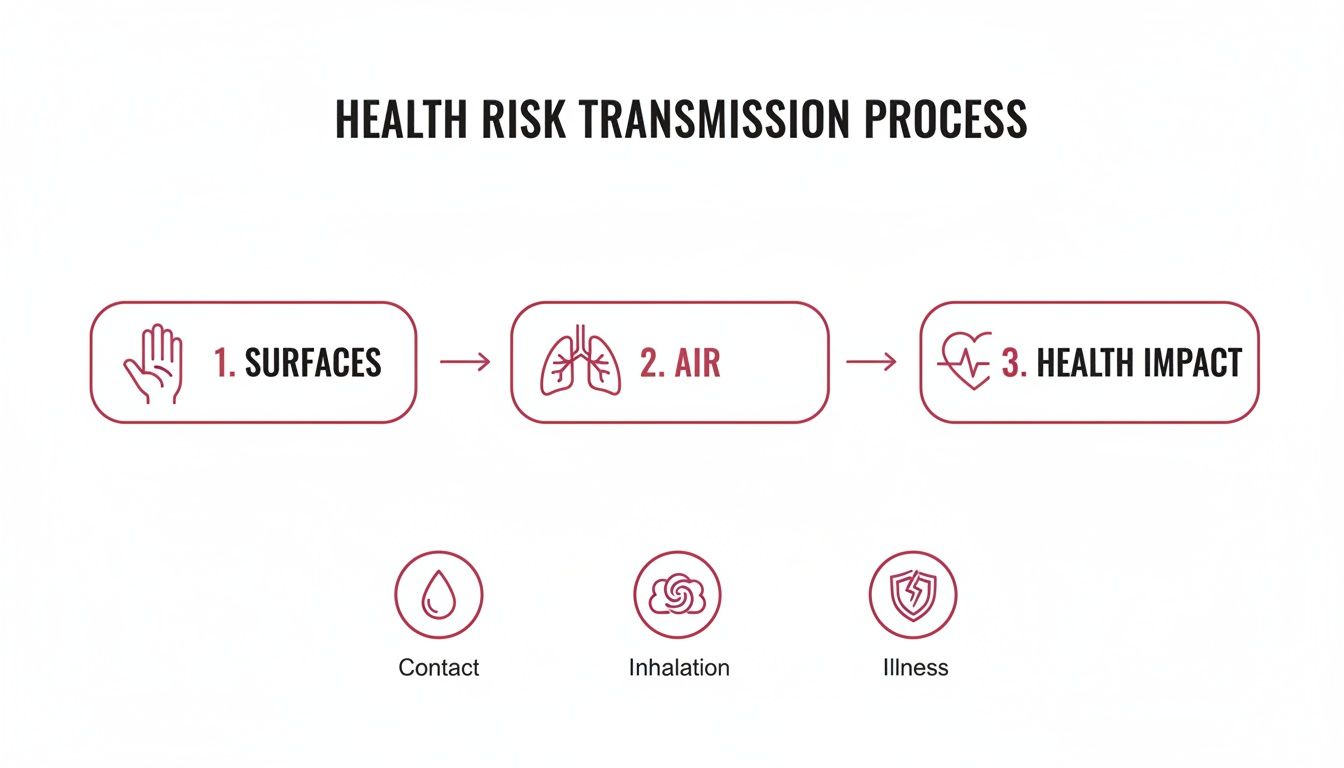
As you can see, contamination isn't just about what you can touch. Residue gets into the air, affecting people's health through multiple pathways, which is why a thorough test is so important.
Understanding the Test Results
When you get a professional lab report back, you’ll see a specific number measured in micrograms per 100 square centimetres (μg/100cm²). This number is everything, because it’s what we compare against the national safety guideline.
In Australia, the accepted guideline for a property to be considered safe for habitation is less than 0.5 μg/100cm². Any reading at or above this level means the property is officially contaminated and needs professional remediation before anyone can live there again.
This isn't just some number plucked out of thin air. It's the threshold experts have determined is needed to protect people from the health risks of third-hand meth exposure. Knowing this benchmark is the key to fulfilling your mandatory disclosures and managing your meth contamination liability.
The Professional Remediation Process
If your property tests above the safe limit, a regular bond clean won't even scratch the surface. You have to bring in a specialised remediation company. Their process is incredibly thorough and a world away from standard cleaning.
Here’s what it typically involves:
- Site Assessment and Planning: The experts will map out the property, identifying exactly which areas are contaminated and creating a detailed plan of attack to decontaminate them.
- Removal of Porous Items: Meth residue seeps deep into soft materials. This means things like carpets, curtains, unsealed furniture, and mattresses are a lost cause. They have to be professionally removed and disposed of as hazardous waste.
- Intensive Chemical Cleaning: Every single hard surface left—walls, ceilings, floors, cupboards, even light fittings—is painstakingly cleaned with powerful, industrial-grade chemicals specifically designed to break down and neutralise the methamphetamine residue.
- Post-Remediation Testing: Once the clean-up is done, an independent hygienist must come back to re-test the property. Their job is to verify that the contamination levels are now safely below the 0.5 μg/100cm² guideline.
Only when you get a pass on that final test will you be issued a Clearance Certificate. This document is your proof. It’s your most critical piece of legal evidence, confirming the property is safe and that you’ve done the right thing. It becomes the backbone of your defence against any future liability claims.
How to Disclose and Document Everything to Limit Your Risk
In property management, a handshake deal is worth absolutely nothing. If it’s not in writing, it might as well have never happened. When it comes to meth contamination, creating an ironclad paper trail is the single most powerful defence you have against future liability claims.
This isn’t about trying to trip tenants up with confusing legal jargon. It’s about being clear, direct, and creating legally sound documents that prove you’ve done your bit—that you've fulfilled your duty of care. This paperwork is your shield, turning simple compliance into solid financial and legal protection.
Crafting a Legally Sound Disclosure Statement
Your disclosure can't just be a casual mention during the property viewing; it needs to be a formal, written part of the tenancy agreement itself. This statement has to be specific and unambiguous, leaving no room for a tenant to later claim they weren't properly informed.
A solid disclosure clause should cover three critical areas:
- Property History: State clearly if the property has a known history of meth contamination. No sugar-coating.
- Remediation Actions: Detail the fact that the property has been professionally remediated to meet Australian safety guidelines.
- Proof of Safety: Attach the final clearance certificate. This is the official proof that the property tested below the 0.5 μg/100cm² threshold and is considered safe to live in.
Providing these documents upfront gives tenants all the information they need to make a decision and creates a transparent record that protects you from claims of non-disclosure.
Example Disclosure Wording: "The tenant acknowledges that the property at [Property Address] was previously found to have methamphetamine contamination. The landlord confirms the property underwent professional remediation by [Remediation Company Name] on [Date]. A copy of the official Clearance Certificate, which confirms residue levels are below the national guideline, is attached as Addendum A to this agreement."
Broadening Your Risk Management Strategy
Look, a good disclosure statement is vital, but it’s just one part of a much bigger risk management puzzle. To truly protect your investment, you need a multi-layered approach that minimises your exposure from every possible angle. Think of it as building a fortress around your asset, not just putting a lock on the front door.
This means taking several proactive steps that go beyond paperwork.
- Review Your Insurance Policy: Never assume you’re covered. Many standard landlord insurance policies have specific exclusions for contamination, illegal drug activity, or related events. You need to dig into your policy documents and scrutinise the fine print for clauses on drug-related damage and remediation costs. Beyond effective disclosure and thorough documentation, securing appropriate financial protection is a crucial step in limiting your risk. Learn more about what is covered in a typical landlord liability insurance policy.
- Implement Rigorous Tenant Screening: A robust screening process is your first and best line of defence. Go deeper than a simple credit check. Actually call and verify rental history with previous landlords and check every reference meticulously.
- Conduct Regular, Documented Inspections: Routine inspections aren’t just for checking on scuff marks. They’re your chance to spot potential red flags—things like strange chemical smells, blacked-out windows, or an unusual amount of visitor traffic at odd hours. Always provide proper notice, conduct inspections according to the law, and document everything with photos and detailed notes after every visit.
This comprehensive strategy—combining transparent disclosure, the right insurance, careful tenant selection, and diligent oversight—is the only truly effective way to manage your meth contamination liability and protect your rental income for the long haul.
Got Questions About Meth Contamination? Let's Clear the Air.
When you're dealing with something as serious as meth contamination in a rental property, it's natural to have a lot of questions. As a landlord, knowing your responsibilities isn't just good practice—it's essential for protecting your investment, your tenants, and yourself.
Let's walk through some of the most common queries we hear from property owners.
What Level of Meth Residue is Actually Dangerous?
This is the big one. In Australia, there’s a clear line in the sand: the national safety guideline is 0.5 micrograms (µg) per 100 square centimetres (100cm²).
If a test comes back with a reading at or above that number, the property is considered contaminated. It’s no longer safe for people to live in until it's been professionally cleaned up. This threshold is the trigger for all your legal obligations.
Can I Just Clean It Up Myself?
In a word: no. Please don't even try. Wiping down surfaces with bleach or sugar soap won't touch the invisible chemical residue left behind by meth. It’s a stubborn, hazardous substance that seeps into porous materials like plasterboard, wood, and carpets.
A DIY attempt is not only a waste of time but also puts your own health at serious risk. The only way to properly decontaminate a property and meet the national safety standard is to bring in a specialised remediation company. They have the training, the protective gear, and the right industrial-strength chemicals to do the job safely.
Remember, a professional Clearance Certificate issued by an independent hygienist after the clean-up is your only real legal protection. Without it, you’re still on the hook for any health problems your tenants might suffer down the track.
The Property's Been Professionally Cleaned. Do I Still Have to Disclose It?
Yes, you absolutely do. A property’s history of meth contamination is legally considered a “material fact” in pretty much every state and territory.
What does that mean? It’s a piece of information that a reasonable person would want to know before deciding to rent your property. Even with a clearance certificate in hand, you have a duty of care to tell prospective tenants about the property's past. Being upfront is the only way to avoid a very costly non-disclosure claim later on.
What are the Telltale Signs of a Meth Lab or Heavy Use?
It’s not always easy to spot, but there are definitely some red flags that should make you suspicious. Keep an eye out for:
- Weird Smells: A strong, lingering chemical smell, often described as being like cat urine, ammonia, or powerful cleaning solvents.
- Odd Tenant Behaviour: Tenants who are secretive, block access for inspections, have visitors at all hours, or are never home during the day.
- Strange Property Modifications: Windows blacked out with foil or blankets, new and unusual vents or fans installed, or yellow and brown stains appearing on walls, ceilings, and drains.
- Suspicious Rubbish: A surprising amount of empty cold and flu medicine packets, empty solvent cans, gas cylinders, or lab-style glassware in the bins.
Catching these signs early gives you the chance to act fast, which can make a huge difference in limiting the extent of the damage and your own liability.
Keeping your property safe and healthy for tenants is your number one job. If you need expert advice on occupational hygiene, from professional testing to guidance on managing contamination, you can trust the team at Anitech. Visit the Anitech Occupational Hygiene website to see how they can help you give your tenants a safe home.


