
Quick Summary: Maintaining a rigorous chain of custody for forensic swab samples is the cornerstone of legally defensible testing. This implementation checklist provides a step-by-step procedural guide to ensure sample integrity from collection to disposal, covering documentation, handling, and compliance—critical for accurate results in diagnostic testing and property screening workflows.
In the world of forensic science and occupational hygiene, the journey of a swab sample from collection site to laboratory analysis is fraught with potential pitfalls. Every handover, every storage period, and every undocumented moment can cast doubt on the final test results. An unbroken, meticulously documented chain of custody is not just a best practice; it is the fundamental requirement for ensuring evidence is admissible, results are reliable, and your organisation’s procedures are legally defensible. Whether you are conducting focused meth contamination screening in residential properties or performing diagnostic testing within a highly regulated manufacturing environment, a single procedural gap can invalidate your entire process.
This guide provides a comprehensive implementation checklist: ensuring chain of custody for forensic swab samples to fortify your procedures. We will move beyond theory and provide actionable steps to safeguard sample integrity from the moment of collection through to its final disposal. Following these protocols ensures that every sample's history is transparent, traceable, and beyond reproach, which is a non-negotiable standard for any professional reliant on accurate, defensible data. You will gain a clear roadmap covering everything from initial labelling and secure packaging to authorised personnel access, transportation logs, and final laboratory intake, protecting your processes against legal and procedural challenges.
1. Initial Sample Collection and Labeling Protocol
The first and most foundational stage of any defensible chain of custody process is the initial sample collection and labelling protocol. This step establishes the origin, identity, and context of a forensic swab sample from the moment it is created. A failure here compromises every subsequent action, rendering the sample data unreliable or legally inadmissible. The protocol ensures that every sample is immediately and accurately identified before it leaves the point of collection, preventing cross-contamination, mix-ups, or loss of critical metadata.
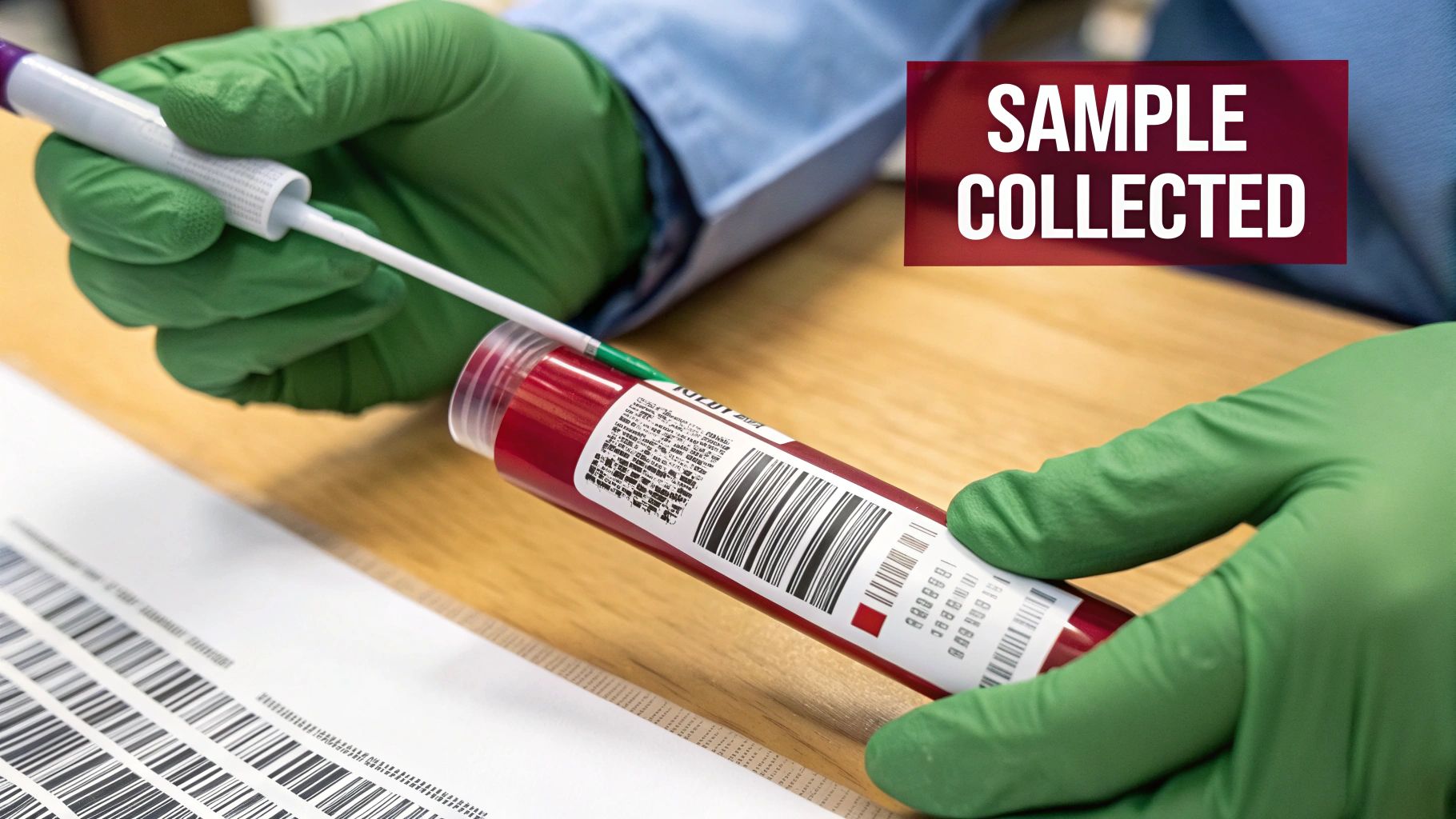
Implementing a robust labelling procedure is non-negotiable for industries where trace contaminants can have significant operational or legal consequences. The goal is to create an unbroken, verifiable link between the physical sample and its collection details. This is especially true when distinguishing between standardised forensic swabbing and less rigorous field testing methods, where documentation standards can vary. You can explore a detailed methodology breakdown of standardised forensic swabbing vs. field testing accuracy to understand why precise initial documentation is paramount.
Successful Implementation Examples
- Pharmaceutical Facilities: Utilise colour-coded swab labels to instantly differentiate samples from various cleanroom zones (e.g., green for Grade A, yellow for Grade B), minimising the risk of procedural errors during high-volume testing.
- Mining Operations: Implement rugged, GPS-timestamped labelling devices for samples collected in remote exploration sites, automatically embedding precise location and time data to ensure sample integrity.
- Food and Beverage Facilities: Employ QR codes on sample labels. A simple scan links the physical swab directly to a digital record containing collector ID, specific production line, batch number, and collection time, streamlining data entry and reducing human error.
Actionable Implementation Tips
To fortify this critical first step in your implementation checklist for ensuring chain of custody for forensic swab samples, integrate the following practices:
- Use Environment-Appropriate Labels: Select waterproof, chemical-resistant, and temperature-tolerant labels. For example, use oil-resistant labels in petroleum sectors or labels that withstand cryogenic storage in biotech applications.
- Implement a Dual-Label System: For high-stakes samples, apply a primary and a secondary, identical label to both the sample container and its outer tamper-evident packaging for redundancy.
- Standardise Labelling Templates: Create a mandatory, organisation-wide template that includes a unique sample ID, precise collection location, date and time, and the collector's full name or unique identifier.
- Conduct Regular Training: Schedule monthly or quarterly refresher training for all personnel involved in sample collection. Focus on proper labelling techniques, common errors (like illegible handwriting or incomplete data), and the importance of their role in the chain of custody.
2. Secure Sample Packaging and Containment
Following initial collection, the integrity of a forensic swab sample depends entirely on its packaging. Secure sample packaging and containment is the critical step that protects the sample from environmental contamination, degradation, and unauthorised access. This process involves using appropriate containers, creating airtight seals, and applying tamper-evident measures to guarantee the sample that arrives at the laboratory is identical to the one collected at the site. A failure in packaging can introduce contaminants or lead to sample loss, nullifying the results and invalidating the entire collection effort.
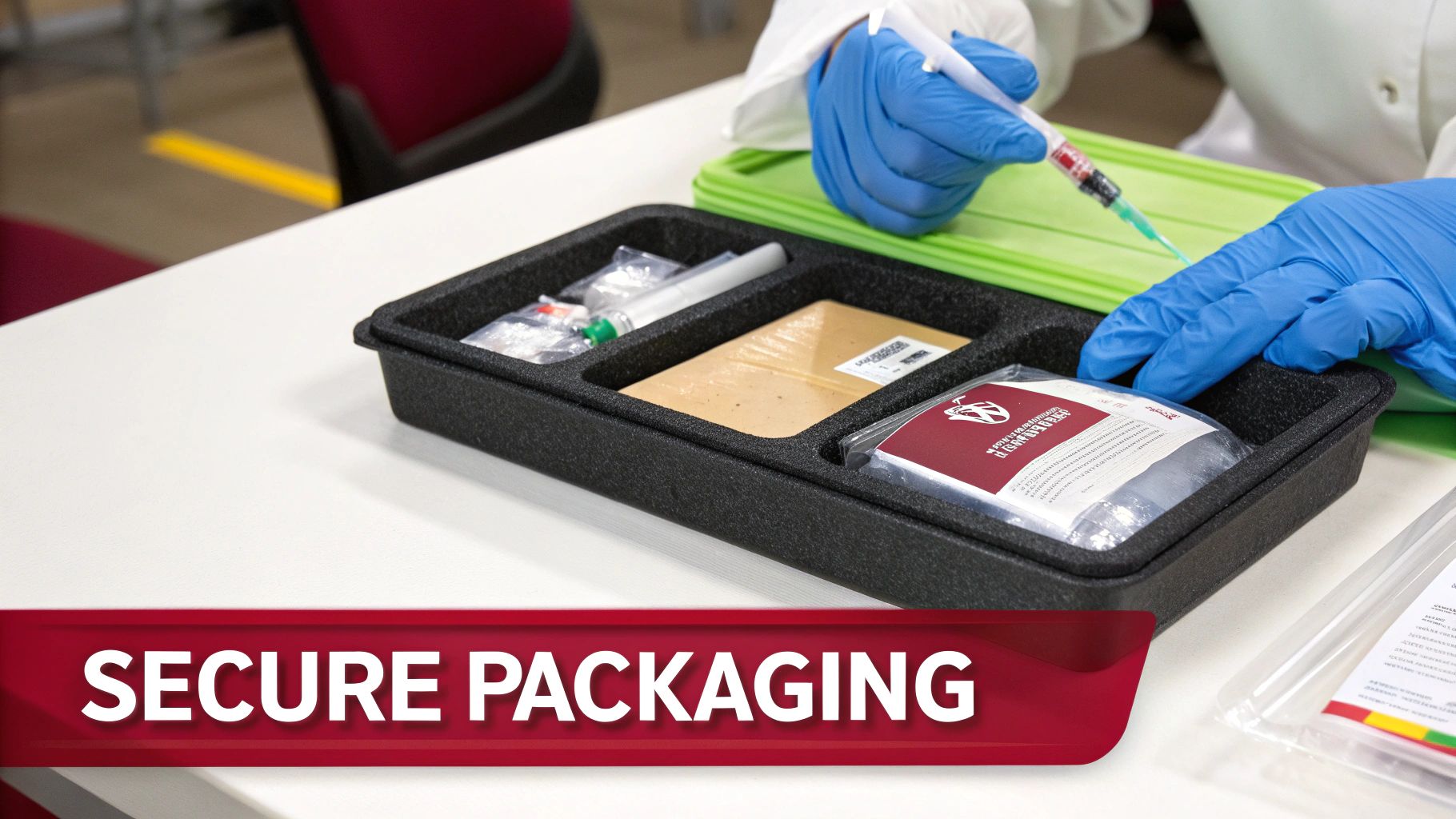
For industries operating in challenging environments or handling highly sensitive materials, robust containment is not just best practice, it is a fundamental requirement of a legally defensible chain of custody. The primary objective is to create a secure micro-environment for the swab that maintains its original state from the moment of sealing until it is opened by authorised laboratory personnel. This physical barrier is the sample's primary defence against adulteration, ensuring that any subsequent diagnostic testing or screening provides a true and accurate reflection of the collection site's conditions.
Successful Implementation Examples
- Pharmaceutical Companies: Employ sterile, humidity-controlled packaging for environmental monitoring swabs taken from aseptic processing areas. This prevents moisture from degrading the sample and compromising microbial viability analysis.
- Aerospace Sector: Utilise shatterproof, pressurised containers for samples collected at high altitudes or from sensitive equipment components. This packaging withstands changes in atmospheric pressure and extreme vibrations during transport.
- Mining Operations: Use rugged, IP-rated (Ingress Protection) sealed hard-cases for samples collected from drill sites. These containers protect against dust, water, and extreme temperatures common in remote field conditions.
- Manufacturing Facilities: Implement custom-designed boxes with secure, foam-padded internal dividers for transporting multiple swab samples. This prevents cross-contamination and physical damage between individual samples during transit.
Actionable Implementation Tips
To strengthen this phase of your implementation checklist for ensuring chain of custody for forensic swab samples, consider these actionable strategies:
- Test Packaging Integrity: Before full-scale deployment, rigorously test your chosen packaging materials under your specific industry's worst-case conditions, including extreme temperatures, humidity, and vibration, to verify their resilience.
- Implement Pre-Packaged Kits: Standardise the process by providing collectors with all-in-one, pre-packaged kits containing the swab, container, tamper-evident seals, and labels. This ensures consistency and reduces the chance of using non-compliant materials.
- Include Absorbent Materials: Place an appropriate absorbent pad inside the secondary container to contain any potential leaks or condensation, protecting both the sample integrity and the accompanying documentation.
- Document Packaging Protocols: Your standard operating procedures (SOPs) must explicitly detail the required packaging materials, including their specifications and any expiration dates. This ensures every sample is packaged to the same defensible standard.
- Select Chemically Compatible Materials: Ensure packaging materials are inert and will not react with the sample or any trace chemicals being tested for. For example, use containers resistant to solvents if collecting from a degreasing station in a manufacturing plant.
3. Documentation and Chain of Custody Forms
If sample labelling is the starting point, then complete and accurate documentation is the narrative that tells the sample's entire story. Documentation, specifically the Chain of Custody Form (CoCF), is the legally defensible record that tracks a forensic swab sample from collection to analysis and final disposition. This step requires the creation of detailed, chronological records that account for every person who has handled the sample, including their signatures, the dates and times of transfer, and the specific purpose of each interaction. A gap in this documentation is a gap in the sample's integrity.

In high-stakes occupational hygiene settings, from pharmaceutical cleanrooms to remote mining sites, documentation must be robust enough to withstand intense regulatory audits and potential legal challenges. This commitment to meticulous record-keeping is a universal standard in forensic work. Beyond the initial collection, thorough documentation is vital throughout the forensic process. Even within the context of an autopsy, it is described as a meticulous, respectful process that’s fundamentally about seeking truth. Each step is documented, each finding carefully recorded. This principle directly applies to every swab sample, where the CoCF serves as the undeniable proof of its journey and handling.
Successful Implementation Examples
- Pharmaceutical Cleanrooms (ISO 14644): Employ Laboratory Information Management Systems (LIMS) that automatically generate digital CoCFs. As samples move through the lab, barcode scans update the record in real-time, eliminating manual entry and creating an infallible audit trail.
- Construction Sites: Utilise mobile apps that allow field technicians to fill out digital CoCFs on-site. These apps can capture GPS coordinates, photo evidence, and digital signatures, syncing the data instantly to a central database.
- Oil and Gas Operations: Deploy ruggedised tablets with digital forms that feature offline capabilities. This allows personnel in remote locations without internet access to complete all necessary documentation, which then automatically uploads once a connection is re-established.
Actionable Implementation Tips
To ensure your documentation protocols are a fortress for your implementation checklist for ensuring chain of custody for forensic swab samples, integrate these actions:
- Create Role-Specific Forms: Design slightly varied templates for collectors, couriers, and lab technicians. This ensures each person provides only the necessary information, reducing complexity and the likelihood of errors.
- Use Sequential Barcodes or Numbers: Pre-print CoCFs with unique, sequential numbers or barcodes. This makes it simple to identify if a form has gone missing and prevents fraudulent duplication.
- Establish a Clear Amendment Protocol: Mandate that any corrections are made by striking through the error with a single line, writing the correct information, and then initialling and dating the change. Never use correction fluid or obliterate an entry.
- Conduct Quarterly Documentation Audits: Regularly review a sample of completed CoCFs to identify recurring errors or compliance gaps. Use these findings as the basis for targeted refresher training on proper completion and signature requirements.
4. Personnel Authorization and Access Control
A critical control point in any defensible chain of custody is restricting sample handling to trained and authorised personnel only. Personnel authorisation and access control is the process of defining, documenting, and enforcing who can collect, handle, transport, and analyse forensic swab samples. This system ensures that every individual interacting with a sample is qualified, their actions are logged, and unauthorised access is prevented. A failure in access control introduces significant risk, potentially invalidating sample results and undermining legal or regulatory compliance.
Implementing strict access protocols is fundamental for industries where sample integrity is directly tied to safety, quality, and legal defensibility. The objective is to create a secure human-to-sample pathway where every handover is between verified individuals, eliminating opportunities for tampering, contamination, or procedural error. This organised restriction ensures that the integrity of the sample is never compromised by unqualified or unauthorised handling at any point in its journey.
Successful Implementation Examples
- Pharmaceutical GMP Facilities: Require specific personnel clearance for entry into sterile processing areas where samples are collected. Access is often controlled by keycards tied to an individual's training record, automatically barring entry if certifications are out of date.
- Aerospace Manufacturers: Use multi-factor or biometric access systems (e.g., fingerprint or iris scanners) for cleanrooms and secure sample storage areas, creating an unforgeable audit trail of every person who enters.
- Mining Operations: Maintain centrally managed digital registries of authorised samplers for multiple remote sites. This ensures that only currently certified personnel, verified against the central database, can log and submit samples for analysis.
Actionable Implementation Tips
To integrate robust access controls into your implementation checklist for ensuring chain of custody for forensic swab samples, focus on these practices:
- Create Tiered Authorisation Levels: Establish different access tiers based on roles and responsibilities (e.g., Collector, Transporter, Analyst). This ensures personnel only access samples and data relevant to their specific function.
- Implement Mandatory Annual Recertification: Require all personnel involved in the chain of custody to complete annual training and recertification on handling protocols, documentation standards, and security procedures.
- Maintain a Centralised Authorisation Database: Use a single, secure database to manage and track all authorised personnel, their training records, and their access privileges. Ensure it is accessible to relevant managers and auditors.
- Use Access Systems with Audit Trails: Employ electronic access badges, keycards, or biometric systems that automatically log every entry and exit from sample handling and storage areas, providing a detailed, timestamped record.
- Cross-Train Backup Personnel: Designate and train backup personnel for each critical role in the chain of custody. This prevents bottlenecks and ensures procedures continue correctly if a primary staff member is unavailable.
5. Transportation and Custody Transfer Procedures
Once a forensic swab sample is properly collected, labelled, and sealed, the next critical phase in maintaining the chain of custody is its secure transportation and documented transfer. This stage bridges the gap between the collection site and the laboratory, a period where samples are highly vulnerable to damage, contamination, or loss of integrity. A breakdown during transit can invalidate an otherwise perfectly collected sample, underscoring the need for meticulous planning and execution, especially for organisations operating across vast or remote geographical areas.
The primary goal is to ensure the sample arrives at the laboratory in the same condition it was in at the time of collection. This involves controlling environmental factors like temperature, preventing physical damage, and, most importantly, maintaining a continuous, unbroken record of who has had custody of the sample at all times. This procedural rigour is a non-negotiable component of a legally defensible implementation checklist: ensuring chain of custody for forensic swab samples, guaranteeing that evidence is protected from the field to the final analysis.
Successful Implementation Examples
- Mining Operations: Utilise specialised, rugged vehicles equipped with secure lockboxes and vibration-dampening storage to transport samples from remote pit sites to an on-site or regional laboratory, with each handover documented in a digital logbook.
- Pharmaceutical Manufacturers: Employ validated courier services that use temperature-monitored coolers with real-time data loggers for transporting sensitive environmental monitoring swabs, providing an auditable record of temperature stability throughout transit.
- Oil and Gas Companies: Implement courier services with live GPS tracking and scheduled, mandatory check-ins for high-value samples moving from offshore platforms or remote onshore wells, ensuring constant visibility and accountability.
Actionable Implementation Tips
To strengthen your transportation and custody transfer protocols, integrate these actionable strategies into your operational workflow:
- Establish Scheduled Courier Routes: Minimise turnaround time and sample degradation by creating regular, predictable collection routes and schedules, especially for remote locations where courier availability may be limited.
- Use Appropriate Transport Containers: For temperature-sensitive samples, use validated, insulated containers with sufficient ice packs or gel products to maintain the required temperature for the entire duration of the transit.
- Mandate Signature at Every Transfer Point: Require a physical signature or a secure digital confirmation on a chain of custody form every time the sample changes hands. This includes transfers from the collector to the courier and from the courier to the laboratory receiving staff.
- Develop Contingency Plans: Prepare for the unexpected. Create clear, actionable plans for scenarios like vehicle breakdowns, adverse weather delays, or courier unavailability to ensure sample integrity is not compromised.
- Document All Incidents: Require couriers and staff to immediately document any incidents during transit, such as accidents, unexpected delays, or temperature excursions outside the acceptable range. This documentation must be attached to the sample's chain of custody record.
6. Sample Receipt and Laboratory Intake Procedures
The laboratory intake process serves as the critical checkpoint where a forensic swab sample transitions from transport to analysis. This stage validates the integrity of all preceding steps in the chain of custody, acting as a final verification gateway before analytical resources are committed. A breakdown here can nullify meticulous field collection, as it’s the laboratory’s first opportunity to formally inspect the sample's condition, verify its documentation, and officially log its entry into a controlled environment. This procedure is fundamental to preventing the analysis of compromised samples and ensuring that all data generated is traceable and defensible.
The primary goal of a robust intake protocol is to confirm that the sample arriving at the lab is the same one collected in the field, in the same condition, with all its documentation intact. This meticulous hand-over confirms the unbroken chain of custody, a non-negotiable requirement for legally defensible or quality-critical testing. Properly executed, this step prevents downstream errors, unnecessary re-testing, and potential invalidation of results, which is especially important in industries like pharmaceuticals and aerospace where precision is paramount.
Successful Implementation Examples
- Pharmaceutical QA Labs: Utilise detailed intake checklists for environmental monitoring swabs. These checklists require technicians to verify sample ID against the chain of custody form, check for temperature excursions on accompanying loggers, and confirm that tamper-evident seals are unbroken before accepting the sample into the laboratory information management system (LIMS).
- Food and Beverage Laboratories: Implement photographic documentation as a standard operating procedure for all received sample batches. This creates a visual, time-stamped record of the packaging and sample condition upon arrival, providing objective evidence in case of disputes over sample integrity.
- Manufacturing Facilities: Employ automated barcoding systems that integrate directly with the LIMS. Upon arrival, samples are scanned, which automatically populates intake fields, timestamps the receipt, and assigns a unique internal lab number, significantly reducing manual data entry errors.
Actionable Implementation Tips
To strengthen this vital link in your implementation checklist for ensuring chain of custody for forensic swab samples, integrate these practices:
- Establish Clear Acceptance Criteria: Create and display visual reference guides showing acceptable versus unacceptable sample conditions (e.g., intact seals, proper labelling, no visible leakage).
- Define Time-to-Analysis Windows: Set maximum acceptable timeframes from sample receipt to the start of analysis for time-sensitive samples and create an alert system for any breaches.
- Automate LIMS Intake: Implement automated LIMS intake workflows using barcode or QR code scanners to minimise manual entry mistakes and accelerate the logging process.
- Create Escalation Procedures: Establish clear, documented procedures for handling discrepancies, such as a broken seal, missing information, or temperature excursions, including who to notify and how to quarantine the affected samples.
7. Storage, Retention, and Environmental Monitoring
Once a forensic swab sample is packaged and transported, its journey is far from over. The storage, retention, and environmental monitoring phase is a critical, long-term component of the chain of custody. This stage ensures that samples are preserved under controlled conditions that prevent degradation, contamination, or any alteration of their chemical or biological state until they are analysed, and often, long after. Proper storage directly upholds the scientific validity of test results, as environmental fluctuations can compromise sample integrity and render subsequent analysis unreliable.
Maintaining a stable environment is crucial for industries where sample viability is paramount. The goal is to create a secure, monitored, and documented storage system that proves the sample remained in a scientifically acceptable state throughout its lifecycle. This part of your implementation checklist for ensuring chain of custody for forensic swab samples is what guarantees the sample presented for analysis is in the same condition as when it was collected, protecting against legal and regulatory challenges.
Successful Implementation Examples
- Pharmaceutical Labs: Maintain validated 2-8°C refrigerators and -20°C freezers equipped with redundant, 24/7 temperature monitoring systems that alert staff via SMS and email of any deviation, ensuring the stability of sensitive biological samples.
- Food and Beverage Facilities: Utilise dedicated, access-controlled freezers for retaining microbial swab samples. Retention policies are tied to product shelf-life, allowing for retrospective analysis in case of a contamination event or product recall.
- Mining Laboratories: Implement climate-controlled storage rooms with industrial dehumidifiers and desiccant systems to store mineral dust swabs at a consistent room temperature, preventing moisture from affecting sample composition.
Actionable Implementation Tips
To ensure your storage and retention protocols are robust and defensible, integrate these actionable practices into your procedures:
- Install Backup Power Systems: Equip all critical storage units, such as refrigerators and freezers, with uninterruptible power supplies (UPS) and connect them to a facility-wide backup generator to prevent sample loss during power outages.
- Implement Automated Alert Systems: Deploy monitoring devices that automatically log environmental conditions (temperature, humidity) and send immediate alerts to designated personnel if conditions go outside pre-set limits.
- Establish a Retention and Disposal Schedule: Create and enforce a formal policy based on regulatory requirements and internal quality standards (e.g., retaining samples for six months, two years, or longer), including a documented process for sample disposal.
- Conduct Regular Audits: Perform and document monthly audits of all storage areas. Verify that environmental logs are complete, samples are organised correctly, and equipment is functioning within specifications.
8. Analysis, Handling, and Disposal with Continued Documentation
The chain of custody does not end when a forensic swab sample reaches the laboratory; it extends through analysis, subsequent handling, and final disposal. This concluding phase is critical for maintaining accountability throughout the sample's entire lifecycle. A failure to document actions during and after analysis can invalidate otherwise sound results, creating significant legal and compliance risks. The protocol ensures every interaction with the sample, from aliquoting for tests to its ultimate destruction, is meticulously logged, preserving the integrity of the entire process.
This continuous documentation is paramount for regulated industries where analytical results dictate operational decisions, product releases, or legal outcomes. It provides an auditable, verifiable record proving that the sample was handled correctly, analysed according to specified parameters, and disposed of in a compliant manner. This step in the implementation checklist for ensuring chain of custody for forensic swab samples closes the loop, offering a complete and defensible history of the sample from collection to destruction.
Successful Implementation Examples
- Pharmaceutical Facilities: Retain archived reference samples under controlled conditions for five or more years post-product release, as mandated by regulatory bodies like the TGA, with detailed logs of storage conditions and access.
- Food and Beverage Laboratories: Systematically document the creation of split samples sent for customer verification or third-party analysis, ensuring the primary and secondary samples have linked, traceable custody records.
- Manufacturing Companies: Archive all digital analysis data, including raw instrument outputs and final reports, on secure, backed-up servers for a minimum of seven years to comply with quality and legal record-keeping standards.
- Mining Operations: Utilise certified waste disposal services for hazardous samples. They obtain and archive official destruction certificates that detail the method, date, and witnesses, providing irrefutable proof of compliant disposal for environmental audits.
Actionable Implementation Tips
To ensure your chain of custody remains unbroken through the final stages of a sample's lifecycle, integrate these key practices:
- Standardise Analysis Requests: Create mandatory forms for all analysis requests that document the specific tests required, the analyst's identity, and the date and time the sample was accessed and returned to storage.
- Document Sample Consumption: Implement strict protocols for logging any aliquoting or partial consumption of a sample. The log should detail the volume used, the purpose, the date, and the personnel involved.
- Establish Clear Disposal Protocols: Develop a formal procedure for sample disposal that requires authorisation from a supervisor. This process must be documented in a dedicated disposal log showing the date, method, personnel, and witness signatures.
- Implement Retention Schedules: Define and enforce sample and data retention schedules based on your specific industry's regulatory environment (e.g., TGA, EPA). Use a Laboratory Information Management System (LIMS) to automatically flag samples nearing their disposal date.
- Secure Digital Records: Ensure all digital analysis data is archived with redundant backups, version control, and access logs. This protects against data loss and unauthorised alterations, securing the final piece of the custody chain.
Chain-of-Custody: 8-Point Implementation Comparison
| Item | Implementation complexity | Resource requirements | Expected outcomes | Ideal use cases | Key advantages |
|---|---|---|---|---|---|
| Initial Sample Collection and Labeling Protocol | Moderate — procedural training and standardized workflows | Waterproof/barcode labels, scanners, trained collectors, photo documentation | Immediate sample identification and collector accountability | Pharmaceutical cleanrooms, manufacturing lines, field sampling | Reduces ID errors; supports legal/regulatory defensibility |
| Secure Sample Packaging and Containment | Moderate–High — multi-layer systems and tamper-evidence | Tamper-evident seals, multi-layer kits, secondary containment, temperature control (if needed) | Preserved integrity and visible tamper evidence during storage/transport | Long-distance transport, oil & gas, aerospace, remote mining | Prevents cross-contamination; shows tampering; meets biosafety rules |
| Documentation and Chain of Custody Forms | Low–Moderate — consistent forms and LIMS integration | Standardized forms or digital LIMS, training, secure storage | Legally defensible audit trail and rapid sample tracking | Labs, pharmaceutical QA, multi-site programs | Centralized traceability; reduces disputes; supports audits |
| Personnel Authorization and Access Control | Moderate — role definitions, vetting and access systems | Authorization database, badges/biometrics, training, background checks | Restricted handling, clear accountability for transfers | Pharmaceutical, aerospace, high-security facilities | Prevents unauthorized handling; reduces contamination/tampering risk |
| Transportation and Custody Transfer Procedures | High — logistics coordination and contingency planning | Trained couriers, GPS tracking, temp-controlled vehicles, insurance | Maintained integrity and documented handoffs during transit | Remote mining, oil & gas, distributed collection networks | Traceable transfers; minimizes loss/damage; regulatory compliance |
| Sample Receipt and Laboratory Intake Procedures | Moderate — inspection protocols and timely logging | Receiving staff, checklists, camera, LIMS entry, cold storage | Early detection of compromised samples and accurate intake records | Analytical labs, pharmaceutical QC, food testing labs | Prevents analysis of unsuitable samples; documents condition at receipt |
| Storage, Retention, and Environmental Monitoring | High — continuous environmental control and audits | Controlled storage units, temp/humidity monitors, backups, space | Long-term sample viability and documented environmental history | Pharma, food/beverage, long-term archival requirements | Prevents degradation; automatic alerts; compliance evidence |
| Analysis, Handling, and Disposal with Continued Documentation | Moderate–High — analysis procedures plus disposal controls | LIMS, analysis forms, retention/archive systems, certified disposal services | Complete chain of custody from analysis through disposal; reproducible records | Regulated industries (pharma, food), labs requiring long retention | End-to-end accountability; archived references; compliant disposal documentation |
From Checklist to Culture: Embedding Integrity in Every Step
Transitioning from a theoretical understanding to practical application is the final, most crucial step in mastering the chain of custody for forensic swab samples. This article has provided a comprehensive implementation checklist, deconstructing the process into eight manageable, yet critical, stages: from initial collection and labelling, through secure transport and laboratory intake, to final analysis and disposal. We have explored the necessity of meticulous documentation, the importance of controlling personnel access, and the non-negotiable requirement for secure packaging and environmental monitoring. Each step is a vital link in a chain that, if broken, can compromise the entire investigation, leading to invalidated results, legal challenges, and significant reputational damage.
The core takeaway is that a defensible chain of custody is not a static document or a one-time task. It is a dynamic, living process that must be woven into the very fabric of your organisation’s operational culture. It demands a proactive mindset, where every individual who interacts with a sample understands their role and the profound responsibility they hold. The difference between a legally sound sample and an inadmissible piece of evidence often comes down to the rigour and consistency with which these procedures are followed.
Turning Knowledge into Actionable Strategy
Mastering these protocols is valuable because it transforms your evidence handling from a potential liability into a strategic asset. For industries like manufacturing, construction, and mining, where occupational hygiene and forensic testing (such as for methamphetamine contamination) are critical for ensuring worker safety and regulatory compliance, a flawless chain of custody is your best defence. It underpins the validity of every test result, providing the objective, unimpeachable data needed to make informed decisions, mitigate risks, and protect your organisation in legal or regulatory disputes.
Your next steps should focus on institutionalising these practices. Don't let this checklist remain a document on a server; turn it into a tangible, operational reality.
- Conduct a Gap Analysis: Use the eight points detailed in this article as a benchmark. Systematically review your current procedures to identify weaknesses, inconsistencies, or gaps in your chain of custody process.
- Develop Customised Standard Operating Procedures (SOPs): Adapt the general guidelines provided here to create detailed, step-by-step SOPs tailored to your specific workflows, facility layouts, and personnel structures.
- Implement a Training and Competency Program: Schedule mandatory, role-specific training for all personnel involved in the sample lifecycle. This should include initial training for new staff and annual refresher courses for existing team members, complete with practical drills and competency assessments.
- Schedule Regular Audits: Establish a calendar for internal and third-party audits. These audits should be rigorous, involving a review of documentation, observation of procedures in practice, and interviews with staff to ensure protocols are being consistently applied.
A checklist provides the framework, but a culture of integrity ensures its flawless execution. The goal is to move beyond simply following steps to instinctively understanding and upholding the principles of evidentiary integrity at every turn.
Ultimately, this implementation checklist for ensuring chain of custody for forensic swab samples serves as your blueprint for building an unshakeable foundation of trust and reliability. By committing to these principles, you are not just ticking boxes; you are cultivating a culture of precision, accountability, and excellence. This commitment ensures that when a critical sample is collected, its journey from the field to the final report is documented, secure, and legally defensible, protecting your assets, your people, and your reputation.
Ready to fortify your chain of custody procedures with expert guidance? The specialists at Anitech offer comprehensive occupational hygiene services, helping you develop, implement, and audit robust protocols tailored to your industry's specific needs. Partner with us to ensure your forensic and diagnostic testing workflows are not just compliant, but irrefutably defensible.


