
Quick Summary: Third-hand meth exposure occurs when toxic residue from methamphetamine use contaminates surfaces in a home, posing a risk long after the drug use has stopped. Children and pets are most vulnerable due to their behaviours, like crawling and grooming. Key symptoms include unexplained respiratory issues, skin rashes, and sudden behavioural changes. If you suspect exposure, document symptoms, seek medical/veterinary advice, and get your home professionally tested.
Recognising the signs of "third-hand" meth exposure in children and pets is a serious concern for any homeowner or tenant, especially for families living in potentially affected homes. It all starts with understanding that toxic residue can stick to just about any surface, long after the drug use has stopped. This invisible danger often reveals itself through unexplained respiratory issues, skin rashes, and sudden behavioural changes—critical warning signs that something is wrong with the environment itself.
What Is Third-Hand Meth Exposure?
Think of it like the lingering smell of cigarette smoke in a room, but instead of just a smell, it’s an invisible, toxic residue. That’s the reality of third-hand meth exposure. It’s not about being present when drugs are used; it's about the harmful chemical leftovers that contaminate a space long after the fact.
When methamphetamine is smoked or cooked, it releases a toxic aerosol that settles on everything. This residue doesn't just wipe away. It seeps into porous materials like plasterboard, carpets, and wooden furniture, slowly releasing harmful chemicals back into the air for months, or even years.
This is what makes third-hand exposure so sneaky. A house could have been a meth lab or home to a heavy user years ago, yet still pose a significant health risk to the new, unsuspecting family who moves in.
Why Children and Pets Are Most at Risk
While everyone in a contaminated home is at risk, children and pets are in a class of their own when it comes to vulnerability. Their unique behaviours and still-developing bodies put them in constant, close contact with the highest concentrations of meth residue, which typically settles on floors and other low-lying surfaces.
Little ones, especially infants and toddlers, live their lives close to the ground. They crawl on carpets, play on the floor, and instinctively put their hands and toys in their mouths. This means they can directly ingest the toxic chemicals clinging to those surfaces.
"The hand-to-mouth behaviour of young children significantly increases their risk of ingesting harmful methamphetamine residues. Their smaller body size and developing organ systems mean that even low levels of exposure can have a more pronounced impact compared to adults."
Our pets face a very similar, if not greater, risk. They nap on contaminated rugs, lick their paws clean after a walk across the floor, and might even chew on a piece of furniture that's absorbed the residue. That constant grooming becomes a direct pathway for ingesting these invisible poisons.
How Exposure Occurs in a Contaminated Home
To spot the symptoms, you first have to understand the pathways. Contamination isn't just in one spot; it becomes part of the home's ecosystem, exposing your family in several ways:
- Dermal Absorption: Simply touching contaminated surfaces like carpets, bedding, and furniture allows the chemicals to be absorbed right through the skin.
- Ingestion: This is a major route for kids who put contaminated hands or toys in their mouths, and for pets who groom themselves.
- Inhalation: The residue doesn't always stay put. It can become airborne again when disturbed by vacuuming or foot traffic, or it can slowly "off-gas," leading to chronic inhalation of toxic fumes.
The table below highlights just how everyday behaviours put the most vulnerable members of your household at risk.
Vulnerable Groups and How Exposure Happens
| Vulnerable Group | Common Behaviours | Primary Exposure Routes |
|---|---|---|
| Infants & Toddlers | Crawling on floors, putting hands and toys in mouth, touching surfaces constantly. | Ingestion, Dermal Absorption |
| Young Children | Playing on carpets, frequent hand-to-mouth contact, sleeping on contaminated bedding. | Dermal Absorption, Ingestion, Inhalation |
| Dogs | Lying on floors, licking paws and fur, chewing on contaminated items. | Ingestion, Dermal Absorption |
| Cats | Constant self-grooming, rubbing against furniture, lying in secluded spots where dust accumulates. | Ingestion (Primary), Dermal Absorption |
Because of these constant, low-level exposures, any unexplained health issues in your children or pets should prompt you to consider the health of your home. The symptoms can be subtle, but knowing what to look for is the first step in protecting your family.
Recognising Exposure Symptoms in Children
As a parent, your alarm bells ring the moment you notice any unexplained shift in your child's health or behaviour. It’s natural to worry. But when these changes crop up without a clear cause, especially after moving into a new property, it's time to consider the environment itself as a possible culprit.
Pinpointing symptoms of third-hand meth exposure in children is tough. The signs are notoriously non-specific and can easily be mistaken for common childhood illnesses like a cold, allergies, or just a "fussy phase."
The real giveaway is often a pattern or a cluster of new symptoms emerging at the same time. This section is a guide to those potential warning signs. It's not a substitute for a medical diagnosis, but it will help you connect the dots. Always trust your gut—you know your child better than anyone. If they suddenly seem unwell or just "not themselves," it’s worth investigating further.
Behavioural and Neurological Changes
One of the first places you might see a change is in your child's mood and behaviour. The chemical residues from meth are neurotoxins, which means they can directly interfere with the nervous system. This can lead to confusing and often distressing shifts in their little personalities.
Keep an eye out for sudden changes that just don't fit. A normally happy-go-lucky kid might become constantly irritable and prone to meltdowns. On the flip side, a child who is usually full of beans could seem unusually tired, flat, or withdrawn.
Key behavioural signs to watch for include:
- Unexplained Irritability: Frequent fussiness, crying, or mood swings that seem completely out of character.
- Hyperactivity: A sudden onset of restlessness, an inability to sit still, or difficulty concentrating that isn't typical for them.
- Sleep Disturbances: Trouble falling asleep, waking up constantly through the night, having nightmares, or even sleeping far more than usual.
- Anxiety or Nervousness: Appearing jittery, anxious, or being easily startled for no obvious reason.
These aren't just hypotheticals; they're documented in real-world cases. Research from Australian homes has revealed that children living in meth-contaminated properties often show distinct behavioural changes, nervousness, and sleep issues. In one documented case, new tenants reported their children were ‘noticeably unwell and behaving differently’ soon after moving in. Testing later confirmed the house was contaminated. You can read more about the findings from these case studies and their implications for Australian health risk assessments.
Physical and Skin-Related Symptoms
The toxic residue doesn’t just mess with the nervous system. It can also trigger a host of physical reactions as a child’s body struggles to process the chemicals absorbed through their skin or ingested from contaminated surfaces.
These physical signs can easily be confused with allergies or minor infections. The trick is to look for symptoms that are persistent, keep coming back without a clear trigger, or don't get better with the usual treatments. If your child develops a rash that won't clear up with standard creams, or complains of headaches that have no other explanation, it might be an environmental problem.
Constant exposure means the body never gets a break. A child might feel unwell, get slightly better when they're away from home (like at school or a grandparent's house), and then feel worse again upon returning. This cycle is a strong indicator that the home environment is the source of the problem.
Look for these physical indicators:
- Skin Irritation: Redness, rashes, or eczema-like patches. Pay close attention to areas that have frequent contact with floors and furniture, like their hands, knees, and feet.
- Irritated Eyes: Persistently watery, red, or itchy eyes that aren't explained by hay fever or other common allergies.
- Recurring Headaches: Complaints of a sore head, especially in older children who can tell you what's wrong.
- Nausea or Stomach Upset: Unexplained tummy aches, loss of appetite, or vomiting.
Respiratory Issues
Because meth residue can become airborne again, a child's respiratory system is another primary target. Inhaling these microscopic toxic particles can irritate the sensitive lining of the lungs and airways, leading to symptoms that look a lot like asthma or a lingering cold.
If your child suddenly develops breathing difficulties after a move, or if their existing asthma gets dramatically worse without an obvious trigger like pollen, it’s a major red flag. These symptoms happen because the body is having an inflammatory response to the toxins they're breathing in.
Be vigilant for the following respiratory signs:
- Persistent Cough: A nagging, dry cough that just won't go away.
- Shortness of Breath: Difficulty catching their breath, particularly during playtime.
- Wheezing: A whistling sound when they breathe, very similar to an asthma attack.
- Sore Throat: A recurring sore throat that isn't joined by other typical cold symptoms.
On their own, any one of these symptoms might not be cause for panic. But if your child is experiencing a combination of behavioural, physical, and respiratory issues, it's absolutely crucial to consider third-hand meth exposure as a potential cause and get them checked by a doctor.
Identifying Exposure Signs in Your Pets
Our pets can’t tell us when something is wrong, but they are often the first to show that their environment is unsafe. Because they live so close to the floor—rolling on carpets, sleeping on rugs, and licking their paws clean—pets are incredibly vulnerable to third-hand meth exposure. The toxic residues settle on these surfaces, meaning our animals are in constant contact with them and often ingest them directly through grooming.
Recognising the signs is crucial. The symptoms can be subtle and easily brushed off as common ailments, but if a pattern of unexplained health problems emerges, it's a serious red flag. In many ways, our pets are the silent victims, and their wellbeing can be a powerful indicator of a hidden danger in your home.
Behavioural and Neurological Shifts
One of the most immediate effects of meth residue on pets is a change in their personality. These chemicals are neurotoxins that disrupt the central nervous system, leading to confusing and often distressing shifts in behaviour. You might notice your once playful dog becoming sluggish and withdrawn, or a normally calm cat turning anxious and aggressive for no apparent reason.
These sudden changes are often the clearest warning signs for pet owners. Keep a close eye on any new habits that don't have an obvious cause.
- Sudden Lethargy or Weakness: Does your pet seem unusually tired? They might lose interest in walks or playtime and sleep far more than normal.
- Increased Anxiety or Agitation: Watch for restlessness, constant pacing, whining, trembling, or an inability to settle down.
- Unexplained Aggression or Fear: A previously friendly animal might suddenly become irritable, snappy, or fearful of people and everyday noises.
- Confusion or Disorientation: They might seem lost in their own home or have trouble responding to familiar commands.
Physical and Skin-Related Problems
The physical toll of third-hand meth exposure can show up in several ways, often starting with the skin. When pets lie on contaminated carpets, bedding, or furniture, the toxins can be absorbed directly, causing major irritation. This problem is only compounded when they groom themselves, ingesting the chemicals as well.
Excessive scratching or persistent skin irritation can be a sign of exposure, but it's often mistaken for allergies. While you might explore options like finding the best dog shampoo for itchy skin for general relief, you should consider environmental toxins if the symptoms persist or appear alongside other warning signs.
Here are some key physical symptoms to look for:
- Skin Rashes and Sores: Look for unexplained red patches, sores, or even bald spots caused by constant licking or scratching.
- Vomiting and Diarrhoea: Ongoing tummy troubles without any change in diet can point to toxicity.
- Loss of Appetite: A sudden refusal to eat or drink is a serious warning sign for any pet.
- Twitching or Seizures: In more severe cases, neurological damage can lead to muscle tremors or even seizures.
Respiratory and Other Health Issues
Breathing in airborne particles from meth residue can wreak havoc on a pet’s respiratory system. This can lead to chronic problems that look a lot like asthma or bad allergies. Pay close attention to any new breathing difficulties, especially if they seem to get worse when your pet is inside.
A harrowing real-world case from Australia’s Gold Coast really drives this point home. After a woman moved into a contaminated rental, she developed severe symptoms herself. But it was her six dogs that also sounded the alarm—they refused to eat and showed clear signs of being unwell. It’s a stark reminder of how pets can act as the "canary in the coal mine," with their health declining right alongside their human family’s when a home is toxic.
Other major respiratory signs to monitor include:
- Persistent Coughing or Wheezing: A dry, hacking cough or a whistling sound when they breathe.
- Shortness of Breath: Laboured breathing or heavy panting, even when they’re resting.
- Watery Eyes or Nasal Discharge: This can look like allergies, but it won’t go away with standard treatments.
If you notice a combination of these behavioural, physical, and respiratory symptoms in your pet, it’s vital to get veterinary advice right away and start considering that your home environment could be the root cause.
Your Action Plan for Suspected Exposure
It’s completely understandable to feel overwhelmed and a bit lost if you suspect your home is contaminated with meth residue. The most important thing is to take that worry and channel it into a clear, methodical plan. By following structured steps, you can get a handle on the situation and put the health of your children and pets first. This isn't about panic; it's about being proactive.
This guide will walk you through what to do right now if you're worried about potential third-hand meth exposure. Your priority is to gather facts, get expert advice, and make sure your family has a safe space.
Step 1: Document Everything Immediately
Your very first move is to become a meticulous record-keeper. A vague feeling that something is wrong is hard to act on, but a clear, written timeline is a powerful tool. Start a dedicated log for every member of your household—and yes, that includes your pets.
Jot down any symptoms you’ve noticed, no matter how small they seem. For each one, make sure to record:
- What it is: For example, a nagging cough, a strange skin rash, or unusual irritability.
- When it started: Be as precise as you can with dates.
- How often it happens: Is it a daily thing? Does it seem worse at certain times of the day?
- Any patterns you see: Do the symptoms get better when your child or pet spends a day or two away from home?
This log will be incredibly valuable when you talk to doctors or vets. It gives them the complete picture and helps them consider environmental causes they might otherwise overlook.
Step 2: Seek Professional Medical and Veterinary Advice
With your detailed notes in hand, your next call should be to your GP and your veterinarian. Book appointments and be upfront about your concerns. Share your log and explicitly mention that you suspect potential third-hand meth exposure at home.
Giving them this context is critical. Without it, a doctor might just diagnose a child's cough as a common virus, or a vet might assume a pet's rash is a simple allergy. When they know about the potential environmental link, they can look at the problem from a much broader perspective, helping you connect the dots.
This simple flowchart can help visualise the decision-making process for your pets.
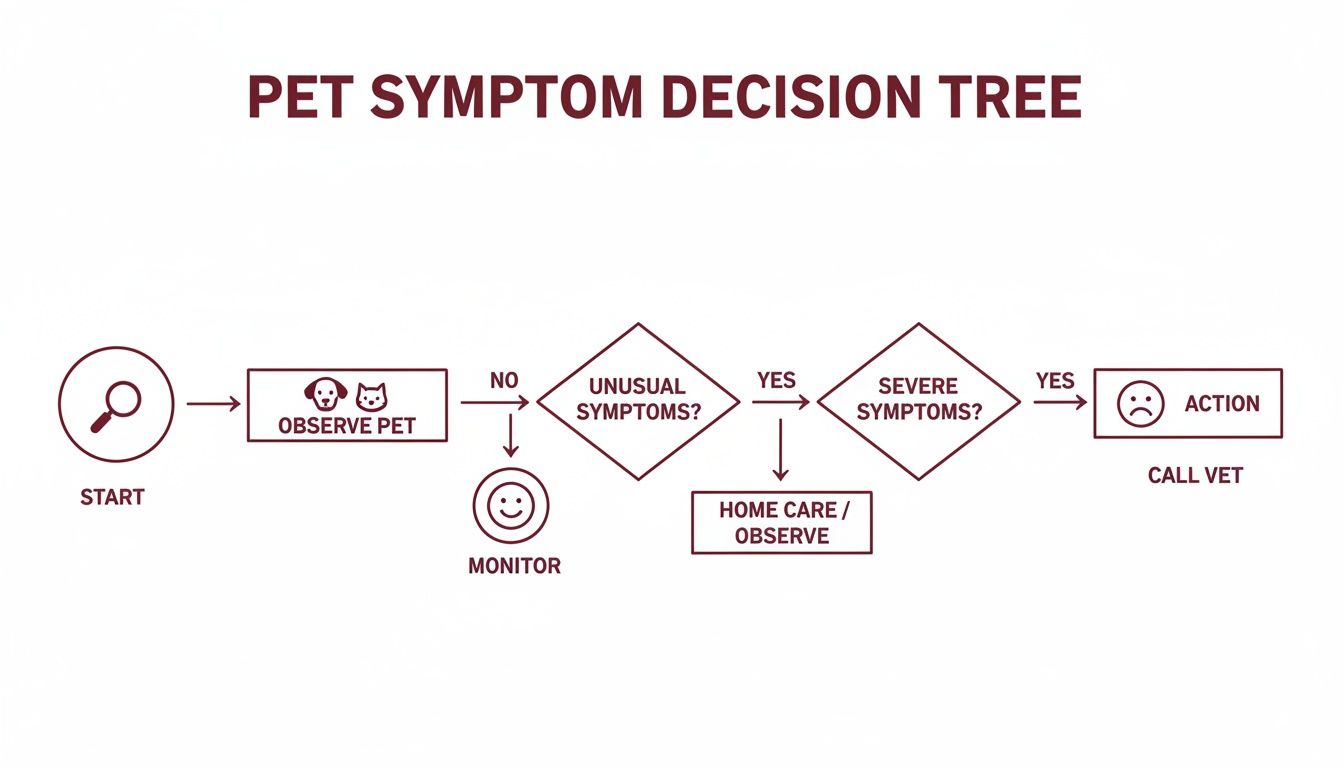
As the chart shows, once you spot potential symptoms, the right next step is always to take decisive action and get professional advice.
Step 3: Investigate Your Home Environment
At the same time you're seeking medical advice, you need to investigate the potential source of the problem: your home. This is where you move from suspicion to getting solid answers.
You have two main paths for testing:
- DIY Meth Test Kits: These are an affordable first step and a good screening tool. They typically give you a simple 'yes' or 'no' result, telling you if meth residue is present above a certain level. Think of it as an initial red flag.
- Professional Hygienist Testing: For accurate, reliable, and legally sound results, nothing beats testing from a certified occupational hygiene firm like Anitech. A professional will take precise samples from multiple areas and have them analysed by an accredited lab. This tells you not just if there’s contamination, but how severe it is—a crucial piece of information for understanding the health risks and planning what to do next.
While a DIY kit can confirm your fears, only professional testing can actually quantify the level of contamination. That data is absolutely essential for making informed decisions about decontamination and your family's long-term safety.
Step 4: Minimise Contact and Relocate if Necessary
This can be the toughest step, but it’s also the most critical. If your suspicions are strong, and especially if your family is showing symptoms, you must limit their contact with the contaminated environment straight away. This might mean arranging a temporary stay with family or friends until the property has been tested and declared safe.
Getting your children and pets away from the source of exposure is the only surefire way to stop the harm. It’s a massive inconvenience, and it can be costly, but their health has to be the number one priority. Making this tough call buys you the time you need to get clear answers and plan a proper remediation without risking one more day of exposure.
Why Professional Decontamination Is Essential
Finding out your home could be contaminated with meth residue is an incredibly stressful and unnerving situation. Your first instinct might be to grab the bleach and start scrubbing, but this is one problem you can't solve on your own. Standard cleaning just won't cut it, and understanding why professional help is non-negotiable is the key to making your home safe again.
Think of it this way: meth residue isn't like everyday dirt or dust. The chemicals are microscopic and stubbornly bond with surfaces, seeping deep into anything porous. It's a lot like the smoke from a house fire—you can't just wipe the smell off the walls because it’s already sunk into the plasterboard, the wooden frames, and the insulation behind them.
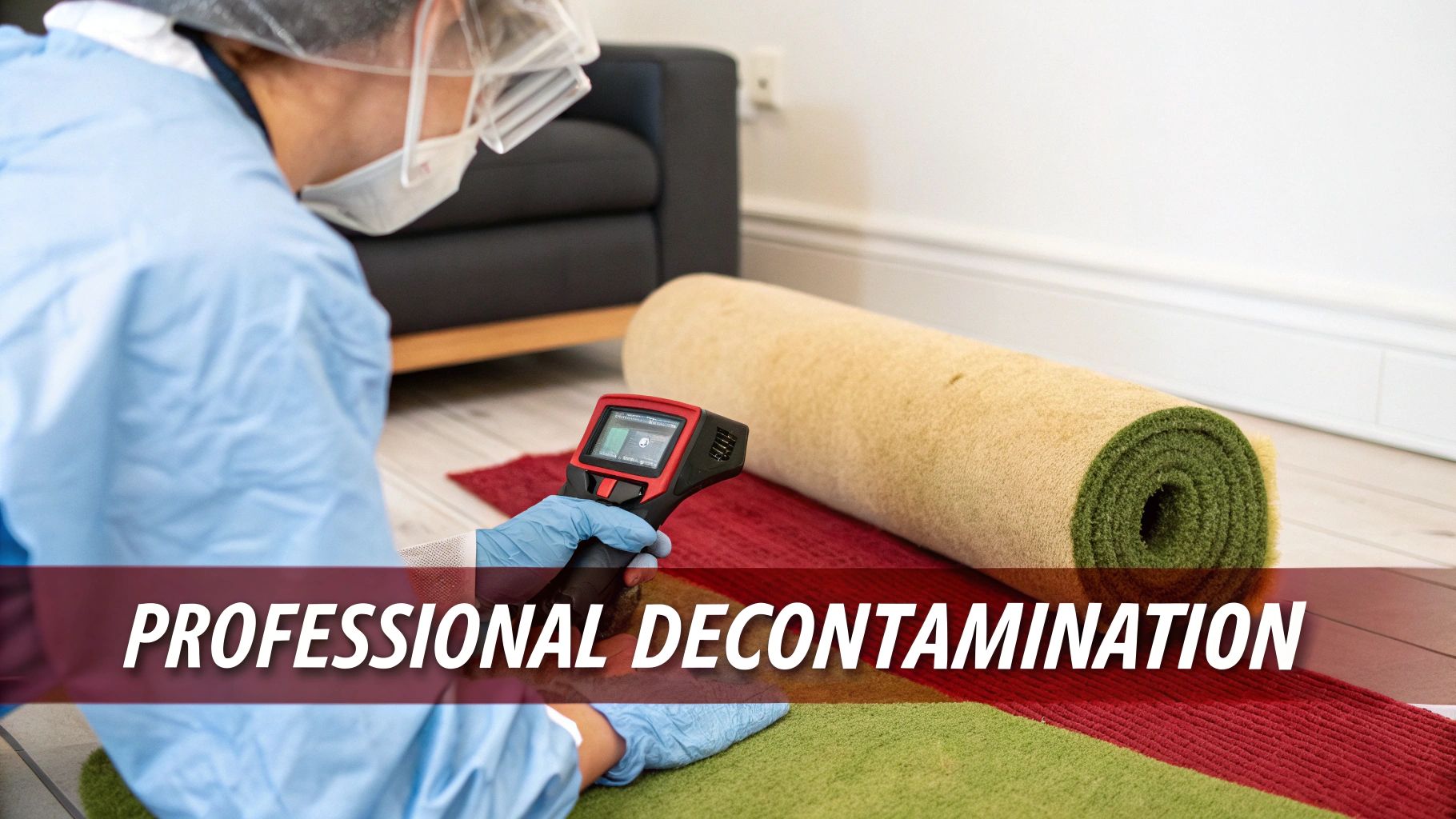
This is precisely why a professional approach is so critical. Trying to clean it yourself might remove a little from the surface, but it can also spread the invisible toxins around or even kick them back into the air, making the exposure risk even worse for your family.
The Professional Remediation Process
Certified remediation specialists don’t just "clean"—they follow a strict, science-based procedure to completely neutralise and eliminate these hazardous chemicals. While the plan is always tailored to the property, the core process involves a few key stages.
- Initial Assessment and Testing: It all starts with a thorough investigation. Experts use specialised tests to map out exactly where the contamination is and how severe it is. This creates a clear picture of the problem.
- Containment and Removal: The team will seal off the affected areas to stop any cross-contamination. Anything that can't be saved—like carpets, curtains, and other soft furnishings—is carefully removed and disposed of as hazardous waste.
- Specialised Chemical Washing: This is where the real work happens. Technicians apply proprietary chemical solutions specifically formulated to break down meth residue. This isn't just a spray and wipe; it’s a targeted treatment for every affected surface, including walls, ceilings, floors, and even inside the HVAC system.
While full-scale remediation is a specialised field, related services such as professional deep cleaning services can play a part in the final stages of restoring a property after the primary hazards have been neutralised.
The Importance of Post-Remediation Verification
This final step is what gives you genuine peace of mind. Once the decontamination work is finished, an independent industrial hygienist is brought in to conduct a final round of testing. This verification is the only way to scientifically confirm that the contamination has been brought down to levels that are safe according to Australian health guidelines.
This isn't a rare problem. A 2021 report suggested that around 2.7% of houses in Western Australia may have been contaminated by meth smoking over just five years. That’s thousands of families unknowingly at risk. We've seen real cases where children living in contaminated rental homes showed signs like constant irritability and disrupted sleep, which only made sense after testing revealed the hidden meth residue.
Trusting certified experts ensures your home isn't just clean on the surface—it’s fundamentally safe for your children and pets to thrive in again. It takes the guesswork out of the equation and provides a clear, verifiable path back to a healthy home.
Got Questions About Meth Exposure? We've Got Answers.
When you're dealing with the possibility of third-hand meth exposure, a lot of urgent questions come to mind. It's a confusing and stressful situation. Let’s walk through some of the most common concerns to give you the clear, direct answers you need to protect your family.
How Long Does Meth Residue Actually Stick Around in a House?
This is the big one for most people, and the answer is unsettling: meth residue is incredibly stubborn. It doesn't just evaporate or break down over time like a typical household spill. We're talking about a chemical compound that can remain active on surfaces and inside porous materials for months, and in some documented cases, even years.
Things like sunlight or opening a window might have a tiny effect, but they won’t get rid of the underlying hazard. The residue clings to everything—drywall, carpets, wooden beams, insulation, and even deep inside your ventilation system. It’s a bit like a greasy, invisible film that seeps into the very structure of the house.
This is why you can't just "air out" a contaminated home or give it a quick scrub with supermarket cleaners. The sheer persistence of these toxins is what makes third-hand exposure so insidious. It’s the reason why children and pets can start showing symptoms long after the last person who used meth has left the property. The only way to know for sure that the danger is gone is through professional testing and proper remediation.
Is Contamination From Smoking Meth as Bad as a Lab?
Both scenarios are bad news, but they're different kinds of bad. A good way to think about it is this: a house where meth was heavily smoked is like a room coated in toxic cigarette tar, but a former meth lab is that same room plus a cocktail of unstable, corrosive chemicals left behind from the cooking process.
-
Contamination from Smoking: The main problem here is the methamphetamine residue itself. While it might sound less dramatic than a lab, heavy and prolonged smoking can leave behind contamination levels high enough to cause serious health problems, especially for the little ones.
-
Contamination from a Meth Lab: This is a whole other level of danger. You've got the meth residue, plus a hazardous mess of precursor chemicals—think things like acetone, sulphuric acid, and anhydrous ammonia. These substances are often volatile, flammable, and can be highly corrosive. A former lab site is simply a more complex and acute chemical hazard.
So while a lab is definitely more dangerous overall, don't underestimate the risk from a heavy smoking environment. That kind of chronic, low-level exposure is exactly what can lead to those subtle but damaging health symptoms in children and pets.
Can I Just Use a DIY Meth Test Kit to Check My Home?
Those DIY kits you can buy online can be a decent first step. They're an affordable way to do an initial screening and are designed to give you a pretty straightforward "yes" or "no" answer. If the kit detects meth residue above its trigger level, it will let you know something is there.
But—and this is a big but—they have some major limitations.
A DIY kit can tell you that a problem likely exists, but it can’t tell you how big the problem is. To understand the actual health risk and figure out a clean-up plan, you need to know the specific concentration of the contamination.
For real, actionable answers, you have to bring in the professionals. A certified hygienist will follow strict protocols to take multiple samples from strategic locations, then send them off to an accredited lab. This gives you precise, quantitative results (e.g., X micrograms of residue per 100cm²), which are essential for knowing if the levels are above the safe limits set by Australian guidelines. These certified results are also what you'll need if you're dealing with a legal or insurance claim.
Are Landlords Required to Tell Me About Meth Contamination?
This is a bit of a grey area, as the rules can differ between states and territories here in Australia. As a general rule, landlords and real estate agents have a duty to disclose any "material facts" that might affect a tenant's decision to rent a place. Known meth contamination or a property’s history as a drug lab would almost certainly be considered a material fact.
The problem is, a landlord can't disclose what they don't know. If a previous tenant was secretly using in the property, the owner might be completely in the dark. There isn’t a standard, nationwide law that requires mandatory meth testing between every tenancy.
This gap in the regulations puts a lot of the responsibility back on you as the tenant. If you have any reason at all to be suspicious, it’s smart to get the place tested for your family's safety. If you've already moved in and your children or pets are suddenly showing unexplained health issues, that’s a massive red flag that demands immediate investigation.
If you suspect your property is contaminated and you're worried about your family or employees, a professional assessment is the only way to get peace of mind. Anitech provides expert occupational hygiene services across Australia, offering comprehensive testing and guidance to ensure your environment is truly safe. Contact our team today for a confidential consultation.


