
Diagnosing Hand-Arm Vibration Syndrome (HAVS) is not a matter of a single, simple test. It's a comprehensive diagnostic process that involves carefully connecting the dots between a worker's job, their symptoms, and objective medical evidence. So, how do you diagnose hand-arm vibration syndrome? It starts by looking at their exposure to vibrating tools, moves into a detailed clinical assessment, and is often confirmed with specific tests that measure nerve and vascular function.
Unpacking the Hand-Arm Vibration Syndrome Diagnosis Process
Understanding how you diagnose hand-arm vibration syndrome is vital for anyone in high-risk Australian industries—think mining, construction, and manufacturing. HAVS is a progressive condition, and the damage it causes to nerves and blood vessels is unfortunately irreversible. This reality makes early, accurate diagnosis absolutely critical to prevent workers from suffering long-term, debilitating harm.
A proper diagnosis is far more than a quick check-up; it's a careful investigation. It’s about piecing together a puzzle that links a worker's entire job history, the specific tools they've used, and the physical symptoms they're now experiencing. This isn't just about an individual's health; it's a cornerstone of workplace health and safety compliance and is central to any potential workers' compensation claims.
The Three Pillars of a HAVS Diagnosis
The entire diagnostic journey is built on three core pillars: delving into the worker's history, assessing their current physical condition, and using specialised tests to get hard, objective data. Each step informs the next, gradually building a complete picture for the diagnosing doctor.
This flow chart gives a great visual overview of the typical diagnostic pathway.

Following this kind of process ensures that any diagnosis rests on a solid foundation of evidence, starting with the worker's own story and ending with measurable, objective findings.
Why a Structured Approach Matters
Without a systematic process, HAVS can easily be misdiagnosed. Its classic symptoms—tingling, numbness, and fingers turning white in the cold—can look a lot like other conditions, such as primary Raynaud's phenomenon or even carpal tunnel syndrome. A structured workflow is designed to make sure all other possibilities are considered and ruled out, leading to a much more confident and accurate diagnosis.
For Australian businesses, this structured approach is fundamental to meeting their duty of care. It’s the backbone of a proper health surveillance program, which is a legal requirement in many states for workers exposed to significant hand-arm vibration. Understanding these diagnostic steps helps companies better protect their people and manage workplace risks. Anitech offers expert occupational hygiene services that can assess and help control vibration exposure, which is the crucial first step in this entire process.
The core of a HAVS diagnosis lies in linking a credible history of vibration exposure with characteristic vascular and neurological symptoms. One without the other is often insufficient for a definitive conclusion.
To simplify, let’s break down the essential steps involved in a thorough HAVS diagnostic workflow.
Core Components of a HAVS Diagnostic Workflow
This table summarises the essential steps a medical professional will follow to accurately diagnose Hand-Arm Vibration Syndrome.
| Diagnostic Component | Purpose | Key Activities |
|---|---|---|
| Occupational History | To establish a clear link between work activities and potential vibration exposure. | Documenting tools used, duration of use, and calculating daily vibration exposure (A(8)). |
| Clinical Assessment | To evaluate and stage the worker's reported symptoms and physical signs. | Physical examination, reviewing vascular, neurological, and musculoskeletal symptoms using the Stockholm Workshop Scale. |
| Objective Testing | To obtain measurable data confirming nerve or blood vessel damage. | Cold provocation tests, vibrometry, nerve conduction studies, and dexterity tests. |
Each component provides a critical piece of the puzzle, coming together to form a complete and reliable diagnostic picture.
Assessing Occupational Exposure and Vibration History
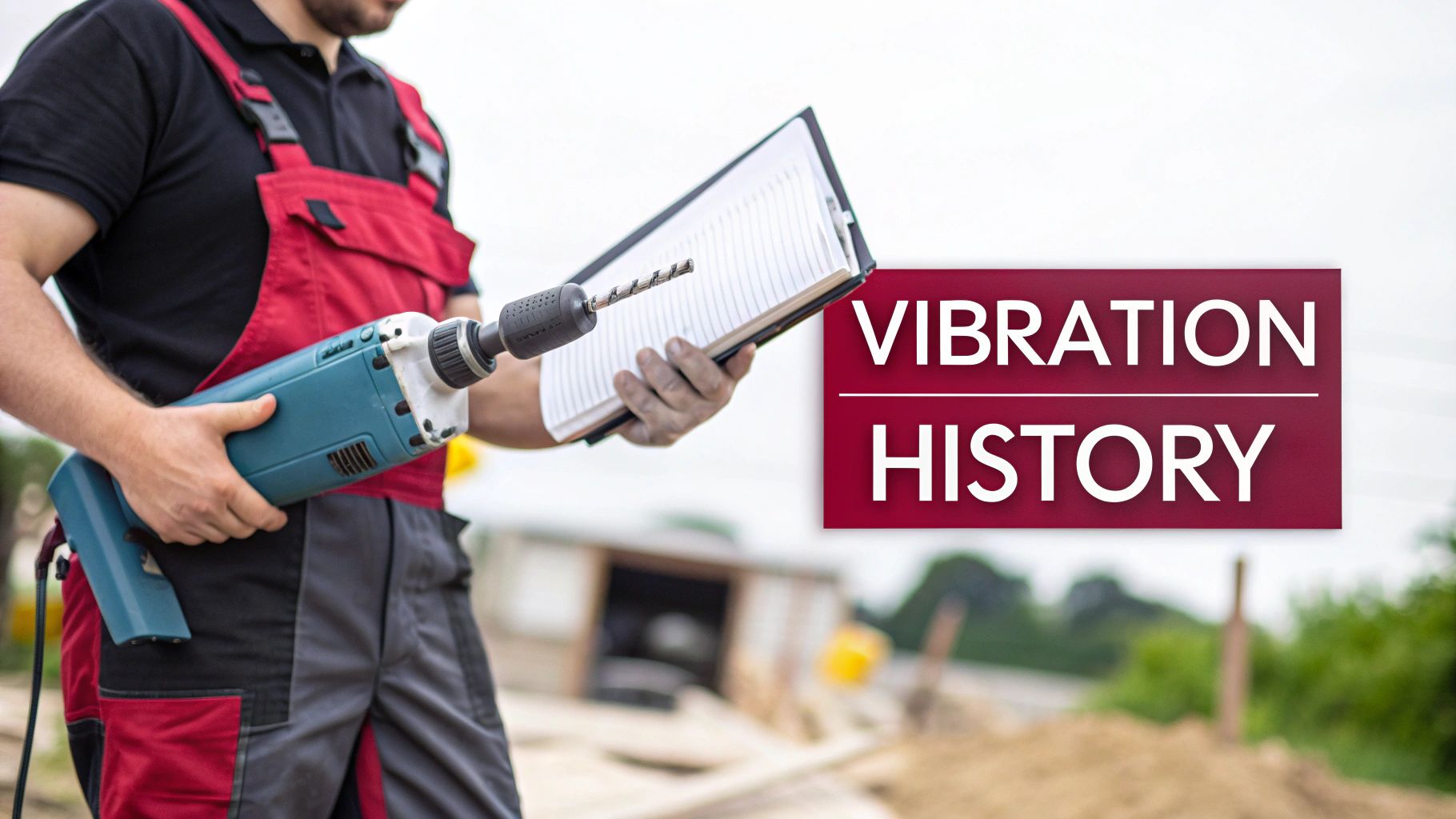
The diagnostic journey for Hand-Arm Vibration Syndrome (HAVS) doesn't start in a clinic—it starts on the job site. Before any physical tests, the first and most critical step is to piece together a worker's occupational history to build a rock-solid case linking their symptoms to their work. This is where we answer the fundamental question, "Could this actually be HAVS?" by first confirming they've had significant exposure.
This isn't as simple as asking, "Do you use power tools?". It’s a deep dive. A detailed inventory of every single vibrating tool that person has picked up throughout their entire career is required. Think beyond the usual suspects like jackhammers and rock drills. We need to account for the grinders, chainsaws, impact wrenches, and even the powered lawnmowers or strimmers they might use day in, day out.
Getting Down to the Details of Exposure
To build an accurate picture of someone's exposure, you have to play detective. It’s all about gathering the small details that, when put together, show the true vibration dose a worker has absorbed over months, years, or even decades.
Here’s the kind of information that’s absolutely essential:
- The Tools Themselves: What specific makes and models of handheld tools have they used?
- Time on the Tool: How many hours a day and days a week were their hands actually on that vibrating tool?
- Career Timeline: How many years have they spent in jobs using this equipment?
- The Work Environment: What were the conditions like? Think about things like the grip force needed, the state of tool maintenance, and what materials they were working with (drilling into concrete is a world away from cutting timber).
This meticulous history is what allows us to quantify the cumulative exposure, which is the cornerstone of a reliable diagnosis.
Putting a Number on It: The A(8) Value
To bring objectivity to this, occupational hygienists and doctors rely on a metric called the daily vibration exposure A(8). It’s a standardised way of measuring the total hand-arm vibration someone is exposed to over a typical eight-hour workday. The calculation uses two key figures: the vibration magnitude of the tool (in metres per second squared, or m/s²) and the total time the tool is actually running in their hands, which we call 'trigger time'.
This isn't just a number for a report; it's a vital diagnostic benchmark. It lets us compare a worker's exposure directly against national safety limits. Here in Australia, this is especially important. An estimated 3.8% of the Australian workforce is exposed to vibration levels above the action limit of 2.5 m/s² each day, with men being the most affected group.
Let me be clear: a detailed exposure history is non-negotiable. Without it, you can't confidently attribute symptoms like tingling, numbness, or white fingers to HAVS. Too many other medical conditions can cause the exact same issues.
How to Properly Document Exposure on Site
If you're an employer in a high-risk industry like mining, construction, or manufacturing, this documentation is a core part of your WHS duties. Getting this right from the start is invaluable if one of your team members develops symptoms down the track.
Here are a few practical ways to stay on top of it:
- Check Manufacturer Data: Many tool manufacturers publish the vibration emission data for their products. This can be a decent starting point for your A(8) calculations.
- Get On-Site Measurements: For the most reliable data, nothing beats a professional hand-arm vibration assessment. An expert will use specialised gear to measure the actual vibration levels from your tools, used by your people, on your site.
- Keep Meticulous Records: Log who uses which tools and for how long each day. This creates the raw data you need for ongoing monitoring and risk management.
This isn't just about ticking boxes. This kind of detailed record-keeping is the foundation of any good health surveillance program. It provides the crucial evidence needed to connect a worker's health issues directly to their job, making a potential HAVS diagnosis both accurate and defensible.
Clinical Evaluation: Connecting Exposure to Symptoms
Once a clear picture of a worker's vibration exposure is established, the next step is to move from the worksite to the clinic. Here, a qualified doctor conducts a thorough physical examination to see how that exposure has translated into actual physical symptoms. It’s a crucial part of the diagnostic puzzle, linking the cause (the vibrating tool) with the effect (the damage to the hands and arms).
This is a methodical investigation into the three main ways HAVS manifests: in the blood vessels (vascular), the nerves (neurological), and the musculoskeletal system. By digging into each of these, the doctor builds a complete picture of how the condition is truly affecting the worker.
Investigating Vascular Symptoms
The most well-known sign of HAVS is what happens to the blood vessels, a condition often called Vibration White Finger (VWF). Years of vibration can damage the tiny blood vessels in the fingers, making them spasm and shut down, especially when it gets cold.
During the evaluation, the doctor will ask very specific questions to uncover these signs:
- Finger Blanching: Do your fingers ever turn chalky white? Does this happen to one finger, or several? Do they later turn blue or a deep red as the blood returns?
- Cold Sensitivity: Have you become unusually sensitive to cold? Do your hands ache or go numb even in mild weather?
- Attack Frequency: How often are these attacks happening? Are we talking once a month or several times a week? And how long do they last?
These are the classic hallmarks of a compromised circulatory system in the hands. The doctor will carefully note which fingers are affected and how far up the finger the colour change goes—this detail is essential for grading how severe the condition is.
Assessing the Neurological Impact
Beyond the visible colour changes of VWF, HAVS does a real number on the nerves. For many workers, this neurological damage is actually more disruptive to their daily life than the vascular symptoms. Efficient medical documentation software is a massive help here for accurately capturing the detailed findings.
The neurological assessment zeroes in on:
- Tingling and Numbness: Is there a constant "pins and needles" feeling? Or have the fingertips gone completely numb?
- Loss of Dexterity: How's your fine motor control? Are you struggling to do up buttons, pick up a small screw, or get coins out of your pocket?
- Reduced Sensation: Has your sense of touch diminished? Can you still feel different textures or tell if something is hot or cold?
Think about a mechanic who can't feel the thread of a bolt, or a scaffolder who struggles with small pins and clips. These are the real-world, life-altering consequences of nerve damage. If this sounds familiar, it's worth learning more about the three early signs of HAVS.
Looking at Musculoskeletal Problems
Finally, the examination explores how vibration has affected the muscles, bones, and joints. While aches and pains can have many causes, they are a significant part of the overall disability caused by HAVS.
This part of the assessment will check for:
- Weakened Grip Strength: Is it harder to hold onto tools or lift heavy objects?
- Aches and Pains: Is there a general, persistent pain in the hands, wrists, or arms?
- Carpal Tunnel Syndrome: Vibration is a well-known risk factor for this condition, where the median nerve in the wrist gets compressed.
It's not just about identifying a list of symptoms; it's about understanding their real-world impact. A worker's story about being unable to hold a cup of coffee without pain says more about the condition's severity than any simple score.
Staging the Severity: The Stockholm Workshop Scale
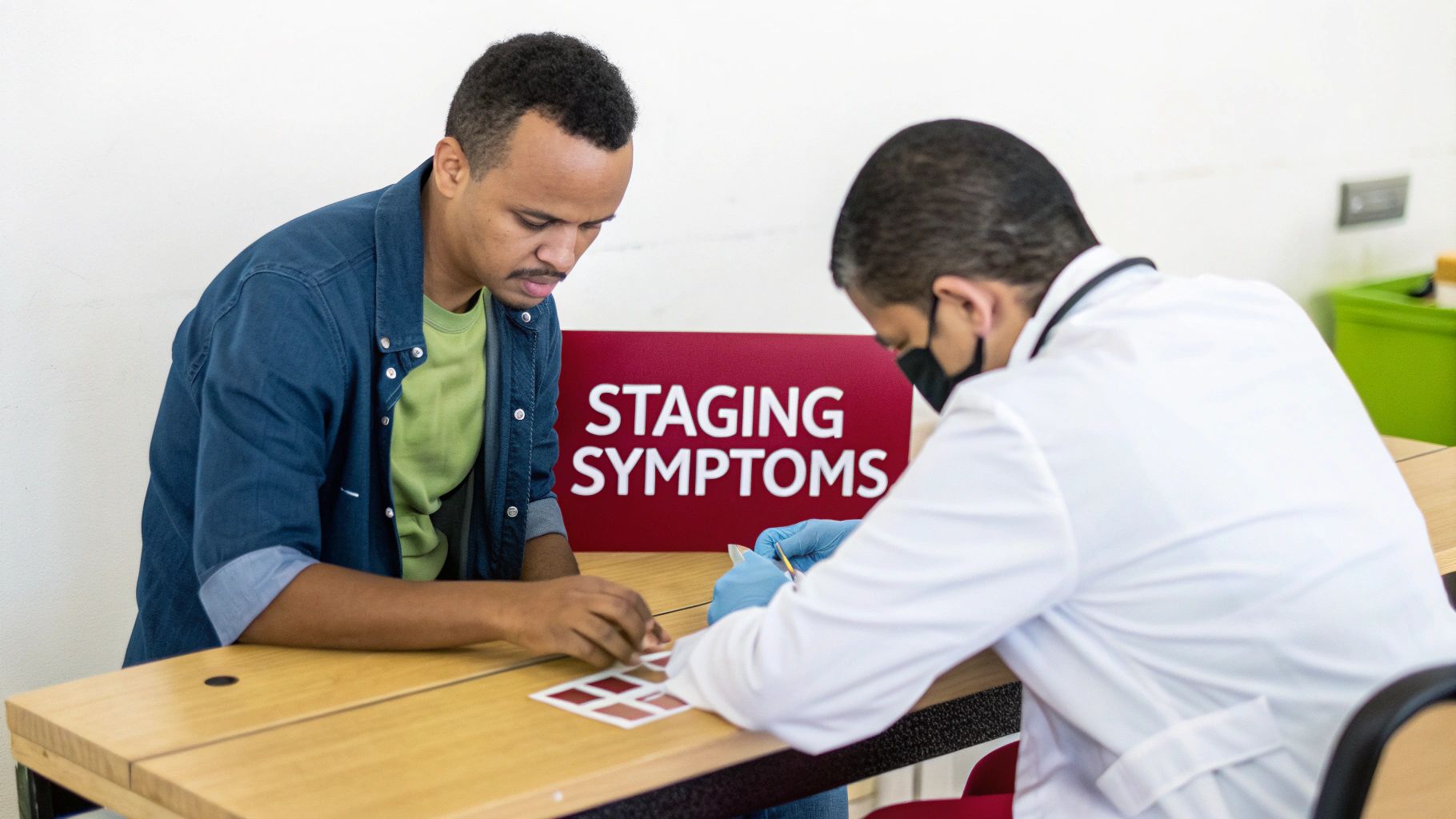
To bring all this information together in a consistent way, clinicians use the Stockholm Workshop Scale. This is the internationally recognised standard for grading HAVS. It works by giving separate scores for the vascular symptoms and the sensorineural (nerve-related) symptoms.
This scale is incredibly useful for a few key reasons:
- Objective Grading: It gives every doctor a common language to classify the condition's severity.
- Tracking Progression: It allows us to monitor the condition over time. Is it getting worse, or are workplace changes helping?
- Guiding Workplace Actions: The stage or score directly informs what needs to happen next, whether it’s modifying duties or reassigning the worker to a different role.
By systematically evaluating these three areas and applying a standardised scale, the doctor creates an accurate clinical profile. This detailed picture is the critical link between the worker's exposure history and the objective tests that follow.
Moving From Symptoms to Hard Evidence with Objective Testing
Once we’ve pieced together the worker's exposure history and gone through a thorough clinical assessment, it's time to get objective. This is where we move beyond subjective reports of numbness or white fingers and into the world of measurable, scientific data. These tests are the bedrock of a solid HAVS diagnosis, giving us the hard evidence we need to confirm the extent of vascular and neurological damage.
Crucially, they also help us rule out other conditions that can look a lot like HAVS. A worker's story is vital, but objective testing is what turns a strong suspicion into a defensible diagnosis.
Pinpointing Vascular Damage
Finger blanching—that classic, ghostly white appearance—is the most well-known sign of HAVS, pointing directly to a problem with blood circulation. The goal of vascular testing is to provoke and measure these circulatory issues in a controlled, clinical environment.
Here in Australia, the cold provocation test is a cornerstone of diagnosis. We're essentially trying to safely trigger a Raynaud's-like attack to see what happens. The worker's hands are placed in cold water for a specific time, and we carefully observe and time how long it takes for their finger colour and temperature to return to baseline. A significantly delayed recovery is a strong indicator of vibration-induced vascular damage. This helps differentiate it from primary Raynaud’s, a condition that affects about 5% of the general population and isn't work-related. For a deeper dive into these protocols, you can explore the specifics of Australian clinical guidelines for HAVS on PMC.
We might also use other tools to get a clearer picture of blood flow:
- Doppler Ultrasound: This gives us a real-time visual of blood moving through the finger arteries, helping us spot any blockages or unusual flow patterns.
- Digital Plethysmography: This technique measures blood pressure at the finger level, providing another angle on circulatory efficiency.
Quantifying the Unseen Nerve Damage
The damage to nerves is just as important, but it's often invisible. Neurological tests are designed to measure how well the nerves in the hands and arms are actually functioning—specifically, how they're transmitting sensory signals.
The go-to test here is vibrometry, also known as a vibration perception threshold (VPT) test. It's a precise way of measuring the quietest vibration a person can feel at their fingertips. For someone with HAVS, this threshold is often much higher than normal, which gives us a clear, quantifiable measure of nerve desensitisation.
Other valuable neurological tests include:
- Nerve Conduction Studies (NCS): These measure the speed of electrical signals along a nerve. They're incredibly useful for pinpointing where the damage is and how severe it might be. They are also excellent for ruling out other nerve entrapment conditions, like carpal tunnel syndrome, which can present with similar symptoms.
- Monofilament Testing: This is a more low-tech but effective test using fine filaments to map out the exact areas and degree of sensory loss in the fingertips.
To make sense of these options, it helps to see how they fit into the diagnostic puzzle.
Objective Diagnostic Tests for HAVS
| Test Type | What It Measures | Typical Application in HAVS Diagnosis |
|---|---|---|
| Cold Provocation Test | Vascular response to cold stress (finger rewarming time) | A key test to confirm vibration-induced Raynaud's phenomenon and assess its severity. |
| Vibrometry (VPT) | Sensory nerve function (threshold for detecting vibration) | Quantifies neurological damage by measuring how desensitised the fingertips have become. |
| Nerve Conduction Studies | Nerve signal speed and integrity | Differentiates HAVS from other nerve conditions like carpal tunnel syndrome. |
| Grip Strength (Dynamometer) | Musculoskeletal function and muscle strength | Measures functional impairment; reduced grip strength is common in advanced HAVS. |
| Purdue Pegboard Test | Fine motor skill and dexterity | Assesses the practical impact of numbness and loss of coordination on hand function. |
As you can see, no single test tells the whole story.
The real diagnostic power comes from combining the results. For example, when a worker has a positive cold provocation test and an abnormal vibrometry result, the case for a HAVS diagnosis becomes incredibly strong.
Measuring the Real-World Impact on Function
Beyond the blood vessels and nerves, we need to know how this condition is affecting a person's day-to-day life and ability to work. Functional capacity tests give us a tangible measure of their physical impairment.
We often use tests like the Purdue Pegboard Test, which involves placing small pegs into holes against the clock. It provides a standardised and objective measure of fine motor dexterity, something often compromised by numbness. At the same time, we'll use a dynamometer to get a precise reading of grip strength, which can be dramatically reduced in workers with more advanced HAVS.
These functional assessments are vital. They help us quantify the level of disability and provide the evidence needed to make informed decisions about workplace modifications, task rotation, or overall fitness for duty. By layering these different objective tests, we build a comprehensive, multi-faceted picture of the damage, leading to an accurate diagnosis and a clear path forward.
Finalising the Diagnosis: Ruling Out Other Conditions
After gathering a detailed occupational history and running a series of objective tests, the final, crucial piece of the puzzle is the differential diagnosis. This is where a medical professional meticulously rules out other conditions that can mimic HAVS symptoms, ensuring the final conclusion is both accurate and defensible.
This step is absolutely critical. Symptoms like numb fingers, painful sensitivity to cold, and a weakened grip aren't exclusive to HAVS. A host of other conditions can cause similar issues. Misattributing them to workplace vibration could lead to the wrong treatment plan and a failure to address the real underlying problem. The key is to synthesise all the information—exposure data, clinical signs, and test results—to systematically eliminate these other possibilities.

Differentiating HAVS from Primary Raynaud's Disease
One of the most common conditions that looks a lot like HAVS is primary Raynaud's disease. It also causes finger blanching and cold sensitivity, but it has zero connection to vibration exposure. It typically presents in young women and often has a family history.
How can they be told apart in a clinical setting?
- Exposure History: This is the most powerful differentiator. If a worker has no significant history of using vibrating tools, it's highly unlikely they have HAVS.
- Symmetry of Symptoms: Primary Raynaud’s tends to affect both hands symmetrically right from the start. In contrast, HAVS often begins in the fingers most exposed to the vibration—usually the index and middle fingers of the dominant hand—and can remain asymmetrical for quite some time.
- Associated Symptoms: Remember, HAVS is a syndrome. It bundles neurological symptoms like tingling and numbness with the vascular signs. Primary Raynaud’s is a purely vascular condition.
Ruling Out Nerve Entrapment Syndromes
Several conditions involve compressed nerves, leading to tingling, numbness, and weakness that can easily be confused with the neurological side of HAVS.
- Carpal Tunnel Syndrome (CTS): This classic condition is caused by the median nerve being compressed at the wrist. While vibration exposure is a known risk factor for developing CTS, it can also arise completely independently. Nerve conduction studies are incredibly valuable here, as they can pinpoint the precise location of nerve compression at the wrist, which is distinct from the more diffuse nerve damage seen in HAVS.
- Thoracic Outlet Syndrome (TOS): This involves compression of nerves or blood vessels between the collarbone and the first rib. It can cause pain, numbness, and poor circulation down the arm and into the hand. A focused physical examination, paying close attention to neck and shoulder movements, can often reproduce TOS symptoms and help distinguish it from HAVS.
An accurate diagnosis hinges on connecting the what (the symptoms) with the why (the cause). If a worker presents with classic signs of Carpal Tunnel Syndrome but has no significant vibration exposure history, the cause is clearly not occupational HAVS.
Considering Systemic and Other Conditions
A good diagnostician will always keep a broad perspective. A range of other health issues can produce symptoms that could be mistaken for Hand-Arm Vibration Syndrome.
It's essential to consider and rule out these possibilities:
- Peripheral Neuropathy: Generalised nerve damage in the hands and feet can be caused by various systemic diseases, with diabetes being the most common culprit. Blood tests to check glucose levels are a standard part of the work-up to exclude this.
- Autoimmune Diseases: Conditions like scleroderma or lupus can cause Raynaud's phenomenon as a secondary symptom. Specific blood tests looking for certain antibodies can help identify these underlying autoimmune disorders.
- Certain Medications: It's easy to overlook, but some drugs, including beta-blockers and certain migraine medications, can trigger circulatory changes in the extremities that look just like vascular HAVS symptoms. A thorough review of a patient's medication list is non-negotiable.
By meticulously working through this process of elimination, a clinician can arrive at a final diagnosis with confidence. This clarifies whether a worker’s health problems are directly linked to their job, paving the way for the right management plan, necessary workplace adjustments, and any potential workers’ compensation claims.
What Happens After a HAVS Diagnosis? Managing the Worker and the Workplace
Getting a definitive HAVS diagnosis is a critical fork in the road that requires immediate and serious action from everyone involved—the worker, their doctor, and especially the employer. The focus must pivot sharply from diagnosis to management and prevention. This is about protecting the diagnosed worker from further harm and ensuring no one else on the team goes down the same path.
For the worker, this diagnosis is the key to getting help, both medically and through a formal workers' compensation claim. For the employer, it's a massive red flag indicating that whatever safety controls were in place simply weren't good enough.
Reporting and Getting Specialist Help
The first thing a worker in Australia needs to do after a confirmed diagnosis is to report the condition formally. This step is non-negotiable for lodging a workers' compensation claim, which is vital for covering medical bills and lost wages. The comprehensive diagnostic report, with all the exposure history and test results, forms the backbone of this claim.
At the same time, the diagnosing doctor will usually refer the worker to a specialist, typically an occupational physician. These doctors are experts in work-related health conditions. They can guide ongoing treatment, advise on what tasks are safe to perform, and recommend specific, practical changes to the job to stop the damage from getting worse.
A HAVS diagnosis is more than just a medical finding; it's a legal and ethical call to action. It signals a breakdown in preventative measures and demands a shift to robust, engineering-level controls to protect every worker on site.
Engineering Controls: Your First and Best Defence
The most effective way to tackle HAVS risk is to eliminate or reduce the vibration at its source through engineering solutions. These are the heavy hitters in the hierarchy of controls and should always be the priority.
Think about making real, physical changes to the work itself:
- Substitute the Tool or Process: Can you swap out a high-vibration tool for something better? For example, using a block splitter instead of a powerful cut-off saw can slash vibration exposure almost instantly. It's about finding a smarter, safer way to do the job.
- Keep Your Tools in Top Shape: A tool that's rattling and poorly maintained is going to vibrate a lot more than one that's in good nick. A strict, regular maintenance schedule for all power tools is crucial to keep them operating within their safe vibration limits.
- Isolate the Vibration: Sometimes you can't get rid of the tool, but you can buffer the vibration. Using things like vibration-damping mounts on machinery or specialised anti-vibration handles can make a huge difference in how much energy is transferred to the operator's hands.
Administrative Controls: Changing How the Work is Done
When you've exhausted engineering controls but a risk remains, it's time for administrative changes. This is all about managing how and when people are exposed to vibration.
Here are a few practical strategies that work:
- Rotate Your People: "Trigger time" is the enemy. You have to limit how long any single person is using a vibrating tool. By rotating your crew between high-vibration and low-vibration tasks during a shift, you can help ensure nobody goes over the daily exposure action value of 2.5 m/s².
- Schedule Smarter: Don't let workers use vibrating tools for hours on end without a break. Plan the workday to include scheduled rest periods away from the tools, giving their hands and bodies time to recover.
- Buy Better Gear: Make low vibration a non-negotiable part of your purchasing policy. When it's time to buy new tools, the vibration emission value should be a key factor in your decision, right up there with price and performance.
Personal Protective Equipment (PPE): The Last Layer of Protection
Anti-vibration gloves have a role to play, but they must be seen for what they are: the last line of defence, not the primary solution. And not all gloves are created equal. You need to choose gloves that are properly certified to ISO 10819 standards. Many of the generic "anti-vibration" gloves you see for sale offer very little real protection, especially against the low-frequency vibrations that cause the most damage.
Also, don't overlook the basics. Simply keeping hands warm and dry is a form of PPE. It promotes good blood circulation and can lessen the severity of vascular symptoms like white finger.
Setting Up Ongoing Health Surveillance
When you have a confirmed case of HAVS in your workplace, it’s a wake-up call. You absolutely need a robust health surveillance program for every single worker who is exposed to vibration. The whole point is to catch the early warning signs of HAVS before the damage becomes permanent. A good program is a fundamental part of learning how to fix hand-arm vibration at a company-wide level.
An effective health surveillance program should include:
- A Baseline Check: Before a new worker ever starts using vibrating tools, they should have a pre-placement health screening.
- Annual Questionnaires: Every year, exposed workers should fill out a standardised form to report any new or worsening symptoms in their hands and arms.
- Tiered Assessments: If a worker flags symptoms on their questionnaire, it should trigger a tiered response—starting with a clinical assessment and, if needed, leading to a referral for a full diagnostic work-up.
By layering these controls—from engineering and job rotation right through to proper surveillance—a business can move from simply reacting to a diagnosis to building a proactive safety culture that genuinely protects every worker from the life-altering effects of HAVS.
Your HAVS Diagnosis Questions Answered
When dealing with a potential Hand-Arm Vibration Syndrome diagnosis, many questions naturally arise. Workers want to know what it means for their health and career, while employers need to understand their responsibilities. Let's clear up some of the most common queries.
Can Hand-Arm Vibration Syndrome Be Cured?
This is often the first and toughest question people ask. Unfortunately, the damage HAVS does to the nerves and blood vessels is permanent. There's no way to reverse it, which means there is no cure.
However, getting an early and accurate diagnosis is absolutely crucial. It's the green light for immediate action. By stopping or drastically reducing any further vibration exposure, you can stop the condition from getting worse and start managing the symptoms you already have. This is precisely why health surveillance isn't just a box-ticking exercise; it’s a critical safety net in high-risk industries.
How Long Does It Take for HAVS Symptoms to Appear?
There’s no single timeline for HAVS. The onset of symptoms can vary massively from one person to the next, depending on several key factors: the vibration levels of the tools, how long you’re using them each day (the "trigger time"), and your own personal susceptibility.
For some workers using tools with extremely high vibration, those first signs of tingling and numbness can pop up in just a few months. For others, it might take 10 years or more of regular exposure before they notice anything is wrong.
It's a dangerous myth that HAVS only happens after a full career on the tools. The truth is, significant damage can happen much faster than people think, which makes early and honest risk assessments a non-negotiable part of keeping your team safe.
Is an Employer Responsible for Diagnosing HAVS?
While a formal medical diagnosis must come from a qualified doctor, employers in Australia have a clear duty of care under WHS regulations. This means you are legally responsible for proactively managing the risks associated with hand-arm vibration.
This breaks down into a few key actions:
- Assessing Exposure: You need to conduct proper vibration risk assessments to figure out which workers are at risk and by how much.
- Implementing Controls: It's your job to put engineering and administrative controls in place to get those exposure levels down.
- Providing Health Surveillance: You must set up a regular health monitoring program for every at-risk worker. The point of this program is to catch the earliest signs of HAVS, which then acts as the trigger for referring the worker for a formal medical diagnosis.
What Is the Difference Between HAVS and Carpal Tunnel Syndrome?
This is a common point of confusion, and it’s easy to see why. Both conditions can cause very similar symptoms like tingling, pain, and numbness in the hands.
The key difference is the underlying cause. Carpal Tunnel Syndrome (CTS) is a specific issue where the median nerve gets compressed as it passes through a narrow passage in your wrist called the carpal tunnel.
Hand-Arm Vibration Syndrome, on the other hand, is a broader condition involving widespread damage from vibration to both the nerves and the blood vessels throughout the hands and arms. To make things more complicated, vibration exposure is a known risk factor that can cause or aggravate CTS. It’s not unusual for a worker to be diagnosed with both conditions simultaneously, which is why a thorough differential diagnosis, often including nerve conduction studies, is crucial to get the full picture.
At Anitech, we provide expert occupational hygiene services to help you assess, manage, and control vibration risks in your workplace. Protecting your team starts with understanding your exposure. Contact us today to ensure your workplace meets Australian safety standards. Learn more at https://occhygiene.com.au.


