
Flour dust exposure monitoring is the process of measuring the amount of airborne flour particles within a workplace. This is a critical procedure for accurately identifying the health risks employees face and, more importantly, for implementing effective controls to mitigate them. By utilising specialised air sampling equipment, businesses can ensure exposure levels remain below legally mandated limits, providing the first line of defence against serious respiratory illnesses such as baker's asthma. This process should be considered an essential health check for any work environment where flour is used, particularly in bakeries, mills, and large-scale food manufacturing facilities.
Understanding the Risks of Flour Dust in Australian Workplaces
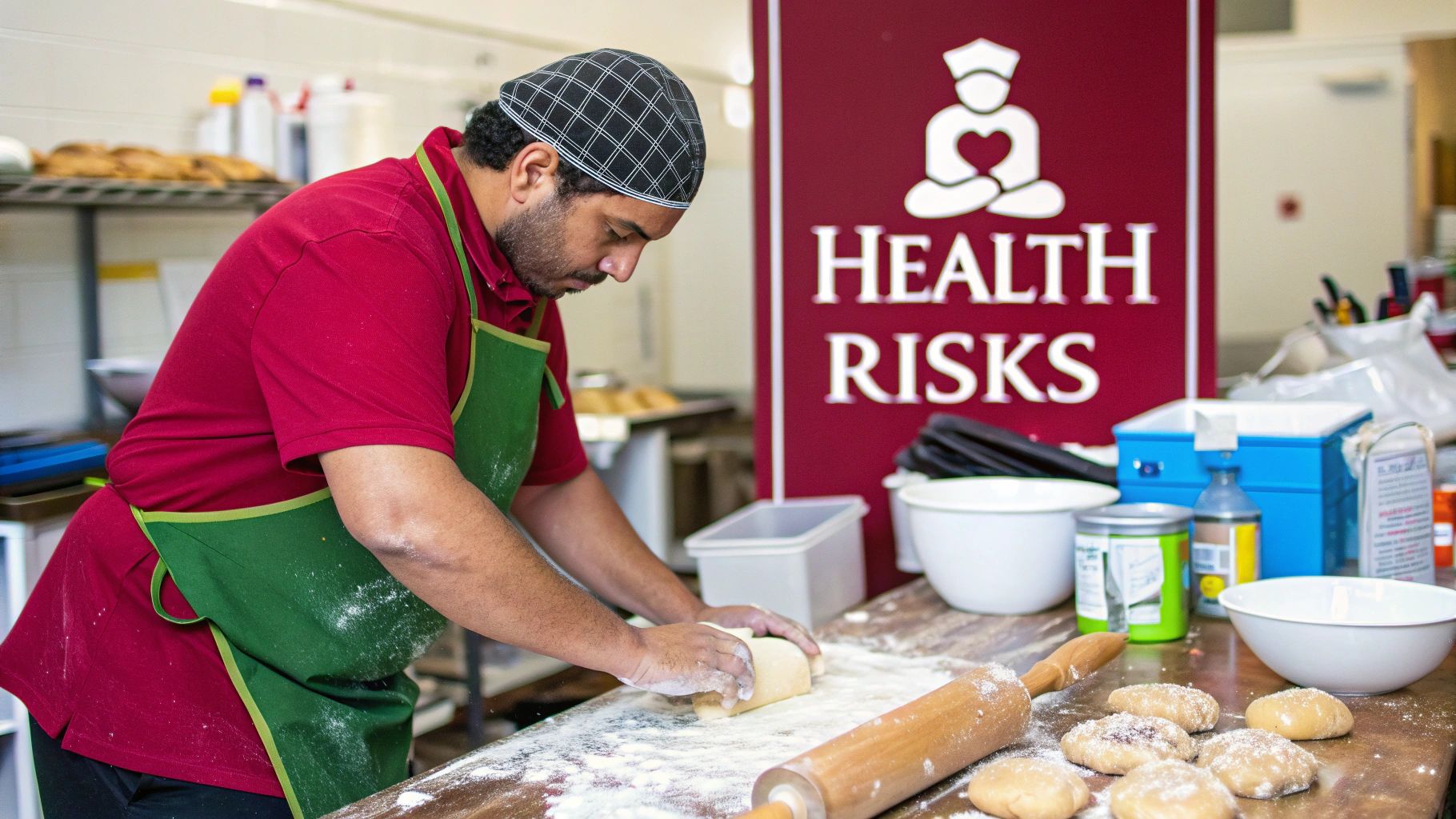
It is easy to perceive flour as one of the most harmless substances in a commercial kitchen or factory setting. However, the fine dust it generates is a recognised and serious occupational hazard. For the thousands of Australians working directly with flour every day, what appears to be a simple ingredient can pose significant, long-term health threats when inhaled consistently over time.
The primary issue lies in the microscopic size of the dust particles. Everyday operational tasks—such as tipping bags of flour into mixers, combining ingredients for dough, and bagging finished products—disperse these tiny particles into the air. Once airborne, they can be inhaled deeply into the lungs, where they have the potential to trigger a wide range of respiratory problems. This is not merely a matter of minor coughing; it is a direct cause of debilitating and preventable occupational diseases.
The Human Cost of Unmonitored Exposure
"Baker's asthma" is the most widely known condition associated with flour dust. It is a specific type of occupational asthma triggered by an allergic reaction to proteins present in flour. The risks, however, do not end there. Long-term, chronic exposure can lead to other serious illnesses that permanently impair lung function and significantly reduce an individual's quality of life.
The main health risks that require careful management include:
- Occupational Asthma: This condition often manifests as coughing, wheezing, and shortness of breath, sometimes developing years after the initial exposure began.
- Chronic Bronchitis: This involves persistent inflammation of the airways, resulting in a chronic cough and the production of excess mucus.
- Rhinitis: Sufferers experience inflammation inside the nose, leading to symptoms such as sneezing, itchiness, and a constant runny nose.
- Skin and Eye Irritation: Direct contact with flour dust can also cause dermatitis and conjunctivitis, leading to considerable discomfort and the risk of secondary infections.
This clear and established link between dust levels and health problems makes a proactive flour dust exposure monitoring program an absolutely non-negotiable component of workplace safety. It is not merely a box-ticking exercise for regulatory compliance; it is a fundamental part of ensuring the safety of your team and the long-term health of your business. The same principles apply to similar particulate materials, and a comprehensive guide to grain dust assessment can offer valuable, related insights.
The Scale of Exposure in Australia
This is a much larger issue than many people realise. Recent research has highlighted a worrying gap between the level of potential exposure and the amount of monitoring currently being performed. A survey of Australian workers revealed that 8.7% of women and 3% of men reported being exposed to flour dust in their jobs.
When these percentages are scaled to the national workforce, it suggests that nearly 600,000 workers across Australia could be regularly exposed. Despite these figures, dedicated monitoring is not yet a standard practice in many workplaces, which has resulted in a major gap in national data regarding the true exposure levels.
It is crucial to grasp the severity of occupational hazards. While flour dust is the focus here, it is helpful to view it within the broader context of airborne risks. For instance, reading about the dangers of hazardous airborne substances provides valuable perspective on why robust monitoring and control measures are so vital across every industry.
Navigating Australia's New Flour Dust Exposure Limits
For many years, the regulations surrounding flour dust in Australia remained relatively static. However, a major shift is approaching, and it is not just a minor adjustment to old rules. This represents a fundamental change in how workplace safety is managed in bakeries, mills, and any food manufacturing site where flour becomes airborne. Understanding these new obligations is the first step toward creating a workplace that is both compliant and genuinely safer for your employees.
Historically, Australia's approach was quite broad. Flour dust did not have its own specific, health-based exposure limit. Instead, it was often categorised with the generic 'Particulates Not Otherwise Classified,' which had limits ranging from 3–10 mg/m³. That is all set to change, thanks to a landmark review conducted by Safe Work Australia.
From 1 December 2026, a new Workplace Exposure Limit (WEL) for flour dust will be enforced. The new time-weighted average (TWA) is set at just 0.5 mg/m³ over an eight-hour shift. This is a massive reduction and signals a new era of accountability for employers. To explore this topic further, you can learn how Australia is introducing its first legal limit for flour dust and the factors that drove this significant decision.
This infographic clearly illustrates the change, showing the dramatic drop from the old general standard to the new specific WEL.
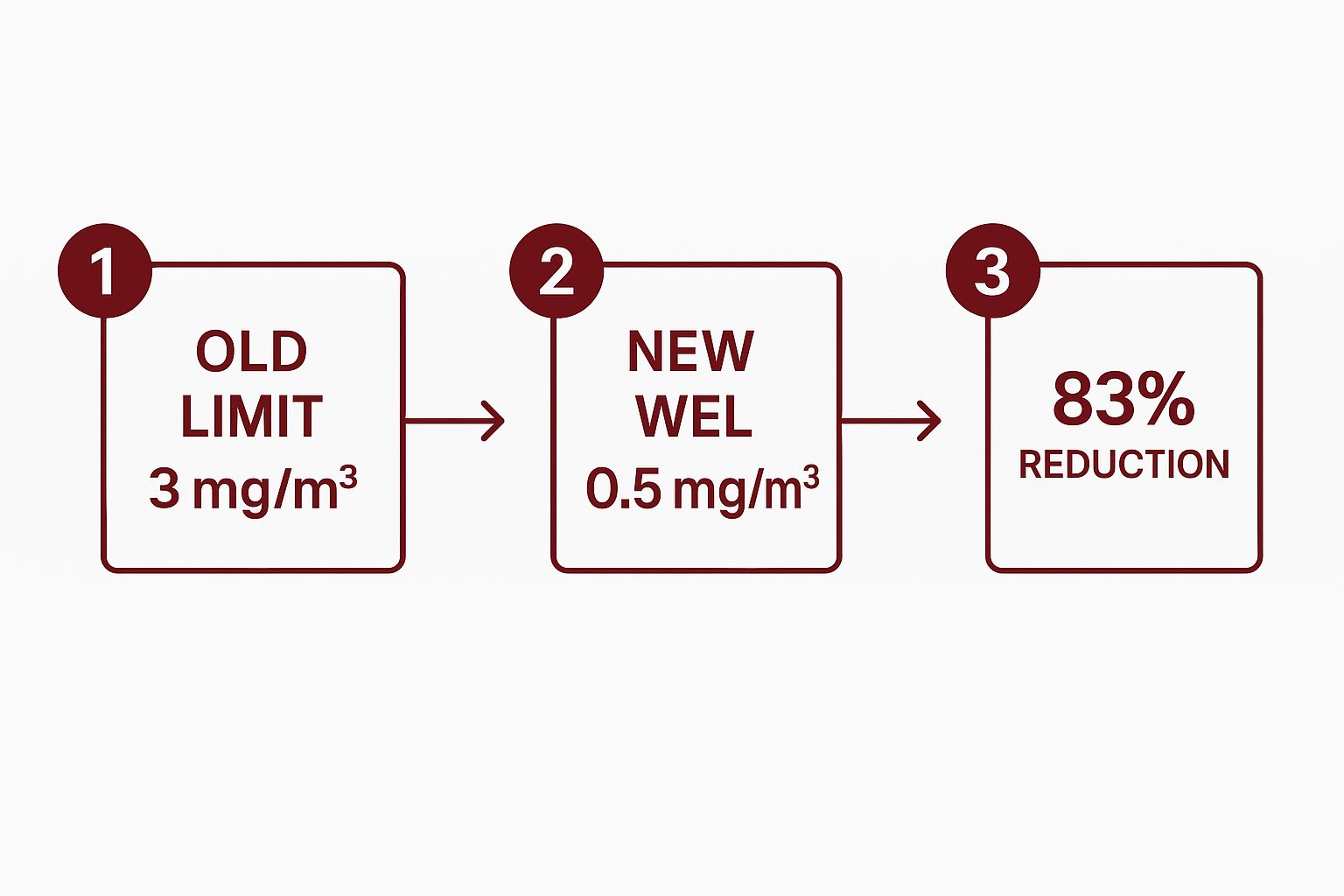
As you can see, this is not a minor adjustment. We are talking about a reduction of over 83%, which means that our approach to flour dust exposure monitoring must become significantly more rigorous and precise.
What This Change Means for Your Business
So, why such a drastic change? The new, much stricter limit is a direct response to a growing body of global health evidence. Numerous studies have linked even low-level flour dust exposure to serious respiratory conditions. Safe Work Australia's decision finally brings our nation into alignment with international best practices and officially classifies flour dust as a hazardous substance requiring its own specific management plan.
For any Person Conducting a Business or Undertaking (PCBU), the practical implications are significant. Airborne dust levels that were previously considered acceptable may now be well over the new legal limit. Adhering to this transition is not a suggestion—it is a legal requirement under Work Health and Safety (WHS) law.
Your core legal duties now focus on a few key actions:
- Demonstrate Compliance: You must be able to prove that exposure levels in your workplace are below the 0.5 mg/m³ threshold. Without a proper flour dust exposure monitoring program, this is simply impossible.
- Reassess Control Measures: The local exhaust ventilation systems or work practices you have had in place for years may no longer be sufficient. A thorough review, and likely an upgrade, will be necessary to meet the new standard.
- Maintain Meticulous Records: Keeping detailed records of your monitoring results, risk assessments, and any modifications made to your control measures is crucial. This documentation serves as your proof of due diligence.
It is beneficial to view this new regulation less as a hurdle and more as a framework for improvement. It provides a clear, health-based target, empowering you to make meaningful changes that protect your most valuable asset: your people.
Understanding Your Duty of Care as a PCBU
Under WHS law, the primary duty of care rests firmly with the PCBU. It is your responsibility to ensure, as far as is reasonably practicable, the health and safety of your workers. When it comes to airborne contaminants like flour dust, that duty specifically includes managing the risks of exposure.
The introduction of the 0.5 mg/m³ WEL provides a precise, measurable benchmark for fulfilling that duty. It eliminates ambiguity and establishes a crystal-clear expectation. Failure to act on this new limit could be interpreted as a breach of your duty of care, which can lead to serious penalties—not to mention the human cost of an employee developing a preventable illness.
That is why it is essential to begin preparations now. Waiting until the December 2026 deadline is a high-risk strategy. The time to plan your monitoring strategy, assess your current controls, and invest in any necessary upgrades is today. A proactive approach will not only ensure compliance when the new rules take effect but also send a strong message that you are committed to building a truly safe workplace.
Building Your Flour Dust Monitoring Strategy
An effective flour dust exposure monitoring program cannot be improvised. It must be built on a solid, well-considered plan. Simply starting to take samples without a clear strategy will result in a collection of data that fails to provide the necessary insights. It is analogous to trying to bake a perfect loaf of bread without a recipe.
The entire process begins with one simple but crucial question: what are we trying to determine? Your answer to this will guide every subsequent decision, from selecting whom to monitor to choosing the appropriate equipment. Without clear objectives, your efforts will be scattered, leading to a waste of both time and resources.
Performing a Practical Risk Assessment
Before you even consider setting up air pumps, you need to know where to focus your attention. This is where a hands-on risk assessment becomes invaluable. It is the investigative phase that helps you pinpoint the specific tasks, job roles, and areas of your facility where flour dust exposure is likely to be highest. This is not a paper-shuffling exercise; it requires getting out on the production floor and observing the work as it actually happens.
Walk through your facility and observe daily operations with a critical eye. Where do you see dust settling on surfaces? Which processes generate the most visible clouds of dust? Pay close attention to activities such as:
- Tipping and Pouring: Manually lifting flour bags and tipping them into mixers is almost always a major source of airborne dust.
- Dough Mixing: Large industrial mixers can aerosolise a surprising amount of flour, especially at the beginning of a mixing cycle.
- Bagging and Packing: Filling bags with flour or dry mixes, particularly if the system is not fully enclosed, can release a significant amount of fine dust into the air.
- Cleaning and Housekeeping: Using compressed air or a dry broom for cleaning is a common mistake. It simply resuspends settled dust into the air, creating a secondary exposure hazard.
By identifying these high-risk activities, you can focus your monitoring efforts where they will have the most impact, ensuring the data you collect accurately reflects the greatest risks your team faces.
Grouping Workers for Efficient Sampling
Realistically, monitoring every single employee is rarely feasible or even necessary. A more intelligent approach is to group employees into Similar Exposure Groups (SEGs). An SEG is a cluster of workers who perform similar tasks and, as a result, are likely to experience very similar exposure levels.
For example, all the bakers on the morning shift who operate the dough mixers could form one SEG. The crew on the packing line could be another, and the team working in the warehouse could be a third. This method allows you to take a representative sample from each group, providing a statistically sound picture of the exposure risk across your entire workforce without the significant cost and logistical challenges of individual monitoring.
Grouping employees logically not only makes your monitoring program more manageable but also enhances its scientific robustness. You obtain high-quality data that accurately represents different job roles.
Choosing Between Personal and Static Monitoring
Now that you know who to monitor, the next question is how. There are two main methods for air sampling, and each provides different types of information.
-
Personal Monitoring: This is the most effective way to determine exactly what an individual is breathing in. A small, lightweight air pump is attached to the worker's belt, with a sampling head clipped to their lapel, directly in their "breathing zone." This device follows them throughout their shift, capturing a true sample of the air they are inhaling as they perform their tasks.
-
Static (or Area) Monitoring: For this method, a sampler is placed in a fixed location—for example, next to a busy mixing station or near a bagging machine. Static monitoring is excellent for identifying "hot spots" where dust levels are consistently high and for verifying the effectiveness of control measures, such as an extraction fan.
Often, the best strategy is not to choose one method over the other but to use both. Personal monitoring tells you what a specific worker is exposed to, while static monitoring helps you understand where that exposure is coming from. Together, they provide a complete picture of the situation.
A well-structured monitoring program is a continuous cycle, not a one-off event. The table below outlines the key stages you will move through.
Key Stages of a Flour Dust Monitoring Program
| Stage | Objective | Key Activities |
|---|---|---|
| 1. Initial Assessment | Identify potential exposure risks and prioritise areas for monitoring. | Walk-through survey, review of tasks, interviews with staff, identifying high-risk processes (e.g., mixing, tipping). |
| 2. Strategy Development | Define goals, scope, and methodology for the monitoring program. | Set objectives (e.g., compliance check, control validation), select monitoring type (personal/static), define SEGs. |
| 3. Execution & Sampling | Collect accurate and representative air samples from the workplace. | Calibrate equipment, conduct personal and/or static sampling over a full shift, document all relevant details (tasks, duration, controls). |
| 4. Analysis & Interpretation | Quantify flour dust concentrations and compare against exposure standards. | Send samples to an accredited laboratory, analyse results, compare with the 8-hour TWA of 0.5 mg/m³ for inhalable dust. |
| 5. Reporting & Action | Communicate findings and implement necessary control measures. | Prepare a clear report, share results with management and workers, develop an action plan for any identified overexposures. |
| 6. Review & Refine | Evaluate the effectiveness of controls and adjust the program as needed. | Conduct follow-up monitoring to verify control effectiveness, review the program annually or when processes change. |
Following these stages ensures that your monitoring is not just a data-gathering exercise but a dynamic tool for actively protecting your workers' health over the long term.
Getting Your Hands Dirty: A Practical Guide to Air Sampling
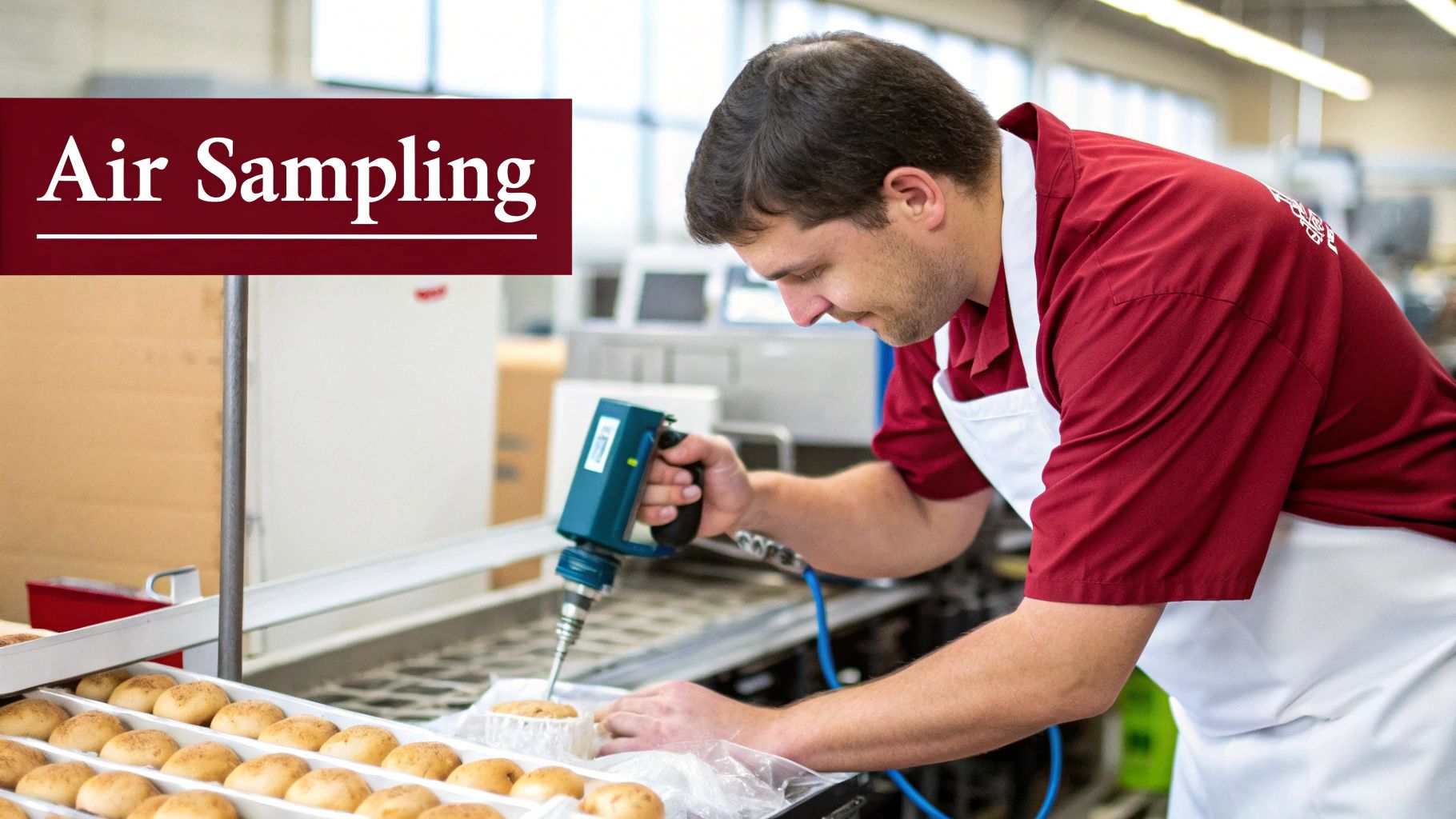
With a solid strategy in place, it is time to get out on the floor and put it into practice. This is where planning meets the reality of the bakery or factory, and where the quality of your entire assessment hinges on meticulous attention to detail.
Consider this: the data you collect is only as reliable as your technique. Any shortcuts or carelessness at this stage can lead to completely skewed results, providing a false sense of security or causing you to pursue problems that do not actually exist.
Mastering Your Sampling Kit
The core of your monitoring work revolves around two key pieces of equipment: the personal sampling pump and the filter cassette. The pump is a small, battery-powered device that draws air through a filter at a very precise and steady rate. That filter, housed inside a plastic cassette, is what physically traps the airborne flour dust for subsequent analysis.
Before you begin, calibration is non-negotiable. This crucial step ensures that the pump is drawing air at the exact flow rate required for the sampling method, typically between 1 and 2 litres per minute for inhalable dust. Using an uncalibrated pump is like trying to bake a cake with inaccurate measuring cups—no matter what else you do correctly, the final result will be flawed.
Accurate calibration is not just a "nice-to-have"; it is the foundation of credible, defensible data. Always document your pre- and post-sampling calibration checks. This is a non-negotiable part of any legitimate flour dust exposure monitoring program.
Real-World Sampling Scenarios
Applying these tools in a busy workplace is as much an art as it is a science. You must gather pristine data without obstructing work or making the person being monitored feel like a science experiment.
Scenario 1: Fitting a Personal Sampler on a Baker
A baker's work is dynamic. They are constantly bending to load ovens, reaching for ingredients, and carrying heavy trays. Your task is to attach the sampling pump so that it does not interfere with their movements. Experience shows the best method is to clip the lightweight pump to their belt at the small of their back, where it is least likely to get snagged or damaged.
From there, run the flexible tubing up their back and over one shoulder, using a small clip to keep it secure. The sampling head itself must be clipped firmly to their collar or lapel, placing it squarely within their personal breathing zone. This is the only way to obtain a sample that truly represents the air they are actually inhaling. For a more detailed look at the specifics, our guide on inhalable dust monitoring offers further information.
Scenario 2: Positioning a Static Sampler
Let's say you suspect the flour packing line is a dust hotspot. A static (or area) sampler is the tool to confirm this. You will want to set up the sampling pump on a tripod stand near the source—perhaps a metre away from where bags are being filled—but not so close that it interferes with the work being done.
The key here is to position the sampling head at the average head height of the workers on that line. This provides a clear snapshot of the ambient dust levels in that specific area, helping you pinpoint exactly where engineering controls, like a new extraction hood, would be most effective.
Common Pitfalls That Will Ruin Your Data
Even the most experienced hygienists can make mistakes if they are not careful. Being aware of these common slip-ups is the best way to avoid them. A quick mental checklist can save a great deal of trouble.
- Sample Contamination: The small filter cassette is incredibly sensitive. Do not open it until the moment you are ready to start sampling. Always handle it with clean hands, and cap it immediately after the sampling period ends to prevent stray dust from contaminating the filter.
- Poor Pump Placement: While it might seem easier to clip the pump to the front of a worker's belt, it is a recipe for disaster. It is far more likely to be bumped or have the tubing snagged. Always position it at the small of the back.
- Wrong Sampler Height: For static monitoring, placing the sampler too low or too high will yield a completely misleading reading. Always aim for the average breathing height of the people working in that zone.
- Forgetting the Field Blank: This step is crucial. Always prepare a "blank" cassette that goes through the entire process—it travels with the other samples and is handled in the same way, but no air is ever drawn through it. This tells the laboratory if any contamination occurred during transport or handling.
It is important to note that the occupational health landscape in Australia is shifting. While the current workplace exposure standard for grain and flour dust in jurisdictions like NSW remains at 4 mg/m³, a new, more protective limit of 0.5 mg/m³ is set to be introduced in 2026. Health risks are known to occur even at levels above 1 mg/m³, and many international bodies recommend limits below this to minimise harm. This upcoming change demonstrates Australia's move towards a much more health-protective standard.
From Data to Action: Interpreting Your Results and Implementing Controls
Receiving your air sample results back from the laboratory is a critical moment, but it is really just the beginning. The numbers on that report are your roadmap. The real work starts now: translating that data into practical changes that genuinely protect your team from flour dust.
Once you have the report, your attention will immediately turn to the 8-hour time-weighted average (TWA). This is the key figure. It is not just a snapshot of a single moment; it is a calculated average of a worker’s exposure across their entire shift, smoothing out the peaks and troughs.
Making Sense of the Numbers
A baker’s exposure is not constant. They might experience a high concentration of dust when tipping a 25kg bag into a mixer, followed by much lower levels while working at a bench. The TWA provides that single, powerful number that you can compare against the Australian Workplace Exposure Standard (WES).
Your benchmark is the new WES of 0.5 mg/m³. If a worker’s TWA is comfortably below this level, it is a good indication that your current control measures are effective. However, if it is at or above 0.5 mg/m³, that is your signal. It is a clear, non-negotiable trigger indicating that you need to take further action.
A result that breaches the exposure standard is not a failure—it is a finding. It provides the hard evidence needed to justify investment in better controls and pinpoints exactly where you need to focus your efforts.
Feeling overwhelmed by the report is common. If the results are complex or the path forward is not obvious, bringing in a specialist can cut through the confusion. An experienced occupational hygiene consultant can help you properly interpret the data and develop an effective, compliant action plan that works in a real-world setting.
Following the Hierarchy of Controls
When your monitoring confirms an overexposure, the hierarchy of controls is your strategic game plan. It is a framework that compels you to prioritise the most robust and reliable solutions first. You should always start at the top of the hierarchy and work your way down.
- Elimination: Can you get rid of the hazard? With flour, this is almost never a viable option.
- Substitution: Can you swap it for a safer alternative? This is worth exploring. Some low-dust or granulated flour varieties can make a difference, depending on your recipes and processes.
- Engineering Controls: This is where you will achieve the most significant impact in a bakery, mill, or food production facility. These are physical changes that contain or remove the dust directly at the source.
When it comes to flour dust, good engineering controls are your most reliable allies.
- Local Exhaust Ventilation (LEV): A well-designed extraction hood placed directly over a mixing bowl or a bag-tipping station is a classic solution for a reason. It captures the dust cloud before it can reach the worker's breathing zone.
- Enclosure: Can you enclose the process? Many modern, automated dough mixers are fully enclosed systems that dramatically reduce the amount of dust escaping into the room.
Implementing Administrative and PPE Controls
Once you have exhausted your engineering options, it is time to look at the next levels of the hierarchy.
Administrative Controls are all about changing the way people work. These controls do not eliminate the dust, but they can significantly reduce an individual's exposure dose.
- Job Rotation: Instead of having one person spend their entire shift at the dusty mixer, rotate them through different, cleaner tasks. This distributes the exposure and lowers the TWA for any single worker.
- Smarter Cleaning: Eliminate compressed air guns and dry brooms—they simply re-entrain flour dust into the air. Switch to a 'wet clean' policy, or even better, use industrial vacuums fitted with HEPA filters to capture the dust effectively.
Finally, at the very bottom of the hierarchy, we have Personal Protective Equipment (PPE). PPE is your last line of defence. It is crucial when other controls cannot reduce exposure below the WES, but it should never be your starting point because its effectiveness relies entirely on individuals using it correctly, every single time. For flour dust, this means:
- Respiratory Protective Equipment (RPE): Workers in high-exposure areas must be provided with properly selected and fitted respirators, such as a P2 or P3 disposable mask.
- Fit Testing: A mask that does not form a perfect seal on an individual's face is essentially useless. Fit testing is mandatory. It is a professional procedure that ensures there are no gaps for dust to penetrate, and it must be repeated regularly to remain effective.
Keeping Your Guard Up: Long-Term Protection and Compliance
Completing your first round of flour dust exposure monitoring is an excellent start, but it is just that—a start. Think of it less as a one-off project and more as a living component of your workplace health and safety (WHS) system. It is a continuous cycle: you assess, you act, and you review. This is how you build a genuine safety culture that offers real, lasting protection for your team.
Your initial monitoring provides a vital snapshot, but workplaces are dynamic environments. Processes change, new machinery is introduced, or production demands increase. Any of these shifts can completely alter the flour dust levels in the air, quickly making your original data obsolete. That is why a sustainable program is built on regular, strategically timed re-monitoring.
Finding Your Re-Monitoring Rhythm
So, how often should you re-monitor? There is no single magic number, as it truly depends on your specific operations. A good rule of thumb, however, is to schedule periodic checks even when you believe nothing significant has changed. This is the only way to be certain that your controls are still performing their job effectively.
Beyond these routine checks, certain events should act as an immediate trigger for a new round of monitoring:
- Changes to Process or Equipment: Did you just install a new high-speed mixer? Are you changing the formulation of a key dry mix? These modifications can introduce new dust sources overnight.
- Implementing New Controls: You have invested in a new local exhaust ventilation (LEV) system. That is fantastic. Now, you must conduct follow-up monitoring to prove it is actually working and successfully reducing exposure levels below the legal limit.
- A Jump in Production: Ramping up production, even with the same equipment, can easily lead to higher dust concentrations. More activity often means more dust.
- Concerns from Your Team: If any employees begin reporting respiratory symptoms, an immediate re-assessment is a non-negotiable part of your duty of care.
A proactive monitoring schedule is your best defence against complacency. It helps you identify emerging risks before they become serious problems and demonstrates a clear, ongoing commitment to WHS compliance.
Why Meticulous Records are Your Best Friend
Solid record-keeping is the backbone of any defensible safety program. It is not just about bureaucracy; under Australian WHS law, you are required to keep detailed records of your risk assessments, all monitoring results, and the control measures you have implemented. These documents serve as your historical log, tracking your progress and guiding future decisions.
Ensure your records are organised and easily accessible. They should clearly detail who was monitored, their TWA results, the laboratory analysis report, and precisely what actions you took based on the findings. This paperwork is your proof of due diligence should a WHS inspector ever visit your site. For keeping everything on track, integrating a structured system like a commercial-grade maintenance checklist can seamlessly weave these safety practices into your day-to-day operations.
Weaving Monitoring into Your WHS Fabric
The most effective programs are those where flour dust exposure monitoring is not seen as a separate, burdensome task. It needs to be woven directly into the fabric of your company's overall health and safety management system. It should be a standard agenda item in management meetings, a topic for toolbox talks, and a key consideration during operational planning.
Communicating the 'why' is just as crucial as the 'what'. Share the results with your team in a way they can easily understand. When you install new controls, take the time to explain how they work and why they are important. When your people see that these efforts are directly protecting their long-term health, they become active partners in making the workplace safer for everyone.
Anitech's team of expert occupational hygienists offers the practical support and scientific rigour you need to not only meet your compliance obligations but to create a genuinely healthier and safer work environment. Partner with us to turn your monitoring data into lasting protection.
Learn more about our comprehensive occupational hygiene services at https://occhygiene.com.au.


