
When we discuss the encapsulation method for methamphetamine remediation, we're referring to a highly specialised process designed to safely manage properties contaminated by meth production or heavy use. It’s not just painting over a problem. Instead, this technique involves applying a specific, industrial-grade sealant over contaminated surfaces to permanently lock away and isolate any harmful chemical residues.
This method essentially creates a permanent, impenetrable barrier. Think of it like laminating a document to protect it from the elements. The encapsulant traps the toxic particles, preventing them from becoming airborne or seeping out, which makes it a safe and often more practical alternative to ripping out and replacing entire building structures.
Understanding the Hidden Dangers of Workplace Meth Contamination
When a clandestine meth lab has been operating in a commercial or industrial building, the danger sticks around long after the lab itself is gone. The chemicals used in the manufacturing process don't just disappear; they leave behind an invisible and toxic legacy. This contamination soaks into porous materials like concrete, timber, plasterboard, and can even circulate through the building's ventilation systems, creating a pervasive health hazard.
The residue left behind isn't just meth. It's a nasty cocktail of precursor chemicals, by-products, and other hazardous substances—things like phosphine gas, iodine, and highly corrosive acids. These chemicals don't break down easily and can linger for years, creating serious health risks for anyone who enters the building.
Why Standard Cleaning Fails
A common mistake is thinking that a thorough industrial clean will solve the problem. Unfortunately, it won't. These chemical residues actually bond with surfaces at a molecular level.
Using standard cleaning products can often just spread the contamination around. Even worse, some cleaners can react with the meth-related chemicals and create new, even more toxic gases. This is exactly why a simple "wash-down" is not only ineffective but can actually make the situation more dangerous.
The scale of meth use—and therefore potential contamination—in Australia is alarmingly high. Data from the Australian Criminal Intelligence Commission (ACIC) paints a clear picture. Their National Wastewater Drug Monitoring Program found that between August 2023 and August 2024, national meth consumption reached a record 12.8 tonnes. That’s a massive 21% increase from the year before, pointing to a growing contamination problem in properties right across the country.
The real threat of meth contamination lies in its persistence. Unlike dust or dirt, these chemical residues can off-gas for years, continuously releasing harmful vapours into the air and creating a chronic exposure risk for anyone in the vicinity.
Risks in an Industrial Setting
For businesses in sectors like manufacturing, mining, or pharmaceuticals, discovering meth contamination can have devastating consequences. The fallout goes well beyond just the immediate health risks and can create major operational and legal headaches.
- Worker Health and Safety: Employees exposed to these residues can suffer from a range of health issues, including respiratory problems, skin irritation, headaches, and even long-term neurological damage.
- Operational Disruption: Finding contamination can trigger an immediate shutdown. This means costly production halts and significant downtime while the site is properly assessed and remediated.
- Legal and Financial Liability: As a business, you have a non-negotiable duty of care to provide a safe workplace. Failing to deal with contamination properly can lead to huge regulatory fines, legal action from affected staff, and a severely damaged reputation.
Getting a handle on these hidden dangers is the first step. It makes it crystal clear why specialised remediation methods are not just a good idea—they're absolutely essential. To dig deeper into this, have a look at our guide on why you should test properties for methamphetamine. This background really highlights the need for a proven solution like the encapsulation method for methamphetamine remediation to guarantee a property is truly safe for people to be in again.
What Is the Encapsulation Method for Methamphetamine Remediation?
When a property is contaminated with methamphetamine, you're dealing with more than just a surface-level mess. The hazardous chemical residues work their way deep into porous materials like plasterboard, timber, and concrete. The encapsulation method for methamphetamine remediation is a specialised approach that tackles this problem by permanently locking those contaminants away.
Instead of tearing out walls and floors, this technique uses an advanced, industrial-grade sealant to create an impenetrable shield over the affected surfaces.
You can think of it like applying a high-tech, permanent laminate over a chemical spill. Once the encapsulant cures, it forms a tough, durable physical barrier. This barrier traps the dangerous methamphetamine crystals and their chemical by-products, stopping them from becoming airborne or leaching back into the living space. It effectively neutralises the threat on-site.
This method is a world away from standard cleaning. It acknowledges that meth residues can bond with materials at a molecular level, which is why simply washing the walls isn't enough—and can even make things worse. Encapsulation offers a smart solution that keeps the building’s structure intact while making it safe for the long haul.
This diagram shows how meth production leads to contamination and the serious health risks that follow.
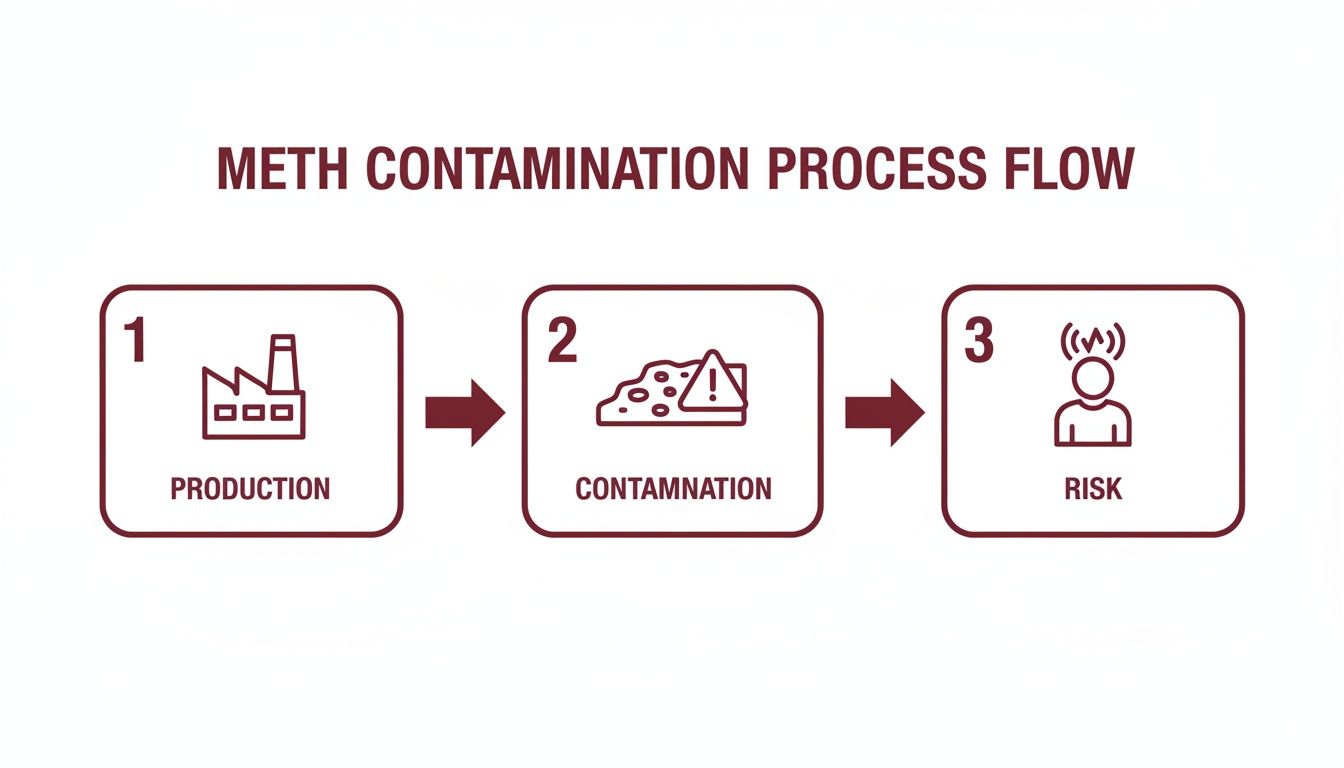
As the visual breakdown makes clear, the unseen contamination from a meth lab creates direct and significant health risks for anyone in the property, which is why a thorough, professional remediation strategy is absolutely essential.
The Science Behind Sealing the Threat
The real magic of the encapsulation method is in the chemistry of the coatings. These aren't your typical off-the-shelf paints or primers. We’re talking about industrial-grade polymers, like two-part epoxies and specialised polyurethanes, that are engineered for one job: total containment.
These materials are chosen specifically for three key properties:
- Low Permeability: They form a non-porous surface that volatile chemicals simply cannot pass through.
- Strong Adhesion: The coatings create a tenacious bond with all sorts of substrates—from concrete and brick to timber and metal—ensuring the barrier won't peel, chip, or fail.
- Chemical Resistance: They are built to withstand the harsh chemicals they are sealing in, so they won’t break down over time.
This science-driven approach is what guarantees the containment is both effective and permanent.
The Step-by-Step Encapsulation Process
A successful encapsulation project isn't a quick paint job; it's a strict, methodical process that has to be followed to the letter to ensure safety and compliance. While every site has its own quirks, the process generally follows these crucial stages.
- Initial Site Assessment and Planning: The first step is always a thorough evaluation by certified hygienists. They map out the extent and severity of the contamination, taking surface wipe samples that are sent to a lab for analysis. This tells them exactly what they're dealing with.
- Containment and Preparation: The contaminated zone is completely sealed off from the rest of the building. This is done with heavy-duty plastic sheeting and negative air pressure machines, which is a critical step to prevent any cross-contamination during the remediation work.
- Removal of Porous Items: Anything that can't be reliably decontaminated has to go. This includes carpets, curtains, and soft furnishings, which are carefully removed and disposed of as hazardous waste.
- HEPA Vacuuming: Next, every surface is meticulously vacuumed using industrial High-Efficiency Particulate Air (HEPA) filter vacuums. This important step removes any loose meth crystals and other fine particles before the wet cleaning starts.
- Surface Decontamination: A multi-stage washing process gets underway using specialised detergent solutions. This isn't just a simple wipe-down; it's a deep clean designed to remove surface-level contaminants and prepare the substrate for the encapsulant. To get a sense of how different cleaning processes work, it can be helpful to look at alternative methods in other fields, like The CitruSolution® Carpet Cleaning Process, which avoids over-wetting materials.
- Application of Encapsulant: With the surfaces clean and perfectly dry, the specialised coating is applied. This is typically done with an airless sprayer to get a uniform, seamless finish. It often takes multiple coats to build up the barrier to the required thickness.
- Curing and Verification: The coating needs time to fully cure, which can take several days. Afterwards, an independent, third-party industrial hygienist comes in to conduct post-remediation wipe sampling. This final check verifies that the encapsulation has worked and the area is safe for re-occupancy according to Australian standards.
This systematic process is absolutely crucial. Skipping any step, especially the initial deep clean or the final verification testing, can compromise the entire project and leave dangerous, hidden risks behind.
The encapsulation method for methamphetamine remediation has become a vital tool for professionals across Australia. With data showing that 1.6 million Australians have used meth, the problem of contaminated properties is far more common than many people realise. Clandestine labs can leave behind contamination levels 10 to 50 times above the safe limit, creating severe health hazards.
In fact, a SafeWork NSW trial showed that encapsulation could slash exposure risks by a massive 89%, allowing properties to be safely re-occupied within 72 hours. This makes it a powerful, science-backed solution for restoring safety to homes and workplaces affected by this hidden danger.
Key Materials and Technologies That Ensure Success
Picking the right materials is what makes or breaks a successful encapsulation method for methamphetamine remediation. This isn't a job for off-the-shelf paint or sealant. It’s a highly specialised process where the chemical makeup of the encapsulant is everything—it’s the key to locking away the contamination safely and permanently.
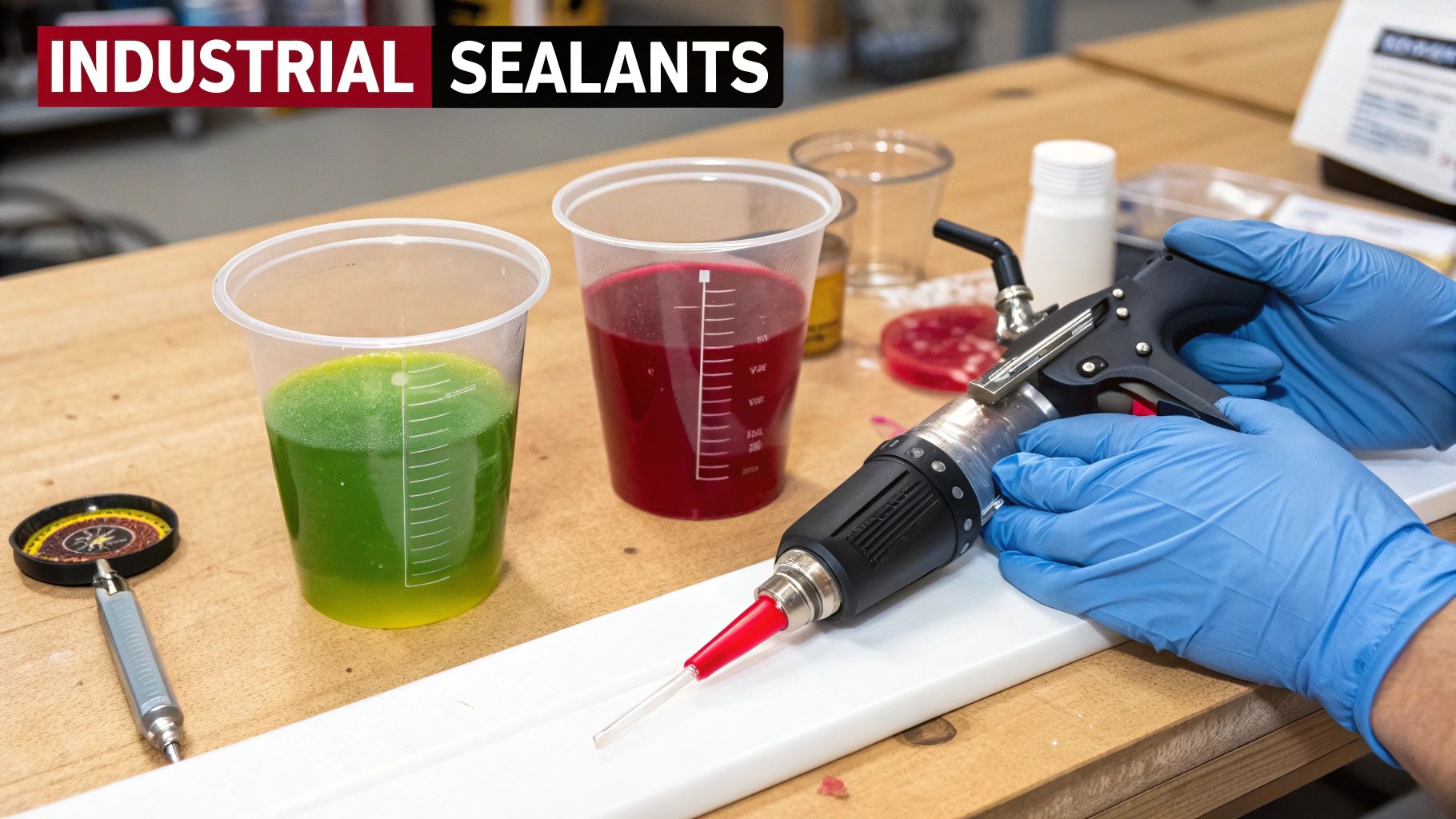
The products we use are industrial-grade coatings, specifically engineered to create a tough, impenetrable barrier. You won't find them at your local hardware store because they're designed for one purpose: to withstand harsh chemicals and contain hazardous residues for good.
Industrial-Grade Encapsulants and Their Properties
The go-to coatings for meth remediation are almost always high-performance, polymer-based products. When applied, they cure to form a seamless, non-porous film that stops toxic molecules dead in their tracks.
Two of the most trusted and effective types are:
- Two-Part Epoxies: Think of these as a resin and a hardener that, when mixed, spark a chemical reaction. The result is an incredibly tough, durable, and chemically resistant surface that bonds deep into substrates like concrete and timber. It’s almost impossible to peel or damage once cured.
- Specialised Polyurethane Coatings: Polyurethanes bring fantastic durability to the table, but with an added benefit: flexibility. This is vital in buildings where materials naturally expand and contract with temperature shifts. A flexible coating moves with the building, preventing cracks that could compromise the barrier.
Materials like elastomeric coatings are a perfect example of this, offering advanced durability and flexibility. Their ability to stretch and return to form ensures the containment barrier stays completely sealed for years to come.
The success of an encapsulation project hinges on the chemical makeup of the sealant. A proper encapsulant must have extremely low permeability to prevent off-gassing, superior adhesion to avoid delamination, and high chemical resistance to ensure it isn't degraded by the contaminants it is containing.
Matching the Coating to the Surface
There’s no one-size-fits-all solution in professional meth remediation. A certified technician will always assess the building materials first to choose the right coating for each surface. The aim is a perfect bond and total coverage, no matter how porous or textured the material is.
Here’s a look at how different surfaces are tackled:
- Porous Concrete: Unsealed concrete is like a sponge, soaking up meth residue deep inside. We typically start with a high-build, penetrating epoxy primer to seal those pores before applying multiple topcoats to build a thick, bulletproof barrier.
- Timber Framing and Subfloors: Timber is another highly porous material that needs a specific approach. Specialists use coatings designed to bond aggressively with wood fibres, making sure contaminants can't leach out in the future.
- Plasterboard (Drywall): While heavily contaminated plasterboard is usually ripped out, lightly affected areas can sometimes be sealed. This requires an encapsulant with exceptional adhesion that won’t damage the paper or gypsum core.
Getting this selection right is what makes the encapsulation method for methamphetamine remediation a permanent solution, not just a temporary patch-up.
Advanced Application Technology
Even the best materials on the market will fail if they’re not applied properly. To create that perfect, uniform barrier without any pinholes or weak spots, professionals rely on specialised equipment. The industry standard is the airless sprayer.
Unlike a roller or brush, which can leave an uneven texture, an airless sprayer atomises the coating under very high pressure. This forces the encapsulant into every tiny crack and crevice, creating a completely consistent layer. It’s not just faster; it delivers a far superior finish that’s absolutely essential for passing post-remediation clearance testing and meeting Australian occupational health and safety standards.
When is Encapsulation the Right Call for Meth Remediation?
Figuring out the best way to handle meth contamination isn't a simple, one-size-fits-all decision. While ripping out and replacing contaminated building materials is one way to go, encapsulation often proves to be the smarter, more practical choice in certain situations. Knowing when to deploy this technique is the key to a successful remediation that's both cost-effective and doesn't wreck the building.
Encapsulation really comes into its own when you're dealing with contamination on surfaces that are critical to the building's structure. I'm talking about the bones of the building—concrete foundations, timber framing, and subfloors. Tearing these out isn't just eye-wateringly expensive; it could jeopardise the structural integrity of the entire property.
In these instances, encapsulation offers a solid, reliable solution. It lets you lock away the chemical hazard without having to resort to destructive and often over-the-top demolition. You get to preserve the core structure of the property while making it completely safe for people to be in again.
Looking at the Level of Contamination
The severity of the contamination plays a huge role in what you decide to do. Encapsulation is the perfect strategy for properties with low to moderate levels of methamphetamine residue. If the initial lab tests show that contamination is present but hasn't soaked deep into every porous material, sealing up the affected surfaces is both an effective and efficient fix.
However, if you're facing extremely high levels of contamination, like those often found in former "super labs," you'll probably need a hybrid approach. This might mean pulling out heavily saturated materials like plasterboard and carpets but then encapsulating the more solid structures that lie beneath.
Key Scenarios Where Encapsulation Makes Sense
To help make the decision clearer, let's break down some specific scenarios where encapsulation is hands-down the better option. If you're a property manager or business owner, you should seriously consider this method when you’re up against the following:
- Contamination on Structural Elements: When load-bearing walls, concrete slabs, or timber frames are affected, encapsulation is often the only realistic choice that doesn't put the building's structure at risk.
- Need to Minimise Downtime: For any commercial or industrial property, every day it's closed is a day of lost revenue. Encapsulation is a much faster process than demolition and reconstruction, which means you can get your business back up and running far sooner.
- Working with a Tight Budget: The financial savings are significant. Encapsulation sidesteps the massive costs tied to demolition, specialised waste disposal, and rebuilding, making it a much more budget-friendly approach.
- Preserving Heritage or Unique Features: In buildings with architectural or historical value, encapsulation allows you to save original materials that would otherwise be lost forever.
The decision to encapsulate is often a strategic one, a careful balance of safety, cost, and business continuity. It offers a targeted response that deals with the contamination without causing unnecessary damage to the property itself.
The economic case for encapsulation is very strong. Our analysis shows this method can slash remediation costs by up to 40% compared to a full demolition and rebuild. During the peak of meth use between 2016 and 2019, more than 6,000 properties a year needed remediation, with most of them located in regional manufacturing hubs. For nationwide services, we always integrate this method with strict air monitoring to ensure we achieve safety thresholds below 1.5 micrograms per cubic metre. If you want to get a better sense of the scale of this problem, you can read more insights on Australia’s meth epidemic.
A Practical Checklist for Decision-Makers
When you're weighing up your options, run through this quick checklist. It will help you decide if the encapsulation method for methamphetamine remediation is the right fit for your property:
- What surfaces are actually contaminated? If the problem is on concrete, brick, structural timber, or subflooring, encapsulation should be high on your list.
- How bad is the contamination? Low-to-moderate contamination levels are a perfect match for encapsulation.
- Is the building structurally sound? If the property's bones are good, encapsulation helps keep them that way.
- How important is it to avoid downtime? For businesses that need to reopen their doors ASAP, encapsulation offers a much quicker turnaround.
- What's your remediation budget? If you're looking for the most cost-effective solution that still meets all compliance standards, encapsulation should be a top contender.
Meeting Regulatory Compliance and Verification Standards
Applying an encapsulant is a huge step forward in the remediation process, but it's not the end of the road. Before anyone can legally and safely re-enter the property, you need to prove the job was done right. This is where rigorous verification testing comes in, ensuring you meet Australia’s strict compliance standards and officially transform the property from a hazardous site back into a safe home or workplace.
This verification stage isn't optional. It’s the crucial final check that confirms the encapsulation method for methamphetamine remediation has successfully locked away the danger. Without it, you have no certified proof of safety, leaving you wide open to serious legal risks and endangering the health of future occupants.
The Role of Independent Hygienists
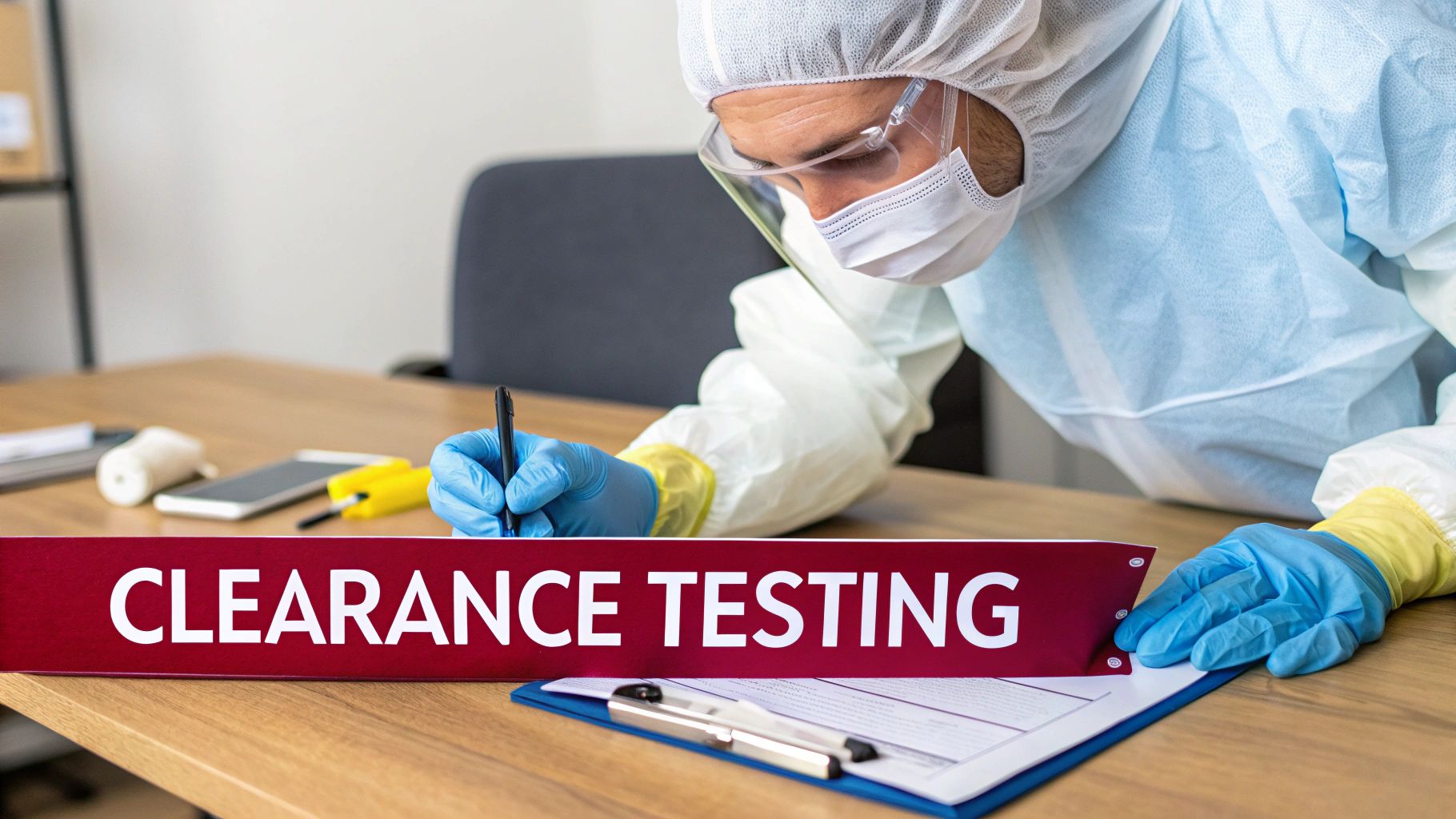
To guarantee absolute impartiality and scientific accuracy, all post-remediation testing has to be performed by an independent, third-party occupational hygienist. This professional has no affiliation with the remediation company, which means their results are unbiased and completely trustworthy. Their only job is to determine if the property meets the safety levels set by Australian health authorities.
This separation of duties is fundamental to ethical and compliant remediation. It gives property owners solid, science-backed proof that the site is safe, which is a must-have for getting a formal clearance certificate.
Post-Remediation Sampling Methods
The verification process isn't just a quick look-around; it involves precise scientific testing to hunt for any leftover contamination. Hygienists use standardised sampling techniques to make sure the results are accurate and can stand up in a legal setting.
These are the key methods they use:
- Surface Wipe Tests: A hygienist will use a template to mark out a specific area, usually 100 cm², and take wipe samples from multiple surfaces in the remediated zone. These samples are then sent to an accredited lab to test for any traces of methamphetamine, with the results measured in micrograms (µg).
- Air Quality Sampling: In certain situations, air monitoring might also be necessary. This checks for any harmful volatile organic compounds (VOCs) or chemical particles in the air, confirming the encapsulant barrier is doing its job and not letting anything escape.
Testing is always done strategically. Samples are taken from high-risk spots like former cooking areas, frequently touched surfaces, and near vents to get a complete picture of the property’s safety.
A clearance certificate is more than just a piece of paper; it is your legal guarantee that due diligence was performed and the property is safe for human habitation. It is the definitive final step in any professional meth remediation project.
Understanding Australian Safety Thresholds
Australia has clear guidelines that spell out what is considered a "safe" level of meth residue. While there can be minor differences between states, the nationally accepted benchmark for a remediated surface is 0.5 micrograms per 100 square centimetres (0.5 µg/100 cm²).
If all the lab results from the wipe samples fall below this critical number, the property passes clearance. The independent hygienist can then issue a clearance certificate, officially declaring the property safe for people to move back in. This document is essential for property records, insurance, and protecting your business from any future liability.
For a deeper dive into the whole journey, from initial testing to the final sign-off, our complete guide on property meth testing and decontamination cleaning offers more valuable insights.
Why Professional Remediation Is Non-Negotiable
Trying to tackle methamphetamine contamination yourself isn't just a bad idea—it's incredibly dangerous. The encapsulation method for methamphetamine remediation is a highly scientific process. It requires specific training, specialised gear, and the right materials that you simply can't find at a hardware store. Without that expert knowledge, you run a serious risk of making a hazardous situation much, much worse.
There’s absolutely no room for error here. One of the biggest mistakes we see in DIY attempts is poor surface preparation. If the surface isn't prepped correctly, the encapsulant will eventually peel, crack, or just fail to stick properly. This creates tiny gaps that let toxic residue continue to seep out, re-contaminating the space. You’re left with a false sense of security while the underlying danger is still very much present.
The Dangers of an Amateur Approach
Cleaning up a former meth lab means handling genuinely hazardous materials, and that demands strict safety measures. Without the right Personal Protective Equipment (PPE) and proper containment strategies, you’re exposing yourself to direct chemical contact or inhalation, which can lead to serious, long-term health problems.
There's also the massive risk of cross-contamination. It’s frighteningly easy for someone without training to spread the invisible toxic residues from one room to another, turning a localised issue into a whole-property disaster. Not only does this drive up the final remediation cost, but it also amplifies the health risk for everyone.
Bringing in a professional isn't just about getting the job done properly; it's about guaranteeing your property is safe, legal, and truly clean. When health and safety are on the line, there are no shortcuts.
The Unmatched Value of Certified Professionals
Hiring a certified remediation company offers a level of assurance that a DIY job could never provide. Professionals don't guess—they follow a systematic, evidence-based approach to ensure the outcome is both safe and legally compliant.
Here’s what a certified team brings to the table:
- Accurate Site Assessment: They start with scientific testing to map out the exact extent and concentration of the contamination. Nothing gets missed.
- Correct Material Selection: Professionals have access to industry-grade encapsulants and know exactly which product works best for different surfaces, ensuring a permanent, robust seal.
- Strict Safety Protocols: Certified technicians are trained in handling hazardous materials. They use proper containment and ventilation to protect themselves, the occupants, and the property itself.
- Guaranteed Clearance: The job isn't finished until an independent hygienist verifies that the property meets Australia's stringent safety standards. This provides you with a legally recognised clearance certificate.
At the end of the day, dealing with meth contamination is a specialised field far beyond the scope of any standard cleaning or renovation work. Partnering with an experienced team is the only way to protect your health, your property value, and your legal standing. The first step is always to get expert advice to make sure you’re meeting all the necessary standards. For guidance on navigating these complex safety requirements, learn more about what a qualified occupational hygiene consultant can do for you.
Frequently Asked Questions
When you're dealing with the complexities of methamphetamine remediation, it's natural to have questions. Let's walk through some of the most common queries we hear from property managers and business owners about using encapsulation to solve the problem.
How Long Does an Encapsulated Surface Last?
This is one of the biggest questions people have, and the answer is reassuring. When an encapsulated surface is applied correctly by certified professionals, it's engineered to last for the lifetime of the building itself.
We’re not just talking about a coat of paint here. The industrial-grade epoxy and polyurethane coatings create a permanent, incredibly durable barrier by chemically bonding to the surface underneath. This engineered solution is built to resist peeling, cracking, and chemical breakdown, ensuring those dangerous residues stay safely and permanently locked away. The key to this longevity, of course, is expert application.
Is Encapsulation Safe for All Environments?
Absolutely. The encapsulation method is a safe and proven solution across all sorts of commercial and industrial settings. Once the specialised sealant has fully cured, it forms a non-toxic, inert surface that presents no health risk to anyone in the building.
It's a trusted approach used in many different environments, including:
- Manufacturing Plants: Perfect for application on concrete floors and structural steel.
- Warehouses: An ideal solution for large, open areas with vast concrete or brick surfaces.
- Commercial Offices: It can be applied to subflooring and structural framing during major refurbishments.
The final surface is completely stable and doesn't release any fumes (off-gas), making it a reliable choice for guaranteeing long-term safety in the workplace.
What Is the First Step if I Suspect Contamination?
If you have any reason to suspect your property is contaminated, the most important thing to remember is do not try to clean it yourself. Your first and most critical step is to call a certified occupational hygienist or a specialised remediation company immediately.
The first move you make is crucial for safety. A professional will start by conducting preliminary tests, using surface wipe samples to confirm if methamphetamine residues are present and, if so, at what concentration. This hard data is the essential foundation for creating a safe and effective cleanup plan.
At Anitech, we specialise in providing expert guidance and professional solutions for methamphetamine contamination in workplaces across Australia. Our certified team ensures your property is remediated to the highest safety standards, protecting your employees and your business. Contact us for a confidential consultation at https://occhygiene.com.au.


