
When you hear about Diesel Particulate Matter (DPM), what probably comes to mind is the puff of black smoke from a truck or a generator. But the real danger lies in what you can't see. DPM exposure is the inhalation of this microscopic soot, and it's a serious workplace hazard precisely because these particles are so tiny. They can easily bypass your body's natural defences, travelling deep into the lungs and, in some cases, even entering the bloodstream.
What Is DPM and Why Does It Matter?

Think of it like trying to catch smoke with a fishing net. The gaps in the net are just too big, letting the smoke drift straight through. That’s a pretty good picture of how Diesel Particulate Matter (DPM) interacts with your respiratory system. The particles are incredibly small—often less than one micrometre across—so they slip right past the natural filters in your nose and throat.
This is what makes DPM exposure a serious occupational health risk. While larger dust particles get trapped and coughed out, DPM can settle deep inside the delicate tissues of your lungs, leading to inflammation and lasting damage. The smallest of these particles can even get into your circulatory system, carrying the risk to other organs.
To better grasp the fundamentals, this table breaks down the key concepts, sources, and the Australian industries most at risk.
Understanding Key DPM Exposure Concepts
A quick overview of DPM fundamentals, its sources, and the Australian industries most affected.
| Concept | Simple Explanation | Industries at High Risk |
|---|---|---|
| Diesel Particulate Matter (DPM) | Microscopic soot and particles created by burning diesel fuel. So small it can be inhaled deep into the lungs. | Mining, Construction, Transport |
| Elemental Carbon (EC) | A key chemical component of DPM, often used as a marker to measure exposure levels in the workplace. | Underground Mining, Tunnelling |
| Occupational Exposure | The level and duration of a worker's contact with a hazardous substance like DPM during their job. | Agriculture, Logistics, Ports |
Understanding these basics is the first step toward recognising and managing the risk in your specific workplace.
Identifying High-Risk Australian Industries
Here in Australia, our reliance on diesel-powered machinery means certain industries are on the front line of DPM exposure. Pinpointing which sectors are most affected is crucial for protecting workers.
Often, workers in these fields are using heavy equipment in enclosed or poorly ventilated spaces, which allows harmful exhaust fumes to build up. The main industries wrestling with this challenge include:
- Mining: Especially in underground mines where fresh air is scarce. Diesel engines power everything from drills and loaders to haul trucks.
- Construction: Building sites are hives of diesel activity, with excavators, bulldozers, cranes, and generators all pumping out DPM.
- Transport and Logistics: Truck drivers, forklift operators, and warehouse staff face constant exposure, particularly at distribution centres, ports, and rail yards.
- Agriculture: Tractors, harvesters, and other essential farm machinery are nearly all diesel-powered, putting farm workers at risk, especially during busy seasons.
The Real-World Impact on Australian Workers
These risks aren't just theoretical; they’re backed by hard data from workplace monitoring. Take the Australian mining industry. A huge dataset with over 8,666 personal monitoring results painted a very clear picture. It showed underground miners faced median elemental carbon exposures of around 0.069 mg/m³—significantly higher than the 0.038 mg/m³ for workers on the surface.
The health effects followed suit. A staggering 29% of Western Australian miners reported having at least one respiratory symptom, with coughing being the most common at 16%. For a deeper dive, you can explore more detailed research on DPM exposure in Australian mining.
This data highlights a crucial point: your work environment directly influences your level of DPM exposure. An underground miner using diesel equipment faces a fundamentally different risk profile than a truck driver on an open highway.
Recognising these risks is more critical now than ever, as Australia is on the verge of tightening its regulations. These impending changes mean businesses need to get proactive about monitoring and controlling DPM now. It's not just about ticking a compliance box; it's about protecting the long-term health of your people.
The Health Consequences of DPM Exposure
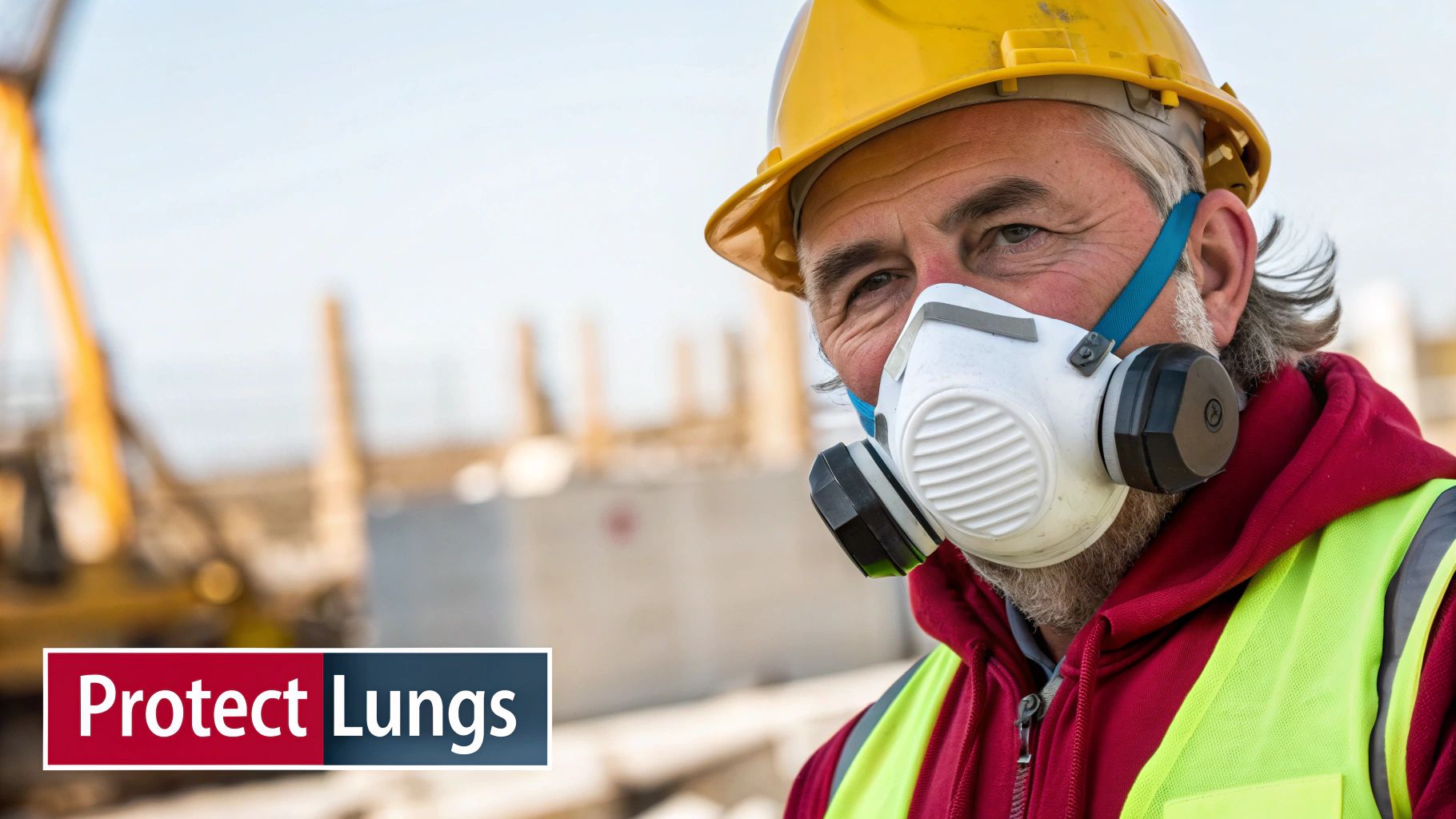
It’s one thing to understand the technical side of Diesel Particulate Matter, but the real urgency comes from what it does to the human body. Because these particles are microscopic, they bypass the body's natural defences and travel deep into the lungs, setting off a chain reaction of health problems that range from mild irritation to life-threatening disease.
Make no mistake: DPM exposure isn't just a compliance box to tick. It's a direct threat to your workers' wellbeing, with effects that can show up right away or develop silently over many years.
Short-Term Health Effects
Straight after being exposed to DPM, a worker might start experiencing symptoms that are all too easy to brush off as a cold or hay fever. These are the body's first warning signs, and they should never be ignored, especially if they keep happening at work.
The most common immediate effects are respiratory. Think of it as the body’s defence system being overwhelmed by invaders.
- Respiratory Irritation: A nagging cough, a scratchy throat, or a feeling of tightness in the chest are classic giveaways.
- Eye and Nose Irritation: Workers might find their eyes are watering or burning, or they suddenly have a runny nose.
- Asthma and Allergy Triggers: For anyone with asthma, DPM can be a serious trigger, causing severe attacks and making symptoms much worse.
- Headaches and Nausea: In poorly ventilated areas where DPM concentrations are high, some people report headaches, dizziness, and feeling sick.
Often, these symptoms get better when the worker leaves the site. That’s a massive clue that the work environment is the root cause. Proactively monitoring lung function is a smart move, and you can learn more about spirometry for securing employee health in our detailed guide.
The Severe Long-Term Consequences
The true danger of DPM is what happens over months and years of breathing it in. This isn't about a single bad day; it's the cumulative damage from constant inflammation and cellular stress that leads to severe, irreversible health conditions.
One of the gravest risks is cancer. The International Agency for Research on Cancer (IARC) classifies diesel engine exhaust as a Group 1 carcinogen. This isn't a "maybe" or a "possibility"—it means it is definitively known to cause cancer in humans. This puts it in the exact same risk category as asbestos and tobacco smoke.
"The classification of diesel exhaust as a Group 1 carcinogen was a landmark moment. It solidified what many in the occupational hygiene field knew for years: that prolonged DPM exposure poses a direct and proven threat of lung cancer to workers."
But cancer is just one piece of the puzzle. Chronic exposure is tied to a whole list of other debilitating diseases that often develop quietly, without any obvious symptoms until the damage is already done.
- Chronic Obstructive Pulmonary Disease (COPD): This covers conditions like chronic bronchitis and emphysema, which make it harder and harder to breathe over time.
- Cardiovascular Disease: The tiniest DPM particles can slip from the lungs into the bloodstream, causing inflammation that can lead to heart attacks, strokes, and high blood pressure.
- Ischaemic Heart Disease: DPM exposure has been linked to a higher risk of heart problems caused by narrowed arteries.
The risk is directly tied to how much DPM is in the air. A key Australian assessment found that roughly 29% of male workers and 6% of female workers had some level of occupational exposure to diesel emissions. Health models predicted that a time-weighted average exposure of just 0.011 mg/m³ could lead to 4 extra lung cancer deaths per 100,000 workers. At higher exposure levels, that risk skyrockets to 4 deaths per 1,000 workers.
These aren't just statistics; they represent a clear and compelling reason for robust safety measures. Protecting your team from DPM is about more than just meeting regulations—it's about preventing life-altering diseases and safeguarding their health for the long run.
Big Changes to Australia’s DPM Exposure Rules
If your business deals with diesel engines, you need to know that the goalposts for managing DPM exposure are moving—and moving significantly. For a long time, we've operated under a single safety benchmark. But as we've learned more about the very real health risks, the need for tighter controls has become undeniable. This isn't just a minor tweak; it's a complete rethink of what a safe worksite looks like.
At the centre of all this is the Workplace Exposure Limit, or WEL. The easiest way to think of a WEL is as a safety ceiling for nasty stuff in the air. It’s the highest concentration of a substance, like DPM, that someone can be exposed to over a standard work week without putting their health at an unacceptable risk.
For years, Australia's WEL for DPM was set at 0.1 mg/m³. This has been the go-to number for everyone from miners to transport operators. The problem is, a mountain of scientific evidence now shows that this limit just isn't low enough to properly protect workers from the long-term health problems we've covered.
The Exposure Limit is Dropping—By a Factor of Ten
Here’s the most important takeaway for Australian businesses: the DPM exposure limit is being drastically reduced. Safe Work Australia is bringing in a new WEL, slashing the acceptable concentration from 0.1 mg/m³ all the way down to just 0.01 mg/m³.
Let’s be clear: this is a tenfold reduction. It’s a huge shift. Imagine a cup of coffee. The old standard was like allowing one teaspoon of sugar. The new standard is like saying you can only have one-tenth of that teaspoon. That's the level of change we're talking about.
This isn’t a decision made on a whim; it's driven entirely by health science. Research has firmly established the link between long-term DPM exposure and serious health issues, especially its classification as a Group 1 carcinogen. The new, lower limit is designed to dramatically cut the lifetime risk of workers developing lung cancer and other chronic diseases.
The move to a 0.01 mg/m³ limit brings Australia in line with global best practices. It’s an admission that even at levels once considered "safe," a real risk to people's health remains.
What This Means for Your Business
For any business in a high-risk industry, this new regulation is a game-changer. Just getting by under the old standard won't cut it anymore. It's time to pull apart your entire DPM management plan and figure out how to meet this much tougher requirement.
The time to prepare is right now. If you wait until the new limit is enforced, you'll be playing catch-up, which could leave your workers exposed and your business non-compliant.
Here are a few things that need your immediate attention:
- Review Your Current Controls: Are your ventilation systems, engine maintenance schedules, and work procedures good enough to slash DPM levels by 90%? For many, the answer will be no.
- Look at New Technology: This is the perfect prompt to investigate retrofitting older gear with Diesel Particulate Filters (DPFs). It might even be the trigger to start planning a shift towards newer, low-emission engines or even electric vehicles.
- Upgrade Your Monitoring: To accurately measure these much lower concentrations, your DPM monitoring will need to be far more sensitive and precise.
This regulatory shift marks a new chapter for workplace safety in Australia. It forces us to be proactive about managing DPM exposure, not just reactive. The businesses that get on the front foot won’t just be compliant; they'll be building a healthier, safer, and more sustainable workforce for years to come.
How to Set Up a DPM Monitoring Program
Knowledge is power, and when it comes to managing Diesel Particulate Matter, a solid monitoring program is your most critical tool. It's the only real way to know your workplace's risk profile, prove your control measures are actually working, and make smart decisions to protect your people. If you're not measuring, you're just guessing.
Putting a monitoring program in place takes the guesswork out of the invisible threat of DPM exposure. It turns an abstract risk into hard data, giving you the evidence needed to meet Australia’s tougher regulations and simply create a healthier place to work. The whole process boils down to picking the right methods, setting a clear strategy, and knowing what to do with the results.
Personal vs. Area Monitoring
First things first: you need to decide what you're trying to measure. There are two main ways to go about monitoring DPM, and each answers a different—but equally important—question about your workplace.
-
Personal Exposure Monitoring: This is the gold standard for figuring out an individual's actual risk. A small, lightweight sampling device is attached to a worker's collar, right in their breathing zone. It goes where they go all shift, collecting a sample that shows exactly what they're inhaling as they move around and do different jobs.
-
Static Area Monitoring: This approach means placing monitoring gear in a fixed spot to measure the general DPM concentration in one area, like a workshop, an underground tunnel, or a loading bay. It’s perfect for finding DPM "hotspots," checking how well your ventilation is working, and getting a handle on background exposure levels.
While area monitoring gives you a great snapshot of the environment, it's personal monitoring that provides the most accurate data for a true health risk assessment. A really thorough program will often use a mix of both to build a complete picture of DPM exposure across the site.
Choosing Your DPM Monitoring Method
Once you've decided what you want to measure, you need the right tools for the job. Monitoring technology ranges from devices that give you instant feedback to traditional lab-based methods that provide incredibly detailed analysis.
Real-time monitors are brilliant for on-the-spot checks, letting you quickly identify high-risk tasks or areas that need immediate attention. On the other hand, traditional gravimetric sampling—which involves collecting particles on a filter and weighing them in a lab—gives you the precise data needed for official compliance reporting against Workplace Exposure Limits (WELs).
A well-rounded diesel particulate matter monitoring strategy often blends both approaches, giving you the best of both worlds: instant insights and compliant, high-accuracy data.
To help you decide, here’s a quick breakdown of the common options.
Choosing Your DPM Monitoring Method
A comparative look at common DPM monitoring techniques to help you select the right approach for your workplace.
| Monitoring Method | Best For | Key Benefits | Potential Downsides |
|---|---|---|---|
| Gravimetric Sampling (NIOSH 5040) | Official compliance reporting and baseline exposure assessments. | The recognised "gold standard" for accuracy. Provides precise, legally defensible data against WELs. | Results aren't immediate (requires lab analysis). Doesn't show exposure peaks during a shift. |
| Real-Time Aerosol Monitors | Identifying hotspots, testing control effectiveness, and providing immediate worker feedback. | Instantaneous readings. Great for "what-if" scenarios and tracking changes in real time. | Less specific than lab methods (can be affected by other dusts). Not typically used for official compliance reporting on its own. |
| Aethalometers | Continuous area monitoring and tracking long-term trends in DPM levels. | Provides continuous, specific measurement of black carbon, a key component of DPM. | Higher initial equipment cost. Primarily for fixed-area monitoring, not personal sampling. |
Ultimately, the best method—or combination of methods—depends entirely on your specific goals, from ticking a compliance box to actively driving down exposure levels on the ground.
Developing a Robust Monitoring Strategy
A successful monitoring program isn't just about buying some equipment; it requires a plan. You need to clearly define your goals. Are you trying to verify compliance with the new 0.01 mg/m³ WEL? Or are you testing how well a new ventilation system is performing?
Your strategy should map out a few key things to make sure the data you collect is meaningful and leads to real action.
- Frequency of Testing: How often should you monitor? It all comes down to risk. High-risk environments might need frequent or even continuous monitoring, while lower-risk areas could be tested quarterly or annually.
- Location and Duration: Think carefully about where to put static monitors to get representative data. For personal monitoring, select workers whose roles cover a range of different exposure scenarios. Sampling should almost always cover a full work shift to calculate an accurate time-weighted average.
- Data Interpretation: Getting the data is only half the job. You have to compare your results against the WEL and use what you find to make changes. If levels are high, it’s a clear signal that your current controls aren't cutting it and need an upgrade.
Recent data from the Western Australian mining sector really drives home the value of consistent monitoring. Over a decade, from 2014 to 2024, average DPM concentrations trended downwards, staying below the old 0.1 mg/m³ standard. But here's the kicker: the same data showed that fewer than 30% of samples met the stricter 0.01 mg/m³ limit that's coming in 2026. This is a perfect example of how monitoring not only confirms progress but also flags future compliance gaps that need to be addressed now. You can learn more about these DPM exposure findings in the mining industry and see why this kind of data is so crucial.
Effective Strategies to Control DPM Exposure
Once your monitoring has given you a clear picture of your workplace's risk profile, it’s time to take decisive action. Effectively controlling DPM exposure isn't about finding a single magic bullet; it's about building a multi-layered defence system based on a proven safety framework known as the hierarchy of controls.
This framework is all about prioritising the most effective and permanent solutions over those that are less reliable. Think of it like building a fortress. Your strongest defences are the high outer walls (elimination and substitution), not just the guards at the gate (personal protective equipment). By working your way down the hierarchy, you can systematically reduce risk and create a genuinely safer environment.
This infographic provides a clear visual of how to structure a robust control strategy, moving from the most effective methods down to the least.

As you can see, a successful DPM control program starts with a clear strategy. This then informs the methods you use, which ultimately generates the data you need to check that your controls are actually working.
Starting at the Top: Elimination and Substitution
The most powerful way to control a hazard is to get rid of it completely. This is the simple but powerful idea behind elimination and substitution, the two most effective strategies right at the top of the hierarchy.
Elimination means removing the source of DPM altogether. While this might sound like a massive undertaking, it’s becoming more and more achievable. A great example is switching out diesel-powered forklifts for electric models inside a warehouse. Just like that, you've completely eliminated the DPM hazard in that space.
Substitution is the next best thing. Here, you replace a high-emitting source with a cleaner alternative. Some simple but highly effective substitutions include:
- Switching to low-emission diesel fuels or biofuels, which produce significantly less particulate matter.
- Upgrading older, dirtier Tier 1 or Tier 2 engines to modern, cleaner Tier 4 engines that have advanced emission controls built right in.
While these options require an initial investment, they deliver the biggest and most lasting reductions in DPM exposure.
Engineering Controls: Capturing DPM at the Source
When you can't eliminate or substitute the diesel engine, the next step is to use engineering controls to physically separate people from the hazard. These are design-based changes to the workplace, equipment, or processes that reduce exposure.
One of the most effective engineering controls is fitting vehicles with Diesel Particulate Filters (DPFs). A DPF is a device installed in the exhaust system that can capture and remove over 95% of DPM before it even enters the workspace. Implementing effective engineering controls and safe operating procedures, such as specific forklift safety protocols, are essential steps.
Other critical engineering controls include:
- Ventilation Systems: In enclosed spaces like underground mines or workshops, installing powerful local exhaust ventilation (LEV) systems can grab fumes right at the source and vent them safely away.
- Isolated and Pressurised Cabins: Making sure cabins on heavy machinery are properly sealed and have their own filtered air supply creates a clean-air bubble for the operator, even when they’re working in a high-DPM environment.
Administrative Controls: Changing How People Work
Next down the hierarchy are administrative controls. These focus on changing work practices and procedures to limit exposure. These controls don't remove the hazard itself, but they can significantly reduce a worker's contact with it.
Administrative controls are all about smart scheduling and safe work habits. They rely on people following the rules, which makes them less reliable than engineering solutions, but they are still a vital part of a complete safety plan.
Effective administrative controls include:
- Creating No-Idle Zones: Banning unnecessary engine idling in sensitive areas, like near building air intakes or inside workshops.
- Job Rotation: Limiting how long any single worker spends on high-exposure tasks by rotating them into other roles throughout the day or week.
- Regular Maintenance: Sticking to a strict engine maintenance schedule ensures engines run efficiently and produce the minimum possible DPM.
Personal Protective Equipment: The Final Line of Defence
At the very bottom of the hierarchy sits Personal Protective Equipment (PPE). This includes items like respirators, which should only ever be used as a last resort when all other control measures aren’t enough to bring exposure below the workplace exposure limit.
PPE is crucial, but it has its limits. It only protects the person wearing it, and its effectiveness depends entirely on whether it’s selected, fitted, and used correctly every single time. A proper respiratory protection program is essential to ensure this final layer of defence works as intended. For anyone relying on this method, it's worth understanding the steps for implementing a respiratory protection program to ensure it is managed effectively.
By applying this layered approach, you can build a robust defence against DPM exposure that protects workers from every angle.
Your Action Plan for a DPM-Safe Workplace
Dealing with Diesel Particulate Matter isn't a one-and-done task you can simply tick off a list. It’s about building safety into the DNA of your daily operations. This means getting everyone on board, from management right through to the crew on the ground, so they understand the risks and can work together on the solutions.
When you pull it all together—the serious health risks, Australia's tough new regulations, and the control methods that actually work—it’s clear that managing DPM proactively is non-negotiable. The goal isn't just about ticking compliance boxes anymore; it's about creating a genuinely healthy workplace where every single person is shielded from this invisible threat.
A truly DPM-safe workplace is built on shared responsibility. It needs leadership to invest in safer gear and it needs workers to be committed to following best practices, day in and day out.
Building a Lasting Safety Culture
A solid plan is more than just a one-off audit or a new piece of equipment. It’s about fostering a culture where safety is a constant loop of assessing, improving, and learning. This is the kind of forward-thinking that ensures your workplace not only meets today's standards but is ready for whatever comes next.
This involves a few key actions that work together to create a powerful safety system.
- Keep Training Fresh: Run regular training sessions to make sure your team is always up-to-date on the health risks of DPM exposure and the specific control measures you have in place.
- Commit to Monitoring: Don't treat DPM monitoring as an afterthought. Make it a standard part of how you operate, and use that data to prove your controls are working and to spot new areas for improvement.
- Empower Your People: Create an environment where workers feel comfortable reporting potential hazards or symptoms without any fear of comeback. They’re your best eyes and ears on the job site.
- Plan Ahead: Put together a long-term strategy for phasing out older, high-emission diesel engines and bringing in cleaner alternatives.
For a broader look at building a safe environment, it helps to understand the fundamentals of effective workplace safety procedures which apply across all industries.
Your Path Forward
At the end of the day, protecting your team from DPM is an achievable goal. With the right strategies, the right technology, and a real commitment from every level of your organisation, Australian industries can successfully adapt to the new standards.
This is about more than just avoiding fines. It’s a genuine investment in the long-term health and wellbeing of your most important asset—your people. By taking on this challenge head-on, you're helping build a safer, more sustainable future for everyone in your industry.
Your DPM Questions Answered
When it comes to Diesel Particulate Matter, a lot of questions can come up. We've put together clear, straightforward answers to some of the most common ones we hear, helping you get a better handle on DPM and how to manage it in your workplace.
What Are the First Signs of Harmful DPM Exposure?
The early warning signs of too much DPM exposure can easily be mistaken for a bad cold or a nasty bout of allergies that just won't clear up. Think a nagging cough, feeling short of breath, a tight chest, or irritation in your eyes, nose, and throat.
If you already have a condition like asthma, you'll likely find these symptoms flare up much more easily. One of the biggest clues is noticing that you feel a lot better when you’re away from work, like over the weekend or on your days off.
Catching these signs early and reporting them isn't just important for your own health—it's a critical signal for your workplace to take a closer look at its safety controls and find any potential DPM exposure hotspots.
How Does a Diesel Particulate Filter Actually Work?
A Diesel Particulate Filter, or DPF, is a clever bit of engineering that acts like a highly advanced trap inside a diesel engine's exhaust. Its whole purpose is to physically catch the solid soot particles—the DPM—before they can escape into the atmosphere.
Think of it as a microscopic net that’s fine enough to catch smoke. As the exhaust gases pass through it, the DPF grabs more than 95% of those dangerous particles.
But the filter doesn't just fill up and clog. It cleans itself through a process called 'regeneration', where it uses high heat to burn the trapped soot into a tiny amount of ash. This clears the filter out, readying it to keep capturing new particles effectively. By dealing with DPM right at the source, DPFs are a foundational piece of modern exposure control.
Are Newer Diesel Engines Safer When It Comes to DPM?
Absolutely. Modern diesel engines are a world away from their older counterparts. Engines designed to meet today's strict emissions standards, like Euro 6, are built with sophisticated technology that slashes the amount of DPM they generate.
This includes features like high-pressure common rail fuel injection, exhaust gas recirculation (EGR), and, crucially, DPFs installed straight from the factory. All these systems work in concert to produce exhaust that is dramatically cleaner.
The biggest risk for high DPM exposure almost always comes from older, poorly maintained gear, especially when it's running in confined or poorly ventilated spaces. A smart DPM management plan involves looking at the age and condition of your diesel fleet and planning to either upgrade or retrofit older machines with modern emission controls. It's a vital step for meeting Australia's new, tougher exposure limits and keeping your team safe.
At Anitech Ltd Pty, we provide expert occupational hygiene services to help Australian businesses get on top of complex safety challenges like DPM exposure. Our team offers comprehensive monitoring, risk assessment, and control strategy development to ensure your workplace is safe, compliant, and healthy. Protect your workforce by partnering with the experts. Learn more about our nationwide services at https://occhygiene.com.au.


