
Think of a consulting occupational hygienist as your workplace's health detective. Their entire focus is on spotting, sizing up, and getting rid of the invisible hazards that can lead to injury, sickness, or chronic health problems down the track. This goes way beyond a simple safety check; they use hard science to shield your team from the dangers you can't always see.
The Scientific Guardian of Your Workplace
A consulting occupational hygienist is a specialist, trained in both the science and the art of protecting people's health at work. While a safety officer might be looking out for immediate physical dangers like slips and trips, the hygienist is digging deeper. They’re the expert who investigates the less obvious threats—the chemical, physical, biological, and ergonomic hazards that can cause serious long-term damage.
At its core, their role is proactive. Rather than just reacting after someone gets sick, they use scientific measurement and analysis to find and neutralise health risks before they can cause harm. This takes a solid understanding of things like toxicology, epidemiology, and engineering to develop control strategies that protect not just your workers, but your business as well. To really get your head around their role, you can explore our detailed guide on what an occupational hygienist does.
Anticipating and Managing Hidden Risks
The main job of a consulting hygienist is to manage health risks using a clear, systematic process. This isn’t about just ticking boxes for compliance; it's about building a workplace that is genuinely safe and keeps your people productive.
Their work usually follows a proven path:
- Anticipation: Looking ahead to identify potential hazards that might come with new machinery, materials, or ways of working.
- Recognition: Carrying out detailed walkthroughs and assessments to find existing health risks, like dust in the air or dangerously high noise levels.
- Evaluation: Using specialised gear to measure exactly how much exposure workers are getting and comparing those numbers to official occupational exposure limits.
- Control: Recommending and helping to implement practical solutions. This could be anything from better ventilation systems to changes in work schedules or ensuring the right personal protective equipment (PPE) is used correctly.
Following this methodical approach means your workplace safety decisions are based on solid data, not just guesswork.
A Profession of Growing Importance
These specialised skills are more critical now than ever before. In Australia, the demand for consulting occupational hygienists has shot up, which shows just how seriously businesses are taking workplace health and safety. In fact, data reveals that the number of 'Occupational and Environmental Health Professionals' jumped by almost 78% between 2001 and 2021. This growth is being pushed by tougher regulations and a much better understanding of health risks in industries like mining, construction, and manufacturing.
"So much of occupational hygiene is interacting with all levels of an organisation. It's talking to the wage roll people in a way they can understand. But it's also talking to the top company officials so that they understand what the issues are and will properly support any fixes to control exposures."
When you bring in a consulting occupational hygienist, you’re not just hiring a contractor. You’re gaining a strategic partner who can help protect your most valuable asset—your people—while also protecting your company's bottom line and reputation.
Core Services for a Safer Workplace
A consulting occupational hygienist goes way beyond a simple safety checklist. Their job is to bring a scientific, proactive approach to managing and controlling the health risks that might be hiding in plain sight within your workplace.
Think of their services as the practical, on-the-ground application of deep expertise. They turn abstract safety goals into real-world, measurable protections for your team. Each service fits together, building a robust and resilient health and safety system from the ground up.
At the heart of their work is a comprehensive Risk Assessment. This isn't just a quick walk-through to spot the obvious trip hazards. It’s a methodical deep dive to uncover the hidden threats before they can cause harm. A hygienist will scrutinise your processes, materials, and work environments to identify potential chemical, physical, biological, and ergonomic hazards.
Pinpointing Dangers With Exposure Monitoring
Once potential risks are on the radar, the next step is to figure out just how serious they are. This is done through Exposure Monitoring, and it's where the real science comes into play. A consulting hygienist uses specialised, calibrated equipment to measure exactly what your employees are exposed to and, just as importantly, for how long.
This process replaces guesswork with hard data. It gives you concrete facts to work with. Key monitoring activities usually involve:
- Air Sampling: Measuring the concentration of airborne nasties like dust, fumes, vapours, and gases. For example, understanding the risks from silica dust is a massive concern in construction and manufacturing. You can learn more about the specifics of the process by reading about air monitoring for silica dust.
- Noise Surveys: Using dosimeters and sound level meters to map out noise levels across your site. This helps pinpoint which employees are most at risk of permanent hearing loss.
- Vibration Analysis: Assessing exposure to hand-arm or whole-body vibration from using power tools or operating heavy machinery.
- Thermal Stress Assessments: Evaluating the real-world risks of heat or cold stress in physically demanding environments, like foundries or cold storage facilities.
Developing Practical Control Strategies
Gathering all that data is one thing, but what you do with it is what really counts. The true value a consulting hygienist brings is in developing effective Control Strategies that actually work in the real world. They use a tried-and-tested framework called the 'hierarchy of controls' to prioritise the most effective and sustainable solutions.
This infographic breaks down the core principles of an occupational hygienist's role, showing the essential functions of identifying, evaluating, and controlling workplace hazards.
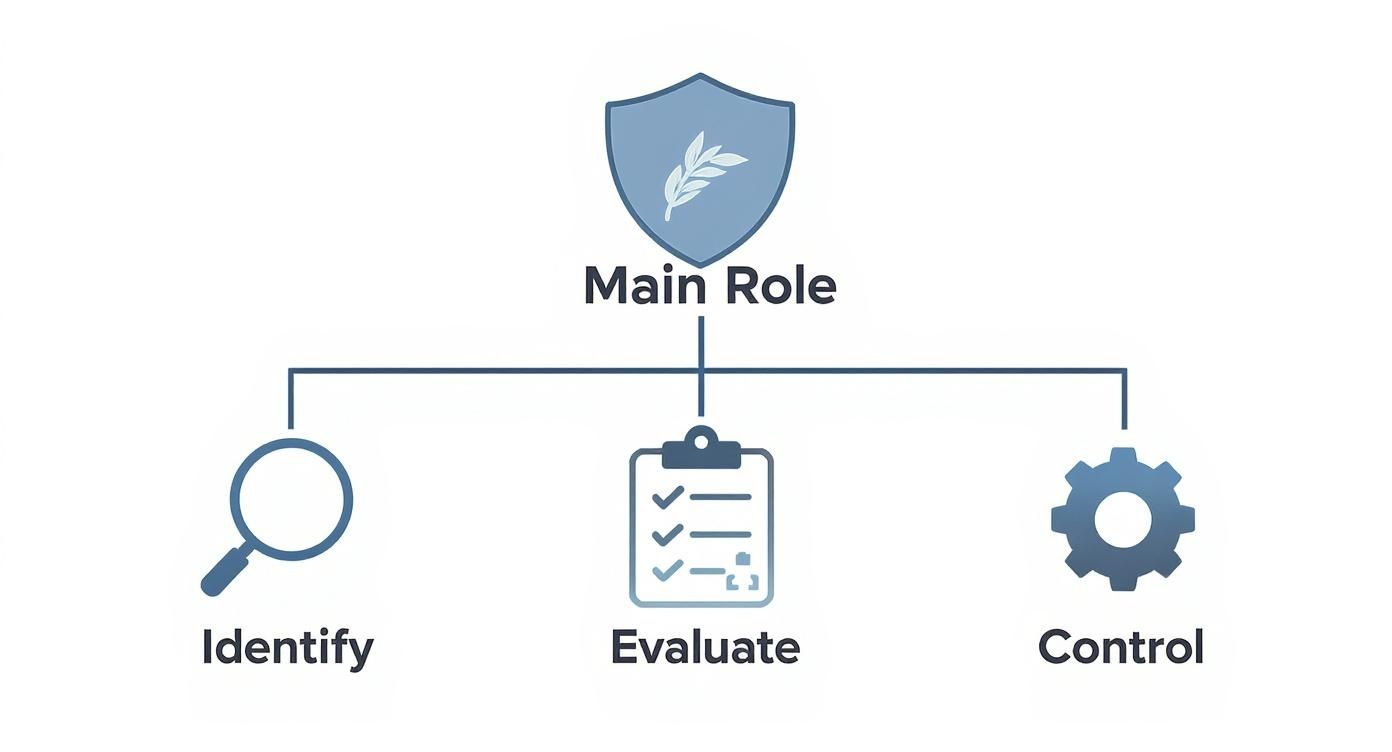
As the diagram shows, control is the final and most critical action. It's what happens after a hazard has been thoroughly identified and its risk properly evaluated.
The hierarchy prioritises actions from most effective to least:
- Elimination: Can you get rid of the hazardous chemical or noisy process entirely? This is always the best option.
- Substitution: If you can't eliminate it, can you swap it for something safer? Think about using a less toxic solvent or a quieter piece of equipment.
- Engineering Controls: Can you physically isolate people from the hazard? This is where things like machine guards, sound-dampening enclosures, or powerful ventilation systems come in.
- Administrative Controls: Can you change the way people work to reduce their exposure? This could involve job rotation, limiting the time spent in a hazardous area, or providing better training. Innovative approaches, like those discussed in the guide to Augmented Reality Safety in the Workplace, can make training and risk communication far more effective.
- Personal Protective Equipment (PPE): This is the absolute last line of defence. While things like respirators and earplugs are often necessary, relying on them alone is the least effective control because it puts all the responsibility on the worker to use them perfectly every single time.
A common misconception is that just handing out PPE solves the problem. A skilled hygienist knows that real control starts with engineering the hazard out of the process itself, not just covering up the worker. This approach builds a fundamentally safer workplace from the inside out.
By applying this structured approach, a consulting occupational hygienist makes sure that the solutions you implement aren't just ticking a compliance box—they’re genuinely protecting the long-term health of your people. Their services help build a system where safety is woven into the fabric of your operations, not just bolted on as an afterthought.
To make this clearer, let's break down the main services and what they achieve.
Key Services of a Consulting Occupational Hygienist
The table below outlines the primary services offered by occupational hygiene consultants and the specific problems each one is designed to solve.
| Service Area | Objective and Activities | Common Hazards Addressed |
|---|---|---|
| Comprehensive Risk Assessments | To proactively identify potential health hazards before they cause harm. Involves site walkthroughs, process analysis, and interviews with staff. | Asbestos, lead, mould, volatile organic compounds (VOCs), ergonomic strains. |
| Exposure Monitoring | To quantify worker exposure to specific hazards using scientific instruments. Includes air sampling, noise dosimetry, and vibration measurement. | Silica dust, welding fumes, chemical vapours, excessive noise, hand-arm vibration. |
| Control Strategy Development | To design and recommend effective, practical controls using the hierarchy of controls (elimination, substitution, engineering, admin, PPE). | All identified hazards; focus on providing sustainable, long-term solutions over quick fixes. |
| Ventilation System Assessment | To evaluate the effectiveness of Local Exhaust Ventilation (LEV) and general ventilation systems in removing airborne contaminants. | Dust, fumes, gases, and vapours in workshops, labs, and manufacturing plants. |
| Training and Education | To empower management and workers with the knowledge to recognise, evaluate, and control hazards themselves. | Hazard communication, correct use of PPE, safe work procedures, understanding monitoring results. |
| Compliance Audits and Advice | To ensure the workplace meets all legal requirements and standards set by bodies like Safe Work Australia. Provides clear, actionable advice. | All regulated substances and physical hazards, ensuring adherence to exposure standards and codes of practice. |
Each of these services plays a critical role in creating a workplace that doesn't just react to incidents but actively prevents them from ever happening.
Why Investing in Occupational Hygiene Pays Off
It’s easy to look at occupational hygiene services and see them as just another business cost. That’s a common mistake. A far better way to think of it is as a strategic investment—one that delivers real, measurable returns that strengthen your company's finances, operations, and reputation. This is about more than just ticking a compliance box; it's about building a more resilient and productive workplace from the ground up.
Bringing in a consulting occupational hygienist is one of the most proactive decisions you can make for your bottom line. By scientifically pinpointing and controlling workplace health hazards before they cause harm, you sidestep the massive costs and disruptions that come with injuries and illnesses. It’s the classic difference between steering the ship and just patching leaks as they appear.
The Financial Shield of Proactive Safety
One of the first places you’ll see a return is in the direct and indirect costs tied to workplace incidents. When an employee gets sick from something they were exposed to at work, the immediate expenses are bad enough. But it’s the hidden costs—the ripple effects—that can truly hurt a business. A good hygienist helps you get ahead of both.
Here’s where you’ll see the financial wins:
- Fewer Workers' Compensation Claims: Health problems from long-term exposure to things like dust, chemicals, or noise often lead to complex, drawn-out, and expensive claims. By monitoring and controlling these hazards at the source, you dramatically cut the risk, which means fewer claims and less severity when they do happen.
- Better Insurance Premiums: Insurers love to see a business that takes health and safety seriously. When you can show them a documented history of professional hygiene assessments, it’s concrete proof of your due diligence. This often translates into more favourable premiums.
- Avoiding Eye-Watering Fines: Falling short of Australian workplace health and safety laws can lead to hefty penalties and legal battles. A hygienist makes sure you’re not just meeting your legal duties but often going beyond them, shielding you from fines that could cripple your operations.
Boosting Productivity and Keeping Your Best People
A safe workplace is a productive one. It's that simple. When your team isn't subconsciously worried about the air they're breathing or the materials they're handling, their morale, focus, and loyalty get a serious boost. This positive shift doesn't happen by accident; it's a direct result of investing in their wellbeing.
A strong safety culture, guided by an occupational hygienist, isn't just about feeling good—it leads to tangible improvements in how your business runs.
A workplace that puts health first isn't just safer—it's smarter. Employees who aren't worried about hidden dangers are more engaged, focused, and innovative, driving the business forward. This cultural shift is one of the most powerful returns on investment you can get.
This commitment to your people’s health also becomes a magnet for great talent. In a competitive job market, showing you genuinely care about your team's long-term wellbeing makes you stand out. It sends a clear message that you see people as your most valuable asset, not just cogs in a machine. That means less staff turnover, which in turn means lower costs for recruitment and training. It all adds up.
A Real-World Example of This in Action
Let me tell you about a mid-sized manufacturing facility. They were struggling. Absenteeism was high, and production efficiency had nosedived. Workers were constantly complaining about respiratory irritation, and their insurance premiums were climbing because of a spike in small compensation claims.
They brought in a consulting occupational hygienist to figure out what was going on. After a thorough assessment, the problem became crystal clear: airborne levels of a solvent used in their finishing process were way over the exposure limits. The culprit? An old, inefficient ventilation system.
The hygienist laid out a straightforward, practical plan:
- Engineer the Problem Out: First, they recommended upgrading the local exhaust ventilation (LEV) system to capture the fumes right at the source.
- Tweak Work Practices: They also suggested rotating staff through the finishing area to make sure no single person was exposed for too long.
- Provide the Right Gear and Knowledge: Finally, they trained the workers on the specific risks and showed them how to correctly use new, more appropriate respiratory protective equipment (RPE) for certain tasks.
The results were remarkable. Within six months, reported respiratory symptoms dropped by 40%, and short-term sick leave fell dramatically. A year later, the company renegotiated its workers' compensation premiums, saving them thousands annually. But the real win? Morale shot up, and production efficiency not only recovered but actually surpassed its previous peak. This is a perfect example of how a targeted investment in occupational hygiene delivered a clear, undeniable return.
Where Expert Hazard Management Makes a Difference
Occupational hygiene isn't a one-size-fits-all field. While the core principles of identifying and controlling hazards are the same everywhere, how they're applied changes dramatically from one industry to the next. This is where a consulting occupational hygienist really shines—they translate scientific theory into practical solutions for real-world problems, whether it's dealing with invisible dust on a building site or chemical vapours in a high-tech factory.
Looking at these specific industry challenges makes it easy to see why this expertise is so crucial. It’s about moving beyond generic safety checklists to create targeted, effective strategies that protect workers and keep operations running smoothly in some of Australia’s most demanding environments.
Construction and Demolition Hazards
Construction sites are a perfect storm of old and new hazards. One of the biggest threats is respirable crystalline silica (RCS), a fine dust released when cutting or grinding common materials like concrete and stone. Breathing this in over time leads to silicosis, a devastating and permanent lung disease.
A consulting hygienist gets on the front foot to manage this risk. Their work often involves air monitoring to see exactly how much silica dust workers are exposed to, checking if on-tool dust extraction systems are actually working, and advising on the right respiratory protective equipment (RPE) – including proper fit-testing. The same meticulous approach is needed for asbestos management during renovations, where a hygienist's oversight is essential to prevent deadly fibres from becoming airborne.
Manufacturing and Production Lines
Manufacturing floors are incredibly varied, presenting a mix of chemical exposures and physical strains. In workshops using paints, solvents, or glues, workers are often exposed to harmful volatile organic compounds (VOCs). A hygienist can assess the ventilation systems, take personal air samples to measure real exposure levels, and recommend safer alternatives.
Ergonomics is another huge issue on production lines. Repetitive movements, awkward postures, and heavy lifting are textbook causes of musculoskeletal disorders (MSDs), which are a leading reason for lost time at work.
By scientifically breaking down job tasks and recommending smarter workstation designs or different work-rest schedules, a hygienist can drastically cut the risk of these expensive injuries. It’s a proactive step that boosts both employee wellbeing and overall productivity.
Mining and Resource Extraction
The mining industry, especially underground, presents some of the toughest occupational hygiene challenges out there. The constant battle is against airborne contaminants like coal dust and diesel particulate matter (DPM). DPM, a known carcinogen, is a major focus, with strict exposure limits now enforced across Australia.
Here, a consulting hygienist is indispensable. They design and run sophisticated monitoring programs to track DPM and dust, evaluate the performance of massive and complex ventilation networks, and provide data-backed advice on engineering controls. Their work ensures mines aren't just ticking regulatory boxes but are actively creating the safest possible environment for their people.
Healthcare and Laboratory Settings
Even environments we think of as clean, like hospitals and labs, have their own set of hazards. Healthcare workers face unique risks, including:
- Biological Agents: Exposure to airborne viruses and bacteria demands a close look at ventilation systems and infection control procedures.
- Chemical Sterilants: Chemicals like glutaraldehyde, used to sterilise equipment, can cause serious respiratory problems if not properly contained.
- Ergonomic Risks: Manually handling patients is a primary cause of back injuries for nurses and aged care staff.
A hygienist can perform a thorough risk assessment, test containment gear like fume hoods, and help develop safer work practices to protect these essential workers.
Office Environments and Indoor Air Quality
You might not think it, but even a standard office can have health risks. Poor indoor air quality (IAQ)—sometimes called "sick building syndrome"—is a common culprit behind headaches, fatigue, and nagging respiratory issues. The cause could be anything from poor ventilation and mould in the air conditioning to chemicals off-gassing from new carpets or furniture.
A consulting hygienist can get to the bottom of these problems by measuring key IAQ indicators like carbon dioxide and VOCs. Their findings help businesses create a healthier and more productive workspace for everyone.
How to Choose the Right Occupational Hygienist
Choosing an expert to help manage your workplace health is one of the most critical decisions a business can make. The success of your entire safety program can really hang on this one choice. Finding a great consulting occupational hygienist isn't just about ticking a box for technical skills; it's about finding a genuine partner who gets your business, speaks your language, and delivers practical solutions that actually work.
Making the right call means looking past the initial quote. You need to dig a little deeper into the qualifications, hands-on experience, and methods that set a true expert apart from someone just going through the motions. This way, you’ll find a consultant who isn’t just technically brilliant but is also the right fit for your company's culture.
Start with Credentials and Certifications
The first port of call when vetting any professional is to check their qualifications. In occupational hygiene, credentials aren't just a nice bonus—they're a direct measure of a consultant's knowledge, their commitment to ethics, and their dedication to the field. Think of them as a baseline for trust and competence.
In Australia, the absolute gold standard is the Certified Occupational Hygienist (COH) designation, which is awarded by the Australian Institute of Occupational Hygienists (AIOH). This isn't a certification you can get overnight. It demands a relevant university degree, a minimum of five years of professional experience, and success in a pretty tough examination process.
When you see ‘COH’ after a consultant’s name, it tells you a few important things:
- They’ve proven their professional knowledge and skills at a high level.
- They are dedicated to ongoing professional development to keep their expertise current.
- They follow a strict code of ethics, so you know their advice will be professional and unbiased.
Choosing a COH gives you the confidence that you're partnering with a professional who meets the highest standards in the industry.
Verify Relevant Industry Experience
Occupational hygiene is definitely not a one-size-fits-all game. The health hazards on a mining site are worlds away from those in a pharmaceutical lab. This is why industry-specific experience is so vital when making your choice. A consultant who has spent years in your sector will already know the unique challenges, processes, and regulatory quirks inside and out.
Don't be shy about asking for the specifics. A hygienist with a background in construction will be an old hand at managing silica and asbestos, whereas someone from manufacturing will have deep knowledge of chemical exposures and complex ventilation systems.
A consultant with experience in your field speaks your language. They understand your operational pressures and can provide recommendations that are not just scientifically sound but also practical and achievable within your business context. This practical insight is often the difference between a report that sits on a shelf and a program that creates real change.
To get a feel for their experience, ask for case studies or anonymised examples of similar jobs they've handled. This will give you a clear picture of how they solve problems and the kind of results they've delivered for businesses just like yours.
Ask the Right Questions
Once you've got a shortlist of qualified, experienced candidates, it's time for a chat. This is your opportunity to understand their process, see what their communication style is like, and hear how they’d tackle your specific challenges. The quality of their answers will tell you everything you need to know about their professionalism and whether they're the right fit.
Think of this as a quick checklist of must-ask questions:
- What is your assessment methodology? Get them to walk you through their typical process. How do they go from the initial site visit and hazard identification to their sampling strategy and data analysis? A good consultant will have a clear, systematic approach grounded in solid scientific principles.
- How do you present your findings? The best technical data in the world is useless if no one can understand it. Ask if you can see a sample report. Is it clear, straightforward, and free of confusing jargon? More importantly, does it offer prioritised, actionable recommendations, or is it just a massive data dump?
- How will you communicate with our team? Good communication is everything. Find out how they plan to engage with people across the business, from the management team right down to the workers on the floor. A top-tier consulting occupational hygienist knows how to explain complex health risks in a way that everyone can understand and get behind.
By focusing on these key areas—credentials, relevant experience, and their practical approach—you can confidently choose a partner who will help you build a safer, healthier, and more productive workplace. For further guidance, exploring a detailed overview of what to look for in professional occupational hygiene consultants can provide additional valuable insights.
Navigating the Occupational Hygiene Consultation Process
So, what does it actually look like when you bring in a consulting occupational hygienist? Far from being a complicated affair, it’s a structured process that turns the goal of workplace health into a clear, manageable project. It's a journey that starts with a simple conversation and ends with real, measurable proof that your workplace is safer.
It all kicks off with an initial chat to define the scope of work. This isn't just a meet-and-greet; it’s a critical session where we align your business needs with the hygienist's scientific expertise. You’ll talk through your specific worries, any operational headaches, and what a successful outcome looks like for you.
Based on that discussion, the hygienist will map out a clear plan. This makes sure everyone is on the same page about what’s being assessed, the methods being used, and what to expect. No nasty surprises down the line.
On-Site Assessment and Data Collection
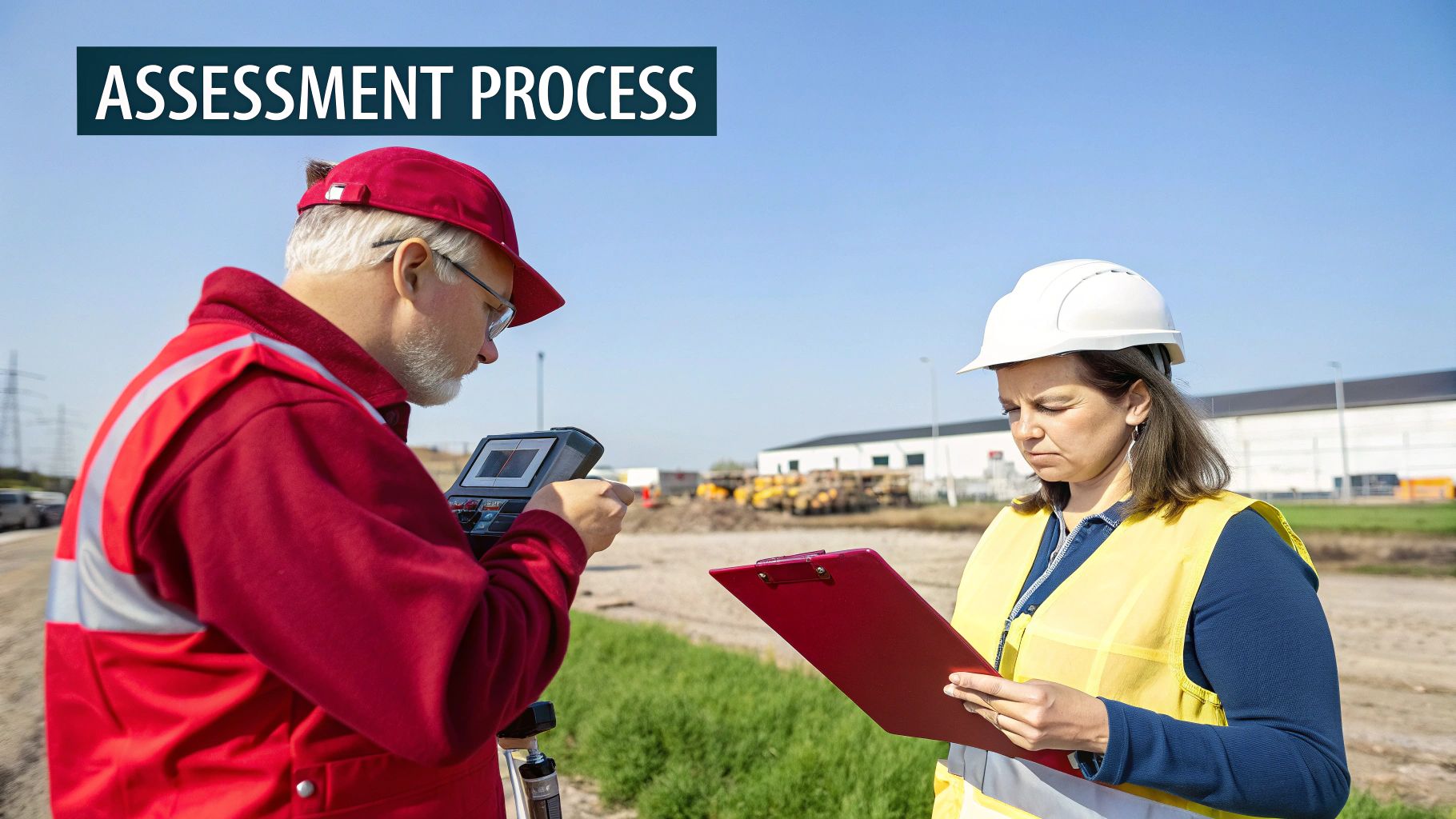
With the game plan set, the next step is getting on-site. This often begins with a 'walk-through survey'. Think of it as a fresh pair of expert eyes on your daily operations. The consultant will observe how things run, chat with your team, and spot potential risks that might have become just "part of the job" over time.
After the initial look-around, it's time for detailed data collection. This is where objective science really comes into play, replacing guesswork with hard facts. Depending on what you've agreed on, this could involve:
- Air Sampling: Using special pumps and filters to capture airborne nasties like dust, chemical vapours, or fumes.
- Noise Monitoring: Kitting out workers with small dosimeters or using sound level meters to map out the noise hotspots across your site.
- Physical Hazard Measurement: Using calibrated instruments to assess things like vibration, heat stress, or even lighting levels.
This data is the bedrock of the whole process—it’s the concrete evidence needed to properly understand the risks.
Analysis, Reporting, and Actionable Recommendations
Once the samples are collected, they head to a laboratory for analysis. The hygienist then crunches the numbers, comparing the results against Australian legal exposure standards and industry best practices. This is how raw data gets translated into meaningful insights about the health risks your people face.
All these findings are then brought together in a comprehensive report. A good consultant knows this report can't be a dry, technical data dump. It needs to be a clear, easy-to-read document that spells out the findings, explains what they mean for your team's health, and, crucially, gives you a prioritised list of practical recommendations.
The true value of a hygiene report lies in its clarity and practicality. It should empower you with a clear roadmap for risk control, guiding you on where to focus your efforts for the greatest impact on worker health and safety.
But the job isn’t finished when the report lands on your desk. The final, vital step is the follow-up and verification. After you’ve put the recommended controls in place—maybe some new ventilation or updated work procedures—the consulting occupational hygienist will often come back to re-test. This confirms the solutions are actually working, giving you both peace of mind and documented proof of a safer workplace.
Your Occupational Hygiene Questions Answered
Diving into the world of workplace health can feel a bit overwhelming. Let's clear up some of the most common questions people have when they consider bringing in a consulting occupational hygienist.
How Much Does an Occupational Hygienist Cost?
There's no one-size-fits-all price tag, as the cost really depends on what you need. A quick walk-through survey to get a general feel for your workplace will naturally cost less than a comprehensive project that involves detailed air sampling and sending those samples off for laboratory analysis.
The final quote will be shaped by things like the size of your site, the specific hazards we’re investigating, and how detailed the final report needs to be. Most consultants work on a project-by-project basis or have a day rate, and they'll give you a clear quote after a chat to understand your situation. It's worth remembering that an upfront investment in professional advice is almost always cheaper than the cost of a serious workplace illness or a hefty fine down the track.
What’s the Difference Between a Hygienist and a WHS Officer?
It's a great question, as both roles are crucial for a safe workplace, but they focus on different things. Your Workplace Health and Safety (WHS) officer is generally looking after the immediate, visible safety issues—things like preventing slips and falls, checking fire equipment, and managing general site safety. They’re focused on preventing accidents and injuries that happen in an instant.
An occupational hygienist, on the other hand, is a specialist. We use science to get to the bottom of the long-term health hazards that you can't always see or smell. We're talking about the invisible risks like chemical vapours, damaging noise levels, or fine dusts that can cause serious illness years later. You could think of a WHS officer as your safety GP, while the hygienist is the specialist you bring in for complex diagnostics on hidden health threats.
How Often Should My Workplace Be Assessed?
This really hinges on your specific industry and the risks involved. A high-risk workplace, like a manufacturing plant using chemicals or a mine site, might need almost constant monitoring and regular check-ins.
But for most businesses, a professional assessment is a must-do whenever:
- You bring in new chemicals or change a key work process.
- You’re installing or making major changes to your ventilation systems.
- Your team starts reporting health issues that might be linked to their work.
- The official safe exposure limits for a substance you use have been updated.
A good rule of thumb for many businesses is to get a solid baseline assessment done, and then schedule periodic reviews every few years to make sure your controls are still effective and your team stays protected.
At Anitech Ltd Pty, our certified professionals are here to help you navigate the complexities of workplace health and protect your team from those hidden dangers. We work alongside you to build a workplace that isn't just compliant, but genuinely safe and productive. To chat about your specific needs, visit us at https://occhygiene.com.au.


