
A chemical risk assessment is a structured process for identifying how hazardous substances in your workplace could potentially harm someone. It involves a detailed examination of a chemical's inherent dangers, an understanding of who might be exposed to it and how, and the implementation of practical, effective measures to ensure the safety of your team. This is not about reacting to incidents after they occur; it's about proactively building a safe and healthy work environment from the ground up.
What Is a Chemical Risk Assessment?
Imagine planning an extensive road trip through a remote, challenging landscape like the outback. A prudent person wouldn't simply start driving and hope for the best. Instead, they would first identify potential hazards—extreme heat, unpredictable road conditions, and wildlife. Following that, they would assess their exposure: how many hours will be spent on unsealed tracks? How far is it between service stations? Finally, they would implement control measures, such as packing extra water, thoroughly checking the spare tyre, and perhaps carrying a satellite phone for emergencies.
A chemical risk assessment applies this same logical and systematic approach to the workplace environment.
It is a methodical procedure for analyzing how chemicals are used, stored, and handled to determine the likelihood and potential severity of any harm that could result. This goes far beyond being a mere compliance exercise for regulatory bodies; it is a fundamental strategy for protecting people, safeguarding the environment, and upholding your business's reputation and operational integrity.
The Core Components of an Assessment
A robust and effective chemical risk assessment is constructed upon a few key pillars. Grasping these essential elements demystifies the entire process and reveals its tangible, real-world value in creating a safer workplace.
- Hazard Identification: This is the initial and foundational step. It involves determining the intrinsic dangers associated with a specific chemical. Is the substance flammable, corrosive, toxic upon inhalation, or harmful to the environment?
- Exposure Assessment: This component focuses on who might come into contact with the chemical. It requires a careful consideration of the duration of exposure, the frequency of contact, and the route of exposure—whether it's through inhalation, dermal (skin) contact, or ingestion.
- Risk Characterisation: In this stage, the information gathered from hazard identification and exposure assessment is synthesized to determine the actual level of risk. A highly toxic chemical that is stored in a securely sealed container with no chance of human contact presents a very low risk. Conversely, a mildly irritating substance that is used daily by workers without appropriate gloves could pose a significant and unacceptable risk.
A common and critical mistake is to confuse "hazard" and "risk." A hazard is the inherent potential for harm (like a shark in the ocean), whereas risk is the likelihood of that harm actually occurring (the probability of a shark encounter while swimming). The primary objective of a chemical risk assessment is to manage the risk, even when the hazard itself cannot be eliminated.
Why This Process Matters in Australia
In Australia, conducting a chemical risk assessment is a legal mandate under the Work Health and Safety (WHS) regulations. However, achieving legal compliance is merely the starting point and the minimum requirement.
Properly managing chemical safety is instrumental in preventing workplace injuries and occupational illnesses, drastically reducing the likelihood of costly environmental incidents, and can even lead to more efficient and streamlined business operations. The principles underpinning a chemical risk assessment are also fundamental to establishing and maintaining safe chemical storage practices in any industrial or commercial setting.
Ultimately, this process is an indispensable part of fostering a strong and positive safety culture. For businesses aiming to achieve a higher standard of safety, exploring the fundamentals of occupational hygiene is a logical next step, as it provides a broader context for how these assessments integrate into a comprehensive health and safety management framework.
The Four Steps of a Solid Assessment
A proper chemical risk assessment is not a matter of guesswork; it is a methodical and structured process. It can be viewed as a logical sequence that transforms a potentially daunting task into a series of clear, actionable, and manageable stages. By systematically working through these four steps, you can develop a genuine and thorough understanding of the chemical risks present in your workplace and implement control measures that provide real protection for your team.
This structured approach is the most reliable way to ensure that no critical details are overlooked. It guides you from the initial stage of simply identifying what could go wrong, all the way through to implementing practical and effective safeguards that create a safer environment for everyone involved.
The infographic below provides a concise summary of the core cycle: identify, assess, and control.
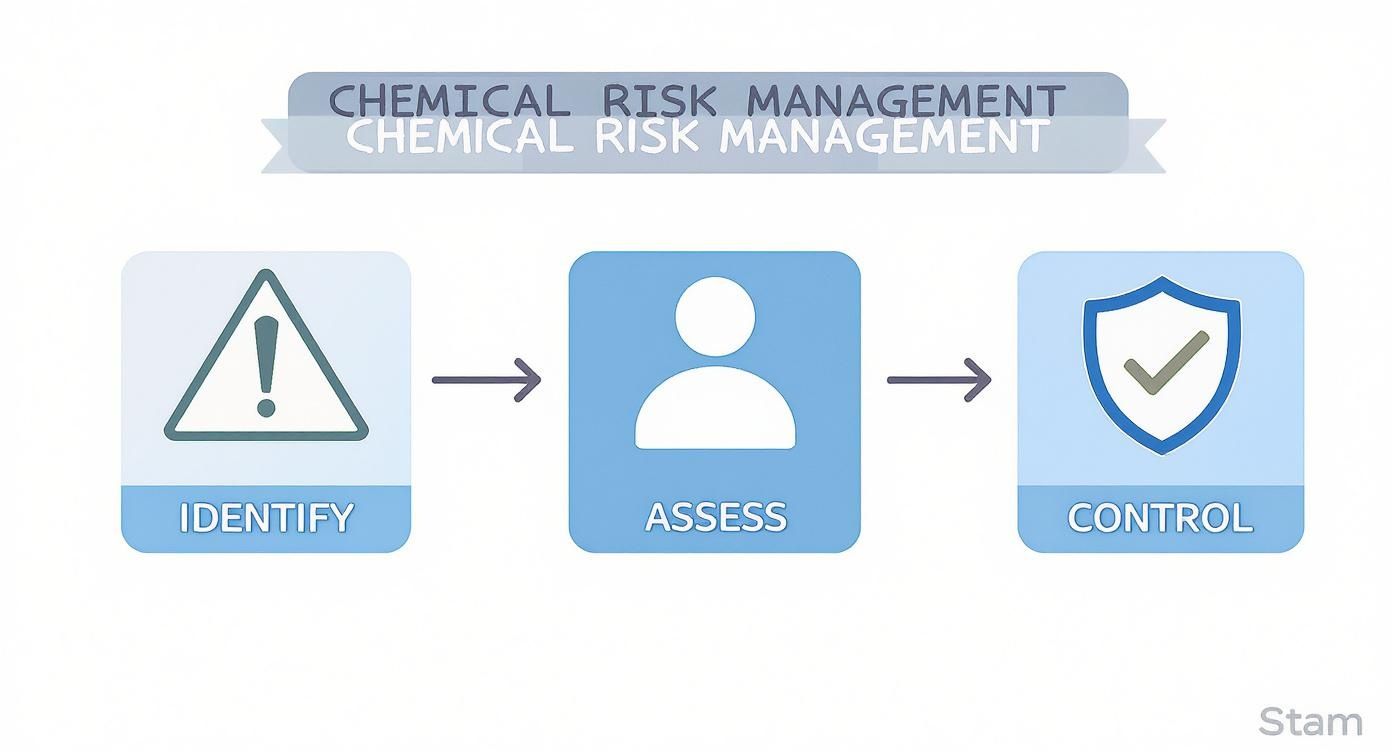
This visual representation illustrates how each component of a chemical risk assessment logically flows into the next, forming a continuous and dynamic loop of safety management. Now, let’s delve into the complete four-step process in greater detail.
Step 1: Hazard Identification
The first priority is to know exactly what you are dealing with. Hazard identification is the process of pinpointing which chemicals present in your workplace have the potential to cause harm. This step serves as the foundation for your entire assessment, so its accuracy and thoroughness are of paramount importance.
Your most valuable resource in this stage is the Safety Data Sheet (SDS). Under Australian law, every supplier of chemical products is obligated to provide an SDS. This document is a comprehensive source of information, detailing a substance's properties, potential health effects, and procedures for safe handling and storage.
Here is a practical guide to getting started:
- Compile a chemical register: Create a comprehensive and detailed list of every hazardous substance used or stored on your premises. This should not be a static, one-time task; it must be a living document that is regularly updated as chemicals are introduced or removed.
- Review every Safety Data Sheet: Methodically and carefully work through the SDS for each chemical on your register. Pay particularly close attention to the hazard statements and pictograms, as they provide a quick and clear summary of the primary dangers.
- Observe real-world practices: It is essential to get out onto the workshop floor or into the field to observe how chemicals are actually being used in day-to-day operations. Often, the way a task is performed in reality can introduce hazards that would not be apparent from reading paperwork alone.
Step 2: Exposure Assessment
Once you have identified the hazards, the next logical question is who might be exposed to them, and under what circumstances. An exposure assessment is the stage where you determine the likelihood of your team coming into contact with a hazardous chemical. This is a critical part of any comprehensive chemical risk assessment.
This process essentially involves answering a few key questions:
- Who is exposed? Pinpoint the specific workers, job roles, or groups of employees who handle the chemical or work in close proximity to where it is being used.
- How are they exposed? Determine the primary route of exposure. The most common pathways are inhalation (breathing in fumes, vapours, or dust), dermal contact (absorption through the skin), and ingestion (accidental swallowing).
- How much are they exposed to? You must consider both the concentration of the chemical and the duration and frequency of exposure. A brief, one-off task presents a very different scenario from an eight-hour shift involving continuous handling of the same substance.
For example, a worker who is decanting a solvent from a large drum into smaller containers could be exposed through both the inhalation of vapours and through accidental splashes on their skin. A clear understanding of these specific exposure pathways is absolutely essential for the subsequent steps of the assessment.
Step 3: Risk Characterisation
This is the stage where all the information comes together. Risk characterisation involves combining the findings from your hazard identification and exposure assessment to determine the actual level of risk. You are answering the crucial question: "Given the way we use this chemical, what is the likelihood that someone will be harmed, and how severe could that harm be?"
A highly toxic chemical that is stored in a properly sealed and unopened container poses a very low risk. Conversely, a much less hazardous substance that is used constantly in a poorly ventilated area without any personal protective equipment (PPE) could present a very high and unacceptable risk.
A simple and effective way to conceptualize this is with the formula: Risk = Hazard x Exposure. For a real risk to exist, you need both a hazardous substance and a viable pathway for exposure. If you can eliminate or significantly reduce either one of these factors, you will effectively lower the overall risk.
This evaluation process helps you to prioritize your actions. By classifying risks as high, medium, or low, you can focus your time, resources, and efforts on addressing the most serious problems first.
Step 4: Risk Control
Finally, it is time to take action. This step is entirely focused on implementing practical measures to either eliminate or reduce the risks you have identified. The most effective way to approach this is by following the hierarchy of controls—a system that ranks control measures from the most effective to the least effective. You should always aim to implement controls from as high up this pyramid as possible.
Many workplaces fall into the common trap of relying almost exclusively on PPE, but this is a fundamentally flawed strategy. PPE is the least effective control because it places the entire burden of responsibility on the worker to use it correctly and consistently every single time. A truly robust safety system employs a combination of different controls to create multiple layers of protection.
To provide a clearer understanding, here is a breakdown of the hierarchy of controls.
The Hierarchy of Chemical Risk Controls
This table outlines the different levels of control, starting with the most reliable and protective measures at the top and moving down to the least effective measures at the bottom. The goal is to always begin at the top of the hierarchy and work your way down.
| Control Level | Description | Example |
|---|---|---|
| Elimination | Physically remove the hazard from the workplace entirely. This is the most effective control. | Stop using a hazardous cleaning solvent and switch to a steam cleaner instead. |
| Substitution | Replace the hazardous chemical with a safer alternative that performs the same function. | Swap out a solvent-based paint for a water-based one with lower toxicity. |
| Engineering | Isolate people from the hazard by redesigning the process or equipment. | Install a local exhaust ventilation system (like a fume hood) over a mixing tank. |
| Administration | Change the way people work through procedures, training, or signage. | Implement a "no-go zone" around a chemical storage area; provide training on SDS. |
| PPE | Protect the worker with Personal Protective Equipment. This is the last line of defence. | Require workers to wear chemical-resistant gloves, safety goggles, and respirators. |
Remember, once you have implemented these controls, the job is not finished. It is crucial to regularly monitor and review them to ensure they remain effective and continue to keep your team safe over the long term.
Navigating Australian Chemical Regulations
Understanding Australia’s complex landscape of chemical laws is not just about ticking boxes for compliance. It is fundamentally about protecting your people, your community, and the environment. These regulations form the backbone of any robust chemical risk assessment, ensuring that every business is held to the same high standard of safety. While neglecting these duties can lead to substantial fines and legal repercussions, embracing them helps to build a workplace where safety is an ingrained part of the culture.
The cornerstone of chemical safety in Australia is the model Work Health and Safety (WHS) Act. At its core, the Act places the primary duty of care firmly on the employer—referred to in the legislation as a 'person conducting a business or undertaking' (PCBU). This means that you are legally responsible for ensuring the health and safety of your team, a responsibility that unequivocally includes the safe use, handling, and storage of hazardous chemicals.
This is not a "set and forget" obligation. It requires you to actively and continuously manage chemical risks, and a thorough, well-documented risk assessment is the primary mechanism through which you fulfill that legal duty. To gain a deeper understanding of how these elements fit together, it is highly beneficial to explore the Australian workplace safety standards to see how these legal duties are applied in real-world scenarios.
Understanding the WHS Framework
The model WHS Act sets the overarching principles, but the WHS Regulations provide the detailed script. These regulations delve into the specific, practical actions you are required to take when managing hazardous chemicals in your workplace.
Consider this your non-negotiable checklist:
- Maintain a Register: You must maintain a current and accurate list of every hazardous chemical present on-site.
- Ensure Access to SDS: Every worker who could potentially be exposed to a chemical must have easy and unimpeded access to its Safety Data Sheet (SDS).
- Correct Labelling: All containers of hazardous chemicals must be properly labelled with clear warnings and internationally recognized symbols.
- Provide Information and Training: You have a legal duty to train your employees on the specific chemical hazards they face and the control measures that have been implemented to keep them safe.
The regulations are explicit: a PCBU must manage risks associated with using, handling,generating, or storing hazardous chemicals. This single sentence makes a formal chemical risk assessment an essential and legally required component of your WHS management system.
IChEMS and Environmental Protection
Workplace safety is only one side of the coin; Australian regulations also place a strong emphasis on protecting the environment from the harmful effects of chemicals. A major component of this legislative framework is the Industrial Chemicals Environmental Management Standard (IChEMS). This is a national standard designed to manage the environmental risks of industrial chemicals throughout their entire lifecycle, from the moment they are manufactured or imported until their final disposal.
IChEMS operates on a system of categorization. It sorts chemicals into one of seven schedules based on their level of concern for the environment. This schedule then dictates the stringency of risk management that must be applied. The principle is straightforward: the higher the schedule number, the greater the environmental risk, and the more rigorous the controls required.
For instance, IChEMS has recently established new environmental regulations for several high-risk chemical groups. Substances are now classified from Schedule 1 (representing the lowest concern) up to Schedules 6 and 7 (representing the highest risk). Chemicals such as decabromodiphenyl ethane (DBDPE) and certain mercury compounds have been placed in these top tiers, leading to near-total bans with only a few specific and critical exemptions. If your business utilizes any of these substances, you now face strict regulations regarding record-keeping, disposal, and product disclosure.
Furthermore, chemical management does not stop at your property line. When considering the entire lifecycle of a chemical, understanding aspects like Hazmat Shipping Requirements is vital for a complete, compliant, and responsible approach.
Ultimately, both the WHS and IChEMS frameworks are designed to function in a complementary manner. A truly comprehensive chemical risk assessment must evaluate both the immediate health risks to your workers and the long-term environmental impact of the chemicals you use. This ensures that your business is not just compliant, but genuinely safe, sustainable, and responsible.
The Practical Tools You'll Need for Your Assessment
Understanding the regulations is one thing, but effectively putting them into practice is another. To transition from the theory of chemical safety to the practical reality of a hands-on risk assessment, you need to equip yourself with the right set of tools. These resources are what transform your legal obligations into a smooth, repeatable, and effective process that genuinely protects people.
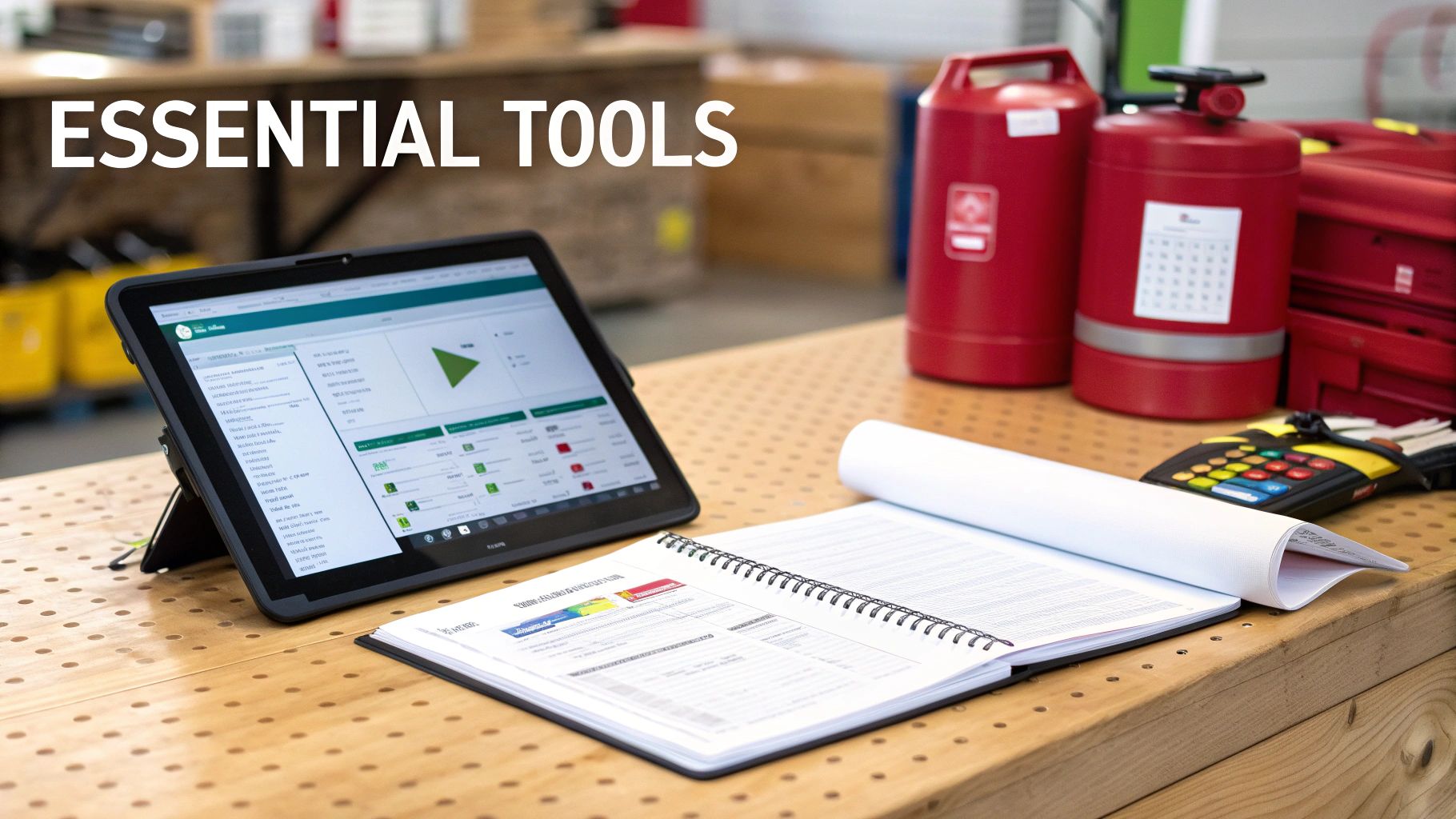
The absolute cornerstone of your toolkit is your chemical register. This is not merely a list to be filed away and forgotten; it should be treated as a live, dynamic, and critical safety document. A well-maintained register provides a complete, at-a-glance overview of every hazardous substance on your site, which is the essential foundation for any assessment you undertake.
How to Read Safety Data Sheets (SDS)
The most important source of information for your chemical register and your entire assessment is the Safety Data Sheet (SDS). Your suppliers are legally obligated to provide an SDS for every hazardous chemical they sell to you. It serves as the official instruction manual for that substance, clearly outlining its hazards, what to do in an emergency, and how to handle it safely.
Developing proficiency in reading an SDS is a non-negotiable skill for anyone involved in workplace safety. You do not need to memorize all 16 sections, but you absolutely must know where to find the most critical pieces of information quickly and efficiently.
Pay close attention to these key sections:
- Section 2: Hazard Identification: This provides a quick-look summary. It utilizes pictograms and clear hazard statements to inform you of the main dangers at a glance.
- Section 4: First-Aid Measures: This section tells you exactly what to do if someone is exposed to the chemical. There is no need for guesswork in an emergency.
- Section 8: Exposure Controls/Personal Protection: Here you will find practical information, such as whether specific ventilation is required and precisely what type of Personal Protective Equipment (PPE) is necessary for safe handling.
An SDS is only useful if it is current and easily accessible. The regulations stipulate that an SDS cannot be more than five years old and must be readily available to any worker who might come into contact with the chemical.
Why You Should Use Templates
Consistency is a key ingredient for effective chemical risk assessments. Utilizing a standardized template or checklist ensures that every assessment—regardless of who conducts it—follows the same logical steps and covers all the necessary bases.
This structured approach prevents important details from being overlooked and makes it significantly easier to compare risks between different tasks, chemicals, or departments. A well-designed template will guide the user through the four essential stages: identifying the hazards, assessing the exposure, characterizing the risk, and finally, documenting the control measures that will be implemented.
This kind of organized methodology is particularly crucial when dealing with high-risk substances that demand meticulous management, such as crystalline silica. For a more detailed examination of this specific hazard, you can learn more about the necessary safety protocols in our article on air monitoring for silica dust.
Making Life Easier with Digital Tools and Software
While a paper-based system can certainly get the job done, modern software solutions can make a world of difference in managing your chemical safety obligations. Digital tools can streamline the entire process, from maintaining an up-to-date chemical register to tracking the progress of assessments and scheduling periodic reviews.
These platforms can automatically flag when an SDS is approaching its expiry date, send automated reminders for review dates, and make the process of generating reports simple and efficient. This significantly reduces the administrative burden on your team and minimizes the potential for human error, thereby freeing everyone up to concentrate on what truly matters: implementing and monitoring safety controls on the ground.
This shift towards more effective data management aligns with national safety priorities. To improve transparency and safety outcomes, Australia recently announced a major initiative to improve public access to assessment information for approximately 700 chemicals in its national inventory. This initiative, supported by the Australian Industrial Chemicals Act 2019, aims to ensure that both human health and environmental impacts are properly and thoroughly assessed. You can find out more about Australia's chemical assessment initiatives on siam-it.com.
Bringing the Process to Life: Chemical Risk Assessments in Action
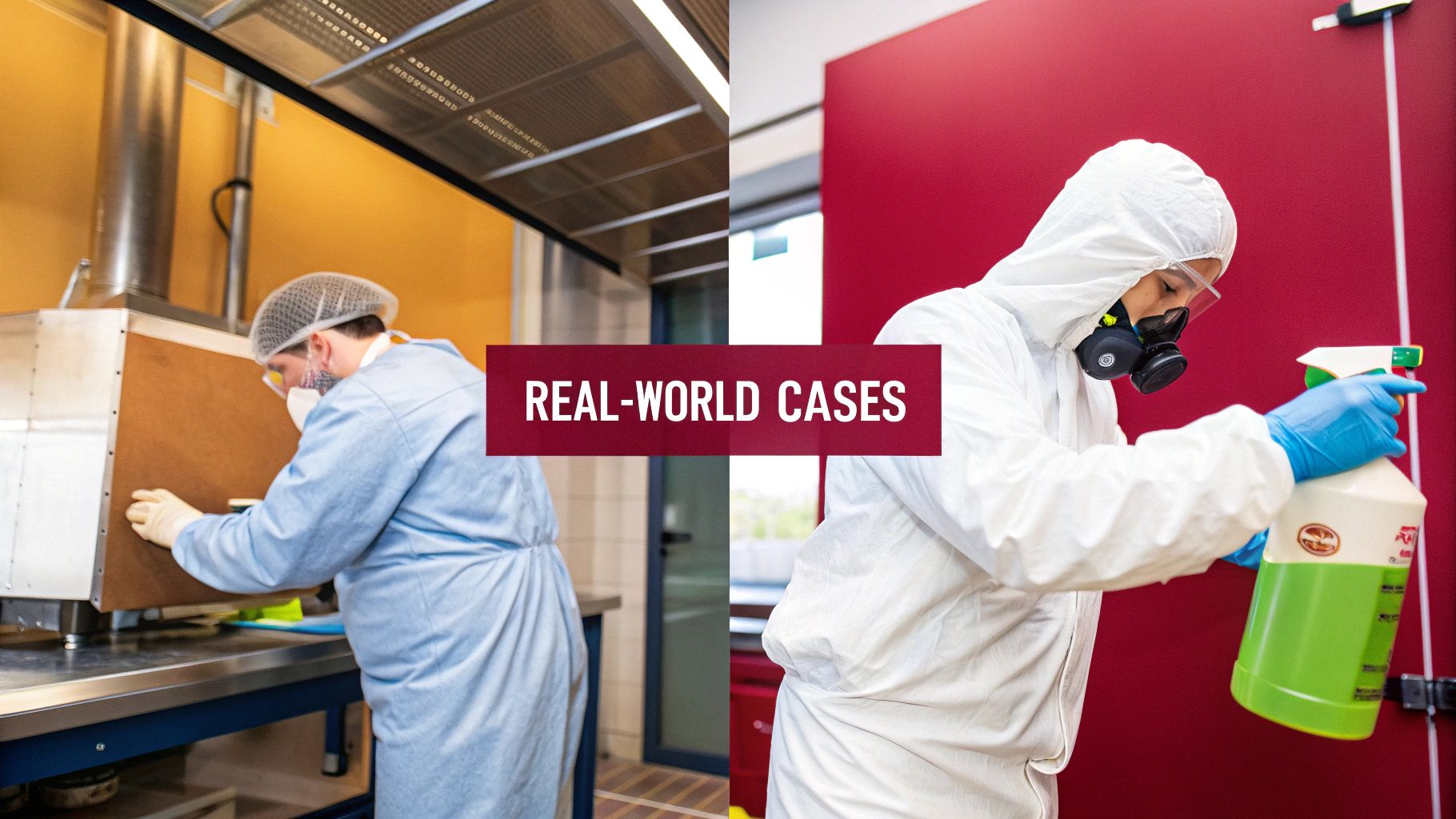
Theory is valuable, but seeing how the four-step process functions in a real-world context is where the concepts truly become clear. A chemical risk assessment can feel somewhat abstract until you apply its principles to a situation you can readily visualize. Let's walk through a couple of common workplace scenarios to demonstrate how this methodology transforms from a set of rules into a practical, actionable plan for keeping people safe.
We will examine two very different work environments. First, we will step into a manufacturing facility where workers are using industrial-grade solvents. Then, we will visit a commercial cleaning business that handles powerful, concentrated detergents on a daily basis. In each of these examples, we will follow the complete four-step journey to see how it plays out in practice.
Case Study 1: A Manufacturing Facility
Imagine a bustling metal fabrication workshop. On the factory floor, workers are using a potent solvent to degrease metal parts before they are sent for painting. This is a routine, daily task that takes place in an older, dedicated section of the facility. Let's conduct a chemical risk assessment for this scenario.
-
Step 1: Hazard Identification: The first port of call is the Safety Data Sheet (SDS) for the solvent. A quick review reveals several serious hazards: the chemical is highly flammable, it can cause significant respiratory irritation if inhaled, and prolonged skin contact will lead to dermatitis.
-
Step 2: Exposure Assessment: A walk-through of the work area reveals the rest of the story. The team members are wearing safety glasses, which is a good start, but they are using flimsy disposable gloves that offer virtually no chemical resistance. The ventilation consists of a general roof fan, with no local system in place to capture fumes at the source. This means that workers are inhaling vapours for several hours each day, and skin splashes are a more frequent occurrence than anyone would like to admit.
-
Step 3: Risk Characterisation: Now, it's time to connect the hazards with the exposure. The risk of respiratory harm from inhaling fumes is determined to be high due to the inadequate ventilation. The risk of skin irritation is classified as medium, primarily because the gloves being used are completely unsuitable for the task. And the risk of a fire? This is also rated as high. A highly flammable liquid being used in a busy workshop with multiple potential ignition sources is a recipe for disaster.
-
Step 4: Risk Control: With the risks clearly identified and prioritized, the management team implements a multi-layered control plan. They begin by installing a local exhaust ventilation (LEV) system directly over the degreasing station to effectively capture the fumes before they can disperse into the wider workshop. They also source and provide the correct type of chemical-resistant gloves and update their procedures and training to make wearing them mandatory. Finally, the area is clearly marked as a flammable liquid zone, and the solvent is stored safely in a designated fire-rated cabinet when not in use.
Case Study 2: A Commercial Cleaning Company
Let's shift our focus to a commercial cleaning crew that uses a concentrated, corrosive detergent to clean industrial kitchens. The chemical is highly effective, but it is also very dangerous if not handled with the utmost respect and care.
The team begins by identifying the hazards from the SDS. This particular detergent is corrosive, which means it can cause severe skin burns and permanent eye damage upon contact. When it is mixed with hot water—a common practice for this task—it also releases irritating vapours.
Next, they assess how their employees are being exposed. Workers are manually pouring the concentrated liquid from large drums into smaller buckets, often without wearing face shields, which creates a very real risk of dangerous splashes. They are working in enclosed kitchen environments where the vapours can quickly accumulate. Furthermore, skin contact is a regular issue due to inconsistent use of the correct type of gloves.
This scenario highlights a crucial point: even seemingly routine and mundane tasks can carry significant risks. A proper chemical risk assessment compels you to examine everyday processes with a fresh, critical eye to uncover these hidden dangers.
Characterising the risk, they determine that there is a high probability of serious eye injury from splashes and a medium risk of respiratory issues arising from the fumes. The risk of skin burns is also rated as high, owing to the chemical’s corrosive nature combined with the team's current work practices.
To bring these risks under control, the company introduces several intelligent changes. First, they switch to a pre-diluted version of the cleaning agent wherever possible—an excellent example of substitution. For the jobs that still require the concentrate, they install automated dispensing systems, which completely eliminates the need for risky manual pouring. They also make the use of chemical-resistant gloves and full-face shields compulsory, reinforcing this with comprehensive training on the new, safer procedures.
Why Your Chemical Risk Assessment is Never Truly Finished
Completing and signing off on your chemical risk assessment is a significant achievement, but it is by no means the end of the journey. It is more helpful to think of it less like a certificate to be framed on the wall and more like a car's GPS. It is an incredibly powerful tool for navigation, but it requires constant updates to guide you safely through ever-changing conditions.
Allowing your assessment documents to gather dust on a shelf is one of the most significant and common mistakes a business can make. Your workplace is a dynamic environment that is constantly evolving—new equipment is introduced, processes are refined, and our scientific understanding of chemical hazards improves over time. An assessment conducted last year may already be dangerously out of date, providing a false and hazardous sense of security.
When to Drop Everything and Review Your Assessment
While establishing a regular review schedule, such as once a year, is a good practice, certain situations demand your immediate attention. These are red flags indicating that your current safety plan may no longer be adequate to protect your team.
It is time for an urgent review if:
- A new chemical arrives on-site: Every new substance introduces unknown risks that your original assessment could not possibly have anticipated.
- You change a work process: Altering how a chemical is handled, the quantity that is used, or even the location where it is used can completely change exposure levels and introduce new risks.
- There’s a safety incident or a near-miss: This is the most obvious and urgent sign that your existing controls are not working as intended. Do not wait for a second incident to occur.
- Regulations or standards are updated: Government bodies and safety authorities regularly update their guidance based on new scientific evidence. Maintaining compliance is non-negotiable.
A risk assessment is not a task to be checked off a list; it is a continuous cycle of improvement. Proactive monitoring and regular reviews embed safety into the very fabric of your daily operations, shifting your organization's mindset from reacting to problems to proactively preventing them in the first place.
How Regulations Force the Issue
Safety regulations do not exist merely to create paperwork; they are designed to ensure that your chemical management practices remain current with the latest scientific understanding and best practices. Here in Australia, for example, the Industrial Chemicals Environmental Management Standard (IChEMS) is constantly being updated to reflect new information.
Just recently, six new chemicals or chemical groups were added to the IChEMS Register, demonstrating a proactive approach to managing substances known to pose a risk to human health and the environment. There is already a list of future priorities for assessment, including substances like BPA and specific PFAS chemicals, which is designed to prevent businesses from simply swapping one hazardous substance for another. You can learn more about how Australia schedules chemicals on sgs.com.
Keeping abreast of these changes is not just a matter of best practice—it is a legal requirement. This is where meticulous and thorough record-keeping becomes your greatest asset. Documenting every review, every update, and the rationale behind every decision creates a clear and defensible audit trail. It not only proves your compliance but also builds an invaluable knowledge base that makes every future assessment smarter, more efficient, and more effective.
Frequently Asked Questions
Delving into the specifics of chemical risk assessments often raises a few practical questions. Here are some straightforward answers to the queries we hear most frequently, designed to help you make sense of your responsibilities and effectively put these critical safety principles into practice.
How Often Should an Assessment Be Reviewed?
There is no single, rigid rule that applies to every situation, but a good rule of thumb is to formally revisit your assessments at least every five years.
However, certain circumstances demand an immediate review. You will need to update your assessment whenever a new chemical is introduced to the workplace, a work process involving a chemical is modified, or, most importantly, if a safety incident or near-miss occurs. It is best to treat your assessment as a living document that must evolve in step with your workplace.
What Is the Difference Between a Hazard and a Risk?
This is a classic and absolutely crucial distinction to understand. A hazard is the inherent, built-in potential of something to cause harm. For example, in a venomous snake, the venom itself is the hazard.
The risk, on the other hand, is the probability or chance of that harm actually occurring. This is entirely dependent on the level of exposure. The risk of being bitten is extremely low if the snake is securely housed in a locked enclosure, but it becomes very high if you are handling it. A chemical risk assessment is fundamentally about managing that risk, especially in situations where the hazard itself cannot be eliminated.
Who Is Qualified to Conduct an Assessment?
A chemical risk assessment must be carried out by a competent person. This is not simply a job title; it means an individual who possesses the appropriate knowledge, training, and practical experience to accurately identify the hazards and properly evaluate the associated risks.
For straightforward situations, this could be an internal safety manager or a specially trained supervisor. However, for more complex chemicals, high-risk processes, or in workplaces with a large chemical inventory, bringing in a professional occupational hygienist is always the safest and most prudent course of action.
Do We Need to Assess Common Cleaning Products?
Yes, you absolutely do. Even common, everyday cleaning products that can be purchased at a supermarket can pose a real risk, particularly when they are used frequently, in large quantities, or in a professional capacity.
An assessment for these products might be simpler than for highly toxic industrial chemicals, but you still need to consider factors such as skin irritation from prolonged contact or respiratory issues from vapours building up in a poorly ventilated space. Regardless of how harmless a product may seem, the first step should always be to obtain and review its Safety Data Sheet (SDS).
At Anitech Ltd Pty, we offer expert guidance to help make your workplace not just compliant, but genuinely safe. Our team of experienced occupational hygienists can help with everything from initial assessments to ongoing monitoring. To see how we can support your safety goals, visit us online.


