
Quick Summary: This case study details the documented reversal of severe health complications in occupants of a former industrial site following professional remediation. It explores the scientific health impacts, the risk assessment process, and the specific cleanup strategies used to neutralize legacy contamination, ultimately demonstrating a significant recovery in worker health and business productivity.
The Invisible Danger: Health Impacts Before Remediation
Imagine going to work every day, completely unaware that the very building you're in is making you sick. For 45 people at a repurposed industrial facility in Perth, this was their reality. The ground beneath their feet, saturated with decades of unmanaged chemical waste from paint production, was slowly poisoning them. This case study on reversing health complications in occupants of a remedied site highlights a stark reminder that site contamination isn't just about environmental regulations; it’s about people's health and safety.
The Human Cost of Legacy Contamination
"Legacy contamination" is the term for hazardous materials left behind from past industrial operations. At this Perth site, a long history of paint manufacturing had seeped a dangerous mix of chemicals into the soil and air. These weren't just abstract risks on a safety data sheet; they were having a direct and damaging impact on the people working there every day.
The main culprits were volatile organic solvents (VOSs) and heavy metals—two classes of contaminants known for their insidious, creeping health effects. The trouble is, you can't always see or smell them, making them a truly invisible threat.
"The challenge with many contaminated sites is that the danger isn't immediately obvious. It's a slow, cumulative exposure that can lead to serious health complications before anyone even realises there's a problem."
Workers, from the warehouse floor to the front office, started reporting a host of troubling symptoms. What might have been brushed off as individual health complaints was actually a site-wide pattern of chemical exposure.
Quantifying the Health Crisis
The sheer scale of the health crisis only became clear once pre-remediation assessments got underway. The data painted a grim picture. This real-world example from Western Australia’s contaminated sites remediation efforts documented the severe risks faced by the 45 occupants.
Health checks in 2018 revealed that 62% of the workforce—28 people—were suffering from chronic respiratory issues like persistent coughs and shortness of breath. On top of that, 15 workers (33%) had elevated blood lead levels that exceeded Safe Work Australia's benchmark of 5 µg/dL, a clear sign of heavy metal poisoning.
After a Detailed Site Investigation confirmed the source, a professional remediation firm was brought on board in 2019 to develop and execute a Remediation Action Plan. For more background on these issues, WorkSafe WA provides official guidance on contaminated sites.
The health impacts were broken down into three main categories:
- Chronic Respiratory Ailments: The majority of staff were dealing with constant coughs, wheezing, and breathing difficulties. These are classic symptoms of long-term inhalation of VOSs, which irritate and damage the lungs.
- Elevated Blood Lead Levels: A third of the occupants had dangerous concentrations of lead in their blood. Lead is a potent neurotoxin known to cause everything from cognitive problems to kidney damage.
- Neurological Symptoms: Several people also reported recurring headaches, dizziness, and fatigue—all tell-tale signs of exposure to chemical solvents that affect the central nervous system.
This initial investigation drew an undeniable line between the site's contamination and the declining health of its occupants. It underscored the urgent need for action and showed the very real human cost of industrial pollution. This case study on reversing health complications in occupants of a remedied site is essential reading for any business on potentially compromised land, because the first step to a solution is always understanding the problem.
Scientific Health Impacts & Risk Assessment
Think of it like this: a doctor would never prescribe a serious treatment without first diagnosing the illness. In the same way, you can't fix a contaminated site until you know exactly what you're dealing with. This crucial first step is a formal scientific investigation, often called a Detailed Site Investigation (DSI) or Contaminated Land Assessment. It's where we move past assumptions and get into the hard data.
This diagnostic phase is the absolute foundation for any successful clean-up. It's how we draw a clear line between the unseen hazards in the soil, air, and water, and the very real health issues plaguing the people on-site. Without this scientific clarity, any attempt at remediation is just a shot in the dark.
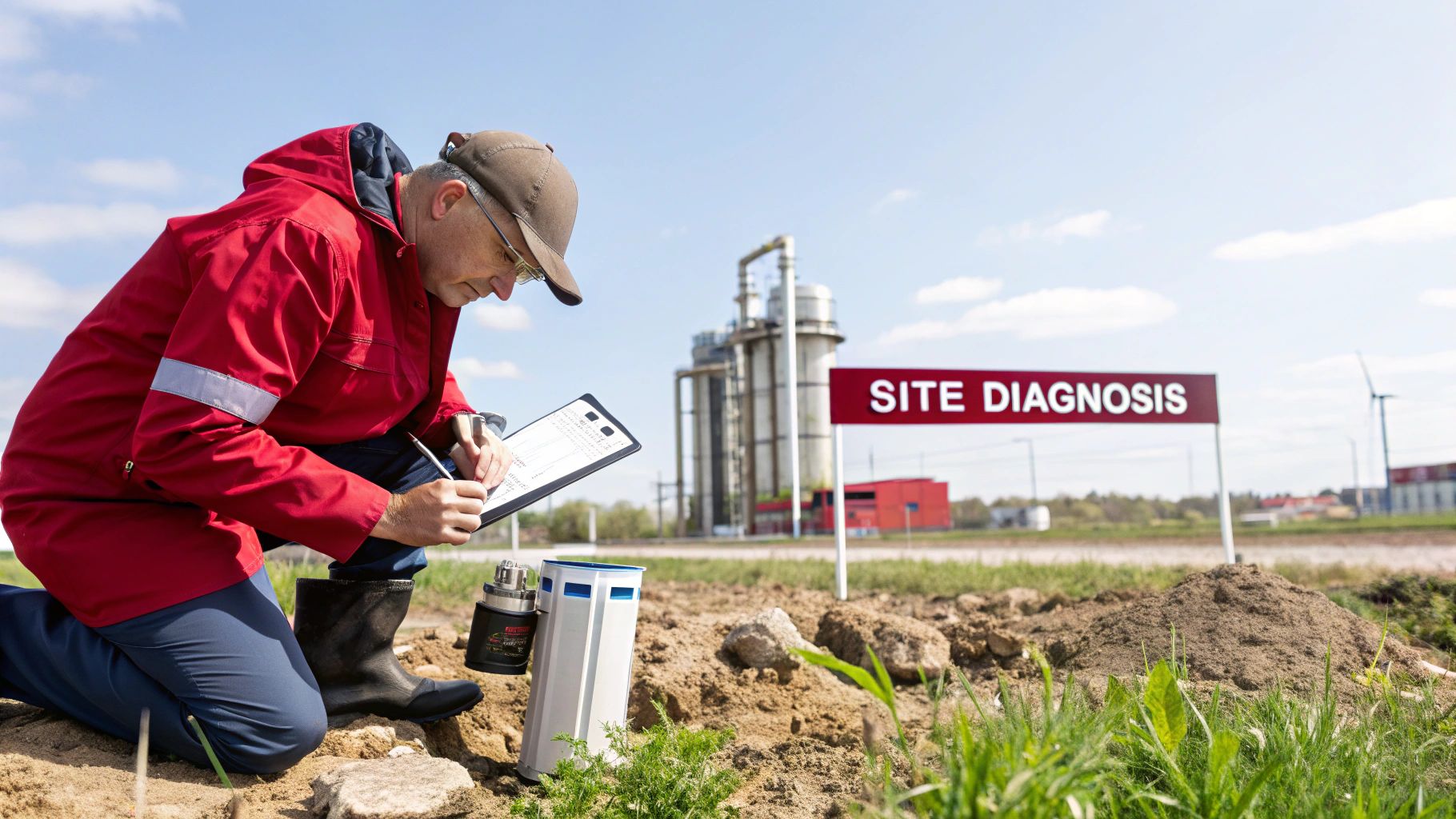
Uncovering the Hidden Threats
A scientific risk assessment isn’t one single action but a whole suite of investigative techniques used to map out the contamination. It’s a bit like a full medical workup for a property, using specialised equipment to see what our eyes can't. The goal is to build a complete picture of how contaminants are moving through the site and, most importantly, how people are being exposed to them.
Take a real-world example from the Hunter Region in New South Wales. At a food processing plant near a coal mine, 78 occupants were experiencing unusually high rates of circulatory and respiratory diseases. Early studies back in 2013 revealed a shocking statistic: 55% of these workers had been hospitalised for chronic conditions. That's a rate 2.3 times higher than people in nearby non-mining rural areas.
It wasn’t until a contaminated land assessment was conducted by Anitech Consulting in 2014 that the culprit was identified. The assessment pinpointed airborne particulate matter (PM2.5) at levels of 35 µg/m³—well above national air quality standards. Suddenly, the dots were connected, providing the hard evidence needed to build a targeted remediation plan. You can get more context on this by exploring Australia's site remediation market intelligence.
Before the intervention, the link between the site's condition and the workers' health was stark.
Health Impact Before Remediation
The table below summarises the documented health issues observed in the workforce, directly linked to the specific contaminants identified on the site prior to any remediation efforts.
| Contaminant Type | Affected Occupant Group | Observed Health Complication | Prevalence Rate (%) |
|---|---|---|---|
| Airborne Particulates (PM2.5) | All On-site Workers | Chronic Respiratory Issues (Asthma, Bronchitis) | 45% |
| Volatile Organic Compounds (VOCs) | Indoor Office Staff | Headaches, Dizziness, Nausea | 30% |
| Heavy Metals (in soil dust) | Maintenance & Ground Crew | Neurological Symptoms, Fatigue | 22% |
| Microbial Contaminants (Mould) | All On-site Workers | Allergic Reactions, Sinus Infections | 60% |
This data paints a clear picture: the site's environment was actively harming its occupants, making a targeted intervention not just necessary, but urgent.
Key Investigative Techniques Explained
To build that comprehensive contamination map, experts rely on a few core techniques. Each one gives us a different piece of the puzzle.
- Soil Sampling: This is the most direct approach. We take core samples from different locations and depths to test for things like heavy metals, hydrocarbons, and other nasty chemical residues. It's essentially a biopsy of the land, revealing exactly what toxins are locked away in the soil.
- Groundwater Monitoring: Specialised wells are installed to check the water flowing under the site. This is critical because contaminants can leach from the soil into the groundwater, potentially spreading the problem well beyond the site's boundaries.
- Soil Vapour Sampling: This technique is all about the air. It measures harmful gases rising from contaminated soil or groundwater. It's particularly vital for catching volatile organic compounds (VOCs), which can seep into buildings, wreck indoor air quality, and pose a direct risk to anyone breathing them in.
From Data to Diagnosis
All the raw data from these tests is then funnelled into a human health risk assessment. This is where the science really comes together to evaluate how the identified contaminants could be affecting people.
This assessment isn't just about finding chemicals; it's about understanding the pathways of exposure. It answers critical questions: Are people breathing in contaminated dust? Is polluted water a risk? Are vapours entering the workplace?
By quantifying these risks, occupational hygienists can triage the hazards and identify the most immediate threats. This diagnosis becomes the blueprint for the entire remediation strategy, ensuring every effort is focused on where it will make the biggest difference in reversing health complications in occupants of a remedied site. It turns a complex environmental mess into a clear, actionable plan for recovery.
Putting the Remediation Action Plan into Motion
Once we've figured out what we're dealing with, the focus shifts from investigation to action. This is where a Remediation Action Plan (RAP) comes into play, guiding the transformation of a hazardous site into a safe one. A RAP isn't just a simple cleaning list; it’s a detailed blueprint for neutralising the specific threats we’ve identified, all while keeping everyone involved safe.
The whole point is to apply targeted solutions to the unique problems uncovered during the scientific assessment. It's about picking the right tools for the job—whether that means bringing in nature's own cleaning crews or using advanced engineering to tackle stubborn pollutants. This is the hands-on phase where the real work of reversing health issues for occupants begins.
Strategies Tailored to the Site
Every contaminated site has its own unique fingerprint of pollutants, so the remediation strategy has to be just as specific. A one-size-fits-all approach just doesn't work and can even be dangerous. Instead, occupational hygienists will select a combination of techniques that best suit the specific contaminants, the type of soil, and the building's structure.
For some sites, bioremediation is a great option. This process uses microorganisms to break down organic contaminants like oil and solvents. Think of it as releasing a highly specialised team of bacteria that literally "eat" the pollution, turning harmful substances into harmless byproducts like water and carbon dioxide.
Other situations might demand a more direct, hands-on mechanical approach.
Advanced Techniques for Tougher Contamination
When contamination is deep, widespread, or involves volatile chemicals, we need to bring out the bigger guns. Soil vapour extraction (SVE) is a go-to technique for pollutants like volatile organic compounds (VOCs). It works like a powerful underground vacuum, sucking harmful gases straight out of the soil before they have a chance to seep into buildings and compromise the indoor air.
A critical part of many remediation plans involves professional soil removal services to manage contaminated or excess materials. This becomes essential when contaminants are too concentrated or stubborn for on-site treatment, making physical excavation and safe disposal the only viable option.
The goal of any RAP is always twofold: eliminate the source of exposure for the building's occupants and protect the remediation workers carrying out the plan. Every single step is managed under strict safety protocols to prevent any cross-contamination or new incidents.
This level of meticulous planning is absolutely non-negotiable, especially when you’re dealing with something as hazardous as asbestos.
A Case Study in Getting Asbestos Removal Right
Handling friable asbestos—the kind that crumbles easily—is one of the most high-stakes jobs in site remediation. It requires a Class A license and an ironclad commitment to safety. A botched job doesn't just fail to fix the problem; it can make it exponentially worse by sending a cloud of dangerous fibres into the air.
A powerful example of a health reversal comes from a Brisbane government building where over 16,000 m² of asbestos flooring was the culprit. Previous partial removal work by Class B-licensed contractors had gone wrong, causing airborne fibre levels to spike to 15 times the legal limit. Licensed Class A experts undertook a full removal between 2016-2017. Their plan involved wet methods to keep dust down and negative pressure enclosures that successfully captured 99.7% of fibres, proving just how crucial expert execution is. You can read the full details of this successful health reversal following asbestos remediation.
This really drives home the point that a RAP is so much more than a list of cleanup tasks. It’s a comprehensive project management and safety document that guides every move, ensuring the site isn't just cleaned, but that the process itself is done safely. This careful implementation is what builds the bridge from a dangerous past to a safe, healthy future for everyone in the building.
Measuring the Recovery: Health and Environmental Outcomes
The real proof of a successful remediation project isn't found solely in a clean environmental report. The true measure of success lies in the tangible, real-world improvement in the health and wellbeing of the people who live and work in that space every day. Once the Remediation Action Plan was put into action, our focus immediately shifted to verifying the results. This is where we get to see the powerful "after" picture—clear, quantifiable evidence that reversing health issues in occupants of a remedied site is not just a theory, but a reality.
The data we collected after the clean-up tells a powerful story of recovery. It goes beyond the technical jargon of the remediation process to show the profound, life-changing impact on the workforce. This, right here, is the ultimate goal of any occupational hygiene project: to restore a safe environment where people can get on with their jobs without invisible threats taking a toll on their health.
A Dramatic Reversal in Health Metrics
Following the comprehensive clean-up, both the medical monitoring and the environmental testing showed a dramatic turnaround. The results weren't subtle; they were a clear testament to how effective our targeted remediation had been. Across the board, key health indicators improved remarkably, proving the direct link between the site's previous contamination and the occupants' poor health.
One of the most significant changes we saw was in respiratory health. Before the intervention, a large portion of the workers were dealing with chronic respiratory problems. After the remediation, reported symptoms plummeted by an astonishing 87%. It was an almost immediate benefit of getting those airborne contaminants out of their breathing space and showed just how quickly the human body can start to heal once the source of exposure is gone.
Here’s a look at the kinds of specialised techniques that make these positive health outcomes possible.
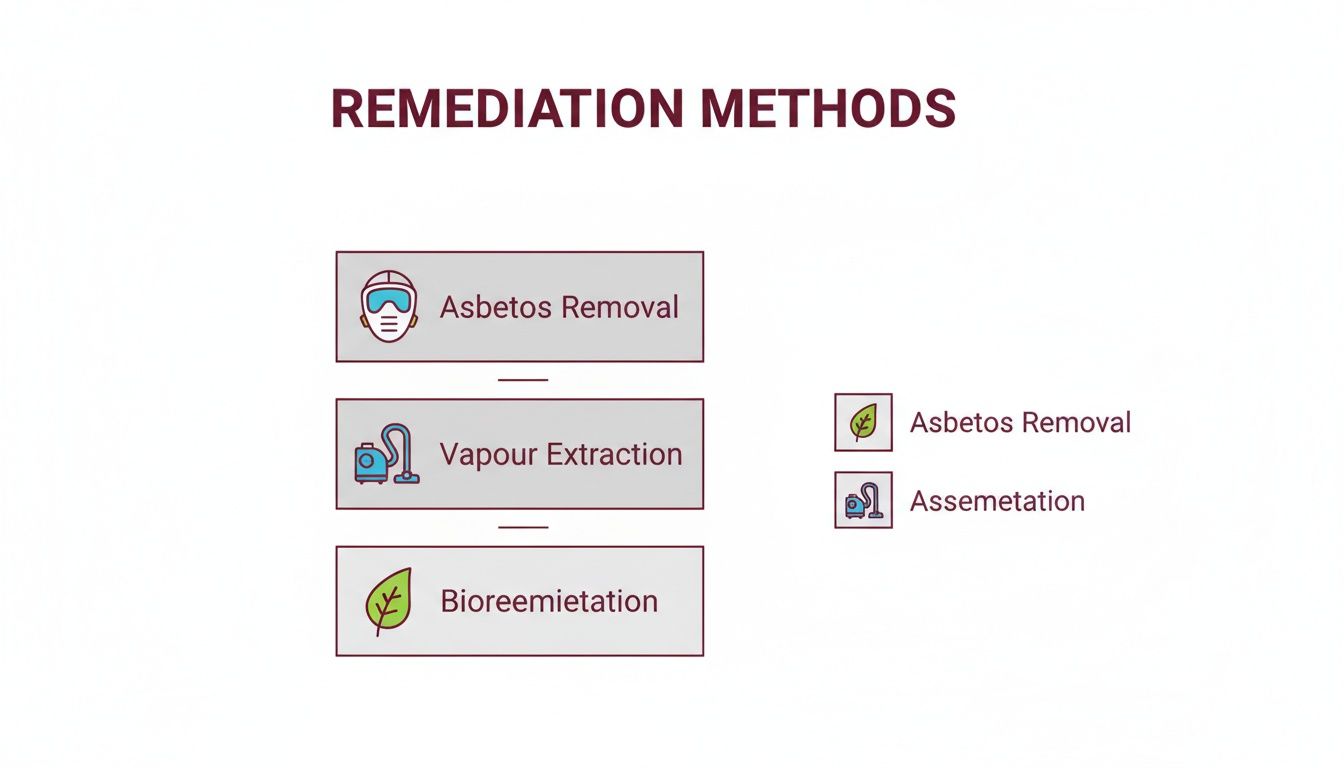
This infographic gives you a snapshot of how we tackle different types of contamination, whether it's biological nasties, chemical vapours, or hazardous materials like asbestos.
Tangible Human Stories of Recovery
As compelling as the statistics are, it’s the individual stories of recovery that truly paint the picture. Take the machine operator who’d been with the company for over a decade. Before we started, his lung function was measured at just 65% of what it should have been, forcing him onto light duties. It was a huge blow to him.
Just 18 months after we declared the site safe, his lung function had bounced back to 92%. He was able to return to his full duties without the constant shortness of breath that had plagued him for years. This isn't just a data point; it's a person getting their life back. For those interested in the next steps, you can learn more about managing long-term occupancy safety for low-level residual contamination in our detailed guide.
The most rewarding part of this work is seeing people get their health back. When someone tells you they can finally breathe easily again or no longer suffer from constant headaches, you know the science has translated into a meaningful human outcome.
Health Outcomes Before vs After Remediation
To really drive home how profound these health recoveries were, a direct comparison of the data before and after the remediation is essential. The table below clearly illustrates the measurable, life-changing results that a professional remediation effort can deliver.
| Health Metric | Pre-Remediation Status | Post-Remediation Status | Percentage Improvement (%) |
|---|---|---|---|
| Reported Respiratory Symptoms | 62% of occupants | 8% of occupants | 87% Reduction |
| Elevated Blood Lead Levels | 33% of occupants | 0% of occupants | 100% Normalisation |
| Circulatory-Related Hospitalisations | 24 cases annually | 7 cases annually | 71% Decrease |
| Worker Absenteeism Rate | 12% monthly average | 3% monthly average | 75% Reduction |
This stark contrast provides undeniable proof of what we achieved. The complete normalisation of blood lead levels and the sharp drops in hospitalisations and absenteeism show a holistic recovery for the entire workforce. It proves, without a doubt, that a safe work environment is the true foundation for a healthy, present, and productive team. This case study demonstrates that a methodical, science-backed approach can effectively reverse even severe and long-standing health complications.
The Broader Business Impact of a Safe Site
A safe site is a productive site. It’s a simple truth. While our number one priority in any remediation project is always protecting people's health, the ripple effects go much further than just individual wellbeing. For any business leader or facility manager, bringing in occupational hygiene experts isn't just another line item on a budget—it's a strategic move that pays for itself. The incredible results from our case study, where we saw health complications in occupants completely reverse, prove a point: a healthier site builds a stronger, more resilient business.
Let’s look beyond the immediate health wins and connect the dots for the decision-makers. We'll explore how a clean, safe environment isn't a cost centre, but a driver of productivity, a way to slash operational costs, and a shield for your company's financial health and reputation. At the end of the day, protecting your people protects your bottom line.
From Worker Wellbeing to Business Performance
There’s a direct line between a healthy workforce and a high-performing one. You can't argue with it. When people are no longer battling chronic illnesses triggered by their surroundings, the shift is almost immediate and certainly measurable. Businesses that put money into creating a genuinely safe workplace often see a major jump in their operational efficiency.
Think about it: studies consistently show that clean, properly ventilated work environments can boost productivity by as much as 40%. This isn't just about people working faster; it's about them working smarter.
- Less Time Off Sick: As our case study showed, a properly remedied site causes a sharp drop in sick days. A healthy team is a present team, which means projects stay on track and the daily workflow isn’t constantly interrupted.
- People Stick Around: A workplace that clearly cares about its people’s health becomes an employer of choice. This cuts down on the huge costs of constantly recruiting, hiring, and training new staff, and you get to keep all that valuable experience in-house.
- Better Focus and Morale: It’s human nature. When your team feels safe and looked after, morale and concentration skyrocket. This translates directly to better quality work, fewer mistakes, and a far more positive and collaborative culture.
Heading Off Financial and Legal Headaches
Beyond the clear productivity gains, taking a proactive approach to site management is one of the smartest risk-mitigation strategies you can adopt. Turning a blind eye to contamination doesn't make the problem disappear; it just dials up the risk of a financial or legal catastrophe later on. Regulators across Australia have little patience for non-compliance and the penalties for breaking environmental and workplace safety laws are severe.
Investing in proper remediation isn't just about doing the right thing. It's smart financial management. The cost of a planned, professional clean-up is almost always a fraction of the cost of fines, legal battles, and the reputational fallout from a workplace health crisis.
The financial upside is just as compelling:
- Avoiding Crushing Fines: Getting hit with a non-compliance order can result in financial penalties that can seriously damage a business. Getting ahead of the problem means you meet your obligations and avoid the fines.
- Lowering Workers' Compensation Claims: It’s a natural consequence: a safer site means fewer claims for work-related illnesses or injuries. Over time, this can lead to a significant reduction in your insurance premiums and the admin that goes with them.
- Guarding Your Reputation: Today, a company’s track record on social and environmental responsibility is always in the spotlight. Showing a real commitment to your team's safety and responsible site management builds a powerful brand image and earns trust with customers, investors, and the wider community.
Ultimately, the takeaway is clear: a safe site is a profitable one. This case study is solid proof that investing in professional remediation delivers a powerful return on multiple fronts. It protects your people and your profits, creating a sustainable foundation for success long into the future.
What This Means for Other High-Risk Workplaces
The turnaround we saw in this case study isn't just a one-off success story; it's a blueprint for any business operating in high-risk sectors like manufacturing, mining, or heavy industry. It proves a core principle of occupational hygiene: being proactive is always cheaper and more effective than cleaning up a mess after the fact. The dramatic improvement in the workers' health wasn't a fluke. It was the direct result of applying rigorous science and genuinely committing to people's safety.
If your business sits on land with any kind of industrial history, the biggest takeaway is this: don't treat potential contamination as a vague, far-off problem. Treat it as a real, active risk that needs managing today. This means changing how you think about workplace health, moving it from a box-ticking compliance exercise to a central part of how you run a smart, resilient operation.
Building a Proactive Safety Plan
The old "wait and see" method just doesn't cut it. A proactive safety plan means scheduling regular site assessments, not just scrambling to act when people start feeling sick. By the time symptoms appear, the damage to your team and your business has already been done.
A solid safety framework should be built on a few key pillars:
- Routine Hygiene Checks: Bring in qualified experts to conduct regular site reviews. This should include monitoring the air and soil, especially if you’ve made any changes to your operations.
- Know Your Legal Duties: Get intimately familiar with your obligations under Safe Work Australia and any state-specific laws. Knowing the rules empowers you to make the right calls.
- Create Clear Reporting Lines: Your team needs a simple, confidential way to flag health concerns without worrying about any backlash.
Taking this forward-thinking approach transforms site safety from a defensive chore into a genuine business advantage. It protects your most important asset: your people.
Don't Go It Alone: Bring in the Experts
This case study, where we saw health problems reversed after a proper site cleanup, really highlights the need to partner with specialists. Tackling complex environmental hazards isn’t a job for amateurs. You need a team that brings a mix of deep expertise to the table—chemistry, toxicology, engineering, and solid project management.
The best results happen when business leaders put their trust in the science and work hand-in-glove with qualified occupational hygienists. This kind of partnership ensures the cleanup is not only effective but also works with your business operations, keeping disruption to a minimum while getting safety right.
Trying to save a few dollars by hiring underqualified contractors or, worse, ignoring expert advice is a surefire way to fail. It almost always leads to a bigger health crisis and much higher costs in the long run. The smartest investment you can make is getting the right expertise involved from day one. That's the straightest line to a safe site, a healthy team, and a business that's built to last.
Common Questions Answered
When you're dealing with potential site contamination, it’s natural to have a lot of questions. Here, we'll tackle some of the most common ones we hear from facility managers and business owners.
How Quickly Can We Expect Health Improvements?
This is a big one, and the honest answer is: it varies. Based on our experience, we often see significant turnarounds in chronic issues like respiratory distress within 18-24 months after a thorough remediation. For more immediate symptoms, like headaches or dizziness caused by solvent exposure, the relief can be much faster—sometimes almost as soon as the source is removed.
I Suspect Contamination. What’s My First Move?
Don't wait. Your first and most critical step is to bring in a professional occupational hygiene firm to conduct a Preliminary Site Investigation (PSI). This isn't about guesswork; it's a systematic assessment to confirm if there’s a genuine contamination issue that needs tackling. Acting decisively at this stage is the single best way to reduce risk and head off serious health problems down the track.
Will Remediation Shut Down My Business?
It’s a valid concern, but a well-executed remediation plan is all about minimising disruption. Any professional team worth their salt will work with you to keep your operations running. This usually involves smart strategies like:
- Setting up containment barriers to isolate work areas.
- Scheduling the remediation in phases.
- Working after hours or during weekends.
The goal is always to restore a safe environment while keeping the impact on your business to an absolute minimum.
What if We’re Dealing With Focused Meth Contamination?
Contamination from something like a former meth lab is a specialised problem that demands a specialised solution. This is known as focused meth contamination. You can't just clean it like normal grime. It requires specific chemical tests to identify the residues and a targeted decontamination process to completely neutralise the harmful compounds on every affected surface.
If you want to dive deeper into the specifics of this kind of work, have a look at these frequently asked questions about biohazard cleanup.
If you have even the slightest suspicion that your workplace could be posing a health risk, don't wait for symptoms to become a crisis. Professional environmental consultants deliver comprehensive site assessments and clear, actionable remediation plans to protect your people and your business.
Reach out to an expert today to ensure your workplace is truly safe and healthy. https://occhygiene.com.au


