
If your Melbourne home was built or touched up anytime before 1990, professional asbestos testing in Melbourne isn't just a good idea—it's essential. Think of it like this: asbestos is a sleeping dragon hidden in your walls, floors, and ceilings. Left alone, it's fine. But the moment you start a renovation, you could wake it up, and that’s when it becomes a serious health hazard. The only way to know for sure is to test.
Why Asbestos Testing Is a Must-Do for Melbourne Homes
For any Melbourne home that predates the nationwide ban in 2003, there's a strong chance asbestos is lurking somewhere. It was once hailed as a "miracle fibre" and was mixed into more than 3,000 different building products. We're talking about everything from 'fibro' cement sheets in your eaves and wet areas, to old vinyl floor tiles, and even insulation.
As long as these materials are sealed and in good condition, they're generally considered stable. The real trouble starts when they get disturbed.
Something as simple as drilling a hole to hang a picture, sanding a wall for a fresh coat of paint, or knocking down a wall for an open-plan kitchen can send microscopic asbestos fibres airborne. Once you breathe them in, these tiny, needle-like fibres get stuck in your lungs for good, setting the stage for devastating health problems down the track.
The Hidden Health Risks in Older Properties
The scary thing about asbestos is that its danger isn't immediate. It's a silent threat, with diseases often taking decades to show up after exposure. The consequences are severe and, all too often, fatal. This is precisely why getting ahead of the problem with testing is so important.
The main health risks are:
- Mesothelioma: A rare, aggressive, and incurable cancer that attacks the lining of the lungs. It's caused almost exclusively by asbestos exposure.
- Asbestosis: This is a chronic lung condition where scarring of the lung tissue makes it harder and harder to breathe.
- Lung Cancer: Exposure to asbestos dramatically increases the risk of developing lung cancer, and that risk is even higher for smokers.
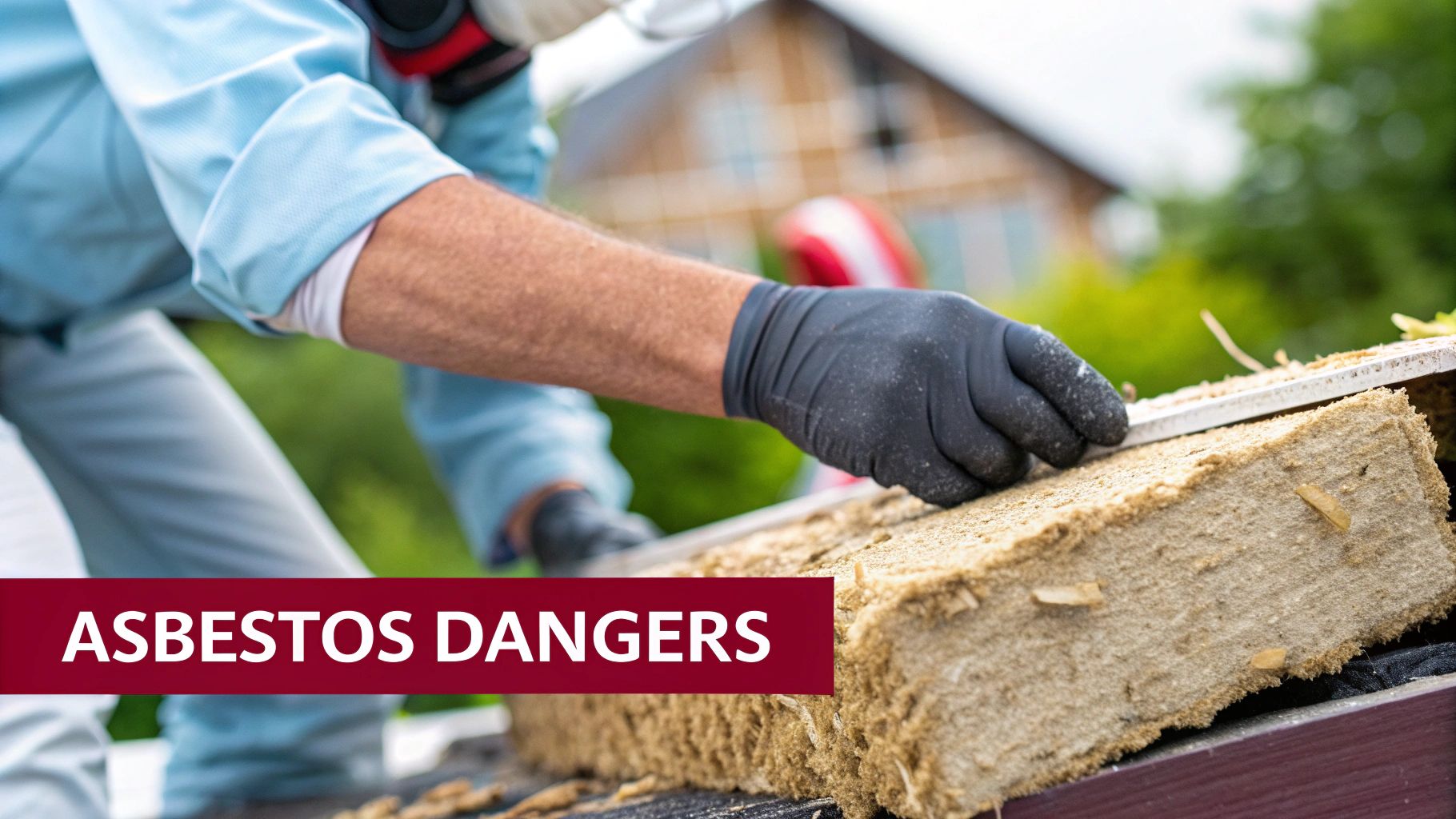
It hammers home why asbestos testing Melbourne services are a fundamental investment in the health of your family, any tenants, or the tradies working on your property. This isn't just about ticking a box for compliance.
To give you a sense of the scale of the problem, consider this: in Victoria during the 2023-24 period, around 625,917 tonnes of asbestos waste were disposed of. That's almost enough to fill the entire Melbourne Cricket Ground (MCG).
Looking beyond the immediate health concerns, properly identifying and managing asbestos is also a smart financial move. It protects your property’s long-term value and market appeal. In fact, tackling potential hazards like asbestos is one of the most crucial strategic upgrades to add value to your home.
Where Asbestos Hides: A Guide to Potential Hotspots in Your Home
If you're planning a renovation, one of the first things you should do is get acquainted with the common hiding spots for asbestos in a classic Melbourne home. You can't confirm it's there just by looking, but knowing where it might be is the first step in understanding your risk. Think of it as a preliminary scout-around, not a final diagnosis.
The tricky thing about asbestos-containing materials (ACMs) is that they were used everywhere. They were the wonder product of their time, which means they could be in some surprising places, especially if your home was built or touched up before 1990.
A Room-by-Room Walkthrough
Let's do a virtual walk through a typical older house to pinpoint where asbestos often lurks. Keep in mind, these materials usually look completely harmless, and the asbestos fibres themselves are microscopic and invisible. That's why a visual check is purely for awareness. For a deeper dive into the science of detection, you can learn more about how asbestos is identified by the professionals.
Common Hotspots Inside and Out
On the Outside:
- Roofing, Gutters & Fencing: Those classic corrugated roofing sheets (often called 'Super Six') are a prime suspect. The same goes for some older roof shingles, gutters, and even corrugated fences made from asbestos cement sheeting.
- Wall Cladding & Eaves: That flat, hard sheeting on external walls, under the eaves, and on soffits is often 'fibro'—a common ACM. It can have a smooth or a slightly dimpled surface.
Stepping Inside:
- Wet Areas (Bathroom, Laundry, Kitchen): Because it was so water-resistant, 'fibro' sheeting was the go-to for lining walls behind showers, sinks, and laundry tubs.
- Flooring: This is a big one. Old vinyl tiles, particularly the 225mm x 225mm (9×9 inch) ones from the 60s and 70s, often contain asbestos. The black, tar-like glue used to stick them down is also a high-risk material. Even sheet vinyl (linoleum) can have an asbestos paper-like backing.
- Ceilings: If you have a textured or 'popcorn' ceiling that was applied before the 90s, there’s a good chance it contains asbestos. It was added to the paint or coating to create that distinctive bumpy finish.
A Quick-Reference Guide to Potential ACMs
To help you get a clearer picture during your initial walkthrough, the table below maps out common materials and where you'll typically find them in older Melbourne properties. It’s a handy checklist to flag areas that might need a closer look from a professional before you pick up a single tool.
Common Asbestos-Containing Materials in Melbourne Homes
| Location in Home | Potential Asbestos-Containing Material (ACM) | What It Looks Like |
|---|---|---|
| Roof and Exterior | 'Fibro' Cement Sheeting | Hard, grey, flat or corrugated sheets on roofs, eaves, and fences. |
| Kitchen & Bathroom | Wall Linings and Splashbacks | Rigid, flat sheets often used behind stoves or showers. |
| Living Areas | Textured or 'Popcorn' Ceilings | A bumpy, stippled texture sprayed onto the ceiling surface. |
| All Rooms | Vinyl Floor Tiles or Linoleum | Often hidden under carpet; look for old square tiles or sheet flooring. |
| Pipes and Ducts | Insulation Lagging | A white, chalky or fibrous wrap around old hot water pipes or ductwork. |
This table gives you a solid starting point, but it's not the final word. Remember, the only way to be 100% sure is to have the material professionally tested.
A Critical Reminder: This guide is for awareness only. You can never confirm the presence of asbestos just by looking at it. Many modern, safe building products look identical to old ACMs. Professional asbestos testing in Melbourne is the only way to know for certain and keep your project and your family safe.
Navigating Your Legal Duties for Asbestos in Victoria
Trying to get your head around the legal side of asbestos in Melbourne can feel a bit daunting. But it's absolutely crucial for keeping people safe and staying on the right side of the law. The rules, which are laid out by WorkSafe Victoria, are there to protect everyone—from the family living in the house to the tradies who come to work on it.
If you're in a position where you manage or control a workplace, you have a legal duty of care. It’s important to know that a "workplace" isn't just an office; it can be your home the moment you hire contractors to work there. This duty means you're required to figure out if there's any asbestos on the property and then take sensible steps to manage the risks.
This isn't just a friendly suggestion; it's a legal requirement. The whole point is to stop people from being accidentally exposed by making sure anyone who might disturb the material knows exactly what they’re dealing with before they even pick up a tool.
Your Key Responsibilities
Your legal obligations are pretty straightforward and all about being proactive. For commercial properties, office buildings, and even the common areas of apartment blocks, this usually means putting together and maintaining an official asbestos register.
This register is a living document that needs to:
- Pinpoint the exact location of any confirmed asbestos-containing materials (ACMs).
- Specify the type of asbestos found and describe the current condition of the material.
- Be kept somewhere that’s easy for any worker or contractor to access before they start their job.
Even if you’re just a homeowner, that duty of care still applies. If you’ve had professional asbestos testing in Melbourne and the results came back positive, you are legally obliged to tell any tradies about it before they start a renovation. It's a simple conversation, but it's one of the most important safety steps you can take.
When it comes to DIY removal, the rules are iron-clad. In Victoria, it is illegal for you to remove more than 10 square metres of non-friable (bonded) asbestos yourself. You cannot, under any circumstances, attempt to remove friable asbestos or anything over that 10-square-metre limit. It's not just illegal; it's incredibly dangerous.
Why Professional Management is Non-Negotiable
The reason the legal framework is so strict is that the problem is so common. The asbestos legacy isn't confined to old houses; countless public buildings built before the 1980s still contain asbestos. With roughly one-third of all Australian homes containing asbestos products, getting a professional risk assessment is the only way to properly protect people in Melbourne, especially in shared spaces like schools and hospitals. You can dig deeper into the ongoing risks by reviewing the research on in situ asbestos.
At the end of the day, these regulations are designed to give you clear, actionable guidance. Whether you're a landlord managing a rental or a homeowner planning a reno, following your legal duties is how you protect people's health and meet your obligations.
A Step-by-Step Look at the Asbestos Testing Process
Getting a professional in for asbestos testing might sound daunting, but it's actually a very methodical and safe process. From the first phone call to the final report, every step is designed to give you clear answers without compromising the safety of your home or workplace. Knowing what to expect can really take the stress out of the situation.
It all kicks off with an initial chat and a detailed inspection of your property. A licensed asbestos assessor will come out, use their trained eye to spot materials that are likely suspects, and map out a clear sampling strategy. This isn't random; they'll pinpoint the exact spots to take small, targeted samples for testing.
How Samples Are Collected Safely
This is where the real expertise comes into play. You’ll never see a professional just snap off a piece of material. They follow strict safety guidelines to make sure no dangerous fibres get into the air. This usually involves wetting the material down with a fine water mist to control dust and then immediately sealing up the area where the sample was taken.
Each sample is then carefully double-bagged, labelled with exactly where it came from, and prepped for its trip to the lab. This strict "chain of custody" is vital—it prevents any mix-ups or contamination and guarantees the lab results match the specific areas tested on your property.
This infographic shows the journey from your property to a final, conclusive report.
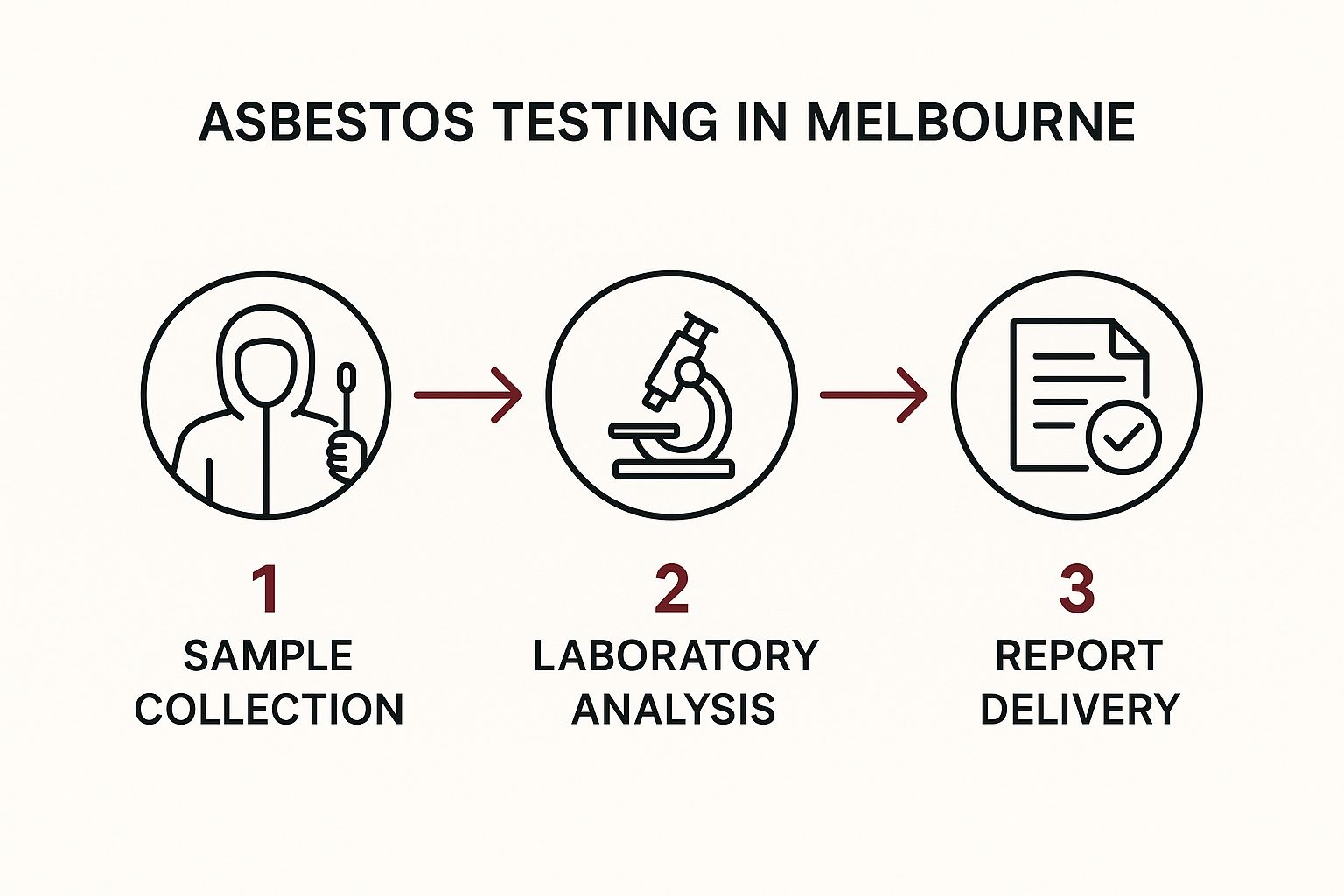
As you can see, every stage is carefully controlled to ensure the results are both accurate and safely obtained.
Lab Analysis and Getting Your Results
Next, your samples head to a NATA (National Association of Testing Authorities) accredited laboratory. This is a big deal. NATA accreditation is your assurance that the testing meets Australia’s highest scientific standards. In the lab, technicians use a technique called Polarised Light Microscopy (PLM) to get a definitive look at the fibres and confirm if asbestos is present.
Why NATA Accreditation Matters: A NATA-accredited lab gives you impartial, scientifically proven results. It’s the gold standard for asbestos testing, removing any guesswork and ensuring the advice you get is based on solid evidence, not just a hunch.
You can typically expect your formal report back within 24 to 48 hours. This document is straightforward and tells you exactly what you need to know: whether asbestos was found, what type it is (like Chrysotile or Amosite), and precisely where it's located. It’s the clear, factual information you need to decide on the safest way forward.
How to Choose a Reputable Asbestos Testing Service
Picking the right professional for asbestos testing in Melbourne is one of the most important calls you'll make for your property and your family's health. Let's be clear: not all services are created equal. The team you choose will determine the accuracy of your results and the quality of the advice you get.
Think of it like hiring a specialist doctor for your home. You wouldn't go to just anyone; you'd want someone with proven expertise, the right credentials, and unbiased judgement.
First Things First: NATA Accreditation is Non-Negotiable
The first and most critical thing to look for is NATA accreditation. Make this your absolute benchmark for quality.
A company that uses a NATA (National Association of Testing Authorities) accredited laboratory is your guarantee that the sample analysis meets Australia's highest scientific standards. This isn't just a fancy certificate on the wall. It’s your assurance that the results are scientifically sound, legally defensible, and completely free from commercial bias. Don't be afraid to ask for proof of their NATA affiliation.
It’s just as important to make sure the person doing the assessment is a licensed asbestos assessor. This confirms they have the proper training and qualifications recognised by WorkSafe Victoria to handle potentially hazardous materials safely and competently.
A huge red flag to watch for is a company that offers both testing and removal and immediately starts pushing for expensive removal work before the lab results are even back. An independent testing service gives you unbiased facts, empowering you to make an informed decision without the sales pressure.
Key Questions to Ask Before You Hire Anyone
Before you sign on the dotted line, have a chat with them and ask some direct questions. Any reputable provider will be transparent and happy to give you clear, straight answers.
Here are a few essentials to get you started:
- Is your laboratory NATA-accredited? This confirms the scientific integrity of their entire testing process.
- What are your qualifications for assessing asbestos? You're looking for a licensed assessor or an experienced occupational hygienist.
- Can you give me a detailed, itemised quote? This is crucial for understanding all the costs involved, from the call-out fee to the lab analysis for each sample.
- What’s your standard turnaround time for the report? Most professional outfits can deliver results within 24 to 48 hours.
The need for this level of vetting is driven home by just how widespread asbestos exposure is, even outside of the workplace. Research shows that non-occupational exposure is a significant issue in Australia, affecting nearly 52% of females and 48% of males, often through contamination right in their own homes.
This really highlights that asbestos is a pervasive risk in older urban areas like Melbourne, making your choice of a qualified testing service all the more critical. You can explore the full statistical breakdown of asbestos exposure to get a sense of the bigger picture.
By taking these simple steps, you can confidently find a trustworthy expert. For more complex properties or situations, engaging specialised occupational hygiene consultants can provide an even deeper level of risk assessment and management expertise.
Understanding Your Test Results and What Comes Next
Getting that lab report back and seeing the word "asbestos" can be a shock. It's completely normal to feel a bit of a jolt, but this isn't a moment for panic. It's the moment you gain control. Knowing what you're dealing with is the first, most critical step toward making your home safe.
Your report will tell you more than just a simple yes or no. It'll specify the type of asbestos found and, most importantly, its condition. This detail is everything, as it helps sort the material into one of two categories: friable or non-friable.
Imagine asbestos fibres are like glitter. In non-friable materials, that glitter is mixed into solid, set glue—it’s locked in and not going anywhere. But in friable materials, it’s like a pile of loose glitter, ready to be kicked up into the air with the slightest disturbance.
Friable vs Non-Friable Asbestos
Understanding this difference is the key to figuring out your next move.
-
Non-Friable (Bonded) Asbestos: This is what we see most often in Melbourne homes. It's locked away in hard materials like 'fibro' cement sheeting, old vinyl floor tiles, and corrugated roofing. As long as these materials are in good nick—not crumbling, cracked, or drilled into—the fibres are held tightly in place and the immediate risk is low.
-
Friable Asbestos: This stuff is far more concerning. It’s soft and crumbly, and you could crush it to a powder by hand. Think of old, flaky insulation lagging around pipes or ceiling insulation that’s been sprayed on. This material releases dangerous fibres into the air with very little effort.
If your report confirms you have non-friable asbestos and it's in solid condition, the best course of action is often to just leave it be. This is called management-in-place. It involves clear labelling and keeping a regular eye on it to make sure it doesn't get damaged.
A positive test result for stable, bonded asbestos doesn't automatically mean you need a team in hazmat suits. In many cases, the safest thing to do is leave it untouched and manage it properly, avoiding the risk of releasing fibres during a removal process.
However, if the material is damaged, friable, or if you're planning a renovation that will disturb it, professional removal is the only safe way forward. It's a legal requirement in Melbourne to use a Class A or Class B licensed removalist for this work.
A positive result is also a good reminder of how important clean air is at home. You can learn about other methods for improving indoor air quality to ensure you’re creating the healthiest possible environment for your family.
Your Top Questions About Asbestos Testing in Melbourne Answered
It's completely normal to have questions when you're dealing with something as serious as asbestos. To give you some clarity and peace of mind, here are the straightforward answers to some of the most common things we get asked by property owners in Melbourne.
What’s the Cost for Asbestos Testing in Melbourne?
The cost really depends on what you need done. If you just have one suspicious material you want checked, a professional call-out to take a single sample and get a lab report will likely set you back between $150 and $250.
For a more comprehensive look, like a full asbestos survey or audit of your entire home, the price usually starts around $450 and can go up to $1,000 or more, depending on how big and complex your property is. The best advice? Always get a detailed, itemised quote before any work begins.
Can I Just Take an Asbestos Sample Myself?
In a word: no. We can't stress this enough—please don't try to take a sample yourself.
Breaking or disturbing a material you think contains asbestos can send a plume of invisible, dangerous fibres straight into the air. Licensed professionals use specific training, specialised equipment, and strict safety protocols to take samples without putting you or your family at risk.
An experienced assessor knows exactly how to collect a sample without cross-contaminating your property. It’s a critical step that DIY sampling simply can’t guarantee, and it’s the only way to get true peace of mind.
How Long Until I Get the Test Results?
Once our expert collects the sample, it goes directly to a NATA-accredited laboratory for proper analysis. Typically, you can expect to receive the formal report within 24 to 48 hours.
If you're on a tight deadline for a renovation or a property sale, most services can arrange for an express analysis to get you the results even faster.
For expert guidance and scientifically accurate results you can trust, contact Anitech Ltd Pty. We provide comprehensive occupational hygiene services, including professional asbestos testing, to ensure your property is safe. Learn more at https://occhygiene.com.au.


